Ian Marter
Acting
Biography
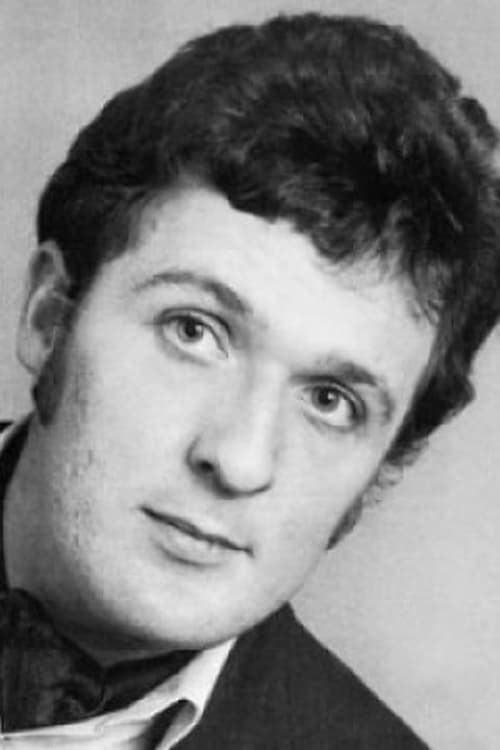
Ian Marter was an actor and novelist. He was best known for his role as Harry Sullivan in the BBC science-fiction television series Doctor Who from December 1974 to September 1975, with a non-regular, one-serial return in November and December 1975. Marter continued his association with Doctor Who long after leaving the show, adapting several stories for the Target novelisation range, and penning an original novel, Harry Sullivan's War. In addition to these books, Marter wrote adaptations of several 1980s American films such as Splash and Down and Out in Beverly Hills for Target and its imprint, Star Books, as well as the Gummi Bears books. With the exception of Down and Out in Beverly Hills, these books were published under the pen name Ian Don - Don being his middle name. Marter died in 1986, on his 42nd birthday, from a heart attack associated with diabetes-related cardiovascular disease.
Known For

The adventures of The Doctor, a time-traveling humanoid alien known as a Time Lord. He explores the universe in his TARDIS, a sentient time-traveling spaceship. Its exterior appears as a blue British police box, which was a common sight in Britain in 1963 when the series first aired. Along with a succession of companions, The Doctor faces a variety of foes while working to save civilizations, help ordinary people, and right many wrongs.
Doctor Who

Crown Court is an afternoon television courtroom drama produced by Granada Television for the ITV network that ran from 1972, when the Crown Court system replaced Assize courts and Quarter sessions in the legal system of England and Wales, to 1984.
Crown Court

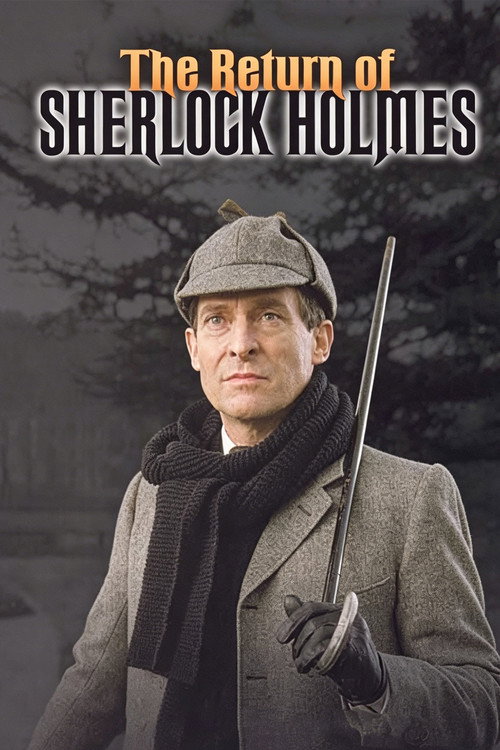
Sherlock Holmes uses his abilities to take on cases by private clients and those that the Scotland Yard are unable to solve, along with his friend Dr. Watson.
Sherlock Holmes

Jim Bergerac is a detective sergeant in The Foreigners Office who likes to do things his own way. While dealing with his own personal demons Bergerac has a knack of finding trouble, and sometimes causing it.
Bergerac

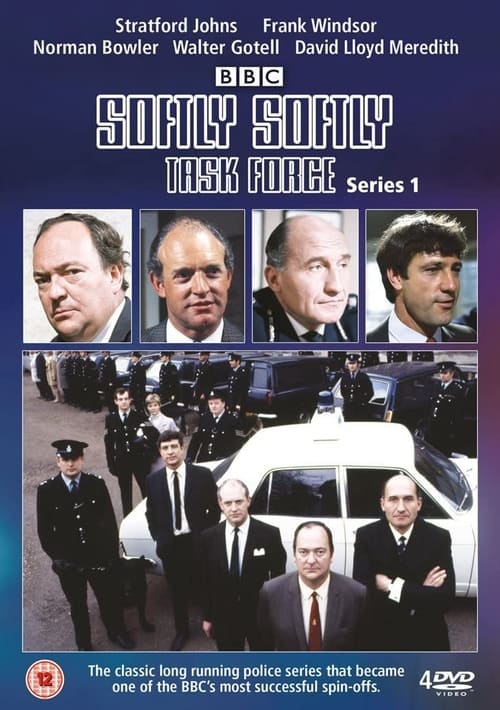
Softly, Softly is a British television drama series, produced by the BBC and screened on BBC 1 from January 1966. It centred around the work of regional crime squads, plain-clothes CID officers based in the fictional region of Wyvern, supposedly in the Bristol area of England.
Softly, Softly

Shine on Harvey Moon! is a British comedy-drama series made by Central Television for ITV from 8 January 1982 to 23 August 1985 and briefly revived in 1995 by Meridian. This generally light-hearted series was created by comedy writers Laurence Marks and Maurice Gran. The series is set in the East End of London shortly after the Second World War. Upon being demobbed RAF serviceman Harvey Moon, played by Kenneth Cranham, returns home and finds his family involved in various troubles. His wife Rita, played by Maggie Steed, is not interested in resuming their relationship, and works in a seedy nightclub frequented by American servicemen. He becomes involved with the Labour Party and the union movement. The name of the series is a wordplay on the title of the popular 1908 song 'Shine On, Harvest Moon'. The first series was commissioned and recorded by ATV at their Elstree studios with the remaining series filmed at newly constructed facilities in Nottingham.
Shine on Harvey Moon

A French detective in London reconstructs the life of a man lying in hospital with severe injuries with the help of journals and a psychiatrist. He realises that the man had powerful telekinetic abilities.
The Medusa Touch

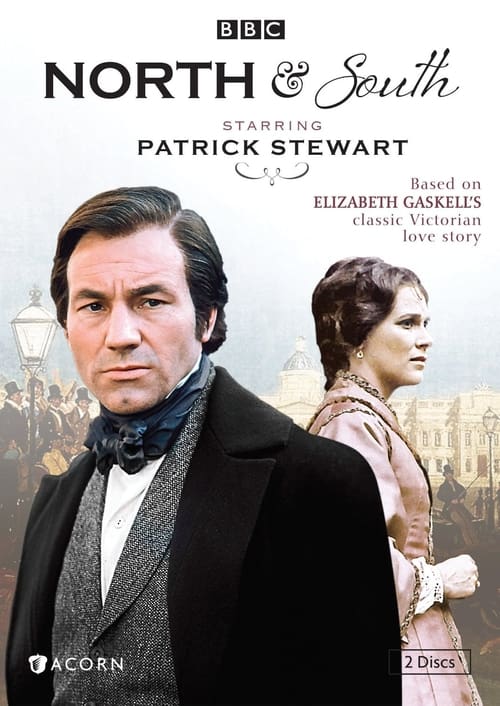
Serialisation of the novel by Mrs Gaskell.
North and South

After a team of surgeons botches his beloved wife's operation, the distraught Dr. Phibes unleashes a score of Old-Testament atrocities on his enemies.
The Abominable Dr. Phibes

Myth Makers was a semi-professional series of documentaries about the principal creatives of the 1963 version of Doctor Who. It was produced for the direct-to-video market by Reeltime Pictures — with most releases being interviews of a single cast or crew member conducted by Nick Briggs. The vast majority of the original interviews were conducted between the mid-1980s and the early 2000s. A few more volumes surfaced until the late 2000s, but most of the releases in the 2000s were actually remastered — and often re-edited — versions of the the interviews that had originally been recorded in the 1980s or 1990s. The series was notable for being the first video series about the production of Doctor Who. Its longevity proved there was an appetite for such information, and it is probably fair to say that it helped pave the way for Doctor Who Confidential, as well as the audio interviews that became commonplace on most Big Finish audio CDs.
Myth Makers

An idealistic former soldier helps unite and house ethnic minorities in a run-down area of London's east end.
King of the Ghetto

Holly Elliot is a university graduate taking an evening class in art appreciation. Her husband, David, on the other hand, works for a mail-order firm and is trying hard to keep up with Holly by taking an extramural degree in his spare time. Their lives are about to be irrevocably upended.
Holly

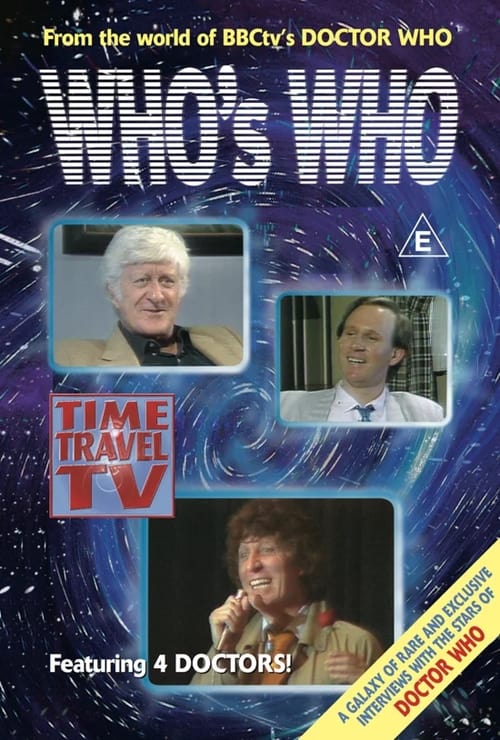
Television documentary filmed at a Doctor Who convention, including interviews with directors, writers and actors.
Doctor Who's Who's Who

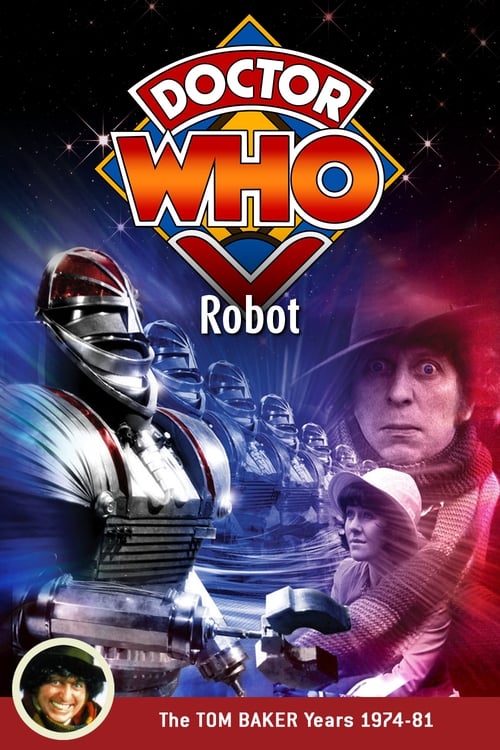
The newly-regenerated Doctor helps UNIT battle a sentient robot being manipulated by a corrupt scientific organization.
Doctor Who: Robot

Captured in a time corridor, the Doctor and his companions are forced to land on 20th century Earth, diverted by the Doctor's oldest enemy - the Daleks. It is here the true purpose of the time corridor becomes apparent: after ninety years of imprisonment, Davros, the ruthless creator of the Daleks, is to be liberated to assist in the resurrection of his army. Not even the Daleks foresee the poisonous threat of their creator. Indeed, who would suspect Davros of wanting to destroy his own Daleks - and why? Only the Doctor knows the truth. Will he descend to Davros' level of evil to stop him?
Doctor Who: Resurrection of the Daleks

The Time Lords dispatch the Doctor to the past of the planet Skaro on his deadliest adventure yet — to prevent the creation of the Daleks.
Doctor Who: Genesis of the Daleks

When the Doctor, Sarah Jane and Harry arrive in Scotland, having received an urgent request for assistance from the Brigadier, they discover that the mysterious force which has destroyed three oil rigs has left giant teeth marks on the wreckage. The mystery deepens, leading them to the shores of Loch Ness where they find that the legendary monster really does exist – and is the murderous tool of the Zygons, aliens intent on overpowering the planet. The Doctor, his companions and UNIT must find a way to defeat the deadly Loch Ness Monster and its controllers, but the Zygons have the terrifying power to change shape. The Doctor's life has never been in more danger, as the line between allies and enemies is tested to the very limit...
Doctor Who: Terror of the Zygons

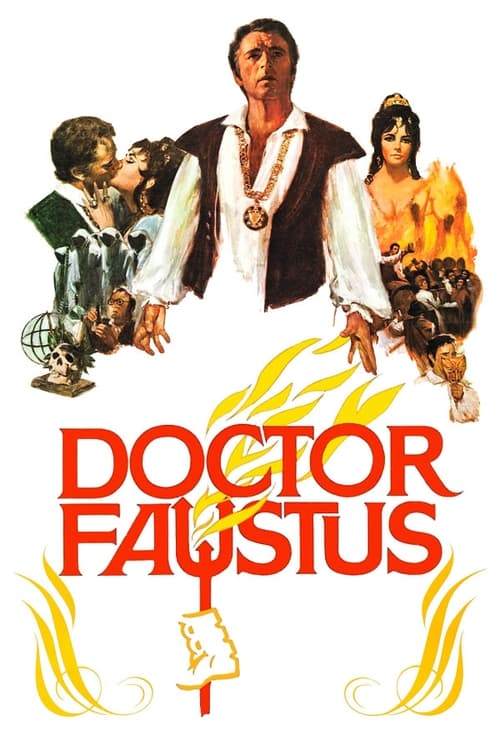
Faustus is a scholar at the University of Wittenberg when he earns his doctorate degree. His insatiable appetite for knowledge and power leads him to employ necromancy to conjure Mephistopheles out of hell. He bargains away his soul to Lucifer in exchange for living 24 years during which Mephistopheles will be his slave. Faustus signs the pact in his own blood and Mephistopheles reveals the works of the devil to Faustus.
Doctor Faustus

After an encounter with the Master, an airline stewardess named Tegan Jovanka becomes an unwitting stowaway aboard the TARDIS as it travels to the planet Logopolis. There, the Doctor discovers that the Master's interference with the Logopolitans' advanced mathematics has unleashed a wave of entropy which threatens to consume the entire universe.
Doctor Who: Logopolis

A spoof of Blade Runner, built around bloopers and outtakes from the Myth Makers series of videos, featuring interviews with actors from the Doctor Who TV series.