Camera
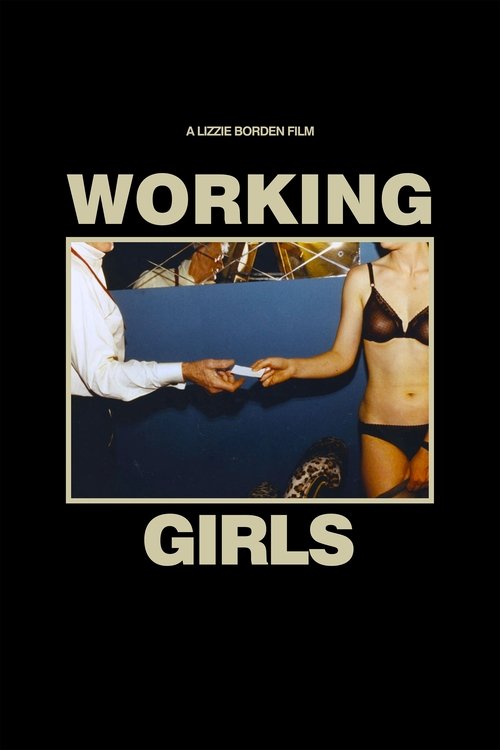
A lesbian college graduate, trying to bankroll her own photography business, works as a high-priced New York City escort.
In near-future New York, ten years after the “social-democratic war of liberation,” diverse groups of women organize a feminist uprising as equality remains unfulfilled.
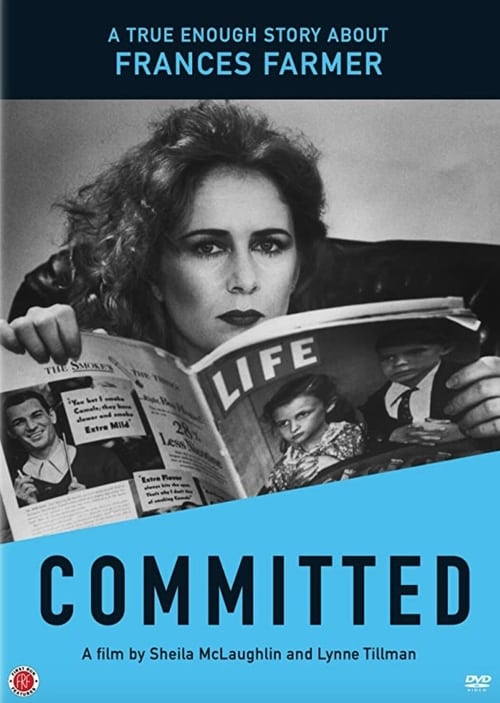
Stylized, black and white biography of Frances Farmer by author Lynne Tillman and Sheila McLauglin.
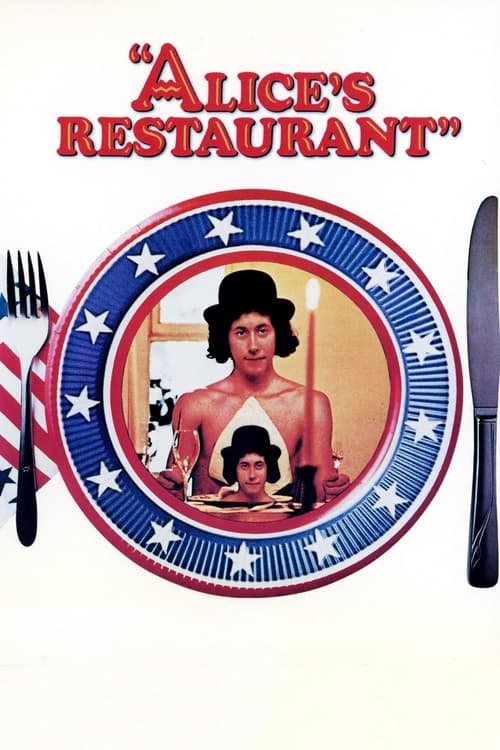
After getting kicked out of college, Arlo decides to visit his friend Alice for Thanksgiving dinner. After dinner is over, Arlo volunteers to take the trash to the dump but finds it closed for the holiday, so he dumps the trash in the bottom of a ravine. This act of littering gets him arrested and sends him on a bizarre journey.
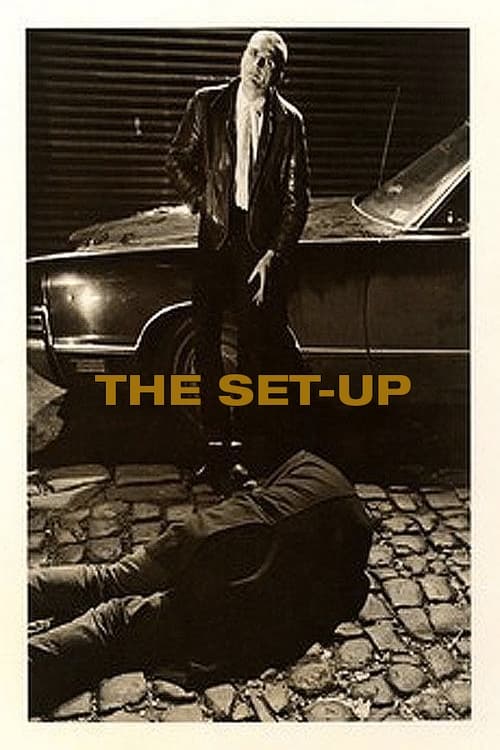
The Set-Up is Kathryn Bigelow's student film at Columbia about the exploration of 'why violence in cinematic form is so seductive'. It featured two men beating each other to a pulp in a dark alley, while two professors analyzed the philosophy of it all on the soundtrack.
With HOW TO FLY, Bowes abandoned plot entirely, finding other forms of structure. He wanted to show that stories do not have to obsessively organize and explain data, and that television’s hundreds of simultaneous, fragmented narratives – news, fiction, commercials, sports, etc. – had prepared audiences for this new type of structure. — Charles Ruas
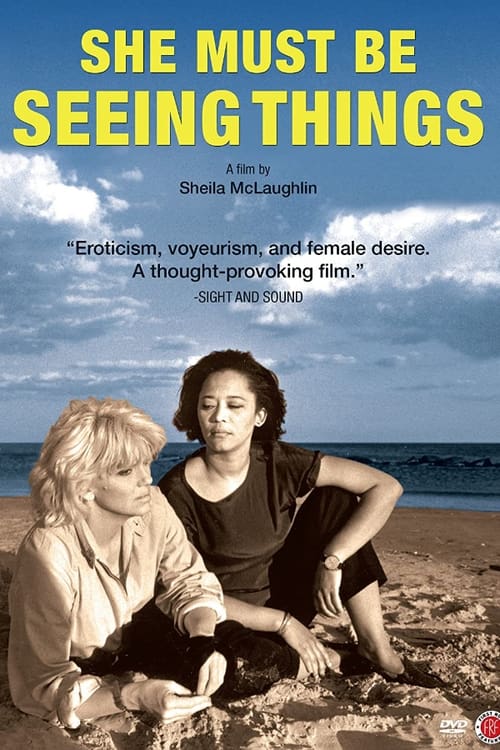
Agatha is an international lawyer, Jo a filmmaker. The two women are lovers. While Jo is on the road showing her films, Agatha discovers and reads her diaries. Problems ensue as Agatha's transgressions lead to jealousy and a spiraling cycle of sexual obsession.
A three-part video epic in which avant-garde artist Vito Acconci explores the relationship between the self and national mythology. Through multiple vignettes, Acconci brings together a collage of music, photographs, diorama, experimental theater and his own profile, to tell a semi-autobiographical narrative that, in turn, becomes a critique of the alienated quality of American mythology.
The plot revolves around Tom (Ed Bowes) and his girlfriend Kathleen (Elizabeth Cannon) and what occurs when her mother and androgynous brother Tommy (Karen Achenbach) come to visit. Tom is receiving transcripts of his innermost thoughts in anonymous letters. Sexual ambiguity, symbiotic relationships, and self-identity are all at play here. Structured in long, uncut takes with beautiful camera work by Tom Bowes, the real-time aesthetic of the work is the result of the script, in which much of the action takes place in drifting conversations. — Marita Sturken, “Television Fictions: An Interview with Ed Bowes,” AFTERIMAGE (May 1986)
In GRISAILLE (which is a painterly and stained glass term referring to the use of ‘gris’: gray) we encounter five figures – all women – or as Bowes calls them ‘presenters’ who seem to overlap and know one another. They sleep, read, write and contemplate their own consciousness and rehearse their mind grammar, and contemplate paintings, gender, a Robert Duncan poem that relates to a mother as a falconress. They exist in a mysterious landscape of texture, unfathomable shapes, and extraordinary color. The tones of painters Bonnard, de Kooning, Picasso, as well as Renaissance art, have inspired the color and shape of GRISAILLE. — Anne Waldman
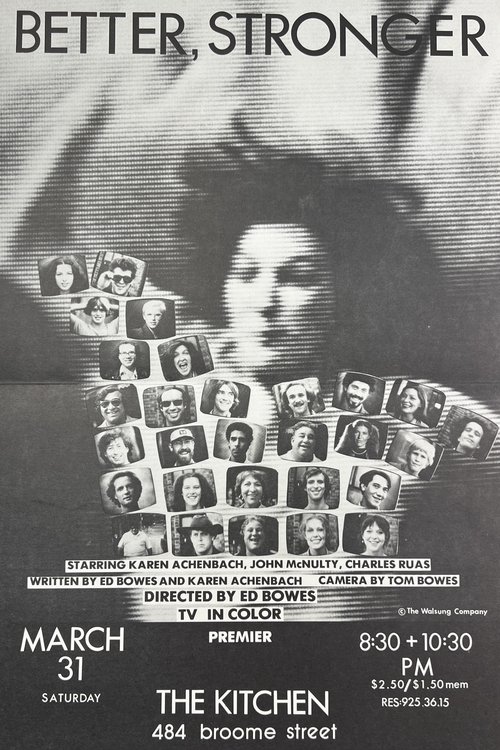
BETTER, STRONGER stands in contrast to the lilting pace of ROMANCE. It begins with an intense monologue by its main character, Lana (Karen Achenbach), which continues at a fairly relentless pace throughout. It is not a seductive story like ROMANCE, but an aggressive one that often jabs and pokes at the audience. Lana’s character is a high-energy, talkative actress who has returned to New York from California for a brief visit. She visits her family and cousins, who are a rowdy and obnoxious bunch, and storms from one scene to another. […] Bowes made BETTER, STRONGER as an artist-in-residence at the Television Laboratory at WNET/Thirteen. The tape is distinguished by its preoccupation with and relentless poetic use of language. […] While BETTER, STRONGER, like ROMANCE, would seem to have a direct plot line, Bowes has structured the action loosely with no central crisis or resolution. — Marita Sturken, “Television Fictions: An Interview with Ed Bowes,” AFTERIMAGE (May 1986)
Digital technologies are supposed to distance us from our material surroundings, but in Ed Bowes’s hands, they accentuate the physical world. His exquisite new film, ENTANGLEMENT, shot in high definition, lingers over skin pores, strands of hair, a clutch of flowers, a chair’s back. The accompanying script – written with poet Anne Waldman – is philosophical, abstract, while remaining as sensual as the camera’s vision. Together, image and word draw attention to the nuances of love, language, and touch that we frequently overlook in our bustling everyday lives. — Alan Gilbert
A portrait of the African American poet through her powerful and moving work. Akilah passed away in February of 2011. — Anthology Film Archives
SEAHORSE POWDER ROOM spends personal time with two adults and two children; variously writers, thinkers, and musicians, presenting in a weave of text, considerations of Judith Butler and queer poetics, a severed fox head and performance, as they mix in the shadow of words, light, and impermanence. — Anthology Film Archives
Ed Bowes’s most recent project, A PUNCH IN THE GUT OF A STAR, was filmed in 2020 during the pandemic. Set in Colorado and based on a text by Anne Waldman and the Catalan-American poet Emma Gomis, it is centered on the dreamy, poetic pod they formed together during this enigmatic time. — Anthology Film Archives
An adult tale of psychological disintegration presented from the point of view of a single, professional woman living in New York, SPITTING GLASS is told in a deadpan manner, with some humor and considerable irony. The program powerfully conveys an experience of mental confusion and frustration rooted in social contradictions. Soon her own thoughts are tormenting her as conflict and anger surface in some disturbing and antisocial behavior. Conversations and confrontations spill over into one another; voices become distorted and insights emerge in fragments as the protagonist moves through a series of unsatisfying encounters in her daily routine. She’d like to ‘find a new approach’ in the midst of this personal moral crisis, but can’t decide if she should go out West or kill her father. — WGBH
Co-written with poet Anne Waldman, THE VALUE OF SMALL SKELETONS describes the world, relationships, and interior imagination of a character named Merit. — Anthology Film Archives