Editing
Lassie is the pet of Jeff Miller, an 11-year-old farm boy. The two become best friends and enjoy family adventures in the American countryside, teaching each other about love, nature and commitment.
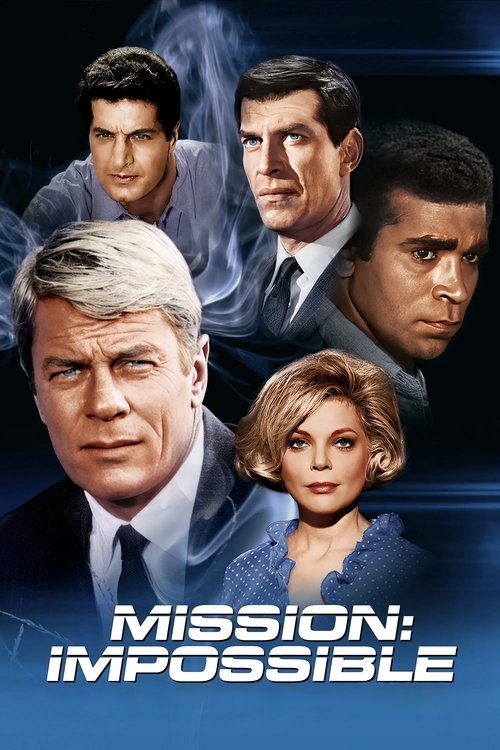
Mission: Impossible is an American television series that was created and initially produced by Bruce Geller. It chronicles the missions of a team of secret government agents known as the Impossible Missions Force. In the first season, the team is led by Dan Briggs, played by Steven Hill; Jim Phelps, played by Peter Graves, takes charge for the remaining seasons. A hallmark of the series shows Briggs or Phelps receiving his instructions on a recording that then self-destructs, followed by the theme music composed by Lalo Schifrin. The series aired on the CBS network from September 1966 to March 1973, then returned to television for two seasons on ABC, from 1988 to 1990, retaining only Graves in the cast. It later inspired a popular series of theatrical motion pictures starring Tom Cruise, beginning in 1996.
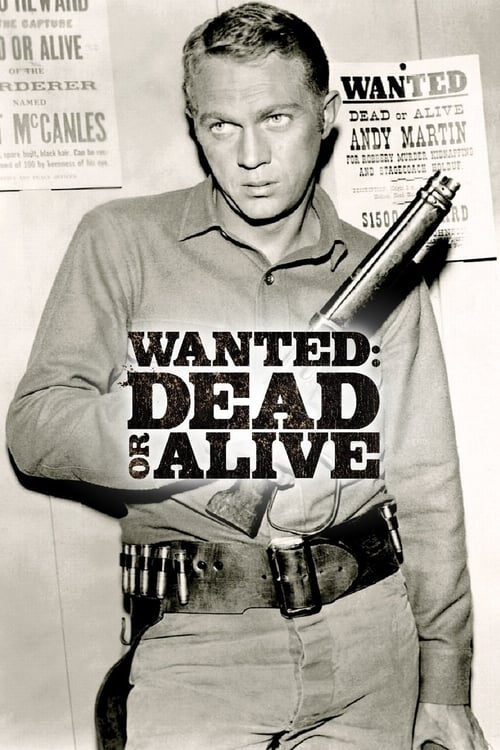
Wanted: Dead or Alive is an American Western television series starring Steve McQueen as the bounty hunter Josh Randall. It aired on CBS for three seasons from 1958–61. The black-and-white program was a spin-off of a March 1958 episode of Trackdown, a 1957–59 western series starring Robert Culp. Both series were produced by Four Star Television in association with CBS Television. The series launched McQueen into becoming the first television star to cross over into comparable status on the big screen.
Richard Diamond, Private Detective is an American detective drama which aired on radio from 1949 to 1953, and on television from 1957 to 1960.
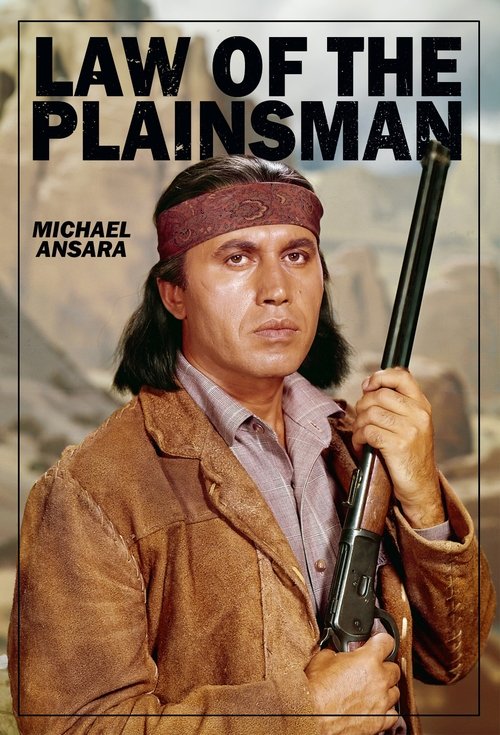
Law of the Plainsman is a Western television series starring Michael Ansara that aired on the NBC television network from October 1, 1959, until May 5, 1960. The character of Native American U.S. Marshal Sam Buckhart was introduced in two episodes of the popular ABC Western television series The Rifleman starring Chuck Connors as Lucas McCain. Law of the Plainsman is distinctive and unique in that it was one of the few television programs that featured a Native American as the lead character, a bold move for U.S.network television at that time. Ansara had earlier appeared in the series Broken Arrow, having portrayed the Apache chief, Cochise. Ansara, however, was not Native American but of Syrian descent. Ansara played Sam Buckhart, an Apache Indian who saved the life of a U.S. Cavalry officer after an Indian ambush. When the officer died, he left Sam money that was used for an education at private schools and Harvard University. After school, he returned to New Mexico where he became a Deputy Marshal working for Marshal Andy Morrison. He lived in a boarding house run by Martha Commager. The only other continuing character was 8-year old Tess Logan, an orphan who had been rescued by Buckhart. Robert Harland, later of Target: The Corruptors! starred in seven episodes as Deputy Billy Lordan. Wayne Rogers, who went on to star in another Four Star western, Stagecoach West, and later, M*A*S*H, also played deputy Lordan in several episodes.
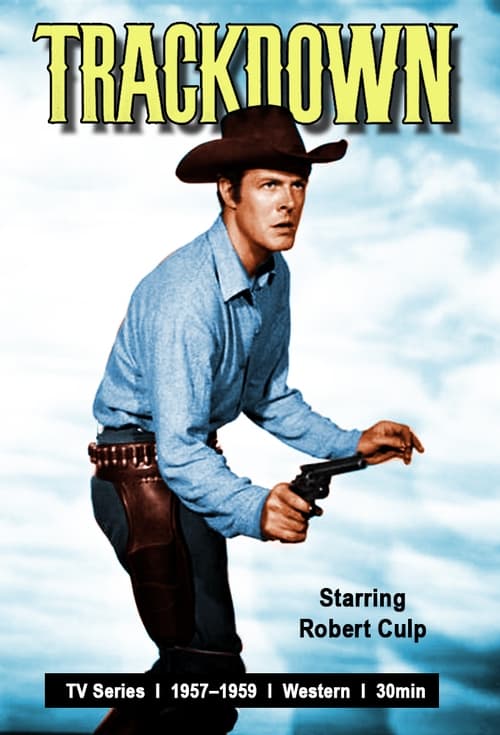
Trackdown is an American Western television series starring Robert Culp that aired on CBS between 1957 and 1959. More than seventy episodes of this series were produced by Dick Powell's Four Star Television and filmed at the Desilu-Culver Studio. The series was itself a spin-off of Powell's anthology series, Dick Powell's Zane Grey Theater.
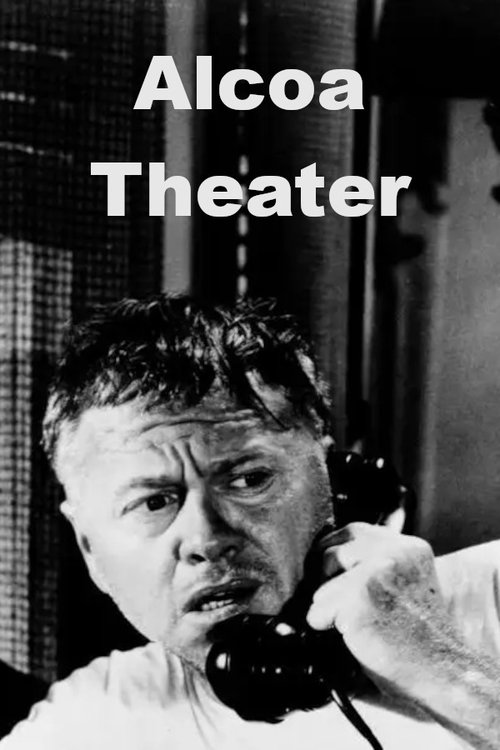
Alcoa Theatre is a half-hour American anthology series telecast on NBC at 9:30 pm on alternate Monday nights from October 7, 1957 to September 16, 1960. The program also aired under the title Turn of Fate, with the stories depicting the difficulties faced by individuals who are suddenly thrust into unexpected and perilous dangers. Alcoa Theatre was syndicated together with Goodyear Theatre as Award Theatre. In 1955, The Alcoa Hour premiered in a one-hour format aired on Sunday nights, but it was reduced to 30 minutes, retitled Alcoa Theatre, and moved to Monday evening in 1957. The show employed an alternating rotating company of actors: David Niven, Robert Ryan, Jane Powell, Jack Lemmon and Charles Boyer. Each appeared in dramatic and light comedic roles through the first season.
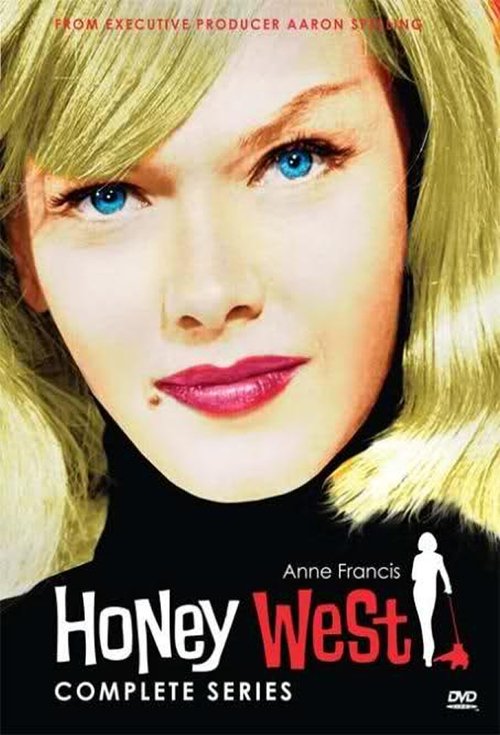
After her father's death, Honey West takes over his high-tech private-detective firm, assisted by rugged Sam Bolt--and her pet ocelot Bruce.
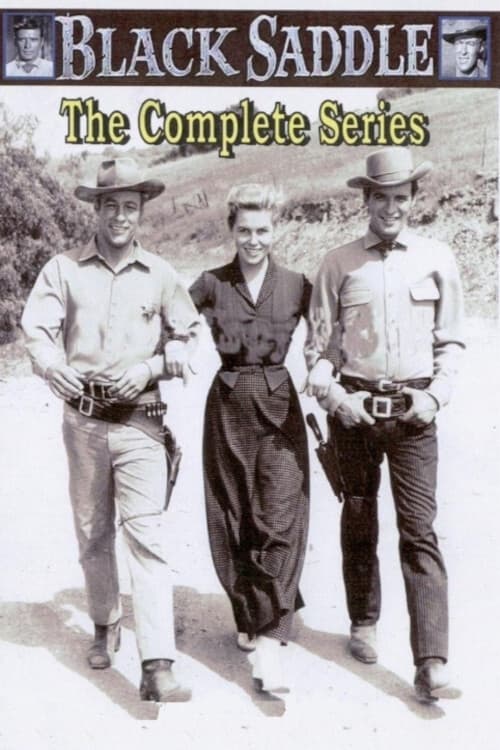
Black Saddle is an American Western television series starring Peter Breck that aired 44 episodes on ABC from January 10, 1959 to May 6, 1960. The half-hour program was produced by Dick Powell's Four Star Television, and the original pilot was an episode of CBS's Dick Powell's Zane Grey Theater, with Chris Alcaide portraying the principal character, Clay Culhane. For syndicated reruns, Black Saddle was combined with three other Western series from the same company, Law of the Plainsman starring Michael Ansara, Johnny Ringo starring Don Durant and Mark Goddard, and the critically acclaimed creation of Sam Peckinpah, The Westerner with Brian Keith, under the umbrella title, The Westerners, with new hosting sequences by Keenan Wynn.
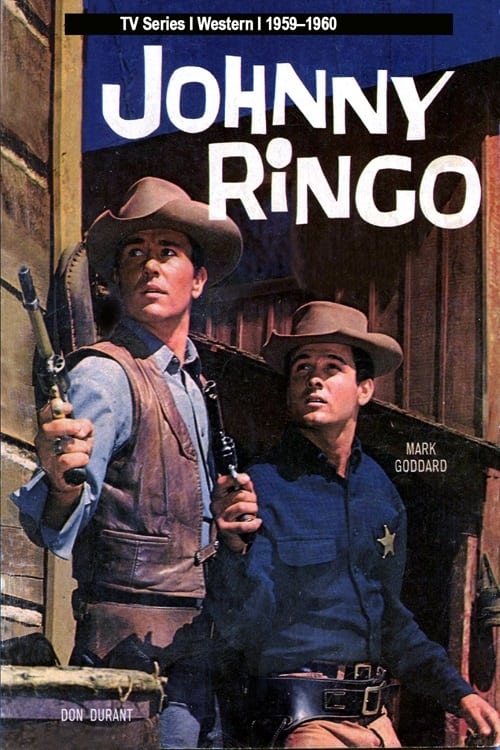
Johnny Ringo is an American Western television series starring Don Durant that aired on CBS from October 1, 1959, until June 30, 1960. It is loosely based on the life of the notorious gunfighter and outlaw Johnny Ringo, also known as John Peters Ringo or John B. Ringgold, who tangled with Wyatt Earp, Doc Holliday, and Buckskin Franklin Leslie.
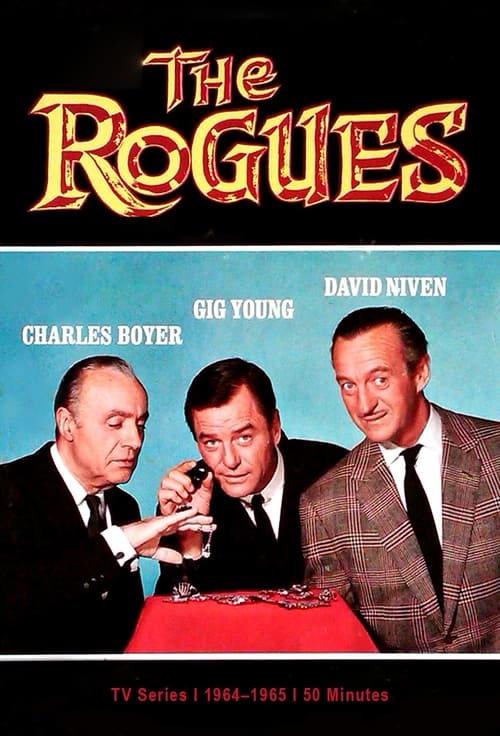
The Rogues is an American television series that appeared on NBC from September 13, 1964, to April 18, 1965, starring David Niven, Charles Boyer, and Gig Young as a related trio of former conmen who could, for the right price, be persuaded to trick a very wealthy and heinously unscrupulous mark. Although it won the 1964 Golden Globe award for Best Television Series, the show was cancelled after one season consisting of thirty episodes.
Cavalcade of America is an anthology drama series that was sponsored by the DuPont Company, although it occasionally presented a musical, such as an adaptation of Show Boat, and condensed biographies of popular composers. It was initially broadcast on radio from 1935 to 1953, and later on television from 1952 to 1957. Originally on CBS, the series pioneered the use of anthology drama for company audio advertising. Cavalcade of America documented historical events using stories of individual courage, initiative and achievement, often with feel-good dramatizations of the human spirit's triumph against all odds. This was consistent with DuPont's overall conservative philosophy and legacy as an American company dating back to 1802. The company's motto, "Maker of better things for better living through chemistry," was read at the beginning of each program, and the dramas emphasized humanitarian progress, particularly improvements in the lives of women, often through technological innovation.
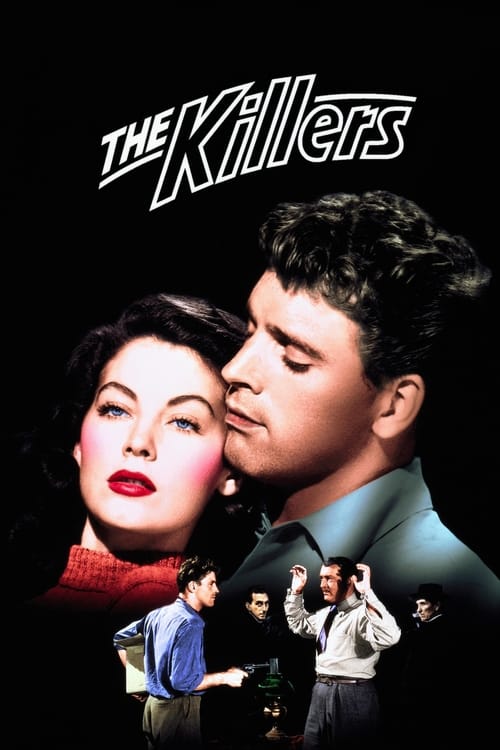
Two hit men walk into a diner asking for a man called "the Swede". When the killers find the Swede, he's expecting them and doesn't put up a fight. Since the Swede had a life insurance policy, an investigator, on a hunch, decides to look into the murder. As the Swede's past is laid bare, it comes to light that he was in love with a beautiful woman who may have lured him into pulling off a bank robbery overseen by another man.
Two beautiful fashion models work undercover as secret agents.
In the gay '90s, cardsharps take over a Mississippi riverboat from a kindly captain. Their first act is to change the showboat into a floating gambling house. A ham actor and his bumbling sidekick try to devise a way to help the captain regain ownership of the vessel.
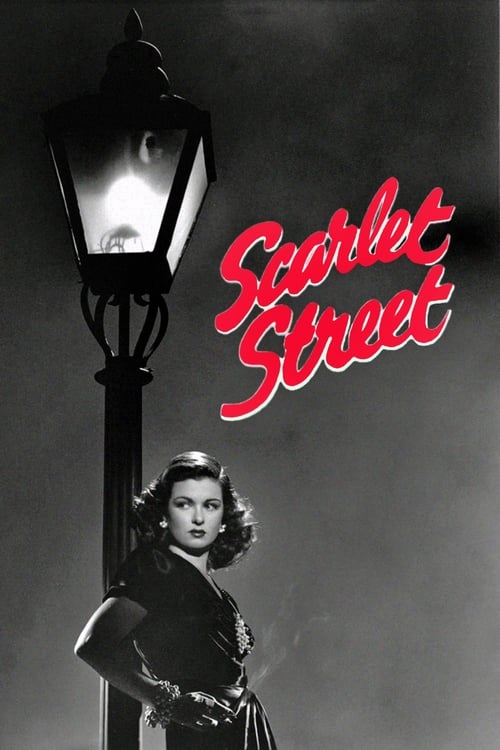
Cashier and part-time starving artist Christopher Cross is absolutely smitten with the beautiful Kitty March. Kitty plays along, but she's really only interested in Johnny, a two-bit crook. When Kitty and Johnny find out that art dealers are interested in Chris's work, they con him into letting Kitty take credit for the paintings. Cross allows it because he is in love with Kitty, but his love will only let her get away with so much.
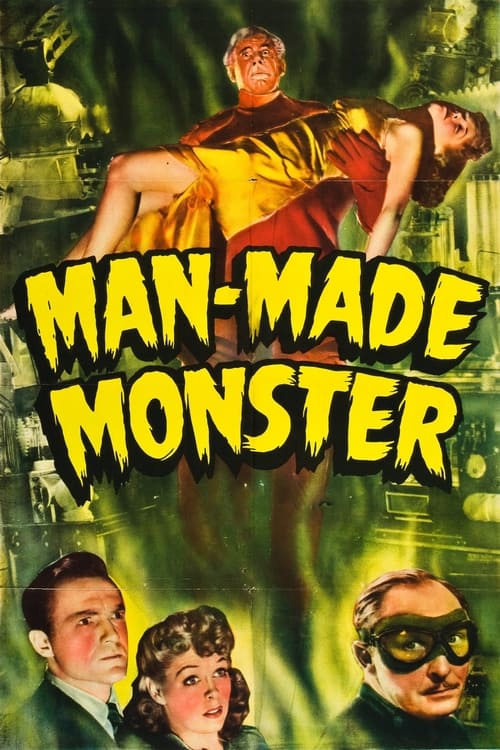
Mad scientist turns a man into an electrically-controlled monster to do his bidding.
Two dumb soda jerks dream of writing radio mysteries. When they try to pitch an idea at a radio station, they end up in the middle of a real murder when the station owner is killed during a broadcast.
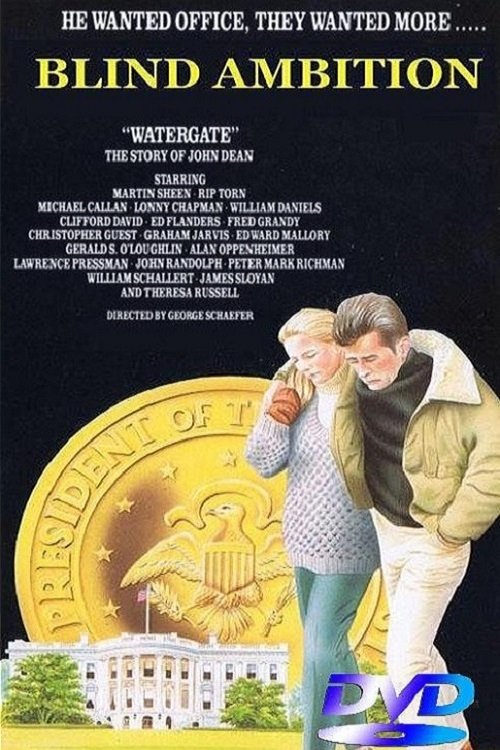
The Watergate crisis as viewed by John Dean and his wife Maureen, based on their personal accounts -- his best-seller, her book on how it affected their marriage -- and distilled into an eight-hour drama with all of the political figures of the day parading by as Dean relates his story to his attorney when his world, based on blind ambition, begins crashing down on him.
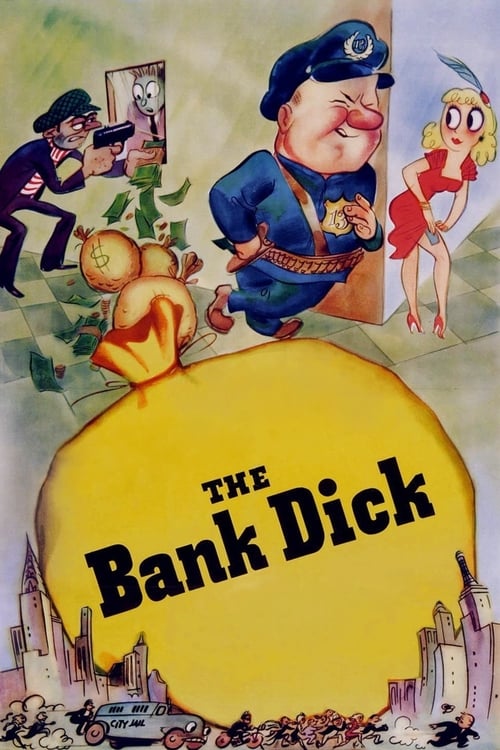
Egbert Sousé becomes an unexpected hero when a bank robber falls over a bench he's occupying. Now considered brave, Egbert is given a job as a bank guard. Soon, he is approached by charlatan J. Frothingham Waterbury about buying shares in a mining company. Egbert persuades teller Og Oggilby to lend him bank money, to be returned when the scheme pays off. Unfortunately, bank inspector Snoopington then makes a surprise appearance.