Brigitte Helm
Acting
Biography
Brigitte Helm (17 March 1906 – 11 June 1996) was a German actress, best-remembered for her dual role as Maria and her double, the Maschinenmensch, in Fritz Lang's 1927 silent film Metropolis. Description above from the Wikipedia article Brigitte Helm, licensed under CC-BY-SA, full list of contributors on Wikipedia.

Known For
No description available.
German Film Award

In a futuristic city sharply divided between the rich and the poor, the son of the city's mastermind meets a prophet who predicts the coming of a savior to mediate their differences.
Metropolis

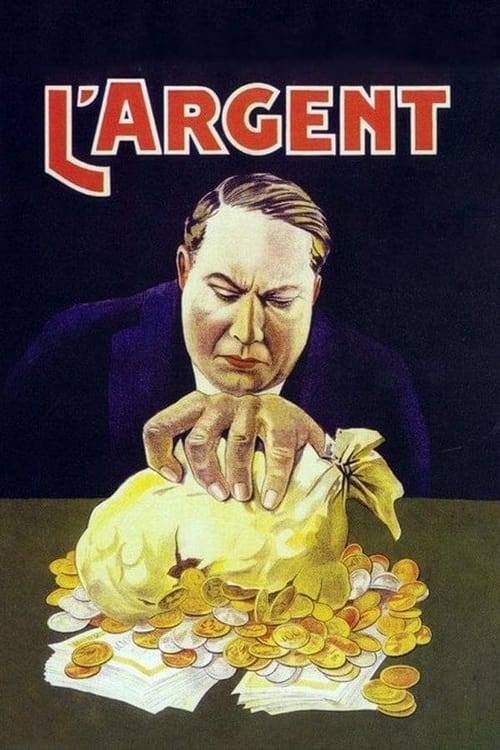
Adapted from the novel L'Argent by Émile Zola, the film portrays the world of banking and the stock market in Paris in the 1920s.
L'Argent

In the Crimea, the Reds and the Whites aren't done fighting, and Jeanne discovers that the man she loves is a Bolshevik (when he kills her father). Penniless, she returns to Paris where she works for her uncle. Soon after, her lover Andreas is in France to organize the sailors in Toulon. So also is a thief, traitor, and libertine, Khalibiev, who wants to seduce Jeanne. His schemes, Jeanne and Andreas's naivete, and a lost diamond bring the lovers to the brink of tragedy.
The Love of Jeanne Ney

Film journalist and critic Rüdiger Suchsland examines German cinema from 1933, when the Nazis came into power, until 1945, when the Third Reich collapsed. (A sequel to From Caligari to Hitler, 2015.)
Hitler's Hollywood

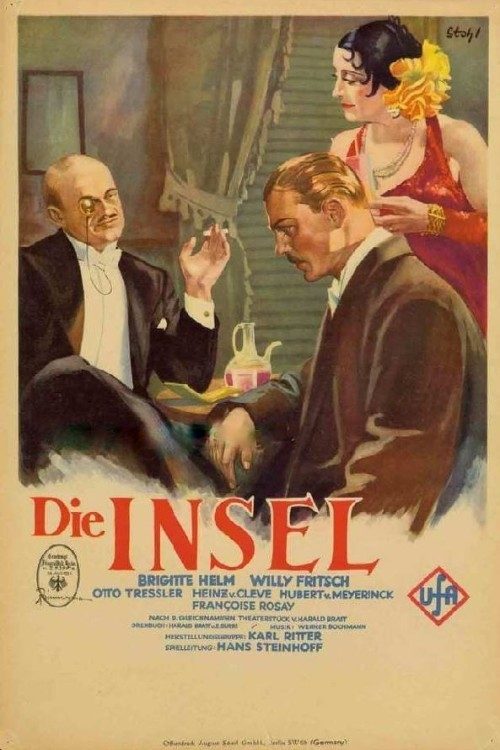
A case of espionage in high society: To save the reputation of his county, a diplomat voluntarily takes his own life.
The Island

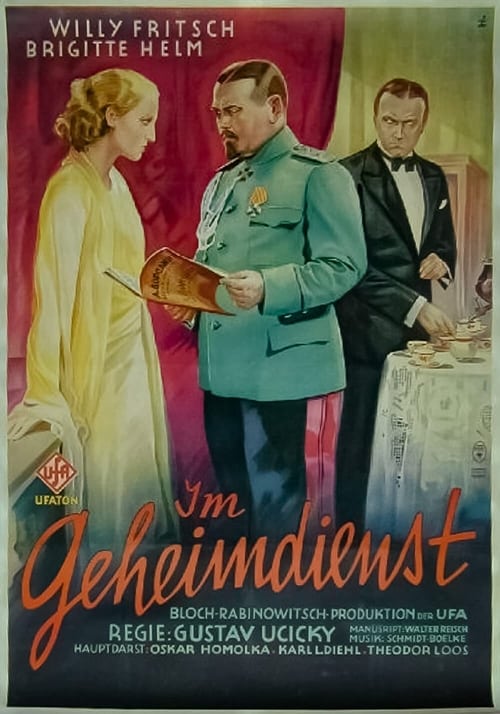
During WWI a German agent receives an order to find out when the Russian army will carry out its expected attack against the German lines.
In the Employ of the Secret Service

Hanns Heinz Ewers' grim science-fiction novel Alraune has already been filmed twice when this version was assembled in 1928. In another of his "mad doctor" roles, Paul Wegener plays Professor Brinken, sociopathic scientist who combines the genes of an executed murderer with those of a prostitute. The result is a beautiful young woman named Alraune (Brigitte Helm), who is incapable of feeling any real emotions -- least of all guilt or regret. Upon attaining adulthood, Alraune sets about to seduce and destroy every male who crosses her path. Ultimately, Professor Brinken is hoist on his own petard when he falls hopelessly in love with Alraune himself. Alraune was remade in 1930, with Brigitte Helm repeating her role, and again in 1951, with Hildegarde Knef as the "heroine" and Erich von Stroheim as her misguided mentor.
A Daughter Of Destiny

As a gang of classy jewel thieves hop from one European country to another, an engineer rescues a woman from their clutches.
Die schönen Tage von Aranjuez

The ship-owner Herr Reeder Roberts organizes a world trip on his luxury liner "Yoshiwara". Aboard are millionaires and famous artists, but also criminals. The manager of the ship-owner, Stefan Martini, has been murdered shortly before the departure in a mysterious way. Several persons are suspected and these are, precisely, the passengers of the "Yoshiwara".
Yacht of the Seven Sins

Neglected by her husband, an ambitious lawyer, Irene seeks variety in Berlin's nightlife-- An evening of dancing, dolls, cocaine and immoral passion. Irene takes the "devious path" as she seeks to make her husband jealous.
The Devious Path
Baron Franz von Naydek is constantly being mistaken for Prince Woronzeff, since both look identical. One day, Woronzeff decides that this similarity might come in handy. Since he is very ill and can no longer deal with the intrigues of his relatives, he begs his friend Naydek to play the role of prince for a while. Naydek agrees and everything seems to be going splendidly. Woronzeff’s ex-nag Diane sees through the game, however, but says nothing, since she’s fallen for Naydek. He, in turn, has the hots for Nadja, Woronzeff’s daughter, long thought lost and who has now reappeared. The prince’s relatives fear for their inheritance and so refuse to acknowledge Nadja’s existence. In the interim, Woronzeff dies. Now Naydek is obliged to play the role for a much longer time than he bargained for.
Prince Woronzeff

Antinea, the Queen of Atlantis, rules her secret kingdom hidden beneath the Sahara Desert. One day two lost explorers stumble into her kingdom, and soon realize that they haven't really been saved-- Antinea has a habit of taking men as lovers, then when she's done with them, she kills them and keeps them mummified.
The Mistress of Atlantis

Focuses on a love triangle between three German athletes competing at the 1932 Olympic Games in Los Angeles. It was the last film Dupont made in Germany, before escaping into exile following the rise to power of the Nazis.
Der Läufer von Marathon

In a Hungarian gypsy encampment, carefree Sandor lives with his beautiful sweetheart Yutka. Into their lives rides a blonde countess, with whom Sandor becomes infatuated. Yutka soon flees from her faithless lover. Sandor roams the country, searching for his lost love, but finds her too late. she now wears furs and has her own aristocratic love. Sandor returns heartbroken to his Romany encampment.
The Blue Danube

A scientist, Professor Jakob ten Brinken, interested in the laws of heredity, impregnates a prostitute in a laboratory with the semen of a hanged murderer. The prostitute conceives a female child who has no concept of love, whom the professor adopts. The girl, Alraune, suffers from obsessive sexuality and perverse relationships throughout her life. She learns of her unnatural origins and she avenges herself against the professor.
Alraune

Two young officers, Saint-Avit and Morhange, get lost in the desert and find themselves prisoners of the beautiful Antinéa, queen of the city of Atlantis. Saint-Avit, blinded by his love for her, obeys her when she orders him to kill his comrade... With L’Atlantide, Pabst offers a psychoanalytic reading of Benoit’s novel, with a dominant female figure who enslaves her lovers before destroying them. The film’s fantasy dimension is disturbing, L’Atlantide bathes in a humid nightmare atmosphere, between the desperate search for a missing friend and the apparitions of an underworld lost in the desert. A long, discursive flashback suggests the Parisian origins of Antinéa, born from the marriage between Clémentine, a pretty, light-thighed French Cancan dancer, and an Arab prince seduced during a theatrical performance. But again, it's impossible to know whether these are the ramblings of an old alcoholic or the strange truth.
Queen of Atlantis

In this mythical fantasy, the evil queen of Atlantis lives in a magnificent palace, the halls of which are filled with the mummified remains of former lovers.
The Mistress of Atlantis

Mother of a young boy, Jackie, Véra Latour asks her husband, Pierre, a famous aviator, to stop performing stunts where he risks death for pleasure. Pierre reluctantly agrees, and it is his friend Bob Deschamps who wins a trophy during a meeting. However, Vera, who never wanted to experience her first flight with her husband, allows Bob to take her up in his plane. When Pierre finds out, he immediately sets off with his loyal mechanic Robert Nourry on a long flight across the Atlantic. After hours of anxiety, Vera learns that her husband has successfully reached New York. Upon his return, she welcomes him as a victor.
Gloria

This silent-screen classic, like many others produced near the end of the silent era, was both a theatrical extravaganza boasting an original orchestral score and an item which languished in obscurity for many years. When Carlo Piccardi took what was left of the score by Maurice Jaubert and re-created it, the existing footage was restored and paired with a new orchestral performance which was shown in Paris in 1988. The film's story concerns the travails of a woman who has been living quite comfortably as the mistress of a colonel in the Tsar's army in Russia. However, she eventually encounters a penniless young lieutenant and falls madly in love with him, as he does with her. Despite her best intentions of remaining with the colonel, and his intention to avoid trouble with his fellow soldiers, they cannot forswear this relationship, and tragedy is the inevitable result. The title refers to a moving incident in the story, and translates as "the wonderful lie of Nina Petrovna."