Nikita Khrushchev
Acting
Biography
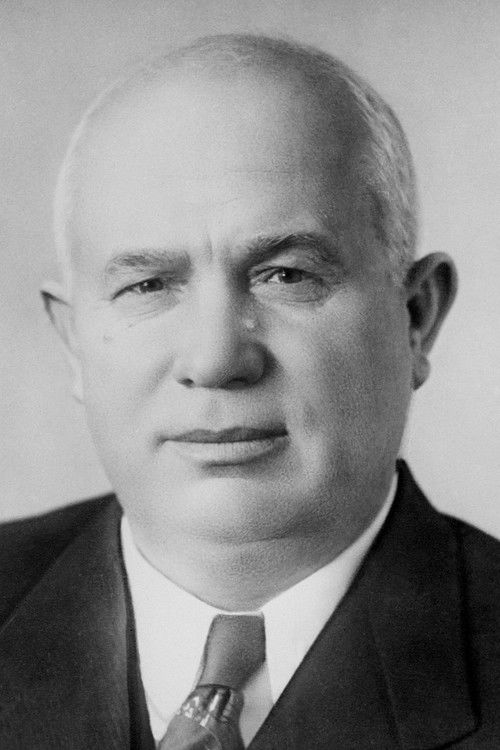
Nikita Sergeyevich Khrushchev (15 April [O.S. 3 April] 1894 – 11 September 1971) led the Soviet Union as the First Secretary of the Communist Party of the Soviet Union from 1953 to 1964 and as chairman of the country's Council of Ministers from 1958 to 1964. During his rule, Khrushchev stunned the communist world with his denunciation of Stalin's crimes and began de-Stalinization. He sponsored the early Soviet space program, and enactment of relatively liberal reforms in domestic policy. After some false starts, and a narrowly avoided nuclear war over Cuba, he conducted successful negotiations with the United States to reduce Cold War tensions. His proclivity toward recklessness led the Kremlin leadership to strip him of power, replacing him with Leonid Brezhnev as First Secretary and Alexei Kosygin as Premier.
Known For

TV's most-watched history series brings to life the compelling stories from our past that inform our understanding of the world today.
American Experience

Oliver Stone's re-examination of under-reported events in American history.
Oliver Stone's Untold History of the United States

From executive producers Kevin Spacey and Dana Brunetti, CNN Original Series "Race for the White House" captures the drama of how a high-stakes presidential election can turn on a single issue and so much more.
Race for the White House

Blending in-depth interviews, rare archival footage, and cinematic recreations, this docuseries on the lives of America's most iconic First Ladies is a bold revision of each woman's traditional portrayal, revealing how they were impacted during their time in the White House, and how their achievements fundamentally shaped American and global history.
First Ladies

No description available.
Legends of Cinema

Historic footage and leading voices of the era examine the "Bobby Phenomenon" of the 1960s and the legacy of the man who helped redefine the country.
Bobby Kennedy for President

Communism spread to all of the continents of the word, lasting through four generations and over seven decades. Hundreds of millions of men and women were affected by this political system, one of the most unjust and bloodiest in history. Using newly discovered propaganda films and archival photos, these four episodes explore the mysteries of this totalitarian political machine that lured its share of important followers into the fold. Known as the red church, communism seduced its ardent followers like some earthly religion.
Faith of the Century: A History of Communism

A visual montage portrait of our contemporary world dominated by globalized technology and violence.
Naqoyqatsi

"Trinity and Beyond" is an unsettling yet visually fascinating documentary presenting the history of nuclear weapons development and testing between 1945-1963. Narrated by William Shatner and featuring an original score performed by the Moscow Symphony Orchestra, this award-winning documentary reveals previously unreleased and classified government footage from several countries.
Trinity and Beyond: The Atomic Bomb Movie

No description available.
Код доступа

Shedding new light on a geopolitical hot spot, the film — written and produced by John Maggio and narrated by Korean-American actor John Cho — confronts the myth of the “Forgotten War,” documenting the post-1953 conflict and global consequences.
Korea: The Never-Ending War

Seven directors each dramatize one of the seven deadly sins in a short film. In "Anger," a domestic argument over a fly in the Sunday soup escalates into nuclear war. In "Sloth," a movie star would rather pay someone to tie his shoe than bend over to do it himself, and he can't be bothered to accept a starlet's sexual favors. In "Gluttony," a peasant family on its way to the funeral of a relative who died from indigestion stops regularly to eat and drink en route, arriving in time to eat some more. In "Greed," a high-class prostitute refunds the price of a cadet's lottery ticket. In "Pride," an unfaithful wife finds reason to reform. And so on through lust and envy.
The Seven Deadly Sins

Using archival footage, cabinet conversation recordings, and an interview of the 85-year-old Robert McNamara, The Fog of War depicts his life, from working as a WWII whiz-kid military officer, to being the Ford Motor Company's president, to managing the Vietnam War as defense secretary for presidents Kennedy and Johnson.
The Fog of War

No description available.
Great Literary Tour

In the 1950s, a small group of artists monopolized the attention of the cameras and the public. Frank Sinatra, Dean Martin, Sammy Davis Jr., Joey Bishop and Peter Lawford together form the "rat pack": they sing the most popular hits of the moment, star in the most profitable Hollywood films and are already making a splash on television . This documentary, produced by a recognized specialist in the history of Hollywood, recounts the exceptional destiny of this informal group which flirted with the greats of this world, notably through Sinatra, personal friend of American President Kennedy.
Rat Pack

Swedish Prime Minister Olof Palme was openly shot to death on a February evening 1986 on the streets of Stockholm. In one night, the country of Sweden was transfigured. “Palme” is about his life, his time, and about the Sweden he had created. About a man who altered history.
Palme

No description available.
Загадки века с Сергеем Медведевым
illustrates how directors pushed boundaries and altered the art of filmmaking during the turbulent, swinging 1960s. Narrated by Woody Harrelson, "Reel Radicals" features clips from such seminal films as Arthur Penn's "Bonnie and Clyde" (1967); Mike Nichols' "The Graduate" (1967); Dennis Hopper's "Easy Rider" (1969); John Frankenheimer's "The Manchurian Candidate" (1962); Stanley Kubrick's "Dr. Strangelove" (1964) and "2001: A Space Odyssey" (1968); John Schlesinger's "Midnight Cowboy" (1969); Richard Brooks' "Elmer Gantry" (1960) and "In Cold Blood" (1967); and Norman Jewison's "In the Heat of the Night" (1967) and "The Thomas Crown Affair" (1968). Frankenheimer, Jewison, Hopper, Schlesinger, Penn, Buck Henry, Paul Mazursky, Roger Corman and Arthur Hiller are among the filmmakers who discuss the decade.
Reel Radicals: The Sixties Revolution in Film

In-depth documentary mini-series presenting the rise, rule and fall of communist Romanian dictator Nicolae Ceaușescu and the way he shaped both Romanian and international history.
Comrade: The Making, Glory and Unmaking of a Dictator

Jazz and decolonization are intertwined in a powerful narrative that recounts one of the tensest episodes of the Cold War.