Editing
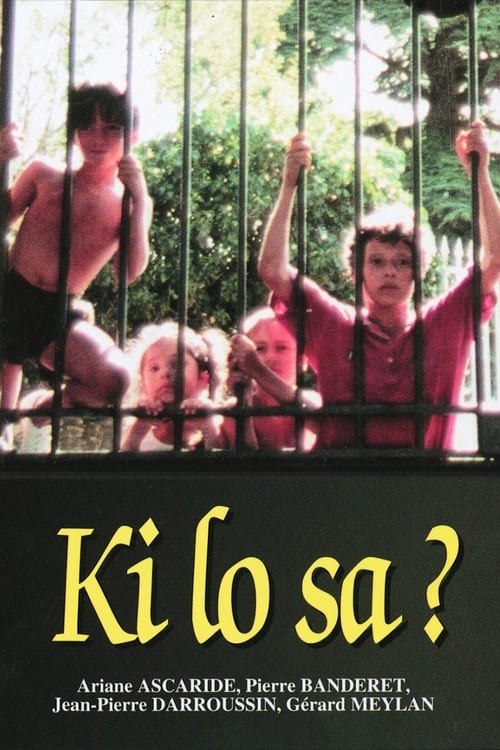
A group of children from the same neighborhood meet a few years later. When the day comes, they meet again and take stock of their lives.
By a little bay near Marseille lies a picturesque villa owned by an old man. His three children have gathered by his side for his last days. It’s time for them to weigh up what they have inherited of their father’s ideals and the community spirit he created in this magical place. The arrival, at a nearby cove, of a group of boat people will throw these moments of reflection into turmoil.
This gripping historical drama recounts the story of Armenian-born Missak Manouchian, a woodworker and political activist who led an immigrant laborer division of the Parisian Resistance on 30 operations against the Nazis in 1943. The Nazis branded the group an Army of Crime, an anti-immigrant propaganda stunt that backfired as the team's members became martyrs for the Resistance.
Jeannette is a single mother living in a working-class community in Marseilles; she tries to support herself and her two kids on her salary as a check-out girl at a supermarket and lives in an apartment complex where everyone is thrown into close proximity with everyone else. Marius is working as a security guard at a cement factory that has gone out of business; he's also squatting in the building, since the plant is soon to be demolished and he'll be needing his money later on. One day, Jeannette happens by the factory, and spotting several cans of paint, tries to take two of them home with her. Marius spots her and tries to chase her away, while she rails at him with curses against the capitalist system. The next day, an apologetic Marius appears at her doorstep, cans of paint in hand; the two soon become friendly, and a romance begins to bloom, though it quickly becomes obvious that Jeannette's romance novel fantasies are a bit off the mark from what Marius has in mind.
A union pensioner and his wife are robbed, but find that merely getting the assailants brought to justice is not enough for their consciences.
No description available.
Quiet 16-year-old Louis, the high school headmaster’s son, has never been in trouble. His best friend, 18-year-old Greg, however, is his polar opposite: provocative, angry, violent, he has been kicked out of school for physically threatening young English teacher Camille. When Greg asks Louis to help him take revenge on Camille, Louis accepts, fascinated...
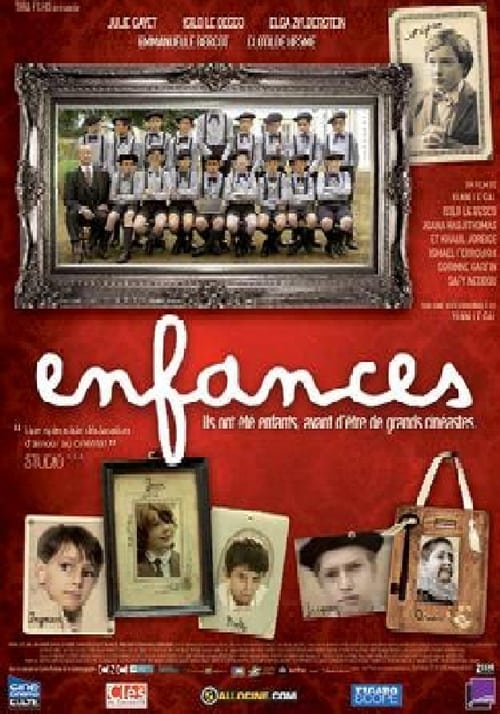
Six stories, six films that follow on from each other; this is a glance at the childhood of renowned directors whose style has marked the history of film. A group of young directors focus their cameras on the story of these filmmakers, these childhood stories that sometimes shape an entire life and thus shed light on their cinematic works. The stories overlap to merge into one film about childhood, filled with emotional wounds, frustrations and encounters.
Daniel leaves prison. He returns to Marseilles where Mathilda, his daughter, has just given birth. Nicolas, her spouse, a self-employed driver, is exhausted while Mathilda is a sales assistant on a trial basis. But, one night, Nicolas is assaulted by taxi drivers determined to reduce unfair competition.
Caught red-handed: Yann, Lena and Céline get a harsh punishment for stealing. The three have to spend four months in prison. They have to stay away from Paris for the next two years. Yann's aunt gives them shelter. Together, the trio moves into a house in the country. Now all anyone needs is a job. Céline is prickly: "I've enjoyed some jobs. But never for more than two days." Yann soon loses his optimism, too...
Maria, who's not as young as she used to be and who helps people older than her, is living from hand to mouth. She can't quite accept her precarious situation and steals a few euros here and there from all those lovely people she looks after with such devotion, and who adore her for it… But after an accusation of abuse of a vulnerable person, Maria winds up in police custody.
Mali, 1960. The youth of Bamako dance the twist to rock and roll music newly imported from the West and dream of political renewal. Samba, a young socialist, falls for spirited Lara during one of his missions to the bush. To escape her forced marriage, she secretly flees with him to the city. But Lara’s husband won’t let them be and the Revolution soon brings painful disillusions as they dream of a future together.
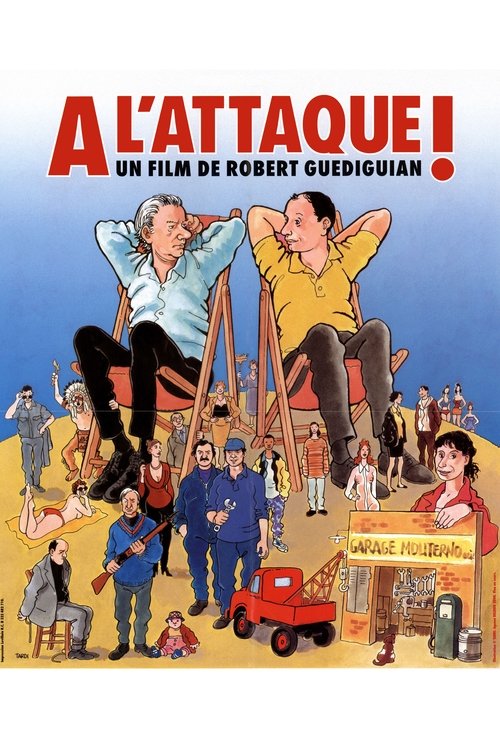
Two scriptwriter friends with opposing personalities fuss and fight as they cobble together a script for a modern political film. Their arguments seem endless, they constantly stray from the plot, but the story slowly takes shape around garage mechanics at Moliterno & co. who fight a multinational in order to save their business.
On April 2, 1995, the television channel Canal+ censored the documentary "Pas vu à la télé" (Not Seen on TV), directed by Pierre Carles, which had been commissioned a few weeks earlier by the program director, Alain de Greef. "Pas vu à la télé" was slated to be featured in Canal+'s "TV Day" segment, under the heading "Television, Power, Morality." Carles recounted this censorship in the feature film "Pas vu pas pris" (Not Seen, Not Caught), released in theaters on November 18, 1998. It drew over 160,000 viewers. Eighteen years later, "Pas vu à la télé" remains unaired on French television. As for "Pas vu, pas pris," it has still not been broadcast on French television. However, it has been shown on television in Belgium, Quebec, and Switzerland. Since then, nine billionaires now control more than 80% of the media in France, while eleven of them account for 57% of the television audience.
In Marseille, Rosa, 60, dedicated her life to family and politics with the same sense of duty. Everyone considers her unwavering, until the day she falls in love with Henri. For the first time, Rosa is afraid to commit. Between the pressure of his family, politics and a desire to indulge in her feelings, the conflict is difficult to sustain.
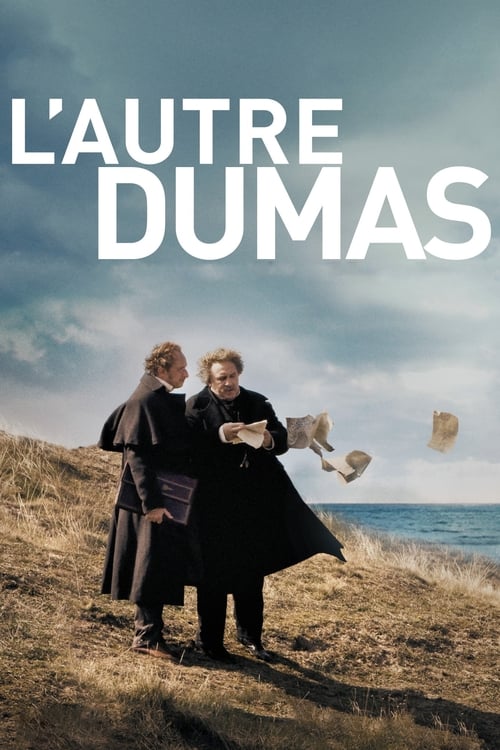
Alexandre Dumas, at the height of his career, takes Auguste Maquet, his chief literary collaborator or 'ghost writer' ten years his junior, to meet a young unknown admirer, Charlotte Desrives. The two men are at the summit of their artistic collaboration for they have just published "The Count of Monte Christo", "Queen Margot" and "The Three Musketeers". If it's Maquet who writes the majority of the texts, both the honours and fame go to Dumas.
Although barely 30, Claire believes she is showing the first symptoms of Alzheimer's disease, a condition from which her mother has recently died. Her sister, Nathalie, is certain that her memory loss, caused by a lightning strike, is temporary. In the clinic where she is being treated, Claire is attracted to Philippe, a man who is still traumatized after a car accident in which his wife and child were both killed. In spite of their personal tragedies, Claire and Philippe fall in love. When Philippe recovers, Claire moves into his home. Then Claire's condition takes a turn for the worse.
Elsa Valentin is in the middle of a brutal divorce and custody battle when she is struck by the appearance of a pretty young girl named Lola (Héloïse Cunin). Her interest in the child grows to an obsession, and she finds any possible excuse to be near her. When Lola's mother, Claire, grows unnerved by all this, Elsa admits she believes Lola is her daughter.
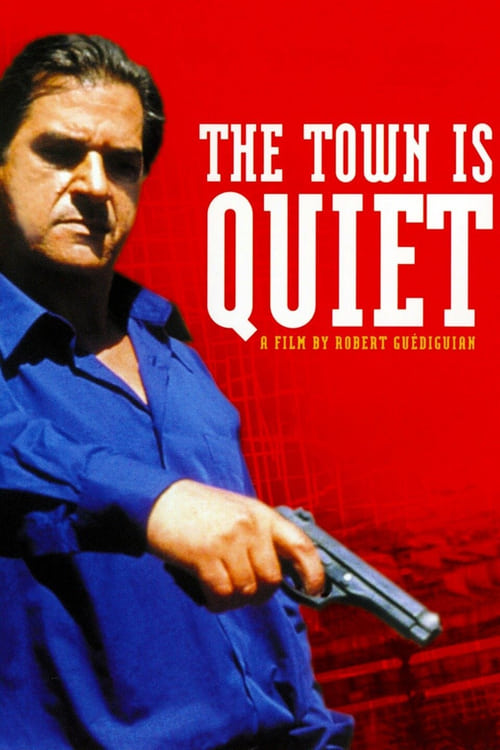
A dark tale of working-class life in Marseilles, a city in crisis. Interesting characters include a hard-bitten but compassionate fish market worker with a drug addicted daughter and a moody bartender with a shocking secret life.