Sound
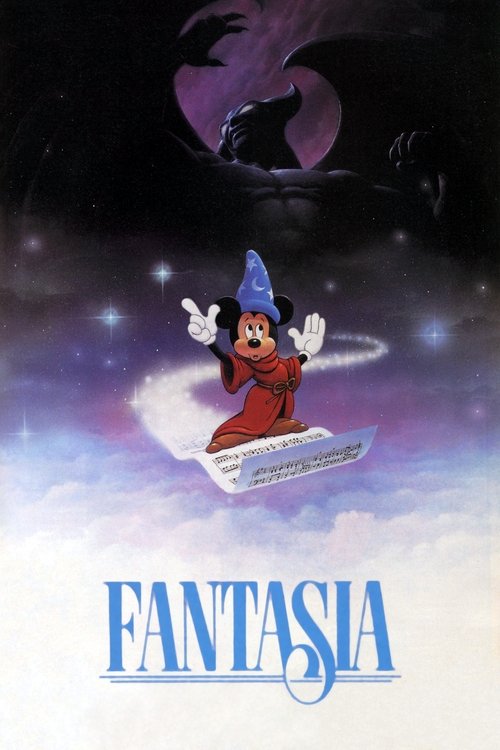
Walt Disney's timeless masterpiece is an extravaganza of sight and sound! See the music come to life, hear the pictures burst into song and experience the excitement that is Fantasia over and over again.
The last film made by Alexander Alexeieff and Claire Parker. Trois thèmes was made on the pinscreen, and first shown in Milan, Italy, in March 1980. It was based on three works by Mussorgsky.
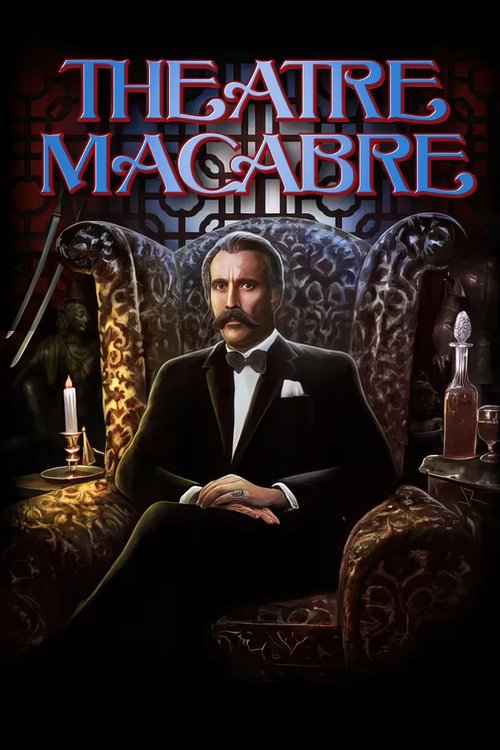
Horror legend Christopher Lee hosts this anthology in the tradition of Alfred Hitchcock Presents, each half-hour episode adapting a story from a classic author, with tales by Edgar Allen Poe, Fyodor Dostoevsky, Ambrose Bierce, Robert Louis Stevenson, and Oscar Wilde.
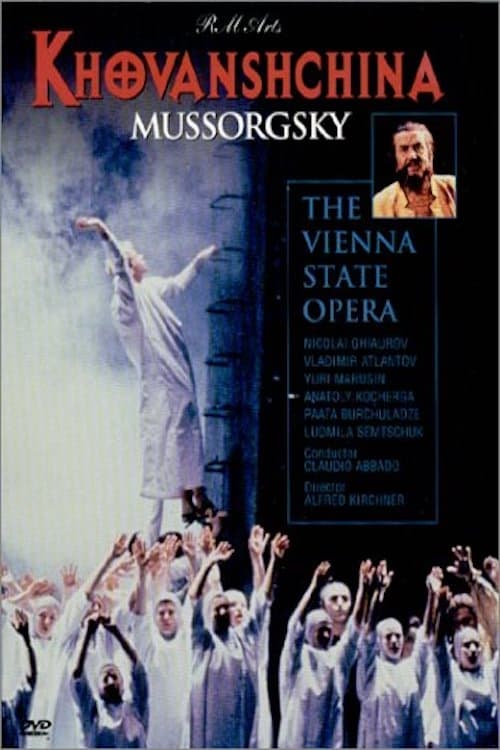
The last and arguably finest opera of Modest Mussorgsky is captured in one of its most powerful interpretations in this 1989 recording from the Vienna State Opera, conducted by Claudio Abbado. A moody opera that is thematically broad at times and intimately personal in others, "Khovanshchina" tells the story of the 17th-century clash between Russian conservatives and Peter the Great's reformists. Among the singers is renowned basso Nicolai Ghiaurov and Paata Burchuladze, as well as Anatoly Kocherga, Ludmila Semtchuk, and Heinz Zednik.
Mauro Bigonzetti's ballet based on Franz Kafka, performed by the National Theatre Ballet. Choreographer Mauro Bigonzetti, fascinated by the irresistible language of Prague native Franz Kafka and the enduring relevance of his novel "The Trial," was drawn into the dark world of Josef K and created a modern dance production depicting the world of the protagonist and his hopeless struggle with a cold and heartless modern society. Bigonzatti used music by a number of composers from different historical periods, from D. Buxtehude to H. Górecki, C. Monteverdi, and M. P. Mussorgsky. This selection is remarkably balanced and surprisingly contemporary.
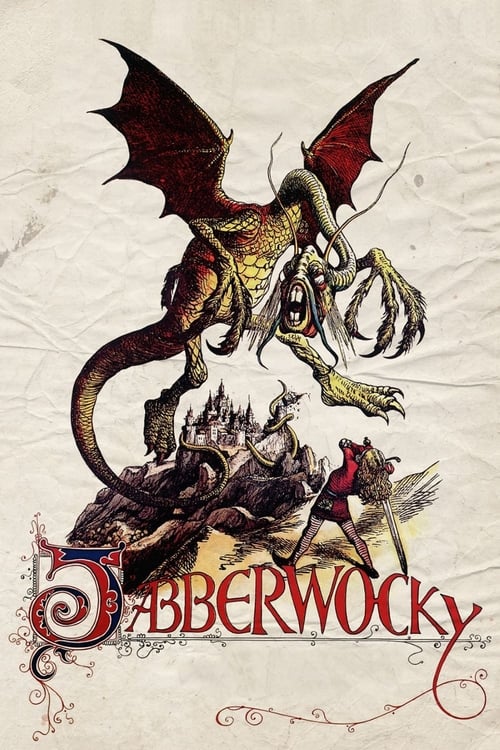
After the death of his father, young Dennis Cooper goes to town where he has to pass several adventures. The town and the whole kingdom is threatened by a terrible monster called 'Jabberwocky'. Will Dennis make his fortune? Is anyone brave enough to defeat the monster?
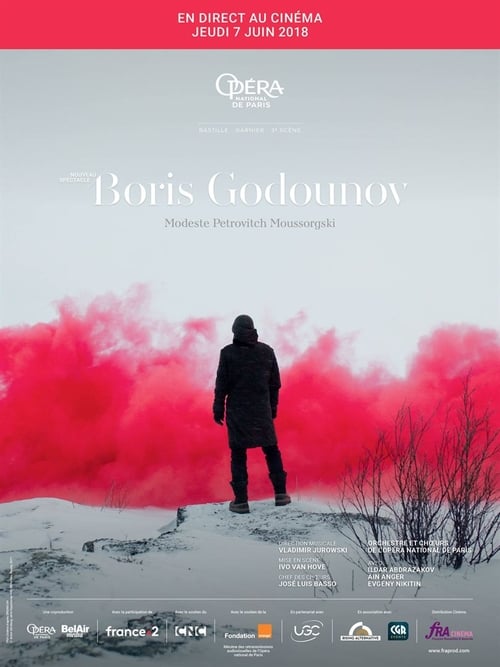
There are elements of Macbeth in this political fable, in which the ghost of the child that Boris has had killed in order to seize the throne appears as an impostor. Adapting Pushkin's epic poem, Mussorgsky composed a meditation on the solitude of power, a populist drama in which the real protagonist is the Russian people with its burden of eternal suffering. Ivo Van Hove is no stranger to grand political frescos. This is his first production for the Paris Opera.
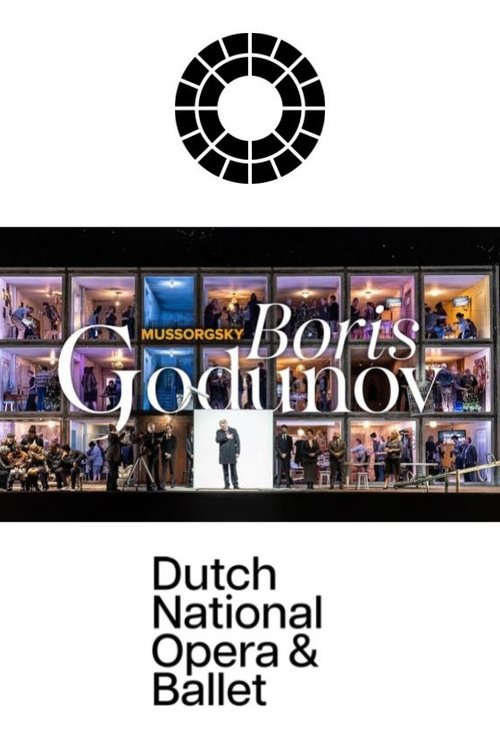
Nobleman Boris Godunov accumulates power in Russia, first as regent, then as tsar. But the ghosts of the past catch up with him and he ends up losing not only his power but his sanity. Russia sinks ever deeper into a mire of corruption, intrigue and coups. In his grand choral opera, Modest Mussorgsky deals with a theme that offers poignant parallels to today’s world: the extremes to which one man’s thirst for power can lead. The director Kirill Serebrennikov incorporates his own experiences in Russia to present his take on an opera about political turmoil and its consequences. Serebrennikov’s production focuses on the effect on the people of high-stakes political scheming. Conductor Vasily Petrenko makes his Amsterdam debut leading the Royal Concertgebouw Orchestra. A top-flight cast is led bass-baritone Tomasz Konieczny, celebrated for his ability to get into the skin of his characters both vocally and dramatically, singing the title role for the first time.
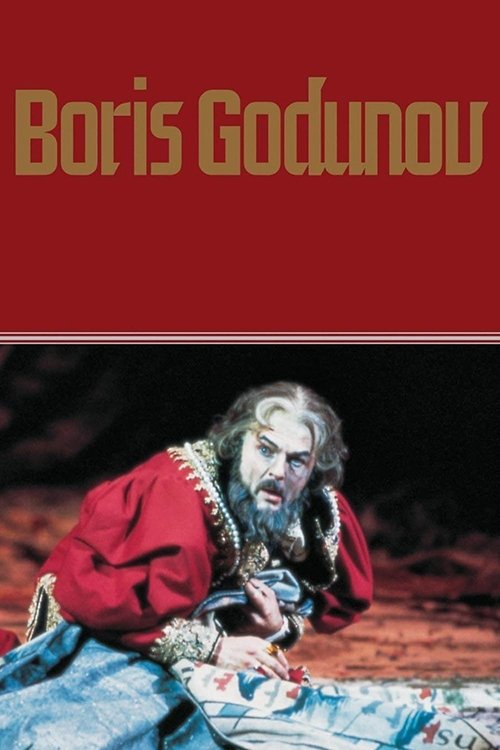
This is the Andrei Tarkovsky production of the famous Pushkin/Mussorgsky opera, performed in 1990. Modest Mussorgsky's opera in prologue and four acts is performed by the Kirov Opera with performances from Olga Borodina, Alexei Steblianko and Sergei Leiferkust. Boris Godunov has obtained the throne of Russia by murdering the rightful heir Dmitry. An old monk, Pimen, witnessed this, and convinces his apprentice Grigory to avenge Dmitry's death. In the following years Grigory poses as Dmitry, raising an army against Boris, who is now convinced that he is being punished for the murder. Filmed in Russia during the collapse of the Soviet Union, this particular production of Mussorgsky's 1872 tale of political upheaval is considered a highly unique and historical moment in opera. Robert Lloyd stars in the title role of Boris Godunov.
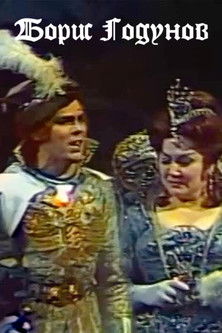
Universally acknowledged as the greatest of all Russian operas, this is a faithful and often dazzling production of the standard Rimsky-Korsakov version taped live at the Bolshoi in 1978. As Boris, the renowned Yevgeni Neterenko is as justifiably identified with the role in his generation as Chaliapin, London and Kipness were in theirs. Nesterenko gives a remarkably vivid, human portrait of the tormented half-crazed Tsar, and is supported by a first rate ensemble in a richly designed and costumed production that represents opera at its grandest. Particularly outstanding are Vladislav Piavko as the Pretender, Valery Yaroslavtsev as Pimen, Irina Arkhipova as Marina (a role generally associated with Vishnevskaya), Galina Kalinina as Xenia, and Alexsei Maslennikov as the Simpleton.
The drama sheds light on the dark side of Japan connected to the political and financial world by depicting the vicissitudes of women.
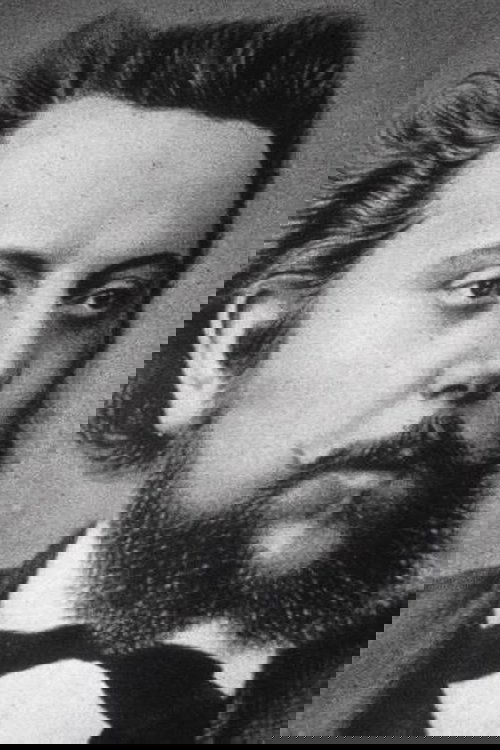
On a gloomy March 1881, an old, sick man was dying in the Nikolaevsky military land hospital in St. Petersburg. Delirium tremens had done its dirty work: there was no hope for recovery. And this “old man” had just turned 42 years old, and it was the great Russian composer Modest Petrovich Mussorgsky. Who knows what visions, what memories swarmed in his fevered imagination in rare moments of enlightenment?
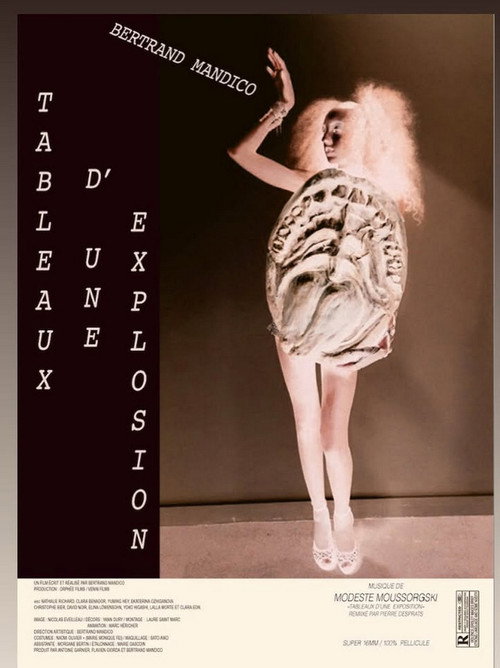
In a post-apocalyptic world, a love triangle involves three models under the spell of a demiurge fashion designer. TABLEAUX D'UNE EXPLOSION is a collision, a reinterpretation of the Petrushka tale set to Mussorgsky's music, 'Pictures at an Exhibition'.
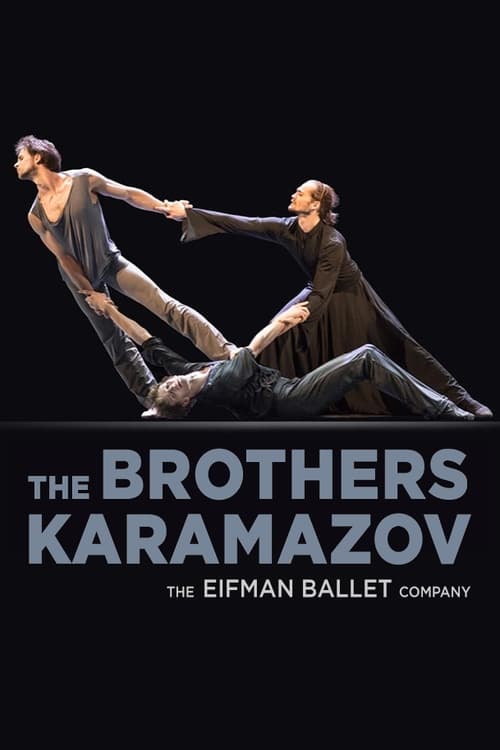
The Brothers Karamazov novel is the epitome of Fyodor Dostoevsky’s creative work, the acme of the philosophic investigation carried out by this colossal and restless mind throughout his life. World renowned choreographer Boris Eifman offers a remarkable vision of the core ideas within the novel, expanding upon them though body language as a way of exploring the origins of the moral devastation of the Karamazovs; creating through choreographic art an equivalent of what Dostoyevsky investigated so masterfully in his book, the excruciating burden of destructive passions and evil heredity. This ballet production is also known and performed as Beyond Sin.
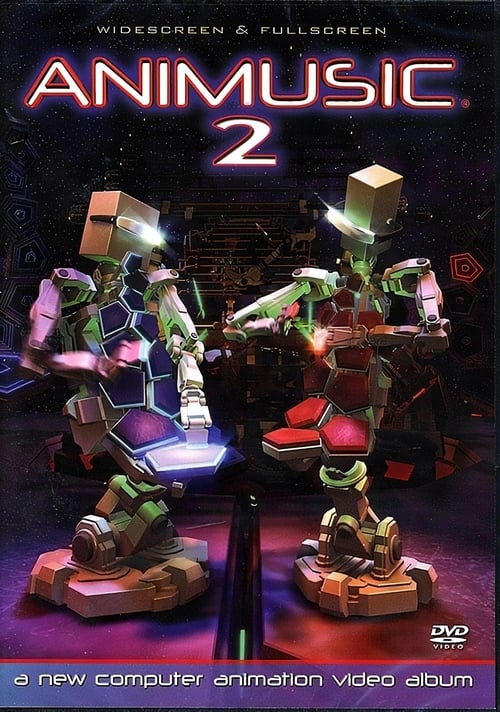
Animusic draws you into its reality like no place you have ever been. You encounter new dimensions of sight and sound as you experience seven unique visual concerts
Based on Mussorgsky's Pictures at an Exhibition. This film used two pinscreens. In front of the main pinscreen, they installed a second, smaller one. This second pinscreen could be rotated thus giving more of an illusion of three-dimensionality
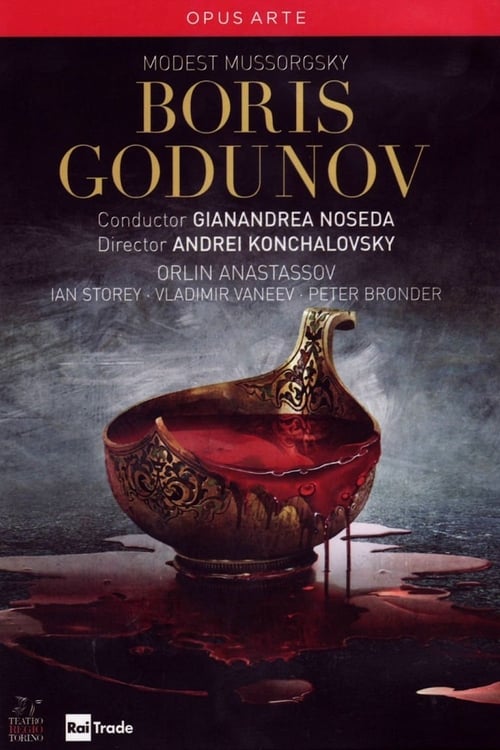
A one-off production of Boris Godunov was staged by Andrei Konchalovsky at the Teatro Regio in Torino in 2010, with Orlin Anastassov in the leading role and Gianandrea Noseda conducting the Orchestra del Teatro Regio.
Troubled and alone, a boxer moves in with his long-lost mother and autistic pianist brother — but must fit in with a family he hasn't known for years.
The libretto is by Mussorgsky himself and takes the eponymous “romantic tragedy” by the celebrated Russian poet Alexander Pushkin as its starting point. Boris Godunov is Mussorgsky’s masterpiece and his only complete opera. It’s a vast sprawling tapestry of Russian life, which centres on the Russian people – represented in the opera by a large and powerful chorus – rather than on the title figure. The staging was produced at the Gran Teatre del Liceu in Barcelona and is based on the original version of the score.
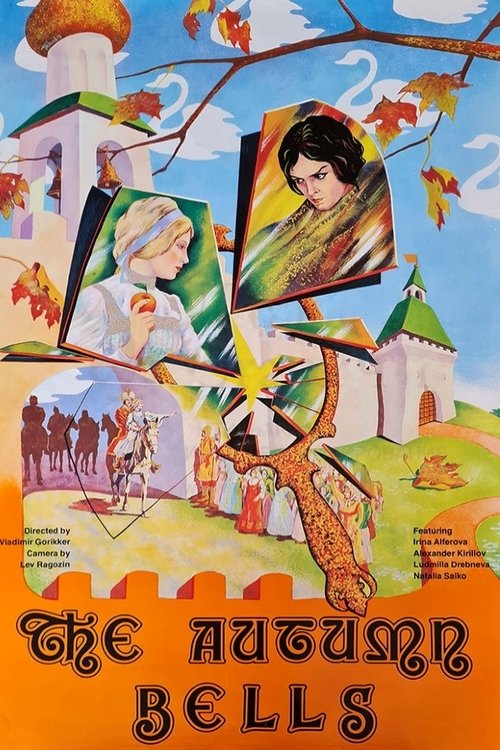
A musical fairytale based on the poem "The Tale of the Dead Princess" by Alexander Pushkin.