Writing
A BBC television anthology series featuring productions of classic and contemporary stage plays usually broadcast on BBC1. Each production featured a different work, often using prominent British stage actors in the leading roles. The series was transmitted from October 1965 to September 1983.
NET Playhouse is an American dramatic television anthology series produced by National Educational Television. NET subsequently merged with WNDT Newark, New Jersey to form WNET and was superseded by the Public Broadcasting Service. American television anthology series of wide range of genres, from history and drama, to fantasy, and science fiction. Fiction novels, stories, stage plays, fairytales, and historic events are dramatized in each episode.
No description available.
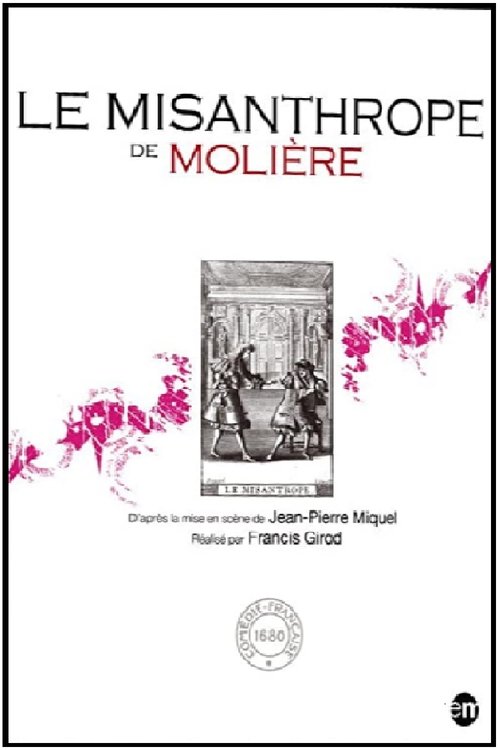
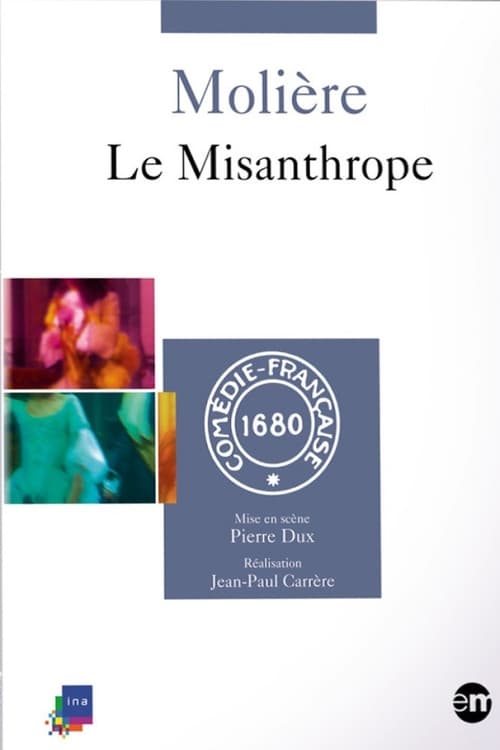
Célimène, a beautiful young widow, chooses to keep her many suitors hoping in order to preserve her freedom, even though she is drawn to one of them, Alceste. An idealist, Alceste refuses to play the social game; he seeks to persuade the young woman to abandon her strategy and give herself over to an exclusive love. Theater play "Le misanthrope" played by the "Comédie française" in 2000. Rather than a simple recording of a live theater performance, this version was explicitly structured as a television movie. It blended cinematic camera work with the theatrical script.
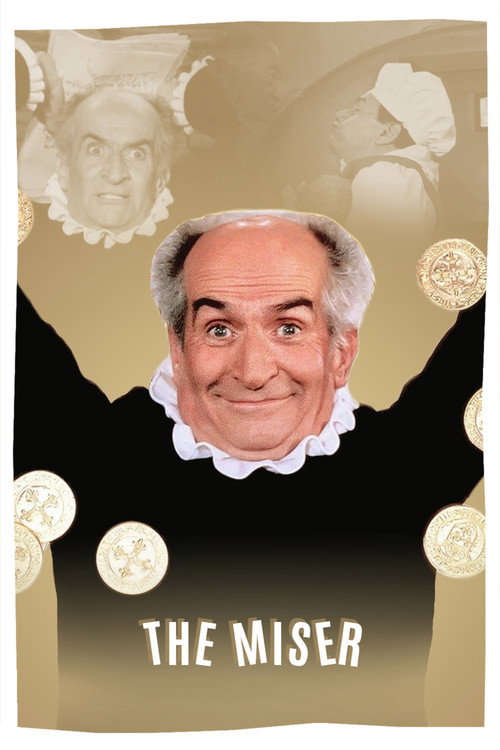
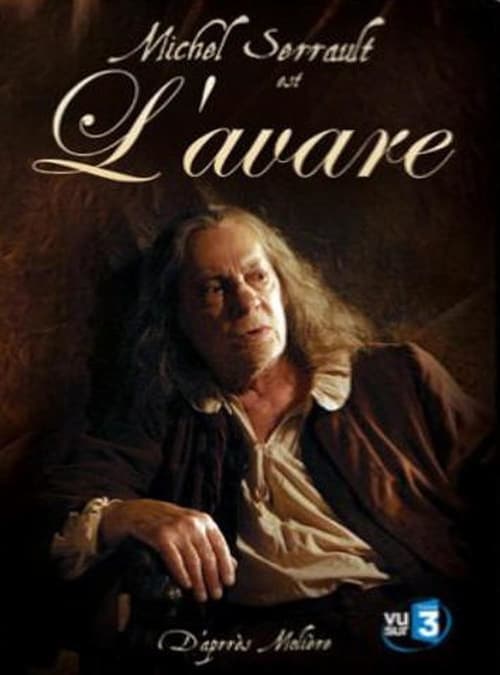
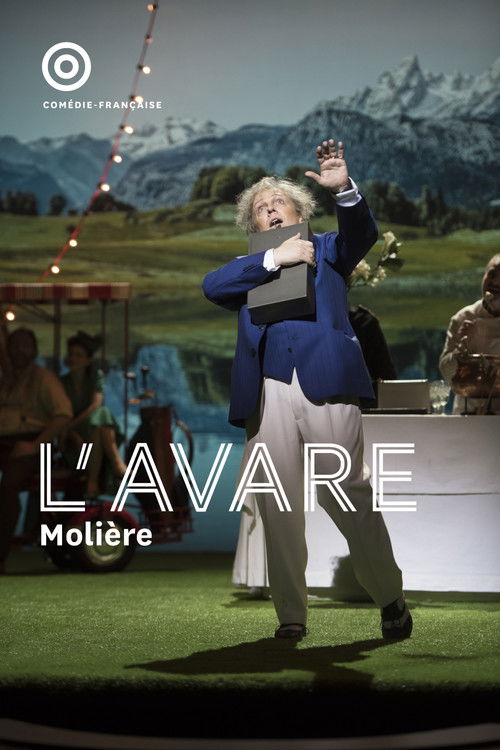
The children of Harpagon, Cléante and his sister Elise, are each in love but they still haven’t spoken to their father yet. Harpagon is a miser who wants to choose the right man and the right woman for his children. Based on Molière’s play.
Sganarelle is the central character in four farces that were adapted for an evening's entertainment. In The Flying Doctor, Sganarelle tries to outwit a man who is forcing his daughter to marry someone she does not love. In The Forced Marriage, an older Sganarelle has fallen in love with a young woman who is interested only in his money. In Sganarelle, the only play of the four written in verse, the title character becomes convinced that his spouse is cheating on him. In A Dumb Show, a wife forces her woodcutter husband to cure a young woman who cannot speak. The American Repertory Theatre's production of Moliere's play, recorded at the Duke of York's Theatre, London.
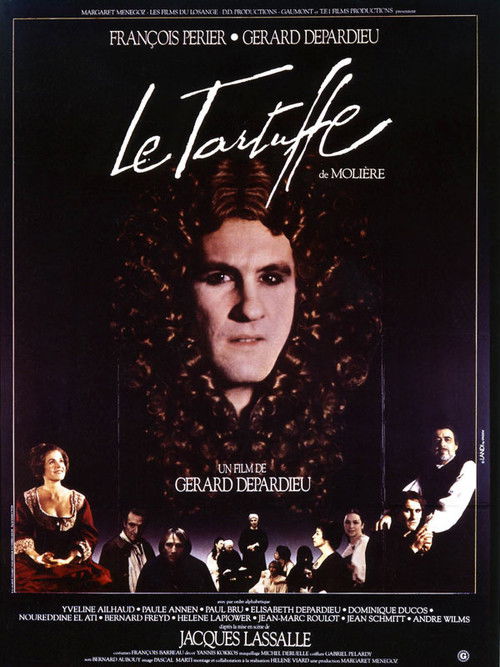
Donald Moffat stars in Moliere's classic comedy about lovable scoundrel Tartuffe, who befriends the wealthy Orgon and then attempts to seduce both his new friend's wife and daughter in this TV presentation from the Broadway Theatre Archive. Tartuffe pretends to be a pious man whose faith convinces Orgon and his family to succumb to his influence, but he's undone when his womanizing ways make it clear that his piety is a charade.
A series of dramas featuring staged theatre plays.
Orgon is a man of property duped by the false piety of the penniless Tartuffe. Orgon takes him into his house, believing him a paragon of virtue. Orgon orders his daughter to reject her fiancé and marry Tartuffe. First Dorine, the family servant, tries a strategy to avert the marriage; then Orgon's son tries his hand. They anger Orgon, and to prove paternal power, he disinherits his son and makes Tartuffe his heir. Next Orgon's wife tries to bring her husband insight, a stratagem that partially backfires. With the bailiff at the door ordering Orgon to vacate his own home and with Tartuffe at court to prove Orgon's a traitor, all seems lost.
A beautiful translation of Molière's works.
Alceste hates all of humanity, denounces its hypocrisy, cowardice and compromise. But he nevertheless loves Célimène, flirtatious and slanderous. The virtuous thus launches into battles lost in advance which force him to flee.
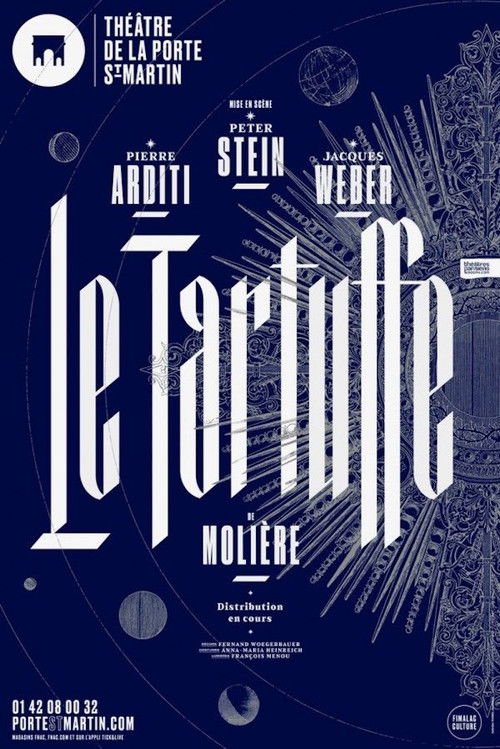
A staging of Molière's play "Tartuffe" by Peter Stein.
Television broadcast of L'avare by Molière.
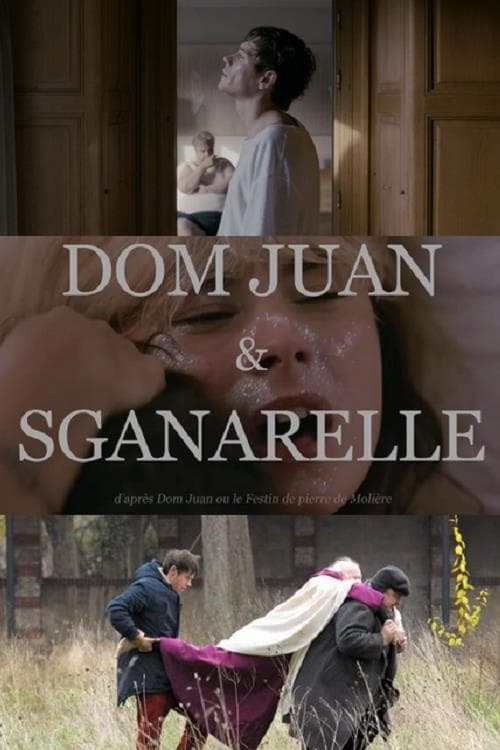
Woman hero Dom Juan lives a life full of excesses and love affairs. When he seduces the nun Elvire, but shows no interest in her a short time later, he gets to deal with her vengeful brothers. Dom Juan and his assistant Sganarelle have to flee and set out on a journey full of strange encounters.
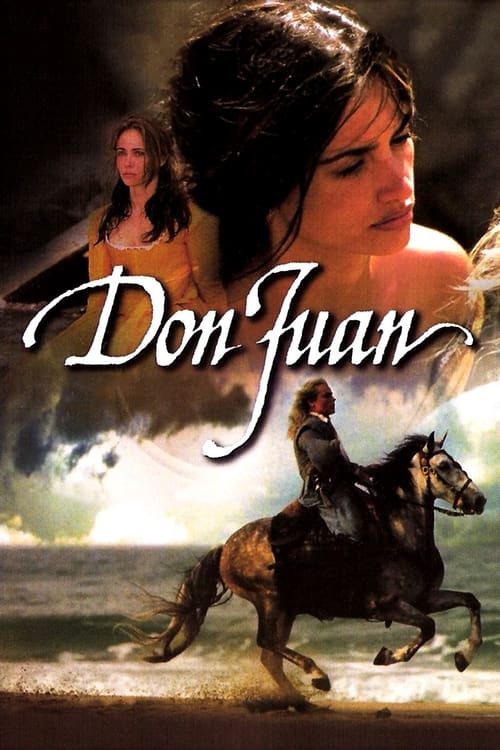
Spain in the mid-seventeenth century. A series of bloody wars has ravaged the nation. Don Juan the nobleman and his valet, Sganarelle, roam the countryside on horseback, on the run and lost.