Production
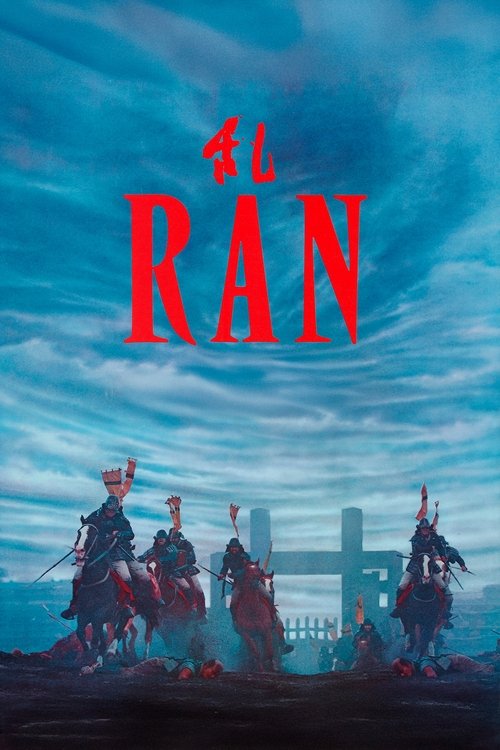
Shakespeare's King Lear is reimagined as a singular historical epic set in sixteenth-century Japan where an aging warlord divides his kingdom between his three sons.
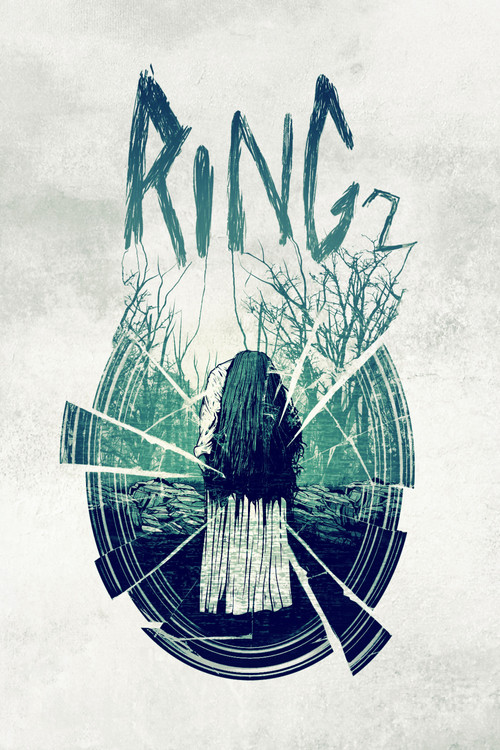
While investigating the horrifying death of her boyfriend, Mai Takano learns about a videotape haunted by the spirit of a disturbing girl named Sadako, which kills anyone who watches it exactly one week later. When her boyfriend’s son, Yoichi, starts to develop the same psychic abilities as Sadako, Takano must find a way to keep the boy and herself from becoming the next victims.
Island of Java, 1942, during World War II. British Major Jack Celliers arrives at a Japanese prison camp, run by the strict Captain Yonoi. Colonel John Lawrence, who has a profound knowledge of Japanese culture, and Sergeant Hara, brutal and simpleton, will witness the struggle of wills between two men from very different backgrounds who are tragically destined to clash.
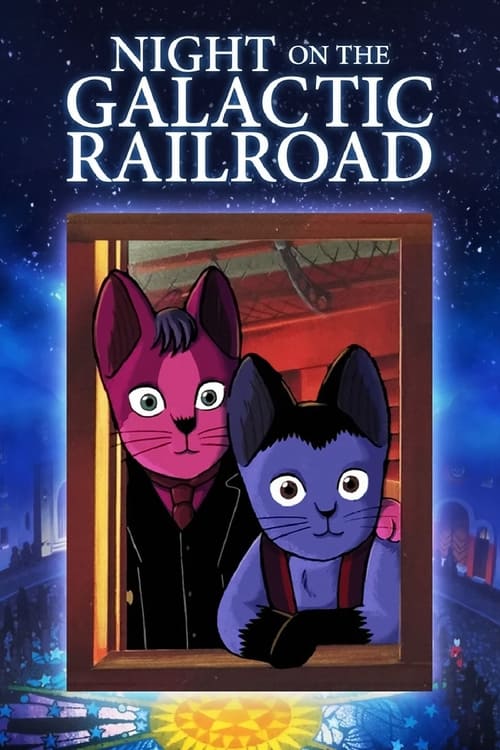
Giovanni currently lives a dreary life of near non-stop work. At school, his peers ridicule him incessantly, and his employer at work is distant and cold. As his isolation from society becomes unbearable, he suddenly finds himself on a train heading far away from his miserable home. Accompanied by Campanella, an acquaintance from school, Giovanni embarks on a journey that will define the rest of his life.
Kuki is a veteran newspaper reporter who has been shuffled off to a book-development branch and finds escape in an illicit relationship with Rinko. Together they find the passion no longer present in their marriages.
Genji, the son of the emperor, is the talk of the Kyoto nobility for his charm and good looks, yet he cannot stop himself from pursuing an unobtainable object of desire: his father's young and beautiful bride. Following the tragic consequences of his obsession, Genji wanders from one affair to another, always seeking some sort of completion to his life.
While pursuing his dream of having car sex, a goofy middle-aged man makes all the wrong moves and ends up enrolling in a number of crazy escapades.
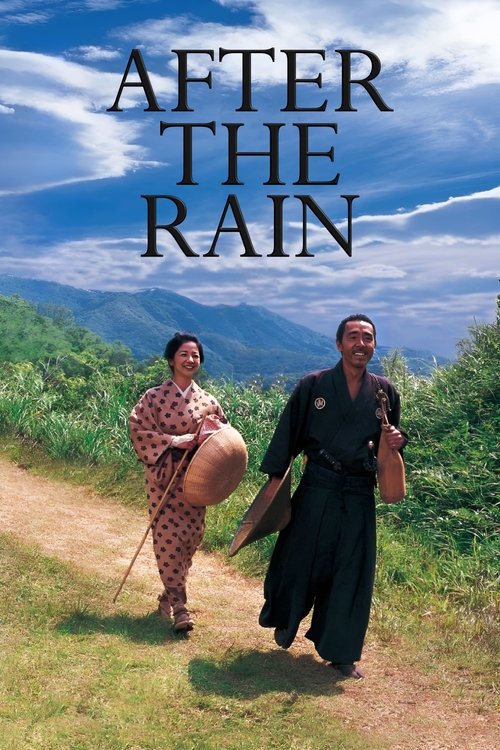
A group of travelers is stranded in a small country inn when the river floods during heavy rains. As the bad weather continues, tensions rise amongst the trapped travelers.
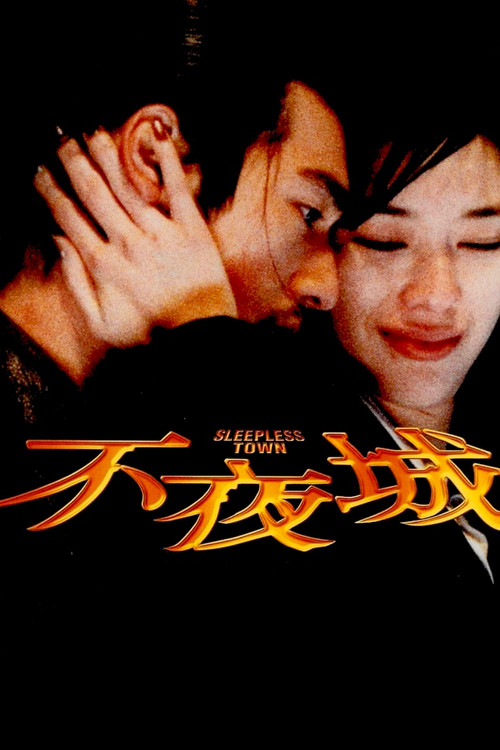
Kenichi is a half-Japanese, half-Chinese man of the underworld. You can sell him anything except children's organs. His domain is in Kabukicho, a gangland controlled by various Shanghai gangs intent on taking control. His former partner-in-crime, Fu-Chun, is rumored to have returned to Kabukicho, having fled years earlier after killing the number two of gangland boss, Yuan. Yuan wants to get even and attempts to do so by using Kenichi.
An intimate chronicle of the shooting of Ran (1985), a film directed by the legendary Japanese filmmaker Akira Kurosawa.
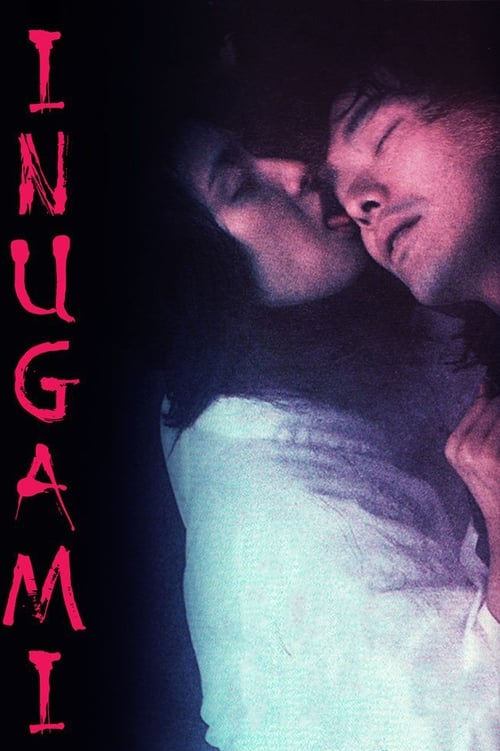
Akira, a teacher from Tokyo, has just arrived in a small rural town to begin his new job. Soon after arriving, he meets, and begins to fall for, Miki, a papermaker and part of a large and unusual family. When he learns of an ancient legend that the family carries the curse of the Inugami, or Dog God, he brushes it off as silly superstition. After a series of mysterious deaths, however, the townspeople begin to grow restless, and Akira must confront the truth about Miki and her family.
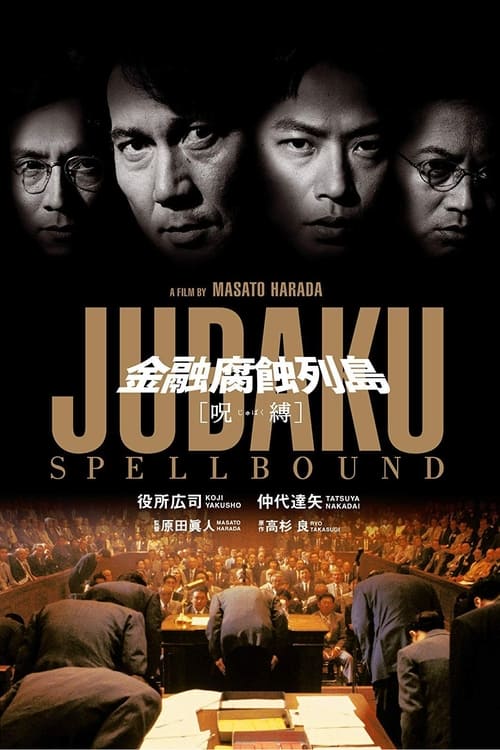
When a major bank is caught paying off a corporate extortionist, the media and prosecutors begin to dig, breaking open a money-and-favours scandal that threatens to rock the entire structure of business and government to its core. While the bank's top executives continue to vacillate, a quartet of middle-management reformers, led by straight-arrow Kitano (Koji Yakusho), decide to stage a boardroom coup and install a new, clean management team. With the aid of a hotshot news anchor (Mayumi Wakamura) and a hard-nosed prosecutor (Kenichi Endo), heads begin to roll.
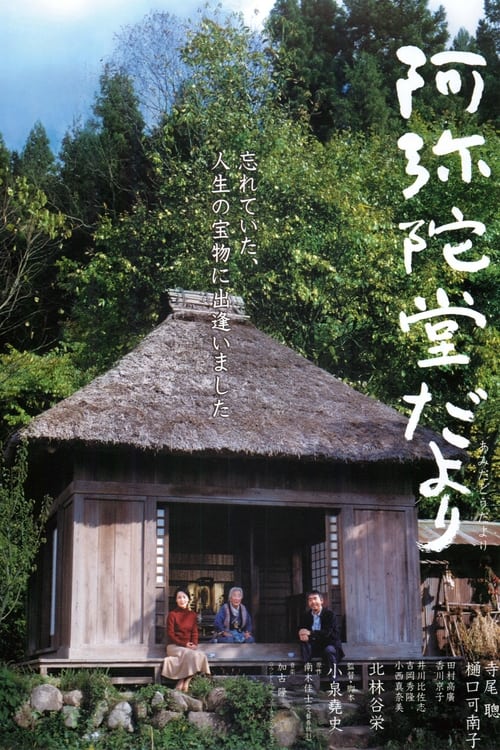
Husband and wife Michiko and Takao move from their urban existence in Tokyo to the isolated, rural farming village where Takao grew up.
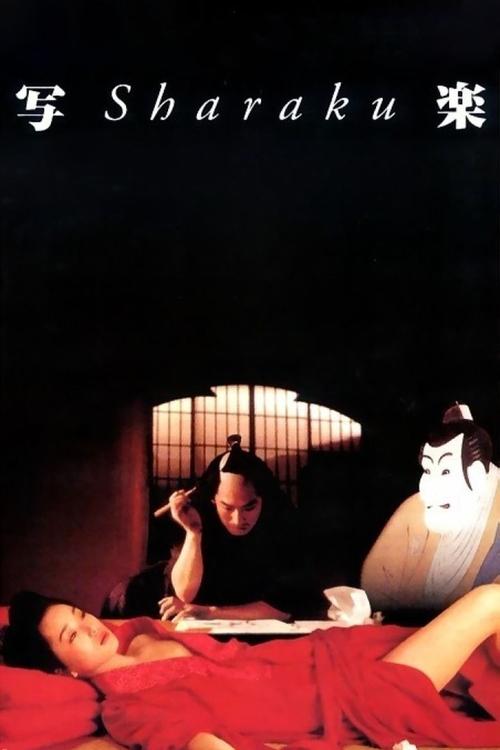
Crippled Kabuki player Tonbo is taken in by a strolling company of itinerant actors. An influential publisher notices his honest, bold art, and nurtures him despite persecution and betrayal.
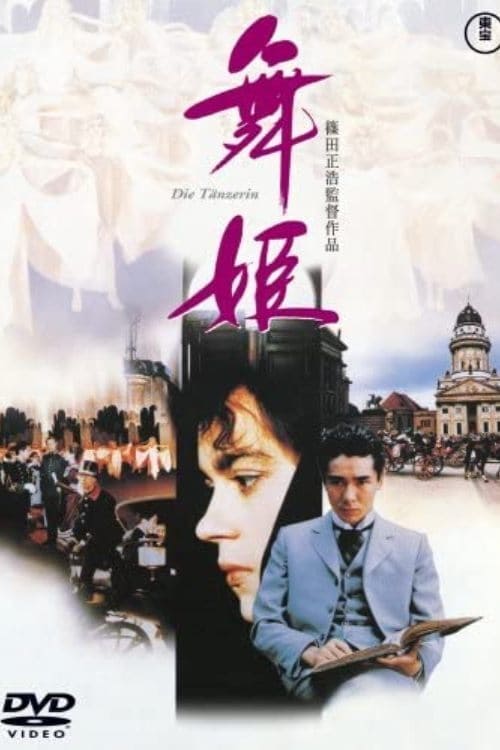
Against the backdrop of late 19th-century Berlin, Toyotaro Ota, a young Japanese uni student studying in Germany, meets and falls in love with 16-year-old local dancer Elise. Their unconventional affair and subsequent cohabitation stir up a massive scandal that threatens his reputation, eventually reaching the ears of officials in Japan.
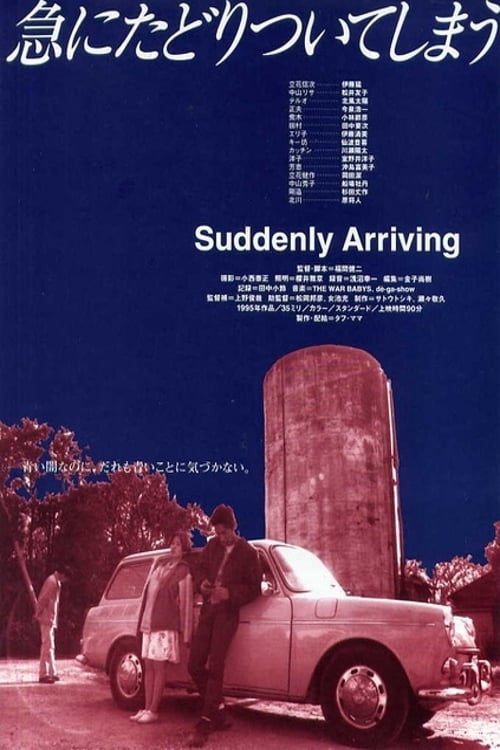
The tale follows the intentional non-adventures of quiet Tachibana (Takeshi Ito), a Tokyo drifter who has worked in a suburban sausage shop for several years without forging any real friendships.
In 1923 a Japanese comes to Munich and immediately falls in love with a street artist with a red hat, without knowing her past is. She turns to the Japanese, for the first time she thinks she has found her really great love- exotic stranger attracts her. They say a lot, but they do not understand each other - but they can show their love. Nevertheless, the relationship is doomed to failure from the beginning. Disappointment, death and loss.
Karin has lived alone in a secluded mountain village with her consumptive mother since her father died. Her worried grandfather advises her to send her mother to a sanatorium and be adopted by him, although she refuses to accept. On the Buddhist All Soul’s Day Festival in August, a messenger from her grandfather pays a sudden visit to her house.
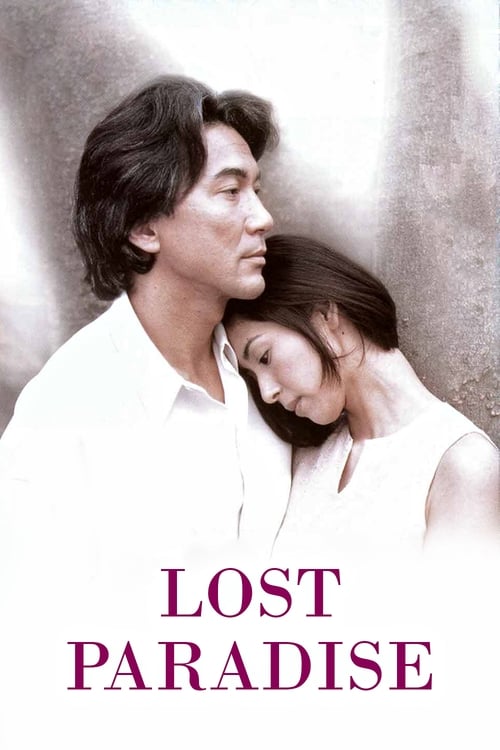
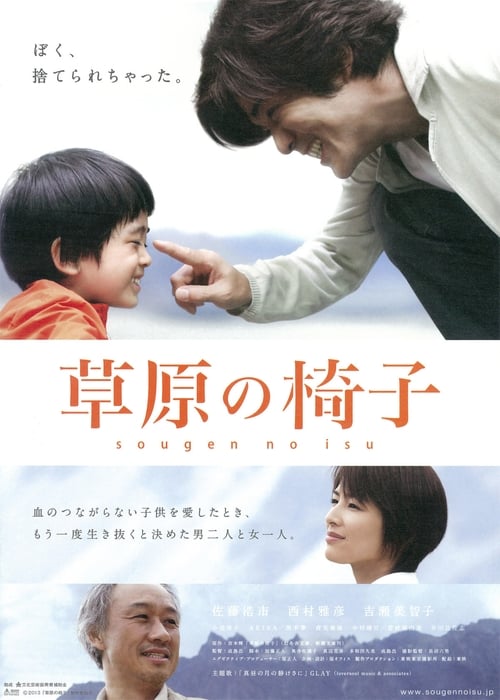
Four people decide to travel to Hunza, Pakistan to find paradise. Kentaro Tooma works as head of sales for a camera company. One of his clients is Jujo Togashi who owns the shop Camera Togashi. The two men are friends and become captivated by a picture with only a chair sitting in a field of grass. Kentaro and Jujo know of a 4-year-old boy Keisuke through Kentaro's eldest daughter. 4-year-old Keisuke is traumatized from being abused by his mother. Kishiko Shinohara is the owner of an antique shop. Kentaro Tooma has feelings for her.
When radicals from Japan's Red Army took a woman hostage in the resort town of Karuizawa, Nagano in 1972, Officer Atsuyuki Sassa was put in charge of diffusing the situation. But the task had its challenges. Upon arriving in mountainous Nagano, Sassa had to compete with freezing winter temperatures, conflicting opinions between the Tokyo Metropolitan Police and the Nagano Prefectural Police, as well as public opinion to gain entrance to the lodge that held the single woman captive.