Werner Nekes
Directing
Biography
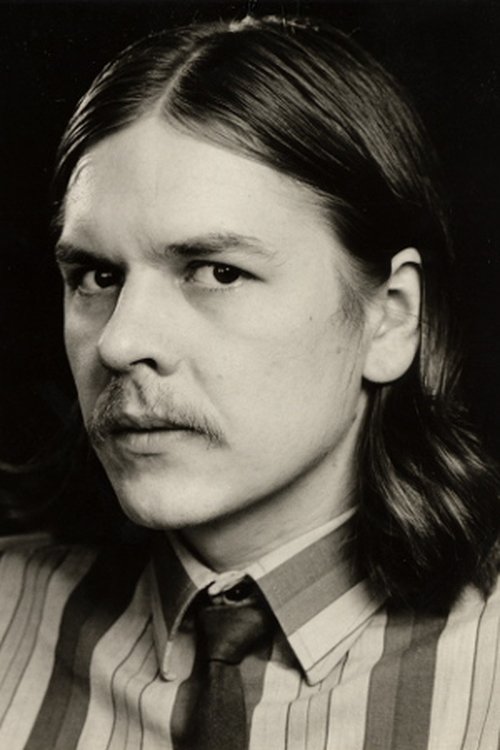
Werner Nekes was born in 1944 in Erfurt and studied linguistics and psychology in Freiburg. He then went to Bonn in 1964 where he was a head of the University Film Club and later chairman of the FIAG. He developed friendships with film directors, sculptors and painters. These included Dore 0., his companion and collaborator since 1967. He began painting in 1965 with diverse materials and objects. He started his practice of film with 8mm and went on with 16mm. He decided to free the film from narration and psychology and organized his films according to temporal units and structural systems. In spring 1967, his films were rejected by the Kurzfilmtage of Oberhausen. Thus, Nekes organized a counter-event. The same year in November, he comes to Hamburg with Dore 0., whom he marries the following month. He was a co-founder of the Hamburg cooperative of filmmakers and was a co-organizer of the « Hamburger Filmschau » in 1967. From 1973, he travelled all over the world to make seminaries about film theory and retrospectives. He moved to Mülheim an der Ruhr in summer 1978. He co-founded the Filmbüro NW in 1980 and the ICNC (International Center for New Cinema) in Riga in 1988. His work was shown at major international museums and festivals, including The Museum of Modern Art New York, or the Kassel Dokumenta. He was also a professor: from 1969 to 1972 and 2004 to 2006 at the Academy of Fine Arts (Hochschule für Bildende Künste) in Hamburg, from 1981 to 1982 at Wuppertal University, from 1982 to 1984 at the Kunsthochschule Offenbach, and, from 1990-96 at the Academy of Media Arts in Cologne. Furthermore, Nekes has compiled one of the most important private collections of artefacts documenting 500 years of pre-cinematographic experiments as well as developments in the early history of film, focusing on spatial and temporal principles of representation.
Known For

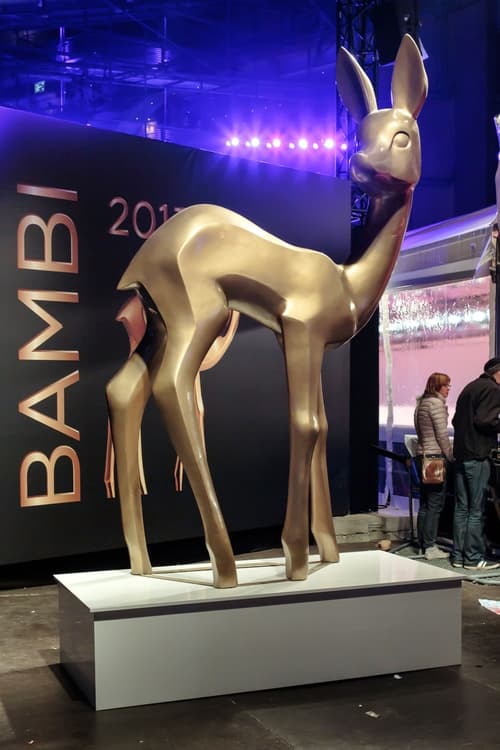
The Bambi, often called the Bambi Award and stylised as BAMBI, is a German award presented annually by Hubert Burda Media to recognize excellence in international media and television to personalities in the media, arts, culture, sports, and other fields "with vision and creativity who affected and inspired the German public that year", both domestic and foreign. First held in 1948, it is the oldest media award in Germany. The trophy is named after Felix Salten's book Bambi, A Life in the Woods and its statuettes are in the shape of the novel's titular fawn character. They were originally made of porcelain until 1958, when the organizers switched to using gold, with the casting done by the art casting workshop of Ernst Strassacker in Süßen.
Bambi

Cinématon is a 156-hour long experimental film by French director Gérard Courant. It was the longest film ever released until 2011. Composed over 36 years from 1978 until 2006, it consists of a series of over 2,821 silent vignettes (cinématons), each 3 minutes and 25 seconds long, of various celebrities, artists, journalists and friends of the director, each doing whatever they want for the allotted time. Subjects of the film include directors Barbet Schroeder, Nagisa Oshima, Volker Schlöndorff, Ken Loach, Benjamin Cuq, Youssef Chahine, Wim Wenders, Joseph Losey, Jean-Luc Godard, Samuel Fuller and Terry Gilliam, chess grandmaster Joël Lautier, and actors Roberto Benigni, Stéphane Audran, Julie Delpy and Lesley Chatterley. Gilliam is featured eating a 100-franc note, while Fuller smokes a cigar. Courant's favourite subject was a 7-month-old baby. The film was screened in its then-entirety in Avignon in November 2009 and was screened in Redondo Beach, CA on April 9, 2010.
Cinématon

Director Werner Nekes has created this experimental film in the mode of James Joyce's Ulysses to the extent that human interactions are represented by poetic, symbolic images and language, with a certain amount of nudity added in.
Uliisses

Knokke, Belgium. A small mundane coastal town, home to the beau-monde. To compete with Venice and Cannes, the posh casino hosts the second ‘World Festival of Film and the Arts’ in 1949, organised in part by the Royal Cinematheque of Belgium. To celebrate cinema’s 50 year existence, they put together a side program showcasing the medium in all its shapes and forms: surrealist film, absolute film, dadaist films, abstract film,… The side program would soon become a festival in its own right: ‘EXPRMNTL’, dedicated to experimental cinema, and would become a mythical gathering of the avant-garde…
EXPRMNTL

German American artist Eva Hesse (1936 – 1970) created her innovative art in latex and fiberglass in the whirling aesthetic vortex of 1960s New York. Her flowing forms were in part a reaction to the rigid structures of then-popular minimalism, a male-dominated movement. Hesse’s complicated personal life encompassed not only a chaotic 1930s Germany, but also illness and the immigrant culture of New York in the 1940s. One of the twentieth century’s most intriguing artists, she finally receives her due in this film, an emotionally gripping journey with a gifted woman of great courage.
Eva Hesse

The funny clown Bratislav Metulskie is found dead in circus "Apollo". The retired commissioner 00 Schneider is asked to assume control of the case. Schneider and his aged sidekick Körschgen investigate to find the murderer.
00 Schneider - Jagd auf Nihil Baxter

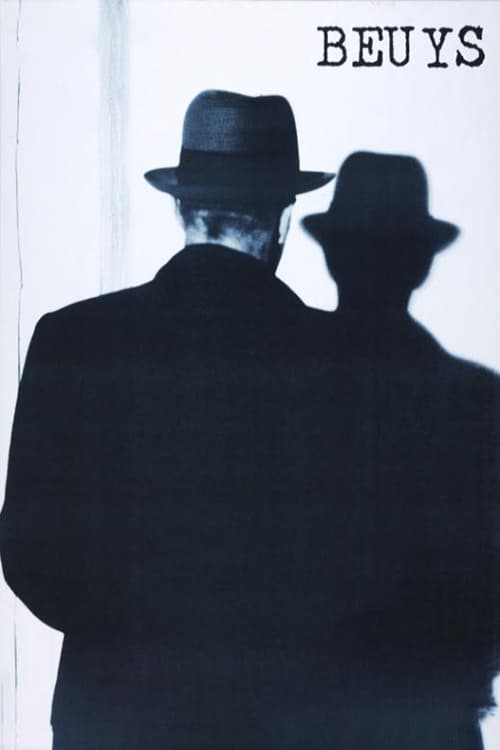
The German artist Joseph Beuys is reflecting on his theory of art, being filmed as a kinetic sculpture. In 1981, the film has won the German film critic's award for “Best short film in Germany”.
Beuys

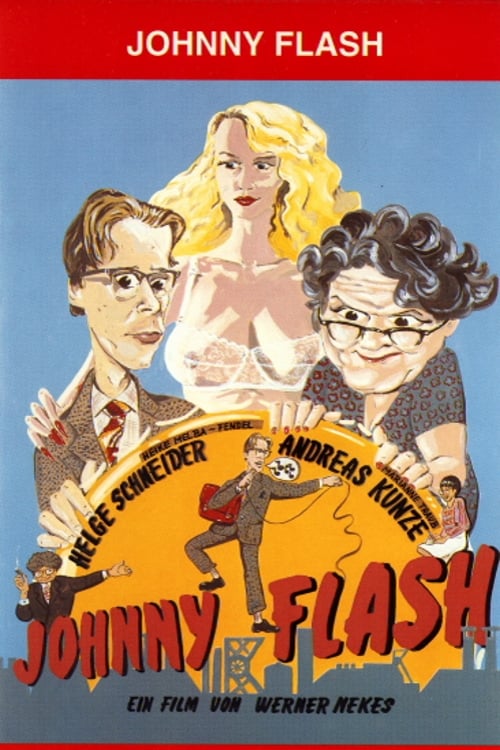
Jurgen is an unknown electrician with a dream of pop stardom. His mother browbeats him into fame, while two managers compete for his contract. All Johnny really wants to do is get some sleep.
Johnny Flash

Based on principles of double projection. Here, two pictures are projected on top of each other: on the upper screen is K, the head of the actor, while ÖRPER can be seen on the lower picture. The head can move in harmony and disharmony with his body.
K/örper

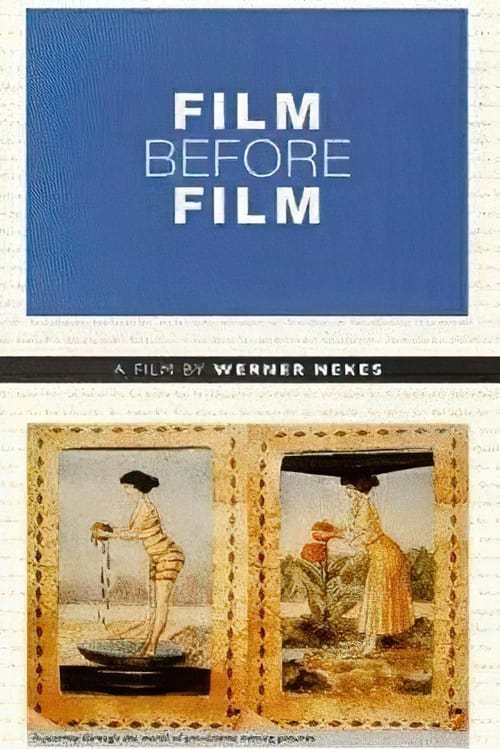
An exhilarating and amusing encyclopedic look at the "prehistory" of cinema. Werner Nekes charts the fascination with moving pictures which led to the birth of film, covering shadow plays, peep shows, flip books, flicks, magic lanterns, lithopanes, panoramic, scrolls, colorful forms of early animation, and numerous other historical artiffices. Working with these formats, early "producers" created melodramas, comedies, -- as well as lots of pornography -- anticipating most of the forms known today. Nekes probes these colorful toys and inventions in a rich and rewarding optical experience. Film Before Film is a bewildering assault of exotic (and sometimes erotic) images and illusions.
Film Before Film

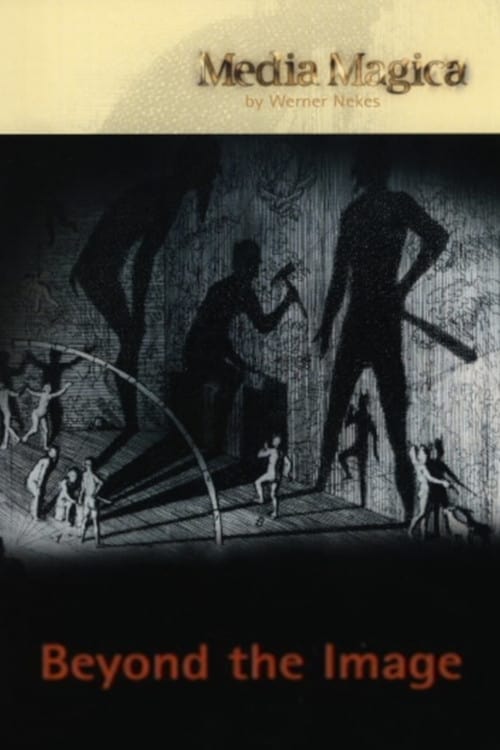
Picture montage was a central aspect in the early history of visual media. As early as the 16th century, techniques such as the folding picture montage anticipated those used in film today. Other examples of early forms of montage are transparencies, picture puzzles and blow books, which direct the gaze towards hidden information. In the myriorame, the multi-thousand picture-show, it is possible to assemble infinite landscapes.
Multi-Thousand Picture Show
In conversations with his friends and colleagues, among them Bernd Upnmoor, Helmut Herbst, Alexander Kluge, Klaus Wyborny, Daniel Kothenschulte and Helge Schneider, Ulrike Pfeiffer takes us on a journey into the broad expanse of Nekes' cabinet of wonder and his cinematic works. At the same time, this documentary provides an insight into the history of experimental film in Germany.
Werner Nekes - Life Between the Pictures

The film looks at ways of creating spezial illusions through amiguous images, perspective theatres, folding peepshows and from the 19th century, the stereoscope, which look forward to today’s holography.
The Ambiguous Image and Space

No description available.
Start

This film is a poetic endeavor about Life and Death. A brown hen was selected to convey motion. The soundtrack is a collage of approximately 200 beginnings and endings of different musical pieces.
Schwarzhuhnbraunhuhnschwarzhuhnweißhuhnrothuhnweiß oder put-putt

Home movies shot on Super 8mm by W+B Hein over 10 years.
Home Movies 1971-81

An adventure film, a journey into light. This film is dedicated to Joseph Plateau, the discoverer of the cinematographic principle, who while exploring the inertia of perception stared into the sun until he was blinded. I made this film because I love the ending of the 'Adventures of Arthur Gordon Pym' by Edgar Allan Poe.
Photophthalmia

No description available.
Das Seminar

A strange succession of tableaux of four women and a man which gives the sense of a sort of dream family locked in an antiseptic world of endless afternoon teas, dinners and waiting. Often her images seem to be stills either before or after something has been said.
Lawale

A film by Werner Nekes.