FEEL IT.STREAM
Nikolai Cherkasov

Nikolai Cherkasov

Acting

Biography

An outstanding Soviet theater and film actor. Honored Artist of the RSFSR (1937). People's Artist of the RSFSR (03/11/1939). People's Artist of the USSR (02.26.1947). He graduated from the Institute of Performing Arts (1926). Since 1919 - a mimic artist of the Petrograd Mariinsky Opera and Ballet Theater, the Bolshoi Drama Theater and other theaters. In the years 1926-1929 - actor of the Leningrad Youth Theater. In 1929-1931 - artist of the Leningrad and Moscow music halls. In the years 1931-1933 - artist of the Leningrad Mobile Theater "Comedy". In 1933-1965 - artist of the Leningrad Academic Drama Theater named after Pushkin. Nikolai Cherkasov is the only actor whose face is imprinted on the order. Stalin personally chose and approved the portrait of Cherkasov for one of the highest state awards - the Soviet Order of Alexander Nevsky. Member of the Supreme Council of the RSFSR 1-2 convocations. Member of the Supreme Soviet of the USSR 3-4 convocations (1950-1958). Chairman of the Leningrad branch of the WTO (since 1948). Member of the Soviet Peace Committee (since 1949). Member of the CPSU (b) since 1940. September 14, Nikolai Konstantinovich died at the 64th year of life. When the great actor passed away, one of his students said that he died not from heart failure, but from insufficient heartiness... The actor was buried in the Necropolis of Artists of the Alexander Nevsky Lavra in Leningrad. July 27, 1970 the name of Cherkasov was assigned to one of the streets in Leningrad.

Known For

When Idols Were Gone
8.5

No description available.

When Idols Were Gone

2005
Ivan the Terrible, Part I
7.3

Set during the early part of his reign, Ivan faces betrayal from the aristocracy and even his closest friends as he seeks to unite the Russian people. Sergei Eisenstein's final film, this is the first part of a three-part biopic of Tsar Ivan IV of Russia, which was never completed due to the producer's dissatisfaction with Eisenstein's attempts to use forbidden experimental filming techniques and excessive cost overruns. The second part was completed but not released for a decade after Eisenstein's death and a change of heart in the USSR government toward his work; the third part was only in its earliest stage of filming when shooting was stopped altogether.

Ivan the Terrible, Part I

1944
Spring
6.3

A drab woman scientist, working on machine to harness solar energy, and a pert concert singer look-alike being courted to play her in a movie swap identities and find personal growth, professional success, love, and happiness.

Spring

1947
Alexander Nevsky
7.0

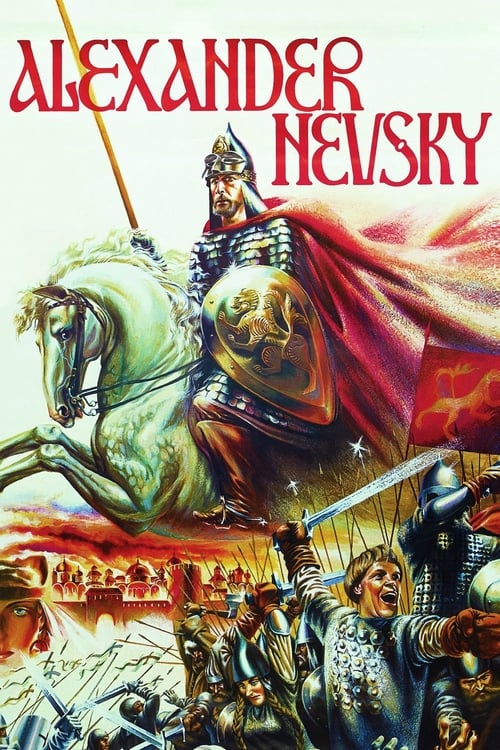
When German knights invade Russia, Prince Alexander Nevsky must rally his people to resist the formidable force. After the Teutonic soldiers take over an eastern Russian city, Alexander stages his stand at Novgorod, where a major battle is fought on the ice of frozen Lake Chudskoe. While Alexander leads his outnumbered troops, two of their number, Vasili and Gavrilo, begin a contest of bravery to win the hand of a local maiden.

Alexander Nevsky

1938
Ivan the Terrible, Part II: The Boyars' Plot
7.3

This is the second part of a projected three-part epic biopic of Russian Czar Ivan Grozny, undertaken by Soviet film-maker Sergei Eisenstein at the behest of Josef Stalin. Production of the epic was stopped before the third part could be filmed, due to producer dissatisfaction with Eisenstein's introducing forbidden experimental filming techniques into the material, more evident in this part than the first part. As it was, this second part was banned from showings until after the deaths of both Eisenstein and Stalin, and a change of attitude by the subsequent heads of the Soviet government. In this part, as Ivan the Terrible attempts to consolidate his power by establishing a personal army, his political rivals, the Russian boyars, plot to assassinate him.

Ivan the Terrible, Part II: The Boyars' Plot

1958
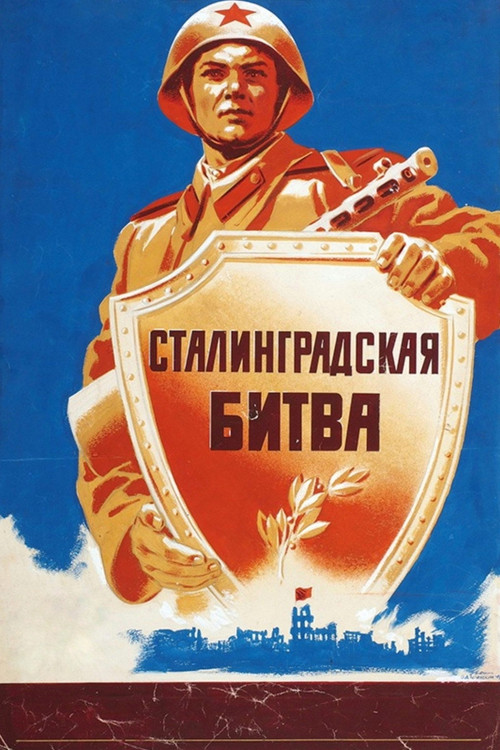
The Battle of Stalingrad
3.9

A 1949 two-part Soviet epic war film about the Battle of Stalingrad, directed by Vladimir Petrov. The script was written by Nikolai Virta.

The Battle of Stalingrad

1949
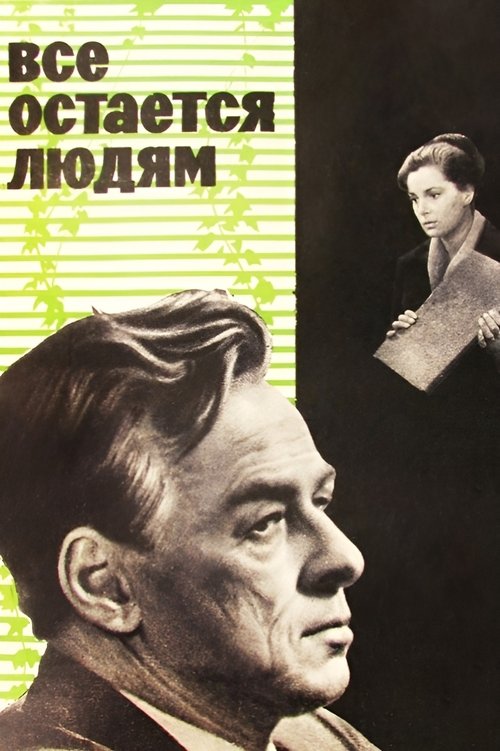
All Remains to People
4.8

Renowned scientist Dronov works in Novosibirsk on the creation of ultra-modern engine. He has a bad heart, he was afraid not to have time to finish the job, and test engine at a factory in Moscow, unfortunately, is not the first time passes unsuccessfully. Dronov abandons the rest of the work, even the leadership of the Institute entrusts to his disciple Morozov.

All Remains to People

1963
Lenin in 1918
5.2

Historical-revolutionary film about Lenin’s activities in the first years after the Great October Revolution in Russia.

Lenin in 1918

1939
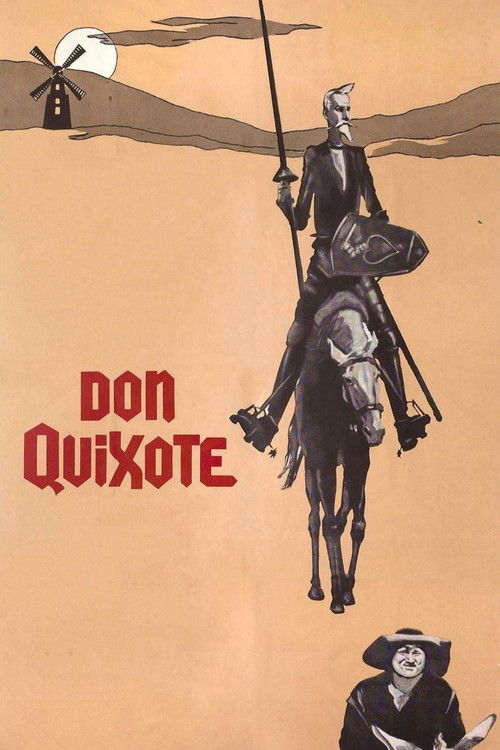
Don Quixote
6.7

Senor Quexana has read so many books on chivalry that he believes that he is the knight Don Quixote de la Mancha. So Don Quixote sets off on his horse, accompanied by his squire Sancho Panza on a mule, to perform valiant deeds. They mistakenly save the Lady Altisidora who is so amused that she invites them to visit the Duke to provide some merriment at court. Among other deeds, Don Quixote frees some prisoners, who then turn upon him, and Don Quixote attacks a windmill that he imagines is a monstrous wizard.

Don Quixote

1957
Frontier
9.0

The residents of the village of Staroje Dudino, located four kilometers west of the Soviet border, are completely dependent on the wealthy Novik, whose interests are protected by the local police and clergy. Novik is actively stirring up ethnic strife between the Jewish poor and Polish workers. During the traditional "black crown" ceremony (a wedding ceremony for an old man and an old woman), a group of factory workers led by the communist Haidul, together with the Jewish poor, attack the police and free Boris Bernstein, who had been sentenced to death.

Frontier

1935
Why We Fight: The Battle of Russia
6.9

The fifth film of Frank Capra's Why We Fight propaganda film series, revealing the nature and process of the fight between the Soviet Union and Germany in the Second World War.

Why We Fight: The Battle of Russia

1943
Pirogov
7.4

A biopic based on the life of Russian scientist and doctor Nikolai Ivanovich Pirogov (1810-1881), famous for being the founder of field surgery.

Pirogov

1947
Царицын. Поход Ворошилова
N/A

The film takes us back to the summer of 1918 and tells the story of how Voroshilov, under the noses of a 300,000-strong German corps, pulled 80 trains loaded with valuable cargo, materials, ammunition, and equipment out of Donbass. With a 15,000-strong army and 50,000 refugees from Ukraine, occupied by Germany, in Tsaritsyn. It was an unprecedented campaign, unparalleled in world military history, because it involved marching 500 km through territory occupied by the White Cossacks, under the command of some of the most capable tsarist cavalry generals, Mamontov and Fitzhelaurov.

Царицын. Поход Ворошилова

1942
The Girlfriends
6.7

Girlfriends Zoya, Natasha and Asya live in Petrograd. Before the Civil War, young heroines are aware of the social injustice of life. When the war begins, the girls are recorded by the orderlies of the working group to protect the Bolshevik Petrograd from the advance of the whites.

The Girlfriends

1936
Peter the First, Part I
5.2

This, the first Soviet depiction of Peter the Great, set the stage for what would become the post-Revolutionary line concerning the early Romanovs. Rulers like Ivan the Terrible and Peter the Great were widely admired for their dedication to Russia and their absolute determination to enhance her position in the world. But praise for the hated later Romanovs conflicted too heavily with the very beliefs that had brought about the Revolution in 1917.

Peter the First, Part I

1937
Concert on the Screen
8.0

Film-Concert. The program includes scenes from plays, ballets, and operas; folk songs and romances; B. Eder with a group of trained lions; S. Obraztsov's puppet theater; and dances by soloists of the I. Moiseyev Ensemble. The host is Nikolai Cherkasov.

Concert on the Screen

1940
His Name Is Sukhe-Bator
7.0

The film tells about the founder of the Mongolian People's Revolutionary Party, the leader of the Mongolian People's Revolution - Damdin Sukhe-Bator.

His Name Is Sukhe-Bator

1942
Capt. Grant's Family
6.3

The son and daughter of a lost-at-sea captain recruit help to find him on the basis of an incomplete note found in a bottle, and encounter adventures in Patagonia, Australia, and New Zealand... Based on Jules Verne novel.

Capt. Grant's Family

1936
Baltic Deputy
4.6

A film based on the life of the Russian scientist, Klement Timiriazev, who taught at Cambridge and Oxford and was awarded the Newton Mantle for his work. Timiriazev, one of the few outstanding Russian scientists who (publically) backed the Soviets in their revolutionary campaign, was later elected a delegate to the Leningrad Soviet by the sailors of the Baltic fleet. There he denounced his fellow scientists for failing to aid the Soviets and predicted that such aid would come.

Baltic Deputy

1937
Ivan Pavlov
9.0

Russia, 1875: In Riazan’, Dr Pavlov is summoned to a landowner who refuses to accept the inevitability of his death; to Pavlov’s dismay, he orders the destruction of a beautiful apple orchard. 1894: Experimenting on dogs, Pavlov tries to comprehend the interaction between nerves and external signals governing digestion. In 1904, he formulates the principles of conditional reflexes. When Zvantsev, an opponent of Pavlov’s materialist worldview, leaves the laboratory, the scientist hires Varvara Ivanova who becomes his most reliable assistant. 1912: Pavlov receives an honorary doctorate from Cambridge University. 1917: Despite Pavlov’s political scepticism, the Bolshevik administration treats him with great respect.

Ivan Pavlov

1949