Georges Feydeau
Writing
Biography
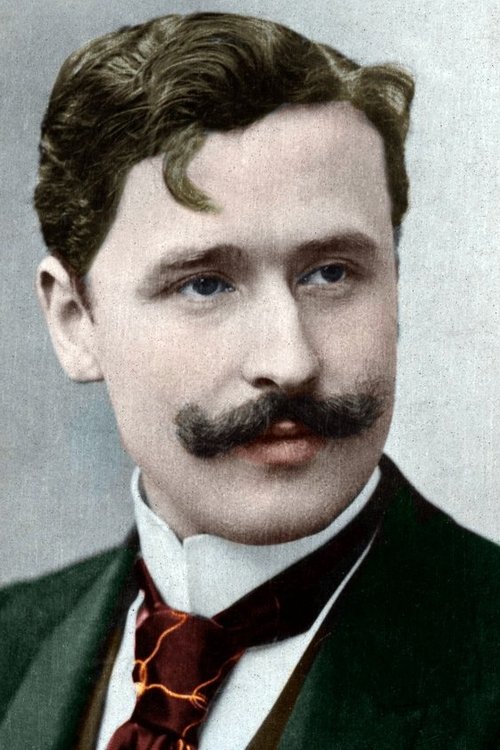
Georges-Léon-Jules-Marie Feydeau (8 December 1862 – 5 June 1921) was a French playwright of the Belle Époque era, remembered for his farces, written between 1886 and 1914. Feydeau was born in Paris to middle-class parents and raised in an artistic and literary environment. From an early age he was fascinated by the theatre, and as a child he wrote plays and organised his schoolfellows into a drama group. In his teens he wrote comic monologues and moved on to writing longer plays. His first full-length comedy, Tailleur pour dames ('Ladies' tailor'), was well received, but was followed by a string of comparative failures. He gave up writing for a time in the early 1890s and studied the methods of earlier masters of French comedy, particularly Eugène Labiche, Alfred Hennequin and Henri Meilhac. With his technique honed, and sometimes in collaboration with a co-author, he wrote seventeen full-length plays between 1892 and 1914, many of which have become staples of the theatrical repertoire in France and abroad. They include L'Hôtel du libre échange ('The Free Exchange Hotel', 1894), La Dame de chez Maxim ('The lady from Maxim's', 1899), La Puce à l'oreille ('A flea in her ear', 1907) and Occupe-toi d'Amélie! ('Look after Amélie', 1908). The plays of Feydeau are marked by closely observed characters, with whom his audiences could identify, plunged into fast-moving comic plots of mistaken identity, attempted adultery, split-second timing and a precariously happy ending. After the great success they enjoyed in his lifetime they were neglected after his death, until the 1940s and 1950s, when productions by Jean-Louis Barrault and the Comédie-Française led a revival of interest in his works, at first in Paris and subsequently worldwide. Feydeau's personal life was marred by depression, unsuccessful gambling and divorce. In 1919 his mental condition deteriorated sharply and he spent his final two years in a sanatorium at Rueil (now Rueil-Malmaison), near Paris. He died there in 1921 at the age of fifty-eight. Feydeau was born at his parents' house in the Rue de Clichy, Paris, on 8 December 1862. His father, Ernest-Aimé Feydeau (1821–1873), was a financier and a moderately well-known writer, whose first novel Fanny (1858) was a succès de scandale and earned him some notoriety. It was condemned from the pulpit by the Archbishop of Paris, and consequently sold in large numbers and had to be reprinted; Ernest dedicated the new edition to the archbishop. Feydeau's mother was Lodzia Bogaslawa, née Zelewska (1838–1924) known as "Léocadie". When she married Ernest Feydeau in 1861, he was a forty-year-old childless widower and she was twenty-two. She was a famous beauty, and rumours spread that she was the mistress of the Duc de Morny or even the Emperor Napoleon III and that one of them was the father of Georges, her first child. In later life Léocadie commented, "How can anyone be stupid enough to believe that a boy as intelligent as Georges is the son of that idiotic emperor!" She was more equivocal about her relationship with the duke, and Georges later said that people could think Morny his father if they wanted to. ... Source: Article "Georges Feydeau" from Wikipedia in English, licensed under CC-BY-SA.
Known For

At Theater tonight is a TV show broadcasted from 25th August 1966 to 21st September 1985. The show is broadcast plays recorded in two or three days, during public performances at the Théâtre Marigny on the Champs-Élysées, or sometimes Edouard VII theater.
At Theatre Tonight

No description available.
Alta comedia
Series based on the short French farces written by Georges Feydeau, Eugène Labiche, Marc Michel and Sacha Guitry. All of them include mistaken identities and impeccable timing.
Ooh La La!

Greek television series
Monday's Theater
No description available.
La Comédie-Française

No description available.
Replay
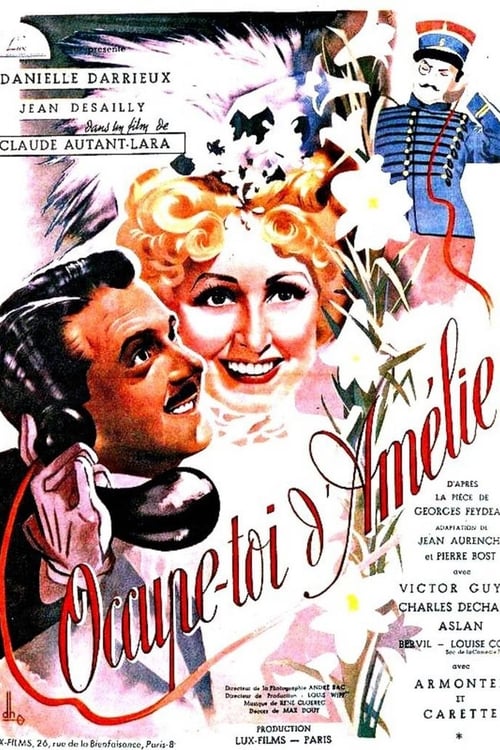
A young woman's comfortable life with her boyfriend is disrupted when he leaves for military duty, entrusting her to a playboy friend seeking a fake marriage for inheritance. Complications arise as a prince enters the scene, pursuing her romantically.
Keep an Eye on Amelia
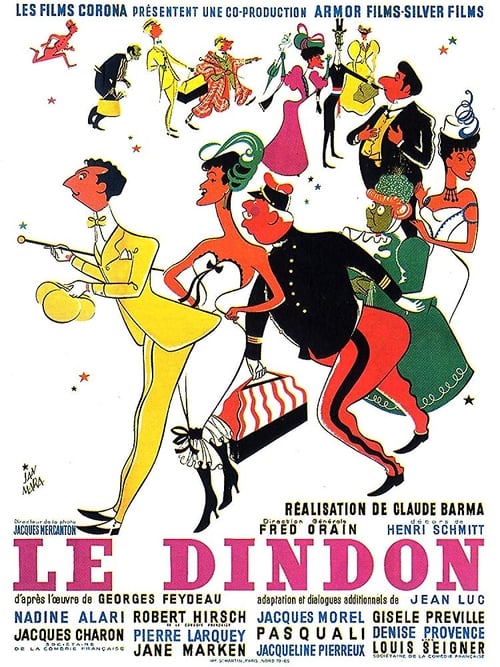
Paris at the Belle Epoque. Monsieur de Pontagnac, a perfect honest man, loves pretty women too much and that plays him many tricks. What need does he have to follow the pretty Lucienne Vatelin, home, to find himself in the presence of the husband, the notary Vatelin, who is part of his circle? From there, many characters will meet, avoid each other, find each other. Adultery, domestic scenes and reconciliation will be their lot.
The Turkey
A Swedish TV movie based on the play L'Hôtel du Libre échange from 1894.
Spökhotellet

Lucette and Edouard: Two lovers passionate about sex, money and life. He is a spoiled but penniless child who wants it all while she is a celebrated figure of la vie parisienne who knows what she wants and what she is worth. Edouard is marrying a young, pretty and rich heiress. He comes to confess this to Lucette and to make their parting official, but he doesn’t want to leave her. He struggles with all his might to hide his betrayal but her opportunities to learn of it are countless and unpredictable.
The Art of Breaking Up

No description available.
Osztrigás Mici

Monsieur Feydeau has writer's block and he needs a new play, so he takes an opportunity to observe his upper class neighbors of 1900 Paris. There is Monsieur Boniface with hard domineering wife Angelique; also, Monsieur Cotte with beautiful but neglected wife Marcelle. Henri Cotte traces architectural anomalies (mostly "ghost" sounds in the drain pipes) and plans a night at the Hotel Paradiso, which happens to be the chosen romantic rendezvous spot of Marcelle and Monsieur Boniface. One wife, two husbands, a nephew, and the perky Boniface maid, all at this 'by the hour' hotel and consummation of the affair is, to say the least, severely compromised (not the least by a police raid). All of this is under Feydeau's eye, and his play is the 'success fou' of the next season.
Hotel Paradiso
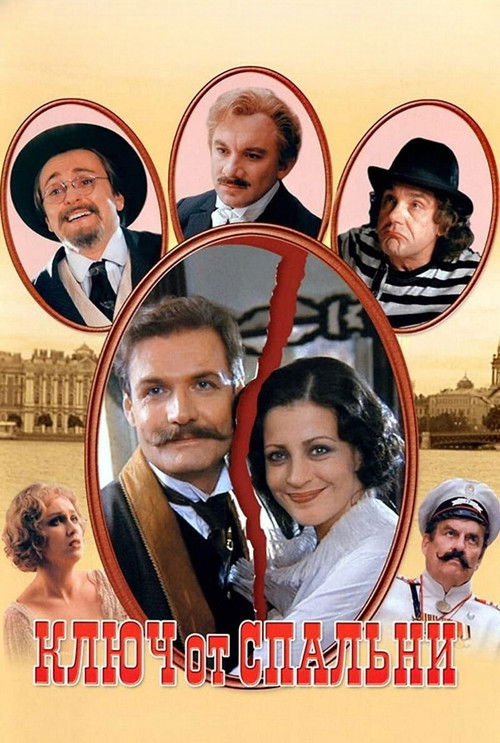
In the beginning of a new century the capital of Russia is just amazing and full of poets, beautiful women and arts...
A Key to the Bedroom
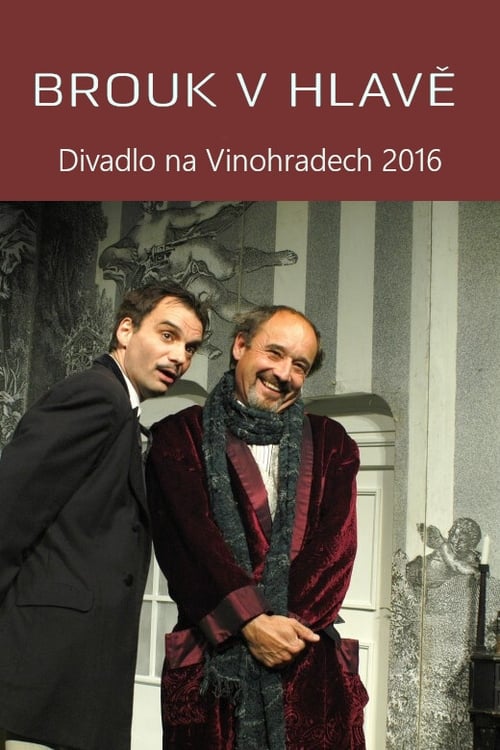
A recording of the final performance of the famous production of G. Feydeau's comedy, directed by Jiří Menzel, which was successfully performed by the Vinohrady Theater for twenty years. The fame of Feydeau's A Flea in Her Ear was established at the Vinohrady Theatre in the 1960s by director Václav Hudeček with his production starring Vlastimil Brodský in the dual lead role. The studio version is now considered a television classic. In the second half of the 1990s, the theater's dramaturgy returned to this comedy bestseller and entrusted the direction to film and theater director Jiří Menzel. Another strong generation of actors was given the opportunity. The successful premiere took place on November 15, 1996, and the production ran for twenty long years. The recording is from April 6, 2016, when the performance was staged for the 363rd and last time. The director and all those who had appeared in the comedy over the long period were in attendance.
Brouk v hlavě
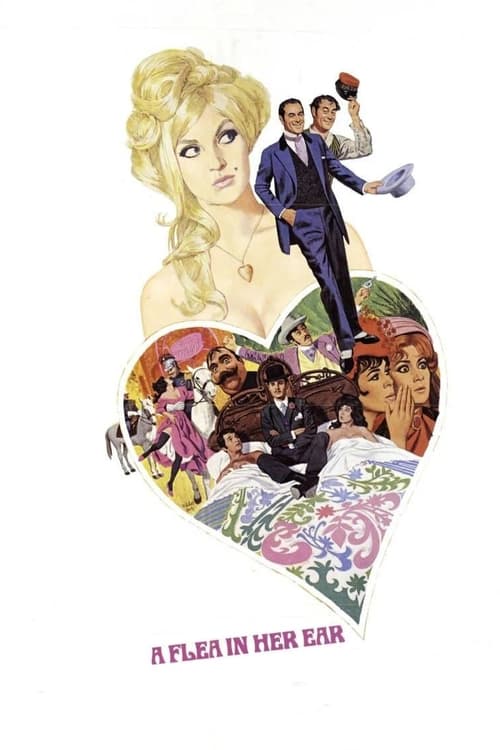
Suspecting that her husband might be having an affair, a wife plots to catch him in the act.
A Flea in Her Ear
No description available.
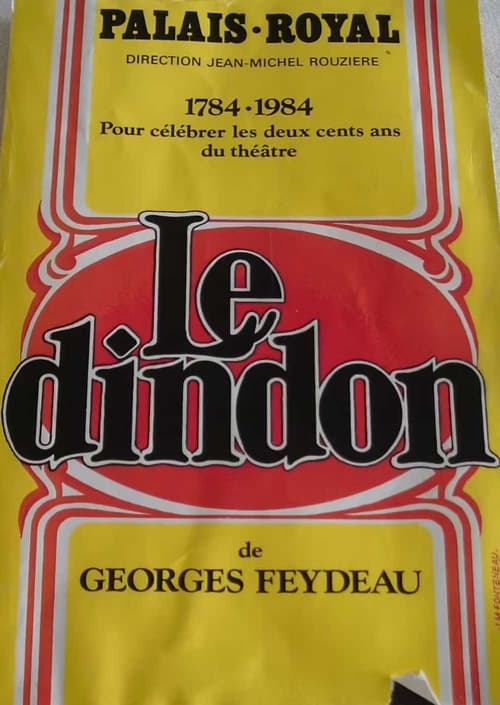
Le Dindon
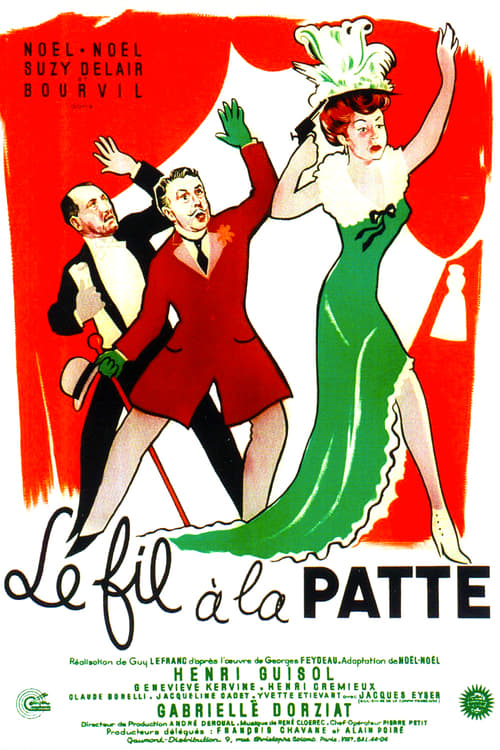
Count Fernand du Bois d'Enghien typifies the pleasure seeker and as such he has a mistress of course, star singer Lucette Gauthier. But now Fernand feels it is time for him to tie the knot. For that, pretty Viviane Duverger is the ideal prey. The trouble is that the explosive Lucette does not hear it that way. Fortunately for Bois d'Enghien, Urugua, a rich South American general, falls in love with Lucette.
Le Fil à la patte
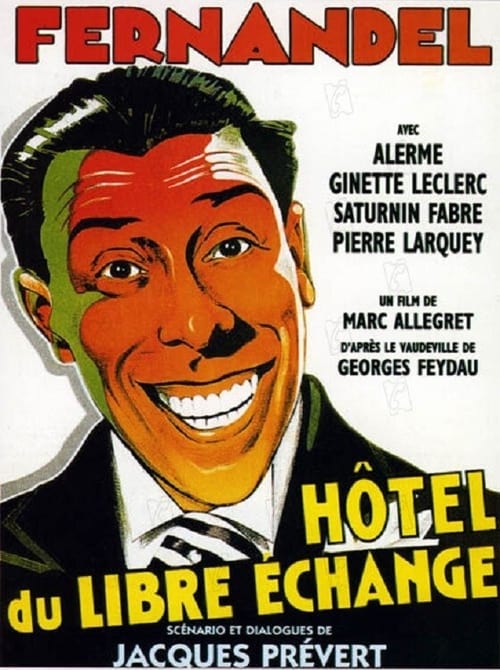
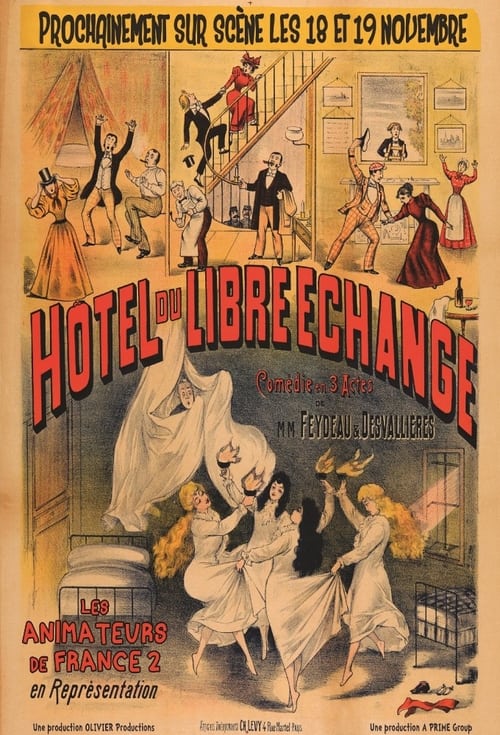
There's never a dull moment at the Hôtel du Libre Echange. Deceptions, hitches and other misunderstandings make a few people mingle whereas, for their own sake, they should not. An example among others: an expert who has come to the hotel for professional reasons had better not meet his wife, who is there to cheat on him with his best friend.
The Free Trade Hotel

Pontagnac, a married man, tries to seduce Victoire, the wife of his good friend. Little does he know, Victoire has plans of her own to punish her cheating husband. The would-be fling ignites a dizzying spell of complications as characters arrange trysts, attempt to expose each other’s deceits, and are ultimately forced to come clean.
The Fool
No description available.