Filip Gołdanowski
Directing
Known For
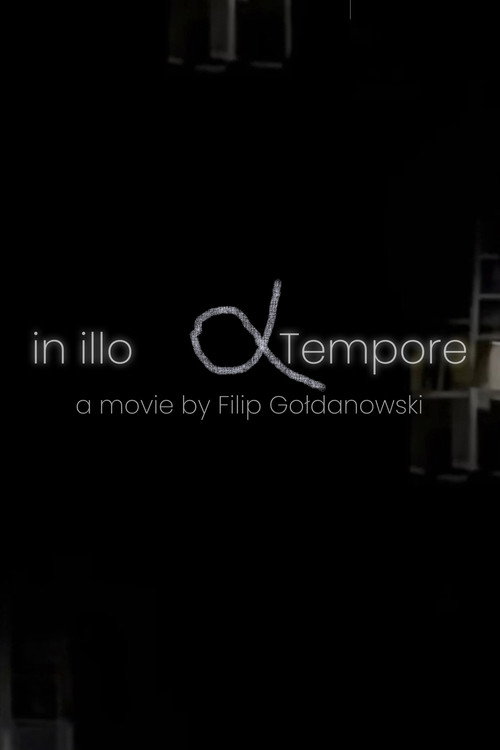
19th part (R. 19 bis) of interdisciplinary cycle REQUIEM. "I imagine that almost everyone who has come across this piece is familiar with the phrase 'in illo tempore'. In illo tempore—in that time. [...] Let’s pause for a moment on 'tempore'. Let’s consider, as laypeople might, what part of the original phrase this is. Of course, it is technically 'time.' [..] When an extra letter 'a' appeared in my mind—which has a tendency to complicate all sorts of concepts to the limit—it completely changed the perspective of everything. 'aTempore' was born. What did that mean to me? If 'tempore' is, theoretically, '(at) that time,' then 'aTempore' would mean 'non-time.' Now we have 'That Non-Time.' Does this mean we should think of time that has stopped? Or perhaps of different spaces, sensations? [...]" - as the introductionary note to the movie says.
In illo αTempore
Sixth part of the cycle of silent short movies "Thou Art BENEDICTUS".
The Wind

“Thou Art BENEDICTUS” is the first part from a cycle of the same title. The entire cycle focuses on concepts related to nature, concepts that are “saintly”—hence, “BENEDICTUS”. In “Thou Art BENEDICTUS,” shots related to nature (a lake from different points of view) and travel (a train) are used. Its form almost resembles a theme and variations. Its basic material is repeated 5 times; each time, new layers of shots are used.
Thou Art BENEDICTUS

A story of (will of) emotional evolution, as seen by an invisible character.
Preface

Fourth part of the cycle of silent short movies "Thou Art BENEDICTUS".