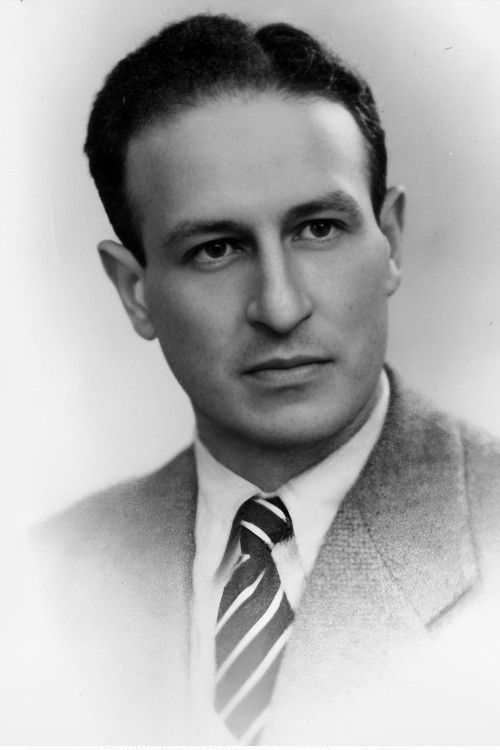
Giusto Gervasutti
Acting
Biography
Giusto Gervasutti, born on April 17, 1909, in Cervignano del Friuli and died on September 16, 1946, on Mont Blanc du Tacul, was an Italian mountaineer who opened numerous routes in the Alps, such as the northwest face of the Ailefroide and the Olan (considered at the time to be the biggest problem in the Alps after the Grandes Jorasses). Gervasutti discovered the mountains at a very young age in the Carnic Alps and the Dolomites, where he forged his temperament as a top-level mountaineer. At sixteen, he began climbing seriously, quickly linking increasingly challenging routes, and then settled in Turin in 1931, which definitively opened the door to major climbs in the Western Alps. His first significant achievements were the south face of the Marmolada and the first ascent of Monte Siera above Sappada, which established his skill on rock faces. In 1932, he discovered high-altitude winter climbing on the Nordend and the Matterhorn, laying the foundations for a style characterized by speed, commitment, and a quest for difficulty in the most challenging conditions. Very quickly, Gervasutti tackled the major problems of the era: in 1934, he opened the northwest face of the Olan, then considered one of the greatest alpine challenges after the Grandes Jorasses, followed by the northwest pillar of the Ailefroide Occidentale in 1936, often cited as one of the most beautiful lines in the Écrins massif. He also made the first ascent of the northeast couloir of Mont Blanc du Tacul and, with Boccalatte and other companions, established a series of pre-war routes that left a lasting mark on the Mont Blanc massif. Nicknamed "Il Fortissimo" for the physical and mental strength he displayed on the rock face, he combined technical mastery on rock, ice, and mixed terrain, a curiosity for modern equipment—particularly Vibram soles—and a keen sense of route finding that impressed his contemporaries. His masterpiece remains the first ascent of the east face of the Grandes Jorasses, achieved in 1942 with Giuseppe Gagliardone, while he was an officer during World War II. This route, long considered the most demanding in the Mont Blanc massif, crystallized his vision: a direct, committing climb where technical difficulty is compounded by extreme psychological exposure. Gervasutti died on September 16, 1946, on Mont Blanc du Tacul, the victim of a rappelling accident, leaving a legacy that extends far beyond his list of first ascents. His routes – Devies-Gervasutti on the Ailefroide, Gervasutti-Boccalette on the Gugliermina peak, the north pillar of the Frêney, the east face of the Grandes Jorasses – remain classics that still define high-level mountaineering. Giusto Gervasutti, a solitary and tormented mountaineer, endowed with an impeccable moral compass, an advocate of lightweight and ethical mountaineering, forever in pursuit of an unattainable happiness, is forever a legend of the mountains.
Known For
People experience adventures on mountains all around the world. Personalities, fascinated by the world of the mountains, bring us closer to the freedom many people experience in such breezy hights.
Bergwelten

Documentary on one of the first editions of the Trofeo Mezzalama, the highest ski mountaineering race in Europe, at more than 4,200 meters above sea level, which takes place on the glaciers of Monte Rosa, from Breuil to Gressoney-La-Trinité, crossing the summits of Castor (4,199 meters) and Nez du Liskamm (4,100 meters). The film recounts the last hours of feverish preparation before the start, the teams preparing for the race linked in ropes, then follows the stages of the competition by following the groups of skiers from a plane. Created in 1933, the Trofeo Mezzalama was contested until 1938, before falling into oblivion during the war. A second version was organized from 1970 to 1973. A third biannual version has been organized since 1997.
Maratona Bianca
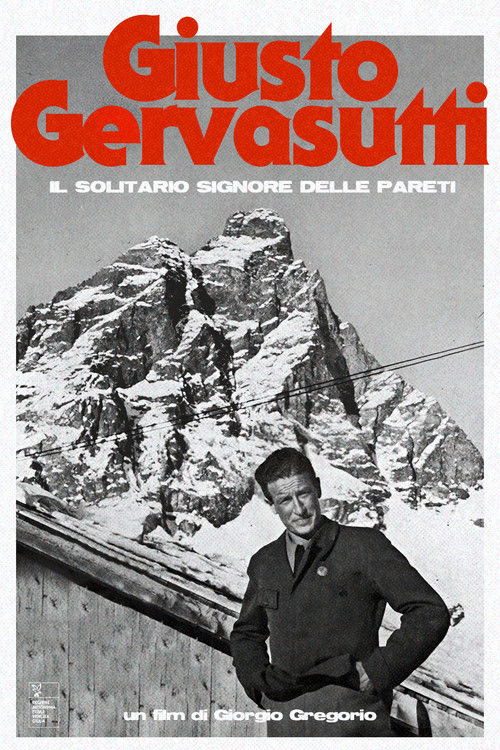
Giusto Gervasutti (1909-1946) was an Italian mountaineer, considered by many to be the best mountaineer of his generation and one of the greatest of the post-war era. He achieved his first feats in 1930 and revolutionized mountaineering in the Western Alps by repeating and opening routes of extreme difficulty that are still considered absolute routes today: the east face of the Grandes Jorasses (with his friend Boccalatte), the northeast spur of the Aiguille Noire de Peuterey, the north face of the Grandes Jorasses, the Gervasutti route on the Gugliermina, the east face of Mont Blanc du Tacul (where he died in 1946), among an incredible list of climbs. The film, made to mark the centenary of Giusto Gervasutti's birth, portrays a solitary and tormented mountaineer, endowed with an impeccable moral sense, an advocate of light and ethical mountaineering, always in search of an unattainable happiness.
Giusto Gervasutti - Il Solitario Signore delle Pareti
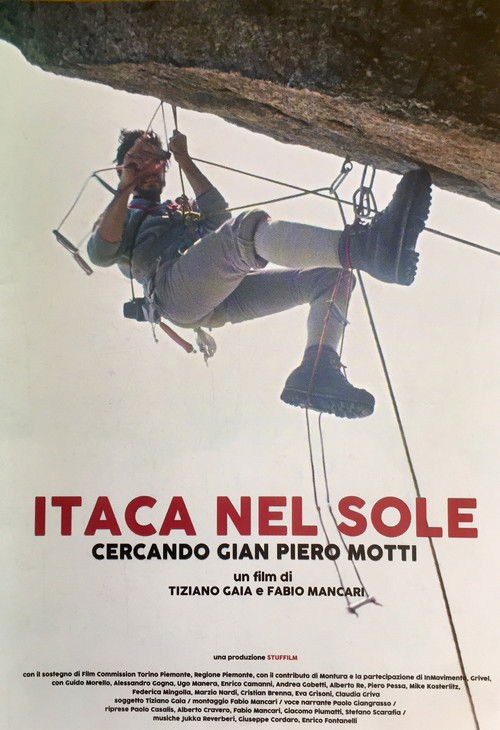
Itaca nel Sole is the name of a climbing route on El Caporal, a wall in Piedmont, Italy, that resembles the worldwide renowned El Capitan. Among climbers, the fame of the route is due not so much to the considerable technical difficulty, but to the symbolic charge that still holds hold on legions of climbers and enthusiasts. Itaca's image is linked to an exceptional character: Gian Piero Motti. Mountaineer, writer and mountain philosopher, Motti embodied the doubts and anxieties of a generation at the crossroads. Through testimonies, photos, and archival materials, his story is articulated through his famous writings.