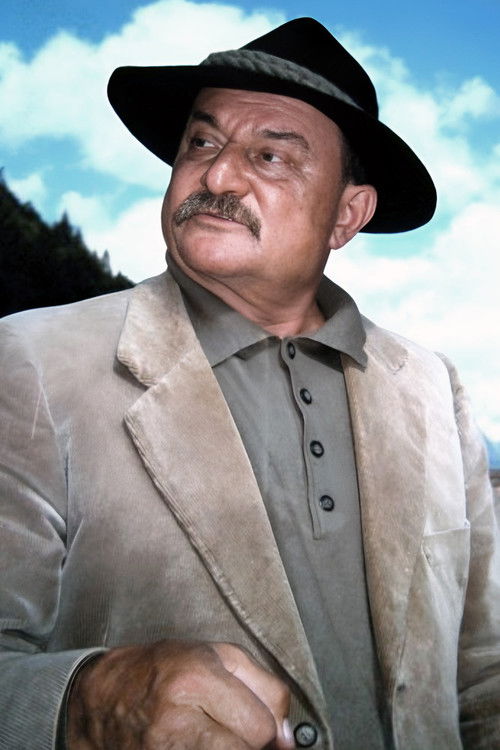
Ignazio Piussi
Acting
Biography
Ignazio Piussi, born on April 22, 1935, in Pezzeit in the Val Raccolana, Italy, is one of the great Italian mountaineers of the 1950-1970 generation. The youngest of ten children in a family where his grandfather Giuseppe and uncle Osvaldo were already local guides and mountaineers, he grew up surrounded by the mountains, working from a very young age on the family farm. Blessed with a powerful physique, he initially pursued competitive sports, practicing ski jumping and cross-country skiing with excellent results, then biathlon and even bobsleigh, before a serious shoulder dislocation in 1954 in Cortina ended this career and definitively led him to mountaineering. His first serious ascents took place while still a teenager with Lorenzo Bulfon and the Perissutti brothers in the Julian Alps, his natural playground. In the 1950s and 1960s, Piussi established himself as a top-tier climber, renowned for his strength, endurance, and economical use of pitons. He established landmark routes on the faces of Jóf Fuart, Cima Veunza, and, above all, Torre Trieste, considered his true masterpiece. After his military service in the mountain artillery, he worked as a lumberjack while continuing to open difficult routes and complete solo ascents, such as the Deye-Peters route on Torre Madre dei Camosci. Outside his native Friuli, he also proved formidable in aid climbing, distinguishing himself particularly in the Dolomites and on major alpine faces. Piussi's ambitions extended beyond the Alps: he participated in the first Italian expedition to Antarctica in the late 1960s, and then in the major 1975 expedition to Lhotse, led by Riccardo Cassin, alongside Reinhold Messner, among others. Messner would later say that Piussi was the strongest mountaineer of the 1960s, highlighting both his exceptional power and his rock-climbing prowess. Obsessed with the Eiger's north face, he attempted the famous Nordwand thirteen times, always thwarted by atrocious weather conditions, which contributed to forging his legend as a tenacious mountaineer. Among his lesser-known exploits is a one-day traverse of the Mont Blanc massif, from Chamonix to the summits of the Dôme du Goûter, Mont Blanc, Mont Maudit, and Mont Tacul, before returning via the Vallée Blanche—a feat still considered a high-level "fast and light" achievement. A reserved and direct man, Ignazio Piussi rarely spoke of his own exploits, which explains why he remained relatively unknown outside of Italy for so long. His legacy was brought back into the spotlight by Nereo Zeper's book and film "Ladro Di Montagne" (Mountain Robber), as well as by Gilbert Dassonville's documentary "Abîmes" (Abysses), alongside Roberto Sorgato, which recounts their 1961 adventure of the first winter ascent of the north face of the Cima Ovest di Lavaredo in the Dolomites. This film won an award at the Trento Film Festival in 1973. In the latter part of his life, he managed the Malga Gregnedul refuge near Sella Nevea. Ignazio Piussi died in Gemona on June 11, 2008, at the age of 73, leaving behind the image of a powerful and unassuming mountaineer, considered by his peers to be one of the greatest figures in the post-war vertical world.
Known For
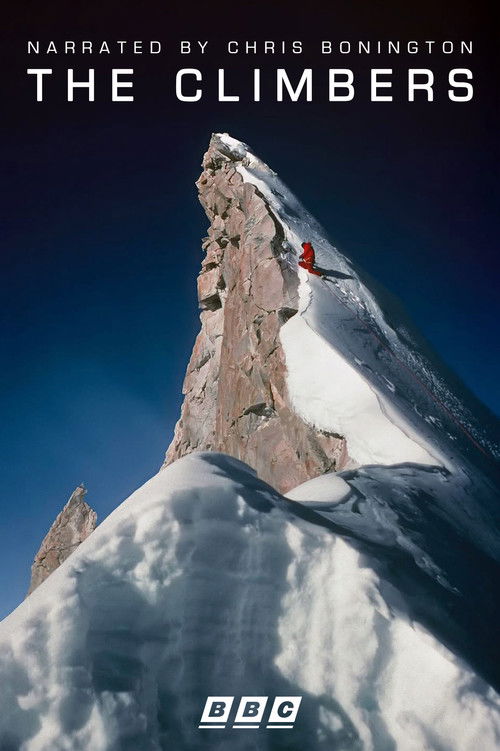
"The Climbers" is a six-part documentary series tracing the history of mountaineering. Directed by Chris Bonington and Richard Else, it was produced by the BBC and broadcast in 1992. The series recounts the evolution of mountaineering and the traditions of climbers in Great Britain and on the European continent: the former developed a free climbing technique, while the latter used aids such as keys, pitons, and drills to ascend otherwise inaccessible routes. The program includes archive footage of the pioneers of the sport, from the emergence of free climbing as a distinct discipline in the late 1970s and 1980s to the advent of competitions.
The Climbers
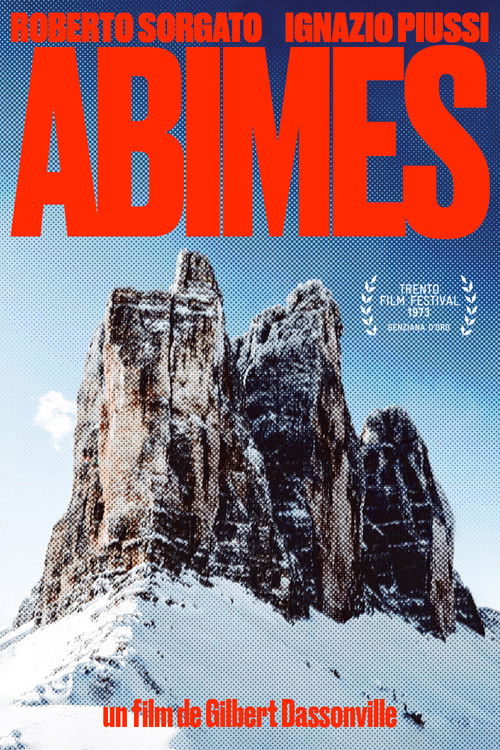
Mountaineers Roberto Sorgato and Ignazio Piussi relive their 1961 adventure: the first winter ascent of the north face of Cima Ovest di Lavaredo, a formidable Dolomite wall reaching 2,973 meters. During this expedition, Sorgato accidentally fell 60 meters while the climbers were preparing their third bivouac and found himself suspended in mid-air by a rope. Through sheer perseverance, ingenuity, and courage, he managed to pull himself back to his partner. The film, shot eleven years later, is a reenactment with the protagonists playing themselves. The difficulties this climb presents, even for the most experienced climbers, are irrefutably highlighted. The film received the Genziana d'Oro award at the Trento Film Festival in 1973.