
Ryan Nurfajar Apriansyah
Editing
Biography
Born on April 26, 2005, Ryan Nurfajar Apriansyah is an Indonesian filmmaker originally from Kuningan, West Java, and currently based in Bandung. He is currently pursuing a bachelor's degree in Film and Television at the Indonesian Institute of the Arts and Culture (ISBI) Bandung, expanding upon the technical foundation established during his previous vocational education. Ryan is a filmmaker whose cinematic approach intuitively integrates a versatile technical skill set—particularly in directing, producing, editing, and cinematography—to construct local narratives centered on spatial memory and socio-environmental landscapes. His directorial vision emphasizes observational realism, documenting the decay of physical infrastructure and the sociological resilience of communities within marginalized regional geographies. He firmly believes that the ordinary can become extraordinary when viewed from a different perspective. From his early school days and continuing into his current university years, Ryan has been actively creating films, with a portfolio that includes several short documentaries and short fiction films. He continues to develop his structural understanding of regional cinema through academic research and consistent involvement in independent production networks across West Java.
Known For

A high-achieving student attempts to expose violence at his school during a child-friendly evaluation, but is then psychologically pressured by a corrupt religious studies teacher trying to protect the institution’s reputation. Caught in a manipulative educational system, the student is faced with an agonising moral dilemma: should he save his academic future or sacrifice his moral integrity?
Tut Wuri Handayani
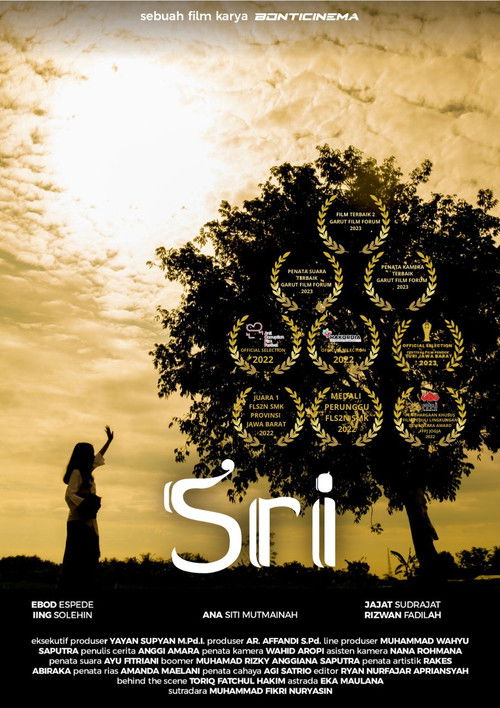
Sri is a symbol of rice fields or the embodiment of Sri Pohaci Larasati, better known as Dewi Sri. When people sold their rice fields to build houses and buildings, Sri felt uneasy, afraid that the villagers would lose their livelihoods and no longer care for the rice fields. This is especially true when Kohar, the village head, is approached by a businessman who offers him a large sum of money to sell the communal rice fields in his village to build a hotel. KOHAR (50) must make a decision. On the table is a brown suitcase filled with money given to him by INDRA (40), a Chinese investor who offers change. If he wanted his village to progress, he had to sell the kabuyutan rice fields to INDRA, who promised significant economic change after the village had been devastated by the pandemic.