Acting
A young Viennese actor is having much success on the stage; but intrigue and confusion in his love life are making his life a living Hell.
A film for scatterbrains. Everyone's constantly forgetting something – the daughter the little dog, the father the files, the chauffeur forgetting to close the roof of his taxi when it's pouring rain and his passenger gets soaked. Everyone rushes through life and doesn't even have time for themselves. Then a "young" student (Hans Söhnker) returns to his hometown. He receives a lavish welcome and, at 34, is probably one of the oldest students in German film history. He has three fathers who support him financially and studies on their money. Interminably. Now he has to accept that his fathers have run out of money for his studies. So he rolls up his sleeves, forgets about the expensive degree, and switches to a trade. He does hair, he drives, he assembles film, he shaves, and he pins seams. There he meets a young lady, has time to serenade her, and then learns that his biological father is a millionaire, who now lends him a hand and distributes cash to the other cash-strapped fathers.
No description available.
A drama about marriage in a small town, which takes place at the turn of the 19th into the 20th Century.
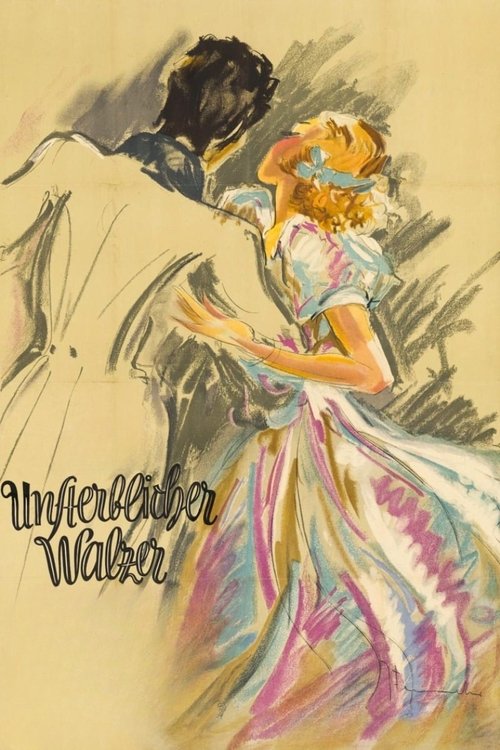
Begun in 1944/45, finished and released in 1949, this is a biography of the composer Carl Michael Ziehrer, who overcomes hypersensitivity in competitive situations which leads initially to failures in both career and romance.
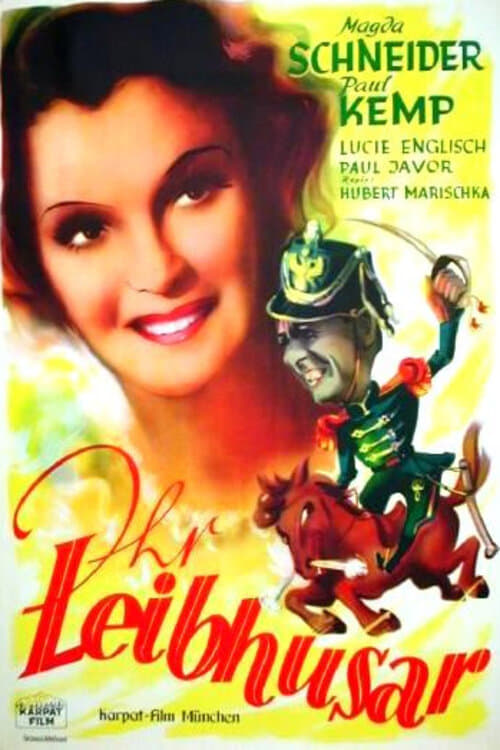
An easy-going hussar officer successfully vies for the love of a millionaire's daughter.
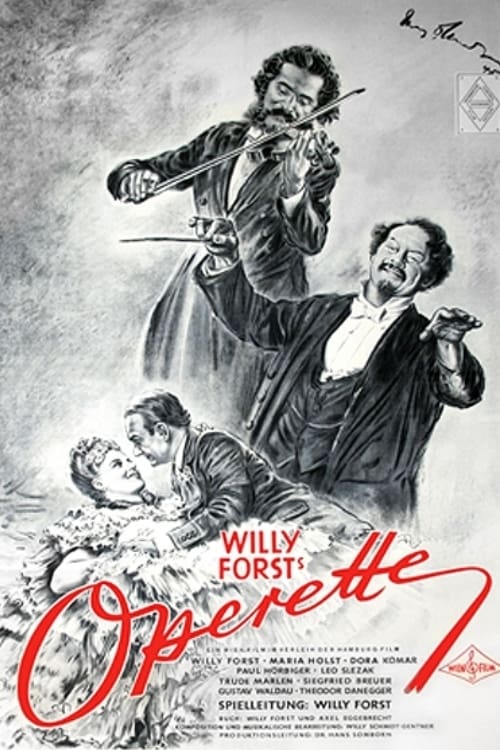
A musician is offered a job in Vienna as stage director, but his disagreements with the aristocratic opera manager end in abrupt firing in spite of a mutual attraction. He's quickly engaged by another theatre and becomes famous for his lavish stage productions and fine acting, which begins their golden age with Suppé and Strauss.
A moron buys a worthless piece of land, which a swindler passed off as an oil field.
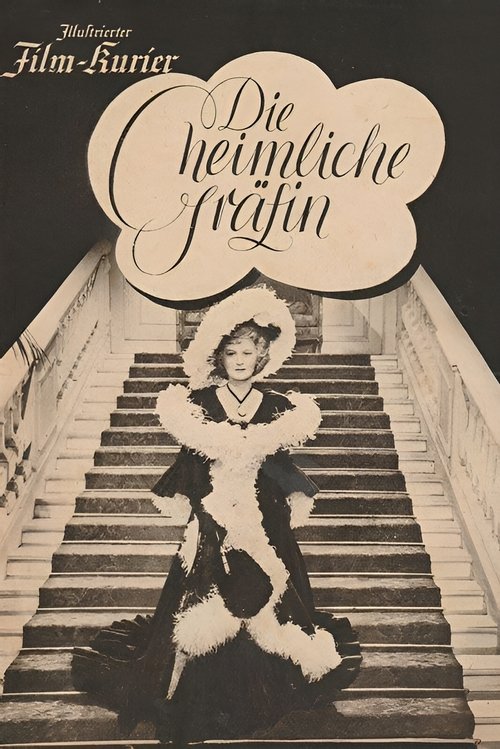
A comedy of confusion in aristocratic Vienna at the turn of the 19th into the 20th Century: The young Bohemian Countess Antschi Dorival trades places with her friend Martina, because she wants to become an actress and applies as such at the city theatre under a false name. And so, Martina attends the Vienna Opera Ball, posing as the countess. Because of their striking similarity to one another, Martina is confused with the impostor Sonja Lubomirska, who shortly before stole a necklace belonging to the wife of Archduke Johann Sylvester.
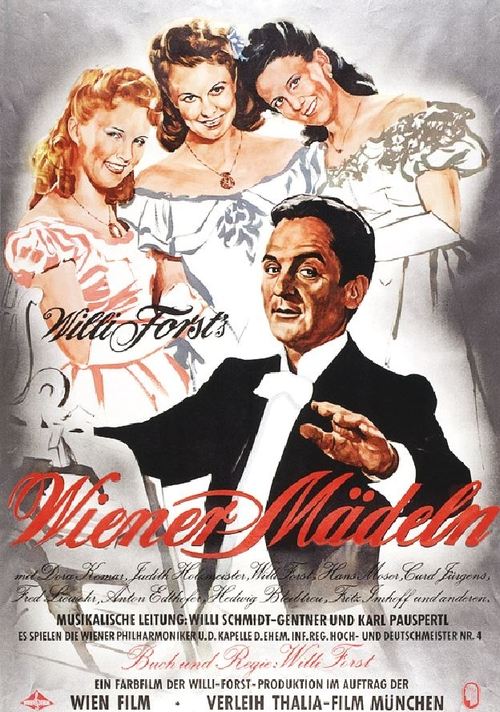
Johann Strauss firmly established himself as the leader of a dance orchestra in Vienna in the 1840s. His sons Johann junior and Josef have clearly inherited their father's talent. Nevertheless, father Johann is strictly opposed to both of them training as composers.
In the eve of the war between Vienna and Berlin playing dear comedy with then popular occupation: The mother wants to marry her daughter to the lord of the manor, but the daughter prefers the elegant hoteliers.
A comedy directed by Géza von Radványi.
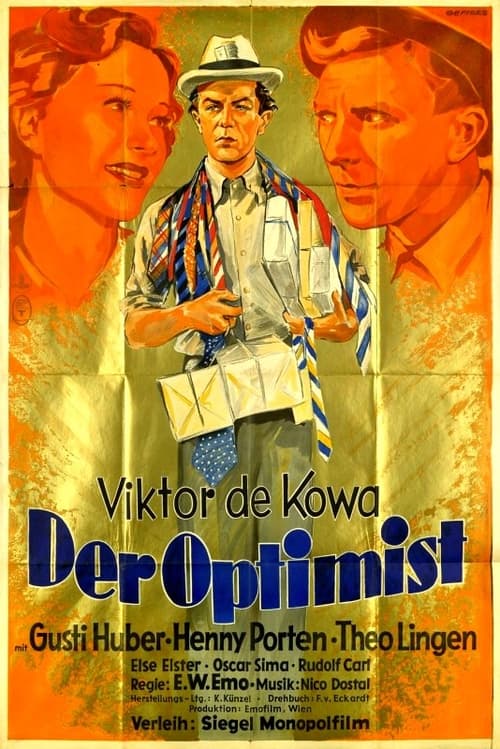
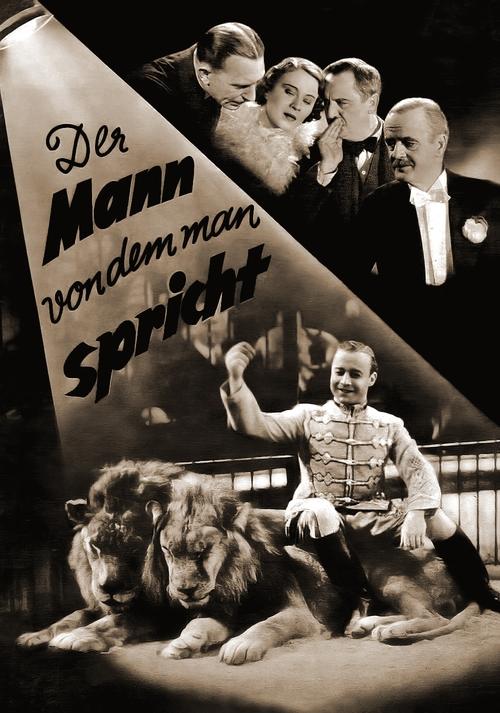
The Man Who is Talked About is the overly agreeable Toni Mathis (Heinz Ruhmann), a gent constitutionally incapable of saying the word "no" (or "nein," this being a German picture). Though he'd rather breeze through life without responsibilities or obligations, Toni agrees to study zoology in college because his uncle (Hans Moser) wants him to. Alas, despite the Herculean efforts by Toni's servant Hassler (Theo Lingen) to prepare his master for his final exams, Toni forgets to show up for the finals and is expelled post-haste. In desperation, his uncle arranges for Toni to get married, and once again our hero just can't say no. Trouble is, he falls in love with trapeze artist Bianca (Gusti Huber), whose father won't let her marry anyone except another entertainer. Undaunted, Toni studies a book on show business and tries out for the vaudeville stage, and the picture isn't even halfway over yet!
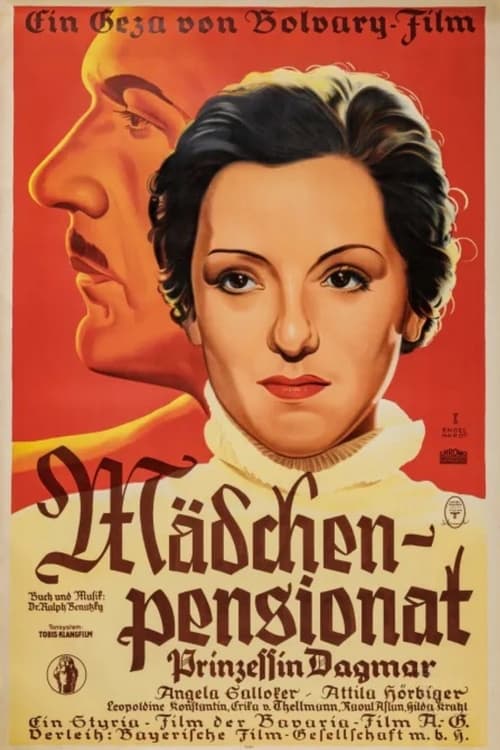
Princess Dagmar's life is boring, so depressed - so depressed that the doctor has to come. And the doctor advises: The girl must get out of the regulated aristocratic everyday life. Princess Dagmar is sent to a girls' boarding school, located on a farm, where everyone studies hard and gets stuck in and eats simple, healthy food. In keeping with the surroundings, Princess Dagmar also falls in love with a tough country boy. He is determined to found a school where individual boys are welded together in camaraderie - so that they can find the values that will enable them to fulfill their leadership roles in the world of tomorrow. Of course, Princess Dagmar will entrust her son to him one day.
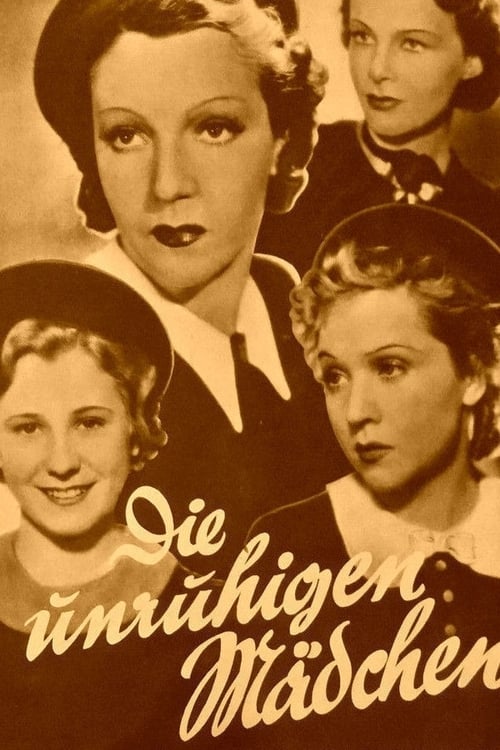
Four orphaned friends move after the Abitur, supported by the janitor of her school, together in a flat and look for work to be able to finance her study. Two make the acquaintance of a frivolous young baron. One shoots in her outrage at him, nevertheless, is acquitted in court. - Stereotyped Jung's girl's cheap sensationalism, broken up by popular comic. Hans Moser stands out by his delightful character comic. The last in Austria produced film before the invasion of the armed forces ('Wehrmacht').
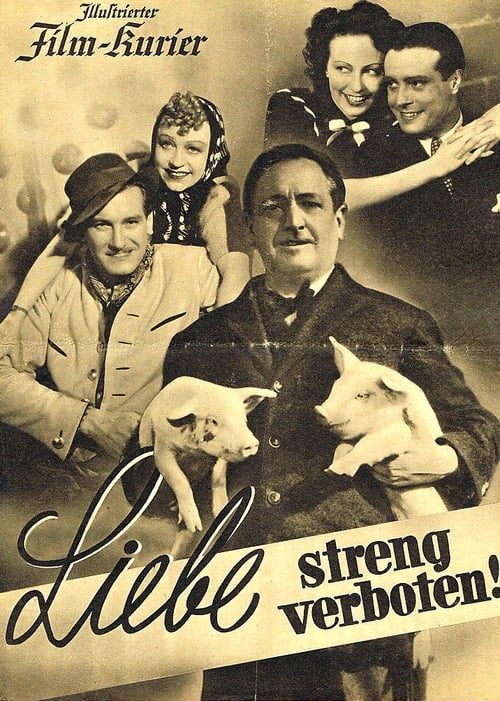
The greengrocer Ferdinand Strubel wants his daughter Marianne to marry the son of the brewery owner Baron von Schnackenberg. Since Strubel is an impossibly cheap bastard, the marriage is to take place on 20 May, which, coincidentally, is the same day the city is having a grand festival for him to celebrate his company's being in business for 100 years. Marianne, however, has fallen in love with Leopold, a gym teacher; and when he reads an article in the newspaper about the upcoming arrival of Haley's Comet on 19 May, he comes up with an idea how he can prevent the wedding from taking place: He tells Strubel that the world is going to come to an end when the comet shows up, so that Strubel will see the errors of his way, cancel the arranged wedding and will become a better person for it. (Sucker!).
Ten years after the end of World War I, Austrian soldier Franz leaves Russia and returns to his village, where he is reunited with Frieda, a woman who believes he is her long-lost son. She seeks him out and greets him with such loving joy, that Franz doesn't have the heart to tell her the truth. He stays with her and when he gets to know his new girlfriend Annie, he begs her to hide his true identity from Annie. Annie, for her part, has seen through this charade already, but chooses to say nothing and to continue to care for Franz.