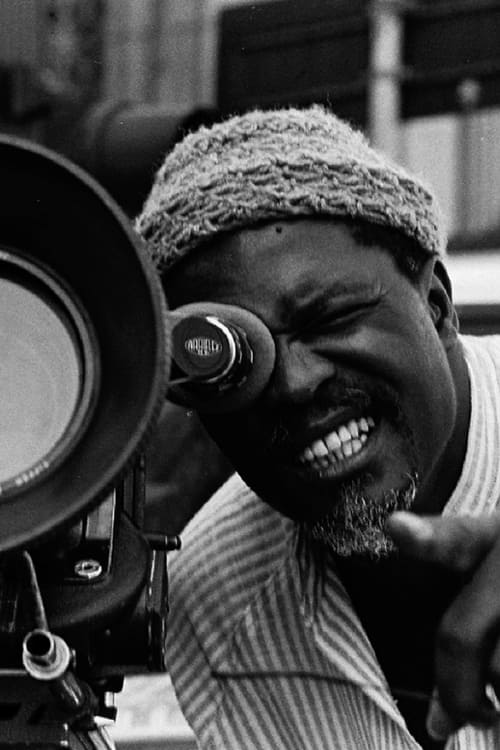
Zózimo Bulbul
Acting
Biography
A Brazilian filmmaker, actor, producer and screenwriter, Jorge da Silva, better known by his stage name Zózimo Bulbul, is regarded as a household name of black Brazilian cinema. He was also the founder of Rio de Janeiro's Black Cinema Center ("Centro Afro Carioca de Cinema"). As an actor, he worked in over 30 features, and was directed by filmmakers such as Glauber Rocha (in "Terra em Transe"), Carlos Diegues ("Quilombo") and Antunes Filho ("Compasso de Espera"), becoming the first black man to play a main character in a Brazilian TV soap opera, in 1969's "Vidas em Conflito". His debut as a filmmaker was 1974's black and white short "Alma no Olho". With his work focusing in raising awareness to Brazilian black culture, Bulbul remained an active filmmaker until his death in 2013. His most well known film, as a director, is 1988's "Abolição", a lengthy documentary that gives critical thoughts on Brazil's 1888's ending of slavery and in what changed for the country's Black people over the course of a century.

Known For

No description available.
Chico Anysio Show

Sexy girl seduces all the members of her family. She indirectly causes the failure of his father's marriage, for her stepmother falls in love with her. Then, she has affairs with her father's stepson, and with the farm housekeeper. She and some friends are also raped by some bad guys. But they all celebrate the ruin of traditional family values.
Giselle

Eldorado, a fictitious country in America, is sparkling with the internal struggle for political power. In the eye of this social convulsion, the jaded journalist Paulo Martins opposes two equally corrupt political candidates: a pseudopopulist and a conservative. In this context, Paulo is torn between the madness of the elite and the blind submission of the masses. But, in this complex tropical reality, nothing really is what it seems to be.
Entranced Earth

Six people find a mysterious mark in the center of their left hand and all independently go to Easter Island in hopes to uncover the mystery.
The Suns of Easter Island

In São Paulo, Vanessa who is normally spoiled rotten, is neglected and rejected by her mother, practically raised alone by her butler and driver Pedro and the maid, Dalva. Vanessa has disturbing daydreams and sexual fantasies, but doesn't let Arlindo, a teenager that flirts with her get close to her. Her best friend is Denise, a promiscuous girl that has intercourse with different men. When Vanessa discloses to Denise her problem, Denise gives the address of her psychotherapist Dr. Artur, to her friend. The unethical shrink pushes Vanessa to the edge, bringing memories of a severe trauma of her childhood. Then the disturbed Dr. Artur induces the girls to commit suicide.
The Girl and the Rapist

A man gets locked naked outside of his apartment.
The Naked Man

Chronicles the life of a 17 year-old girl living in the upper-class Rio de Janeiro neighbourhood of Ipanema. Márcia lives a life of parties and spend her days among bohemians, musicians and intellectuals. While seeming happy in the outside, she's extremely anguished inside. Based on the famous song by Antonio Carlos Jobim and Vinicius de Moraes.
The Girl from Ipanema

No description available.
Vidas em Conflito

Jorge de Oliveira is an Afro-Brazilian poet who works in a publicity agency in São Paulo. Torn between his rich white lovers and his black family and friends, Jorge's situation serves as a springboard to a discussion about racial issues in Brazil.
Compasso de Espera

The life of a runaway slave who founded the Quilombo dos Palmares, an outlaw community of Brazilian slaves.
Ganga Zumba

Quilombo dos Palmares was a real-life democratic society, created in Brazil in the 17th century. This incredibly elaborate (and surprisingly little-known) film traces the origins of Quilombo, which began as a community of freed slaves. The colony becomes a safe harbor for other outcasts of the world, including Indians and Jews. Ganga Zumba (Toni Tornado) becomes president of Quilombo, the first freely elected leader in the Western Hemisphere. Naturally, the ruling Portuguese want to subjugate Zumba and his followers, but the Quilombians are ready for their would-be oppressors. The end of this Brave New World is not pleasant, but the followers of Zumba and his ideals take to the hills, where they honor his memory to this day. Writer/director Carlos Diegues takes every available opportunity to compare the rise and fall of Quilombo with the state of affairs in modern-day Brazil.
Quilombo

João Grilo is a backwoodsman who tries to get along at the expense of the powerful in the city, who pretend to be respectful of morals and good customs and hide their sins. But when a band of cangaceiros attacks the small town, everyone has to settle accounts with God and the Devil.
Our Lady of Compassion

A woman from a bourgeois family marries a loveless man. She remembers (or dreams?) a life of adventure and smuggling, hijacking ships at night. She is kidnapped by the leader of the enemy gang, with whom she falls in love.
Hung Up

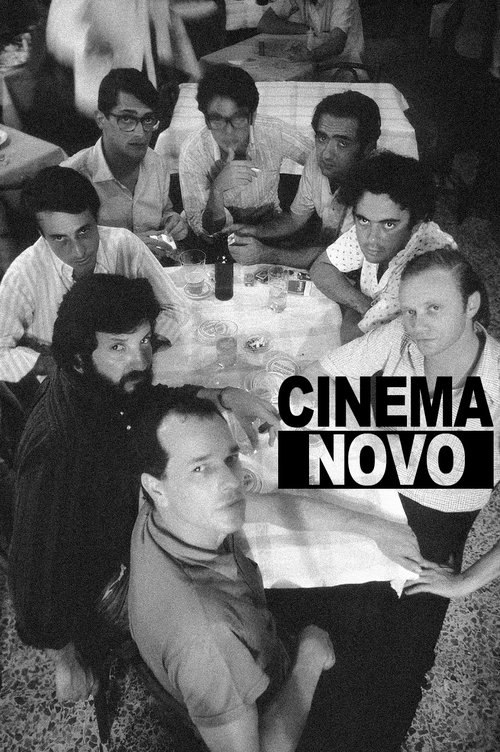
Originally produced for German TV, Improvised and Purposeful is a firsthand look at the "Cinema Novo" movement (otherwise known as the 'Brazilian New Wave'). Director Joaquim Pedro de Andrade focuses on six Cinema Novo filmmakers working in Rio in 1967.
Improvised and Purposeful: Cinema Novo

Bárbara, a French girl living in São Paulo, and two friends transform a small apartment into a luxury bordello, "The Palace of Angels", at first securing money and success, but...
The Palace of Angels

No description available.
Ana, a Libertina

Young man, of Portuguese nobility ascendancy, starts working in a rubber plantation in the Amazon, in 1912, and falls in love with pretty Yayá, a married woman.
The Forest

The making of the samba school parades, with the construction of the great cars, the decorations being spread all over the city and the hand-crafted tailoring of the costumes by apt hands that stitch together colourful and glowing materials.
Artesanato do Samba

A shockingly irreverent follow-up to the rural austerity of Barren Lives, dos Santos’ Godardian social satire owes more than a nod to the self-conscious antics of the French New Wave. The pampered son of a general, El Justicero is a hipster playboy who fancies himself a James Bond/Jean Paul Sartre urban hero. “Archetypical” yet “full of contradictions,” he sees that justice is achieved for the disadvantaged while taking advantage of certain bourgeois perks. His exploits are closely followed and eventually directed by his biographer who decides a film is not only more lucrative than a book, but it gives him the luxury of reviewing previous scenes. Unlike Bond, El Jus eventually experiences an awakening which threatens to compromise the entertainment value and glamour of his life story. - Harvard Film Archive
El Justicero

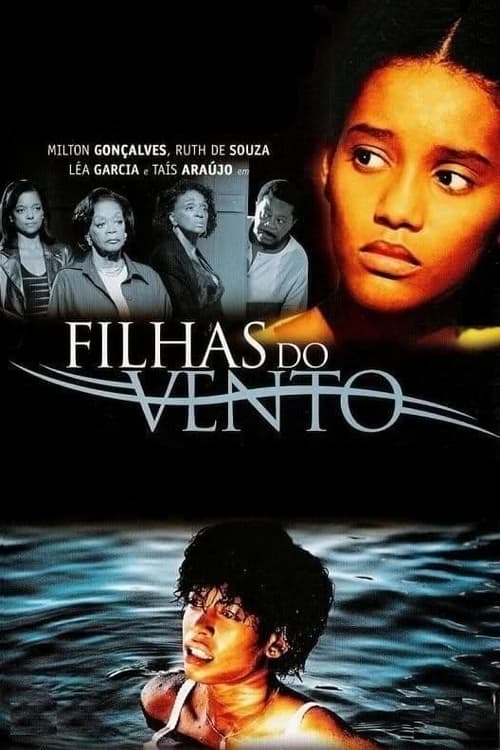
In a small town in the State of Minas Gerais, Brazil, two sisters meet again after years apart.