FEEL IT.STREAM
Bernard Baissat

Bernard Baissat

Directing

Biography

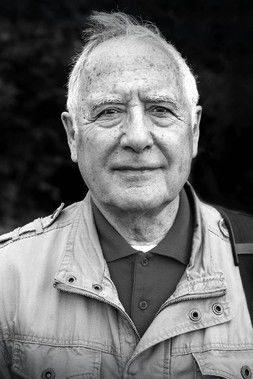
Bernard Baissat, born March 5, 1943, in Nabeul, Tunisia, is a French journalist, television director, filmmaker, pacifist, and libertarian. After teaching Italian and French literature, Bernard Baissat left teaching in 1966 to become a journalist at ORTF (the regional television station in Dijon), working under Pascal Copeau. In 1967, he became an assistant television director in Paris, first in news and then in educational television. He notably produced programs on economics with the trade unionist Jacques Delors. In 1968, after participating in the May events, he went to Niger as a director for educational television, where he remained for two years. Wishing to continue his work in Africa, he then took up a position as a director/trainer in Bouaké, Ivory Coast, for four years. In 1974, the Francophone Agency for Cultural and Technical Cooperation appointed him head of a French-language television project in Lebanon. Director of Vidéo Liban for two years, he had to cease operations at the start of the civil war. In 1976, upon returning to France, he worked as a director for FR3. There, he produced numerous reports and collaborated on the new program Mosaïque, aimed at foreign audiences and produced by the Agency for the Development of Intercultural Relations, until 1981. He also became a trainer at the INA (National Audiovisual Institute). He chose the status of freelance director for the performing arts, allowing him to work for different channels and programs. This status also enabled him to make more personal films outside of television. From 1980 onwards, he directed and produced documentaries, including the series "Écoutez..." (Listen...), in which he portrayed libertarian and pacifist figures such as André Claudot, Jeanne Humbert, Eugène Bizeau, May Picqueray, Marcel Body, Aguigui Mouna, Robert Jospin, René Dumont, Serge Utgé-Royo, and André Bösiger. In 1987, he filmed a documentary about the satirical weekly Le Canard enchaîné to mark its 70th anniversary. In 2000, still interested in new production and distribution possibilities, he collaborated for two years on the European venture of CanalWeb, an internet television service, producing and directing some fifty social history programs with historians from the Sorbonne, the CNRS (Maitron team), and international historians. In 2007, a meeting with a historian in charge of the New Caledonian archives gave him the idea of ​​creating films from the many hours of unseen footage in his personal archives. These films are intended for students, researchers, and anyone interested in the history of New Caledonia. Since 2009, to update screenings of his older films, he has been making short films on the themes of friendship, solidarity, and resistance. Since 2010, he has been developing his pacifist and libertarian ideas in the newspaper and radio programs Si Vis Pacem (Libertarian Radio) of the French Pacifist Union.
Known For

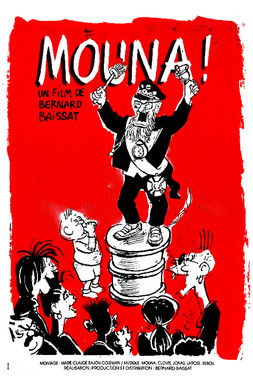
Écoutez Mouna
10.0

Everyone knows Aguigui Mouna, the jester who harangues the crowds on the Beaubourg esplanade in Paris and rides his bicycle through demonstrations. But many don't know the story of André Dupont, a Savoyard raised in tough conditions, forced into violence in the navy to rise to power and into resourcefulness in civilian life to survive. Antibes, 1952, the transformation: Aguigui Mouna is born. Laughter, solidarity, non-violence, humanism—Mouna has found the meaning of his existence. He will try to share them with all the robots of this "poop-pee-capitalist" society. A comic book character who, through his adventures, reveals the absurdities of his century.

Écoutez Mouna

1989
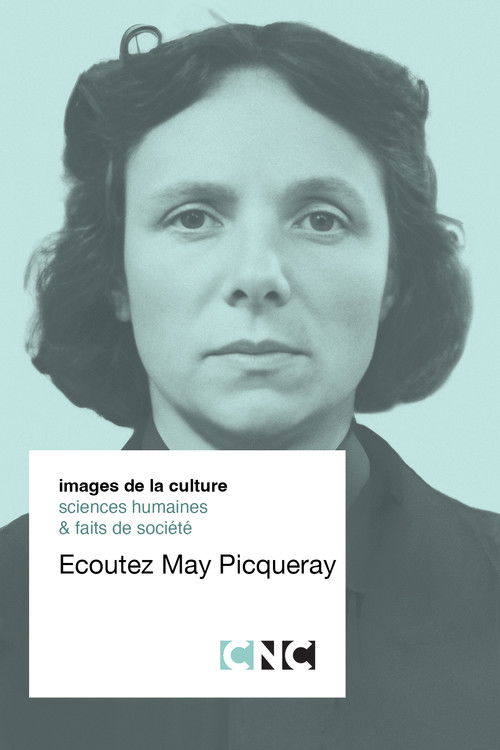
Écoutez May Picqueray
10.0

"Well, I believe in anarchy! And I believe it will come true one day." That's what "May the Rebel," a union activist, anti-militarist, and anarchist, always ready to denounce oppression and defend victims, affirms at 85. Born in Brittany, she earned her living at age 10 delivering butter. In Paris, at 20, she became involved with the Anarchist Union. Sébastien Faure became her mentor. She used a grenade to trigger the Sacco-Vanzetti affair. A union delegate in Moscow in 1922, she sang "Hymn to Anarchy" before Trotsky. Children during the Spanish Civil War, Jews during the Second World War, conscientious objectors alongside Louis Lecoin during the Algerian War, and later, through her newspaper Le Réfractaire, the Larzac, Plogoff, and Creys-Malville protests—all these were battlegrounds for May Picqueray. To the very end, she remained true to her commitment to defending peace and individual liberties.

Écoutez May Picqueray

1984
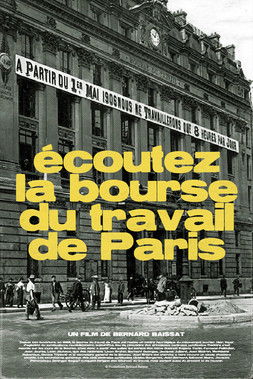
Écoutez La Bourse Du Travail De Paris
10.0

Since its opening in 1882, the Paris Bourse du Travail (Labor Exchange) has remained a nerve center of the labor movement. Once a hotbed of revolutionary syndicalism, and now a meeting place for the main labor federations, history is etched into the walls of the Bourse. It is from the rooms bearing the names of illustrious figures—Eugène Varlin, Fernand Pelloutier, Jean Jaurès, Léon Jouhaux—that historians (Jean Bruhat, Bernard Georges, Jacques Julliard, Jean Maitron, Madeleine Reberioux, Denise Trintant) and the Bourse's general secretary, Jean Braire, have sought to bring to life a century of social history. The general secretaries of the five major labor federations (André Bergeron, Jean Bornard, Edmond Maire, Jacques Pommateau, Georges Seguy) discuss the origins of the Bourses du Travail, but also address the present and the future.

Écoutez La Bourse Du Travail De Paris

1982
Aux Quatre Coin-Coins Du Canard
10.0

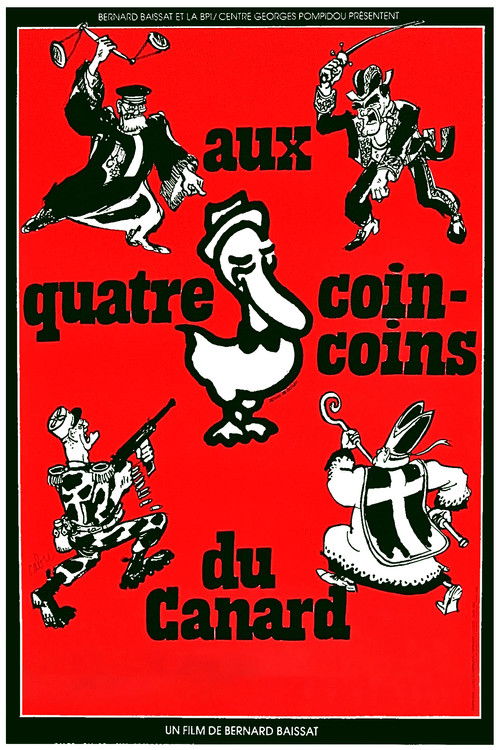
Since 1915, the French satirical newspaper Le Canard Enchaîné has maintained and even strengthened its position in the press, without losing any of its wit or bite. This multi-part documentary recounts the history (53 min.) of the newspaper, when Maurice Maréchal decided to fight against the propaganda of the mainstream press, beholden to lobbies and the powerful. It features portraits (45 min.) of some of the newspaper's journalists and cartoonists. Its traditions (34 min.) are deeply rooted and faithfully upheld in the spirit of irreverence, insolence, and freedom in the face of all forms of power. The documentary also delves into the scandals (40 min.): if "Le Canard" was able to launch investigative journalism in France, it is because it has remained "free, independent, and clean," as its founder intended, thus retaining the trust of its readers.

Aux Quatre Coin-Coins Du Canard

1987