FEEL IT.STREAM
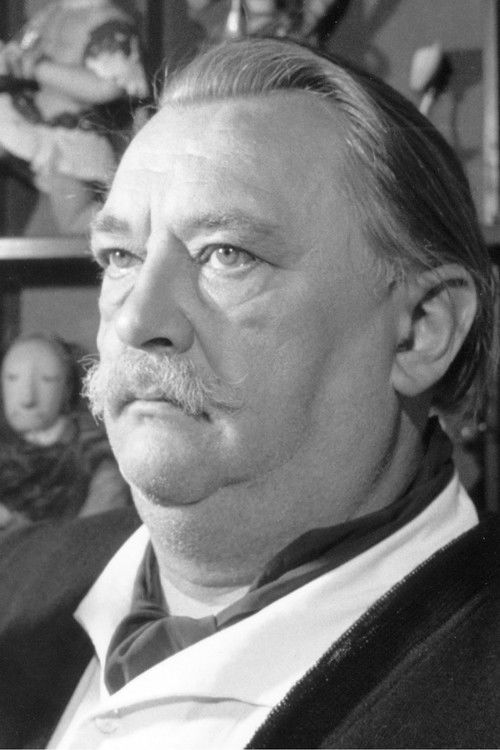
Jiří Trnka

Jiří Trnka

Directing

Biography

A graduate of Prague's School of Arts and Crafts, in 1936 he created a puppet theater, which was disbanded after the outbreak of WWII. During the war he designed stage sets and illustrated children's books. In 1945 he set up an animation unit with several collaborators at the Prague film studio; they called the unit "Trick Brothers." Trnka specialized in puppet animation, a traditional Czech art form, of which he became the undisputed master. He also created animated cartoons, but it was his puppet animation that made him an internationally recognized artist and the winner of film festival awards at Venice and elsewhere. He wrote the scripts for most of his own films.
Known For

Lemonade Joe
7.1

A satire of the Great American Way, with Lemonade Joe a "clean living" gunfighter who drinks only Kola-Loca Lemonade and convinces everyone else in town (with his gun skills) that all "real men" drink ONLY lemonade!

Lemonade Joe

1964
Jan Žižka
7.0

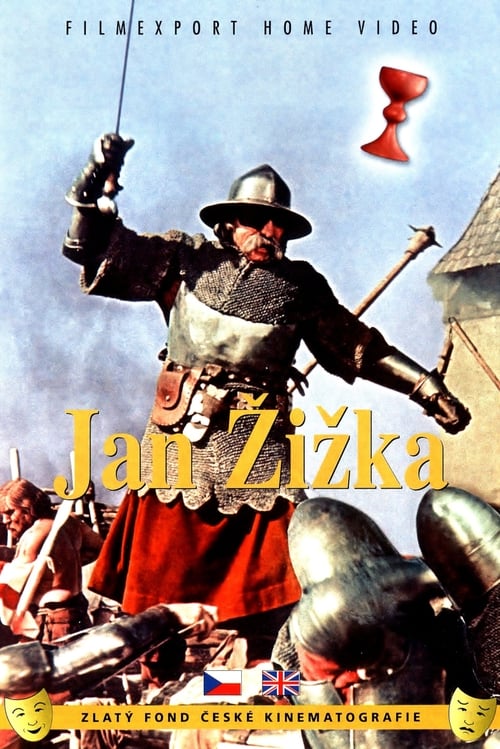
The second part of the revolutionary Hussite trilogy takes place in the years 1419-1420.

Jan Žižka

1956
Story of the Bass Cello
5.8

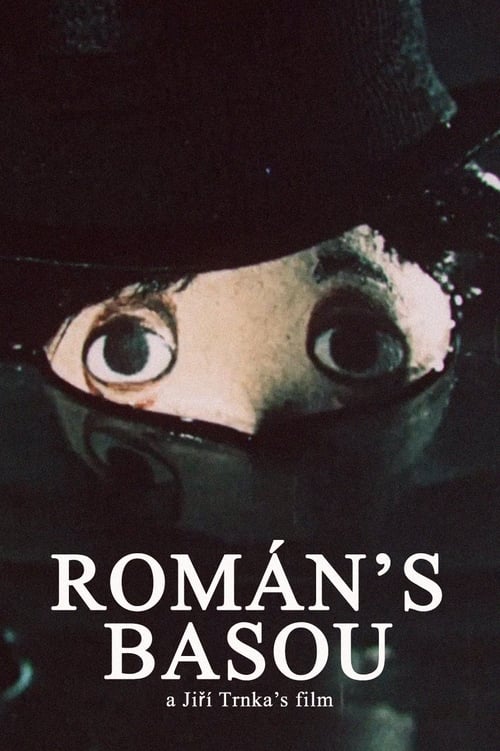
"Román s basou" is another short by master a stop-motion puppet-animator Jiri Trnka. The story is based on Anton Chekhovs story "Roman s Kontrabasom". Princess Bibulova decides to go fishing along the river while not far away a bass player leaves his two companions to go for a swim.

Story of the Bass Cello

1956
The Hand
7.4

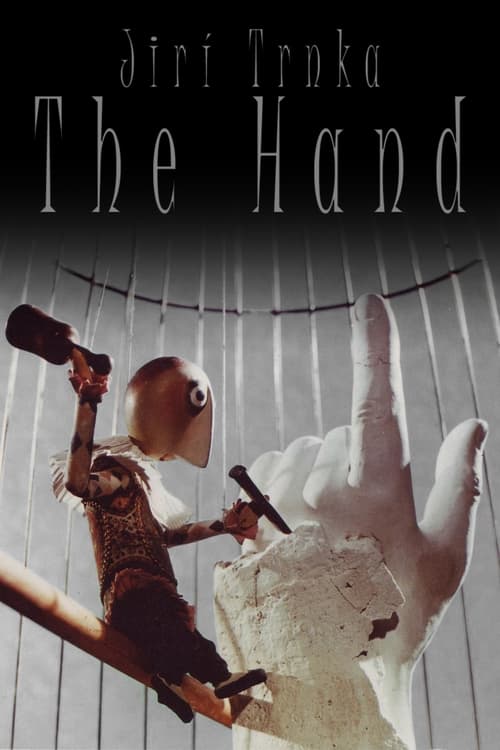
A happy little potter is approached by a huge hand which wants him to sculpt its statue. The potter refuses, wanting nothing more than to be left alone with his only friend, a potted plant. As the hand's request gives way to bribery, demands, and threats, the potter becomes more desperate to escape its clutch, leading to tragedy.

The Hand

1965
Once Upon a Time, There Was a King...
8.0

A selfish self-centered widowed ruler, barely tolerated by his subjects and called appropriately enough, 'King Myself, First' asks his three daughters to name the measure of their love for him. When one of them says, "more than salt", he banishes her from the kingdom. Not understanding what she meant the King assumes love can only be measured by precious metals or one's own talent, the 'correct' answers from his other two daughters. The arrogance of the King leads him to gather all the salt in the kingdom and destroy it. Of course, this backfires as he slowly learns the universal value of the substance, and of course, the essence of his daughter's reply. With the help of the wise and magical old 'herb woman', the King also learns what it means to be a true and wise ruler.

Once Upon a Time, There Was a King...

1955
The Emperor's Nightingale
5.6

Adaptation of a fairy tale by Hans Christian Andersen, about an emperor who prefers the tinkling of a bejeweled mechanical bird to the song of a real nightingale. When the Emperor is near death, the nightingale's song restores his health.

The Emperor's Nightingale

1949
The Puppet Films of Jiri Trnka
N/A

The Czech stop-motion puppet animation master Jiri Trnka directed some of the most acclaimed animated films ever made. In 1966, four years before his death, Newsday lauded him as "second to Chaplin as a film artist because his work inaugurated a new stage in a medium long dominated by Disney." Trnka continues to astound audiences to this day, particularly those discovering this amazing animation for the first time. This collection includes five of the master's shorts and his feature-length classic "The Emperor's Nightingale" based on Hans Christian Andersen's fairy tale and narrated by Boris Karloff. Includes: The Emperor's Nightingale (1951, 67 min.), The Hand (18 min.), The Story of the Bass Cello (13 min.), A Merry Circus (11 min.), A Drop Too Much (14 min.), The Song of the Prairie (21 min.), Jiri Trnka: Puppet Animation Master documentary (12 min.).

The Puppet Films of Jiri Trnka

2000
The Emperor and the Golem
7.0

The Emperor's mismanagement of his country is provoking some in his court to plot to overthrow him. He feels successful, at least, when he discovers the legendary Golem, which he believes can protect him and even cure his imaginary illnesses but, when he disappears while on a bender, his kindly baker, who looks just like him, is mistaken for him, and begins to put things in order. However, the conspirators, not to be outdone, determine to bring the Golem back to life to do their bidding.

The Emperor and the Golem

1952
Capek's Tales
7.7

Five crime stories connected by the narration of police superintendent Bartosek.

Capek's Tales

1947
Prince Bayaya
6.5

Bayaya, a young peasant, protected by the spirit of his dead mother, arrives at the castle of the King, where he entertains his three daughters. He soon realizes that the three princesses are nagged by evil spirits. The little peasant manages to rid them of them, fights a duel with a wicked lord who wanted to marry one of the three princesses. He finally wins the heart of the youngest sister while saving the soul of his mother who was in purgatory.

Prince Bayaya

1951
Against All
6.1

After the battle of Sudoměř the Hussite teaching spreads through the whole country and people start leaving their homes to help build the fortification of Tábor. Prague citizens request help against the army of Zikmund. The Hussite army with Jan Žižka in the lead make their way towards Prague. They fortify themselves on the mountain Vítkov and engage in a bloody battle with Zikmund’s huge army.

Against All

1957
The Merry Circus
5.1

Trnka brings to life a surrealist circus of tightrope-walking fish, musical monkeys, balancing bears, and high-flying acrobatics in this whimsical feat of cutout animation made in collaboration with leading Czech painters of the era.

The Merry Circus

1951
No image
N/A

No description available.

To jsou Bratři v triku

1957
Jan Hus
6.3

The first part of the "Hussite Revolutionary Trilogy", completed with Jan Žižka (1955) and Proti všem (Against All Odds, 1957). The film captures the period from May 1412 to the summer of 1415, a turbulent time in the Czech Kingdom, during which there were protests in Prague against the sale of "omnipotent indulgences" whose sale throughout the kingdom was announced by Pope John XXIII. The ideological leader of this movement is the preacher Master Jan Hus, whose words, calling for the elimination of church abuses, are listened to in the Bethlehem Chapel by thousands of ordinary Praguers, Czech lords and Queen Sophie, wife of the Czech King Wenceslas IV.

Jan Hus

1955
No image
6.1

A poor fisherman catches the golden fish that promises him to fulfil three wishes if he sets her free again. He does so and the fish fulfils two of his three wishes. However, she refuses to fulfil the third one, the last one in which the fisherman’s wife wants to be equal to God.

The Golden Fish

1951
The Czech Year
6.1

The first full-length puppet film made by Jiri Trnka. Like the painter Ales who illustrated the national songs, Trnka depicts the traditional customs and tales of the Czech village in six separate sequences: Shrovetide, Spring, Legend About St. Prokop, The Fair, The Feast and Bethlehem." A Treasury of Fairy-tales" made Trnka famous all over the world and it is a masterpiece of Czech and world animation.

The Czech Year

1947
Garden
N/A

No description available.

Garden

1974
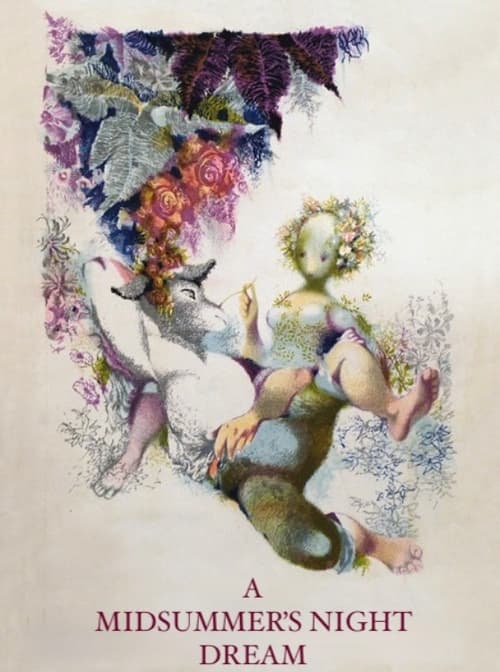
A Midsummer's Night Dream
7.2

The first puppet film shot in CinemaScope. It is based on the famous poetic comedy by William Shakespeare. Three worlds meet in this story: the noble world of three Athens couples, a common popular world of tradesmen amateur theatre and a fairy-tale happiness of magic creatures as elves and nymphs. The film is considered the most remarkable Jiří Trnka's work and a milestone in the history of the world animation.

A Midsummer's Night Dream

1959
Archangel Gabriel and Mistress Goose
6.2

Taken from Boccaccio's Decameron, this lovely puppet film tells the bawdy story of the beautiful young Venetian lady who confesses her sinful passion for the Archangel Gabriel to a lustful monk, who promptly impersonates him in her bedroom with predictable results. Amidst the film's ribaldry, the hypocrisy and false piety of the monk are mercilessly mocked.

Archangel Gabriel and Mistress Goose

1965
No image
5.5

Trnka reached new heights of modernist abstraction with this innovative, surrealist mini-masterwork, which critic Jean-Pierre Coursodon praised as the Citizen Kane of animation.

The Gift

1947