FEEL IT.STREAM
?

Igal Bursztyn

Directing

Biography

Igal Bursztyn (born May 27, 1941) is an Israeli film director, writer, producer and adjunct full professor at the Tel Aviv University Film and TV Department.
Known For

Out of the Blue
N/A

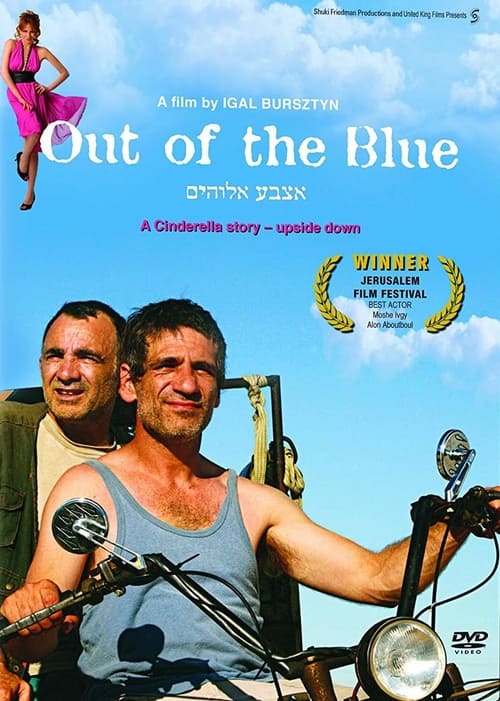
A working-class guy meets the beautiful model from the billboard. But a few more people are involved. Here, the guy is married and his daughter has a crush on the weatherman. The weatherman wants to marry the cosmetics queen from the billboards. The cosmetics queen kind of likes the guy's sidekick. The sidekick kind of likes the guy's daughter, although she's in high school and the age difference would raise anyone's eyebrows.

Out of the Blue

2008
Conversations with My Dead Friends
N/A

Claire was my childhood love. I heard Yonatan, a kibbutznik, lecturing on Marx and Tolstoy the day we both enlisted. Jacques was a painter; the sergeant major ordered him to smear the cannons with grease so they would shine in the parade. I met Hanoch after the army; every morning I would wake to the clatter of his typewriter—he was then writing "Solomon Grip." With Shmuel I played chess; I loved the quiet that accompanied the game. Era, the editor, was my cinematic conscience. My friends are no longer here. But I still speak to them through the memories.

Conversations with My Dead Friends

2026
No image
N/A

Director Yigal Bursztyn’s made-for-TV road movie takes viewers on a contemporary journey in which he traces the gospel and teachings of Jewish philosopher, Maimonides (aka the Rambam). Burszstyn goes from the Spanish city of Cordoba to Fes in Morocco, then onwards to Egypt and finally, Israel. In the course of this physical, geographical journey, Bursztyn also does a deep dive into Maimonides’s 12th century canonical work, The Guide for the Perplexed, which he uses as a tool to interpret present-day events and the conflicts between faith and rationale, and between religion, culture, and gender.

The Guide for the Perplexed

2006
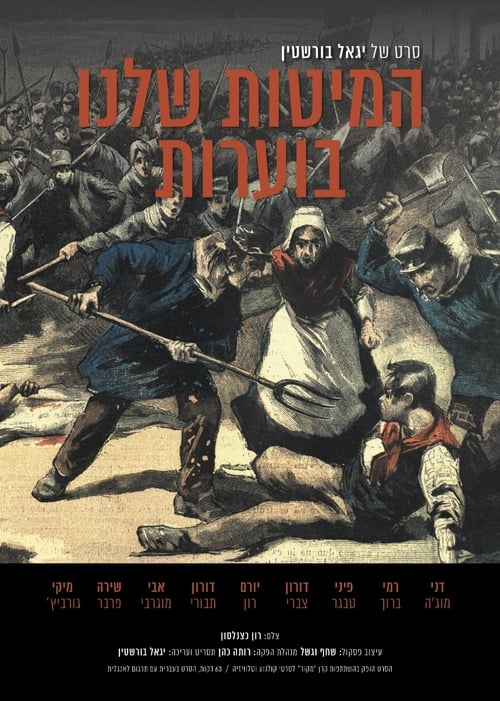
Our Beds Are Burning
N/A

The film presents fascist ideologies since the beginning of the 20th Century. The actor/presenter of Maurice Barrés argues against foreign labor on the Tel Aviv beach. Mussolini in a gym. Jose Antonio Primo de Rivera in a bookshop. Carl Schmitt at court. Abba Ahimeir and Itamar Ben-Avi in a public library. Gudrun Streiter recalls her love affair with an SA Stormtrooper with Hitler and Himmler on a bench in a park. Three Rabbis from the Yitzhar Settlement on the West Bank: Shapira, Ginzburg and Elitzur have recently ruled that “there is a reason to kill a child if it is clear that it will grow to harm us” (Torat Hamelekh, 2009, pg. 207). They too appear and discuss their interpretation of Divine commands on a park bench.

Our Beds Are Burning

2021
No image
10.0

Uriel Morag, a retired general with a glorious past that includes some less than glorious episodes, has, like many other army officers, graduated into an executive ministerial job. Self-important, overweight and - in his own mind - indispensable, he heads for the countryside with Mona, his latest bimbo, for a weekend away. But as he drives his BMW towards the village farm of two friends from his military past, he and his love are transported into a twisted Through The Looking Glass-style version of present day Israel.

The Glow

2001
No image
N/A

Three philosophers huddled on a taxi backseat ride on a rainy day to a small town in the Galilee. The town prepares to confront them. The confrontation at the local community center leads to the question: is a civil war in Israel unavoidable?

Yeshayahu Leibowitz in Ma'alot

1981
No image
N/A

A kind-hearted, liberal and person-loving orthopedic doctor is about to purchase a new apartment for his son and daughter-in-law. While visiting the building site, he steps on excrement left in the living room by the laborers locked up for the night. He can't get rid of the smell in any way and falls into the terrible crisis of his life...

The Passion of Dr. Wider

1983
Belfer
8.5

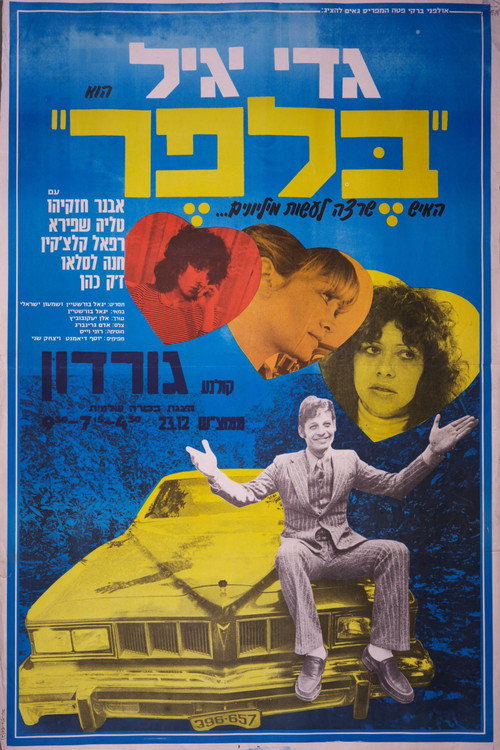
Solomon Belfer, child who arrives to kibbutz after his father fled the country. He dreames of the moment when his father sent him a plane ticket, and he will leave the kibbutz. Meanwhile, he lies in his room and refuses to join the life of the community ...

Belfer

1978
Everlasting Joy
7.3

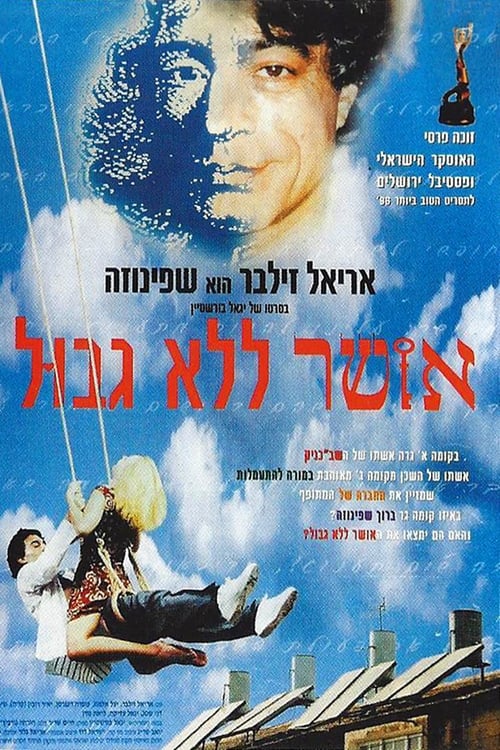
A descendant of Spinoza is living, translating, and commenting on life today.

Everlasting Joy

1996
Souvenirs from Hebron
N/A

Three IDF soldiers on a routine patrol in the early 1980s in occupied Hebron.

Souvenirs from Hebron

1982
No image
N/A

Yigal Borstein's experimental short film is based on Baruch Spinoza's book of the same name ("Ethics", in Latin). Spinoza called his philosophical theory "geometric"; Accordingly, the prominent visual element in this film is also the geometry. Burstein shows what is happening simultaneously on four balconies of one building. The camera films the events statically and without movement, and as time passes, the events alternate using jump-cuts. The building is a microcosm of Israeli society, whose representatives inhabit each of the balconies: the lonely writer, the young woman and her partner, the family with children who live with the grandmother, the older couple - and later also the Arabs, followed by the IDF soldiers who drive them away.

Ethics

1992
No image
N/A

Two small men fight for a small woman’s affections. When one of them eventually wins her over, he is suddenly snatched up by a large woman and ends up drowning in her cleavage.

The Fall of Mr. Fikus

1969
No image
N/A

A man and woman meet on either side of a desolate road. He falls in love and tries to impress her in any way possible. But from the moment they become a couple, it all starts to go downhill.

Louise, Louise!

1969
No image
N/A

Directed by Yigal Burstein.

Muhammad Will Reap

1976