Maxime Le Forestier
Acting
Biography
Maxime Le Forestier (born 10 February 1949 as Bruno Le Forestier) is a French singer-songwriter. Bruno Le Forestier was born on 10 February 1949 in Paris to father Robert Le Forestier and mother Genevieve (née Lili 1917—2010) who had lived in England. He had two older sisters, Annette (born 1943) and Catherine (born 1946). His musical training started on the violin. He attended the Lycée Condorcet, where he studied literature. In 1965, he formed a duo (Cat et Maxime) with his sister Catherine. Playing at cabaret venues on Paris' Left Bank, the pair met and formed a friendship with Georges Moustaki. They were amongst the first artists to cover a number of songs by Moustaki – including Ma Liberté and Ma Solitude. In 1968, Catherine joined Moustaki as a backing singer. Le Forestier began to focus on songwriting and composed Ballade pour un traître which was recorded and released by the French/Italian singer and actor, Serge Reggiani. Le Forestier continued as part-time singer/songwriter during his military service (beginning 1969) with a parachute regiment (the inspiration for the song Parachutiste). He recorded two songs: Cœur de Pierre, Face de Lune, and La Petite Fugue. His military service ending September 1970, Le Forestier refocused on his musical career. He developed a folksy style which was enormously popular in the 1970s and 1980s. He and his sister spent the summer of 1971 living in the Castro District of San Francisco at the invitation of his friend, Luc Alexandre. The experience, and meeting Allen Ginsberg, was the inspiration of a popular song, San Francisco. His first album Mon Frère, released in 1973, contains several pieces that have entered French folklore, including the title song Mon frère, San Francisco, Comme un arbre and Education sentimentale. He toured extensively, both in France and abroad. In 1976, he toured in 14 cities in the USSR. Recently he has gained particular acclaim for his reworkings of the songs of Georges Brassens. "San Francisco", one of his best known songs, begins with the line: "C'est une maison bleue adossée à la colline" (meaning "It's a blue house with its back to the hill"). In 1971, a young Le Forestier was living in a hippie commune, called "Hunga Dunga", in a blue house situated at 3841 18th Street in San Francisco. The anthemic song was written as a fond tribute to Le Forestier’s housemates and hippie friends, and the names mentioned in the song refer to real people. These include Phil Polizatto, who recalls with great affection Le Forestier’s stay in the blue house, in a critically acclaimed book entitled “Hunga Dunga: Confessions of an Unapologetic Hippie”. In the summer of 2011, the house was repainted from light green to its original blue, and a plaque dedicated to Le Forestier was unveiled by the French Consul, pointing to the cultural importance of the song in French popular culture. Maxime Le Forestier has participated in Les Enfoirés, the annual concert to raise money for the charity Restaurants du Cœur, since 1995. Source: Article "Maxime Le Forestier" from Wikipedia in English, licensed under CC-BY-SA.

Known For

No description available.
Champs-Elysées

No description available.
Vivement dimanche

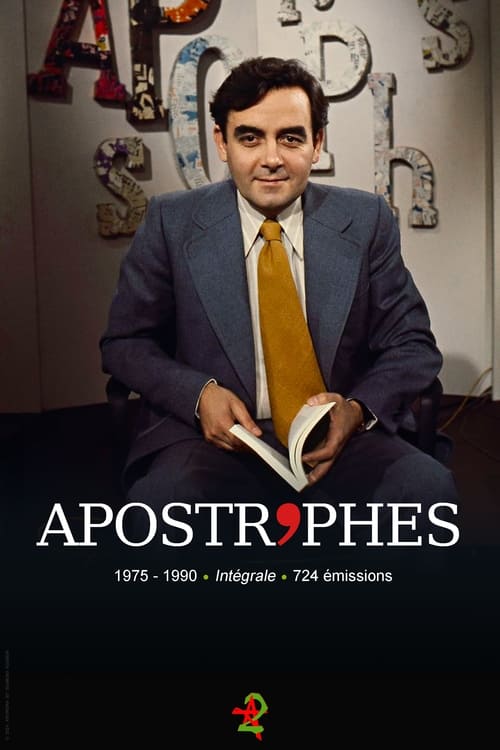
Apostrophes was a live, weekly, literary, prime-time, talk show on French television created and hosted by Bernard Pivot. It ran for fifteen years (724 episodes) from January 10, 1975, to June 22, 1990, and was one of the most watched shows on French television (around 6 million regular viewers). It was broadcast on Friday nights on the channel France 2 (which was called "Antenne 2" from 1975 to 1992). The hourlong show was devoted to books, authors and literature. The format varied between one-on-one interviews with a single author and open discussions between four or five authors.
Apostrophes

No description available.
Sacrée soirée

A talk show presented by Michel Drucker
Les Rendez-vous du dimanche

No description available.
Le monde est à vous

A French variety show.
Numéro un

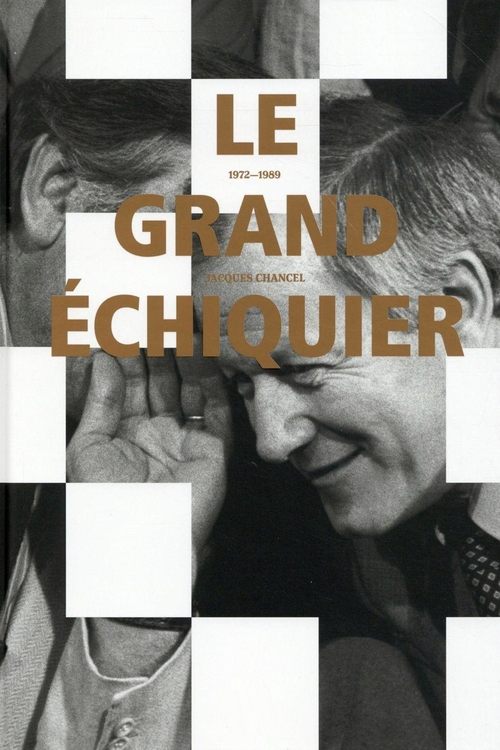
Le Grand Échiquier is a French variety television program created and presented by Jacques Chancel. It aired at 8:30 pm on the first channel of the ORTF from January 12, 1972 to July 12, 1972, then on the second color channel of the ORTF from September 1972 to December 1974, and finally on Antenne 2 from January 1975 to December 21, 1989. The program returned to France 2 on December 20, 2018 and is hosted by Anne-Sophie Lapix.
Le Grand Échiquier
No description available.
Midi trente

No description available.
Discorama

No description available.
Nulle part ailleurs

Taratata was a French TV show showcasing live and pre-recorded footage of current rock acts. Presented by Nagui since its début in 1993, the show was initially shown on France 2. The show often involved surprise and unlikely duets, as well as brief interviews with the artists. Taratata was cancelled in 2000, but returned in April 2005 on the public French network France 4 once a week on prime time, France 3, and late night once a month France 2 and Virgin Radio. Artists including Devendra Banhart, Katie Melua, and Ayo made their French TV debut on the show. The show's chief lighting technician, Jean-Philippe Bourdon, was awarded two Sept d'or in 1994 and 1995. The show featured unique duets and highlights new artists and uses different presenters for each episode. These aspects, and the general emphasis on original music, led the Conseil supérieur de l'audiovisuel to identify Taratata as a uniquely creative show on French TV in April 2009. The show aired throughout Europe on TV5MONDE Europe on Saturday nights. The show is also franchised to Dubai Television in Arabic with an almost identical format to its French counterpart. On 31 May 2013, France Télévisions announced that the show was cancelled. Despite the announcement, the show will continue in a web only format and that a concert will be oragnized at Zénith de Paris on 10 October 2013. The last show was recorded on 13 June 2013 and was broadcast on 12 July 2013.
Taratata

Star Academy is a French reality television show produced by the Dutch company Endemol. It consists of a contest of young singers. It spawned an equally successful show in Quebec called Star Académie. It is broadcast on TF1. At the end of each season, selected contestants would go on tour around France, Morocco, Switzerland, Belgium, Tunisia, and other French-speaking countries.
Star Academy

Télématin is a French breakfast television news show, broadcast on France 2 since January 7, 1985. It is broadcast in Metropolitan France weekdays from 6:30 to 9:00 am CET. TV5 broadcast the show in Canada in its entirety until September 2011: it now shows a 90 minute version between 6:30 and 8:00 am Eastern Time, when the French original version is now 2h30 long. Télématin is hosted by William Leymergie. The show is daily seen by around 40% of the French morning audience, a very high percentage for French TV. In Metropolitan France, the newscasts are presented at 7:00, 7:30 and 8:00, with newsflashes at 6:30 and 8:50, and two press reviews at 7:20 and 8:30. The 6:30, 7:30 and 8:50 newscasts are usually presented by a female reader and the hourly newscasts by a male. The usual readers are Nathanaël de Rinquesen, Sophie Le Saint, Julien Benedetto, Sophie Gastrain, Patrice Romedenne and Frédéric Vion.
Télématin

No description available.
Téléthon

No description available.
Victoires de la musique
No description available.
Samedi soir

No description available.
30 millions d'amis

No description available.
Stars 90

No description available.