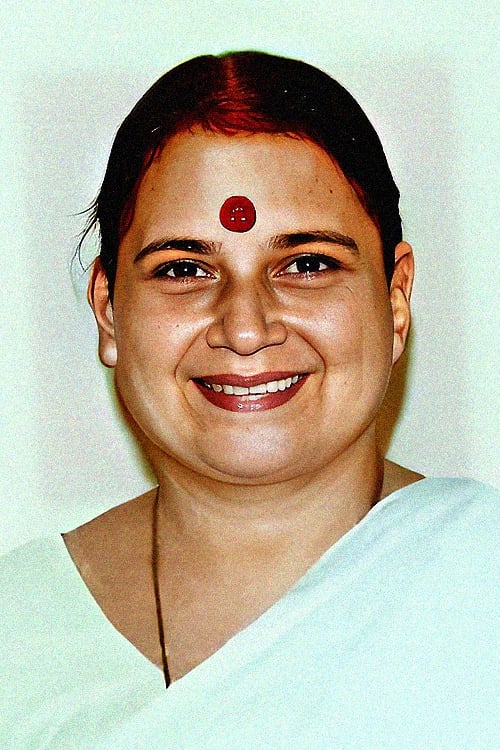
Pandari Bai
Acting
Biography
Pandari Bai (Kannada: ಪಂಡರೀ ಬಾಯಿ; 18 September 1928 – 29 January 2003) was a prominent actress of South Indian languages films mostly in Kannada language during the 1950s, 1960s and 1970s. She is considered Kannada cinema's first successful heroine. She has the distinction of having acted as both heroine and mother to stalwarts such as Rajkumar, MGR and Sivaji Ganesan. She was the heroine in Rajkumar's debut movie Bedara Kannappa and also Sivaji's debut movie Parasakthi. She has acted in over 1,000 films in Kannada, Telugu, Tamil and Hindi.
Known For

The story of the great Indian saint Raghavendra Swami. Born as Venkatanatha, he proved to be a very brilliant scholar from a very young age. After enduring a series of profound life challenges, he embraced sannyasa following his master and the divine.
Sri Raghavendrar

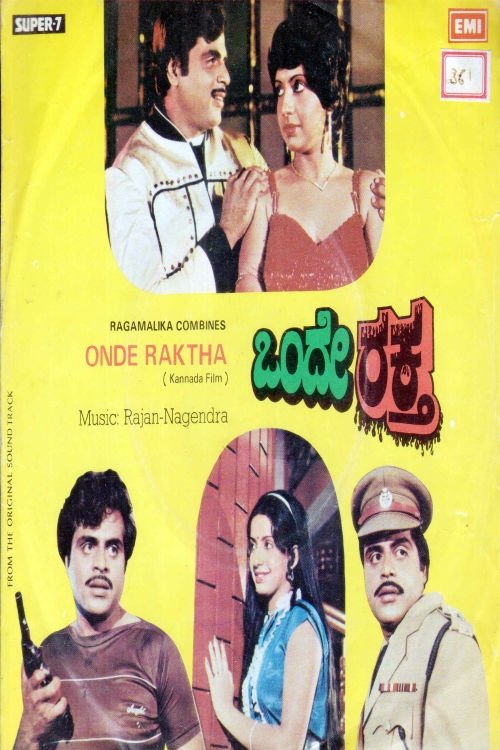
The atrocities of a landlord lead one brother to the life of a dacoit while the younger brother becomes a police officer. However, things take a turn when they are pitted against each other.
Iru Thuruvam

An orphaned woman becomes governess at mansion where the occupants hold a dark past.
Shanti Nilayam
Aarupushpangal is a Tamil film is directed by K.M.Balakrishnan.
Aaru Pushpangal

Dr. Siva treats leprosy patients and gives great importance to his patients' care. When Geetha falls in love with him, he marries her expecting that she would understand the hassles of his profession.
Dr. Siva

Sadanand, a successful businessman, has two business partners, Nithyanand and Murthy. Things take an unexpected turn when Murthy murders Sadanand out of greed.
Anbu Vazhi

A hardened criminal seeks revenge against his father for abandoning his mother. Soon, he finds a policeman who is a doppelganger of himself and decides to manipulate him for his own motives.
Avasara Police 100

Amar and Prem, college friends, and Asha and Shobana form friendships. Marriages are arranged, but dowry demands a US ticket. Prem returns, becomes office predator, and Asha endures harassment to pay off debts.
Doli

Widowed Mrs. Lal lives with her two sons, Ram and Ratan; an unmarried daughter, Sheela; Ram's wife, Parvati and her children. While Ram is employed in a mill, Ratan is studying engineering in Calcutta. When Ratan returns, he is offered a job at the same mill, falls in love with a Typist named Manju, much to chagrin of Malti, the daughter of the mill-owner, Sewakram. When Ratan finds out that Sewakram has been defrauding the employees, he decides to form a union, a move that is opposed by Ram, who is very devoted and loyal to Sewakram.
Paigham

Ramu is an innocent son of a rich landlord who is afraid of his brother-in-law Narendran and his whiplash. To escape from his punishments, Ramu leaves his house and his look-alike replaces him. Enga Veettu Pillai is a remake of NTR’s Ramudu Bheemudu 1963 Telugu movie. Both are directed by same director Tapi Chanakya
Enga Veettu Pillai

No description available.
Irumbu Thirai

Set against the backdrop of World War II, three brothers are separated by war while their sister Kalyani faces immense struggles after being widowed and left destitute. As each sibling endures hardship and societal injustice, their paths cross in unexpected ways, culminating in a dramatic courtroom trial that exposes the harsh realities of their world and sets the stage for a powerful family reunion.
Parasakthi

Ramachandra Rao, a professor, is forced to marry Gowri at his family's behest despite being in love with Lalitha. He fails to get along with his wife and broods about his lost love. The movie is based on the novel of the same name by Vani. The film is considered as one of the greatest romantic films in Kannada noted for the strong performances of lead actors Rajkumar and Kalpana.
Eradu Kanasu

Nagabhushanam and his son Nagaraju (Satyanarayana) runs smuggling and Illegal transport of forest produce in the Forest. Ramu (NTR) opposes and raises the villagers to fight against him. Padma (Jayaprada) Daughter of Forest officer (Jaggayya) loves him. One tribal lady Chilakamma (Jayasudha) also loves him as a brother. Nagabhushanam takes the help of Jaggu (Sridhar) to sent Ramu away from the forest. Later half reveals that Ramu was in fact a Forest officer in secret mission to investigate the case of Forest affairs. The story finally leads to the arrest of criminals.
Adavi Ramudu
Thota Ramudu is a Telugu film released on October 31, 1975. Produced by G.D.Prasad Rao and Korada Suryanarayana under the banner of Sri Dasarathy and Chalam Bombayns, the film was directed by B.V.Prasad. Chalam, M.Prabhakara Reddy and Thyagaraju are the main cast of the film and Chellapilla Sathyam has composed the music.
Thota Ramudu

Rajasaker will kill anyone who stands in his way and ends up killing Kumar's beloved's grandfather. Thus, Kumar sets out to investigate and punish Rajasaker.
Andha Oru Nimidam

Amar lives a poor lifestyle along with his widowed mom in a village, and has a sweetheart in Savitri. He is a trouble-maker and makes life difficult for the Panchayat Chair, Kalicharan, who also happens to be Savitri's father, so much so that Kalicharan hires Ram Shastri to kill Amar. After his passing, Amar enters Swarg Lok where he gets to meet with Devraj Indra and then Yamraj. Amar incites Yam Dhooths to go on a strike, as well as has Yamraj himself consider going on a vacation along with his assistant, Chitragupt Sharma. As a result, Yamraj and Chitragupt end up in modern day Bombay as ordinary human beings, and people stop dying, while Amar himself is given back his life. But not for long for soon he will be called upon to provide bail for a jailed Yamraj and Chitragupt, who will soon return to Swarg Lok and take him along too!!
Lok Parlok

An orphaned boy is granted superpowers after praying to the god Hanuman.
Superman

Madan, a disco dancer, finds his life partner in Kalpana, a classical dancer. When Madan starts getting strange visions, he is advised to go on a trip where he learns about his tormented past.
Enakkul Oruvan

A murder-mystery, in which the friend of a wealthy, elderly couple tries to bring about a reconciliation between them on the one hand, and their their estranged relatives on the other.