FEEL IT.STREAM
Roland Oehme

Roland Oehme

Directing

Biography

Roland Oehme was born on October 27, 1935 in Gräfenhainichen, Saxony-Anhalt, Germany. He was a director and writer, known for Wie füttert man einen Esel (1974), Einfach Blumen aufs Dach (1979) and Der Mann, der nach der Oma kam (1972). He died on November 29, 2022 in Potsdam-Babelsberg, Brandenburg, Germany.
Known For

Polizeiruf 110
6.2

Polizeiruf 110 is a long-running German language detective television series. The first episode was broadcast 27 June 1971 in the German Democratic Republic, and after the dissolution of Fernsehen der DDR the series was picked up by ARD. It was originally created as a counterpart to the West German series Tatort, and quickly became a public favorite.

Polizeiruf 110

1971
How Do You Feed A Donkey?
6.0

Due to his profession, Fred, an easy-going and charming long-haul truck-driver, sees a lot of the world. Along his routes he enjoys the company of a lot of girlfriends who sweeten his spare time. One day, he suffers an accident in Prague which puts his co-driver Orje out of action. The beautiful Hungarian Jana persuades him to make her his new co-driver and does her utmost to take care of the stressful job. The more time the uneven couple spends on the road together, the more Jana feels attracted to Fred.

How Do You Feed A Donkey?

1974
No image
9.0

He could have had women, he could have climbed the ladder of his accountancy career, and he could have stood on the podium next to the highest in the land. If only he had wanted to! But Farssmann, shaken by divorce and unwilling to better himself, wants to remain what he is: an ordinary bookkeeper like you and me. And so the dollar deal with Mr. Osbar from Utah (USA) is not the first time he comes into conflict with the very palpable unreality of a country called the German Democratic Republic.

Farssmann oder Zu Fuß in die Sackgasse

1991
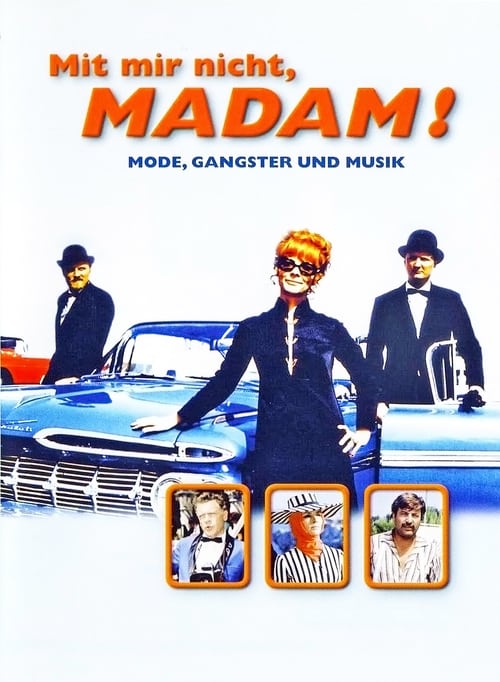
Not to Me, Madam!
5.9

Accompanying a GDR fashion team, journalist Thomas takes a plane to an haute couture festival in an exclusive Mediterranean seaside resort. A French Padre, who could be mistaken for Thomas's twin brother, is a fellow passenger. Precisely for this reason, the journalist is plunged into the most extraordinary and very precarious situations.

Not to Me, Madam!

1969
No image
9.0

On May 17, 1946, Deutsche-Film AG (DEFA) was founded in Potsdam-Babelsberg. Until 1990, DEFA produced nearly 700 feature films, 750 animation films, 2250 short and documentary films and synchronized about 8,000 films from abroad.

DEFA – Es werden ein paar Filme bleiben

1996
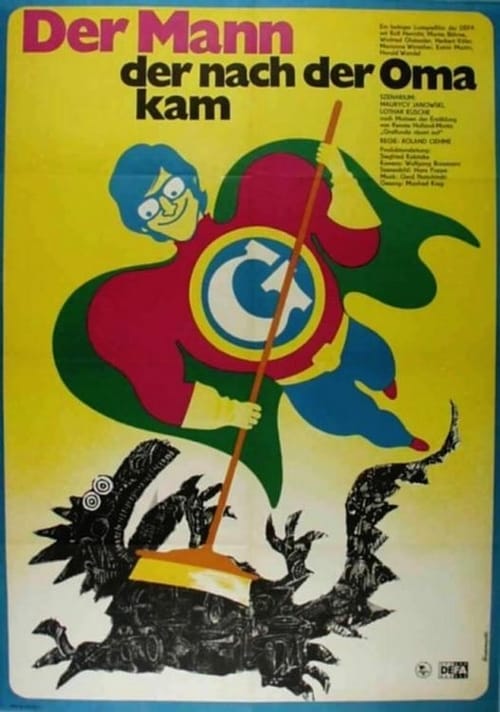
Der Mann, der nach der Oma kam
6.9

Günter and Gudrun Piesold are very busy with their careers as a TV comedian and an actress, so Grandma takes care of household chores and childcare. But when Grandma remarries, the Piesolds are faced with chaos at home and a burning question: Who will take care of the household?

Der Mann, der nach der Oma kam

1972
Einfach Blumen aufs Dach
5.4

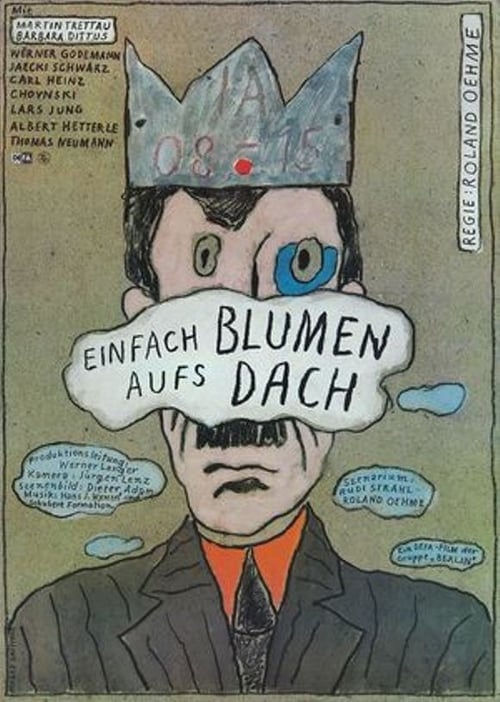
Mechanic Hannes Blaschke and his wife Maxi, who works as a bus driver, have just become happy parents of twins. Now they have a serious transportation problem: Their Trabant is far too small for the grown family that furthermore includes two sons and a dog. Thanks to the support of a state secretary and of his brigade, Hannes acquires a Tschaika – a limousine that is normally restricted to representational purposes – for a small price. Whereas Maxi views the state carriage only as a useful means of transportation, Hannes enjoys the unusual pre-emption he is receiving for the spectacular car. Hannes, who normally is just a humble guy, starts to grate his colleagues with his new affectations. Thus, they teach him an effective lesson: They decorate the state carriage with flowers and thus bring Hannes back down to earth in a humorous way.

Einfach Blumen aufs Dach

1979
No image
N/A

No description available.

Endlich fliegen

1982
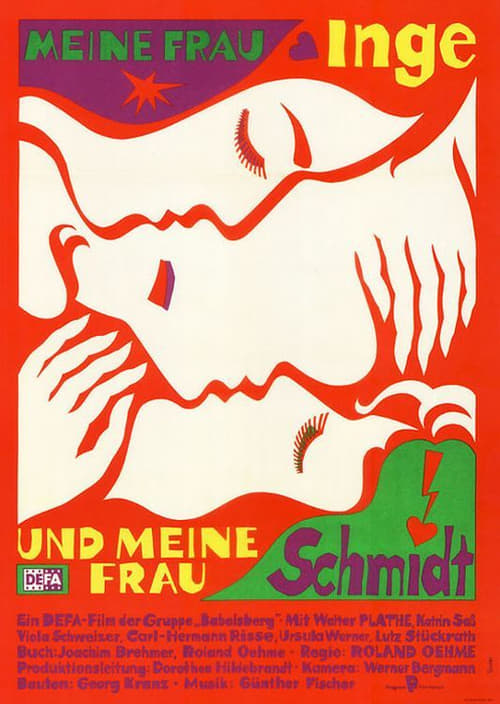
Meine Frau Inge und meine Frau Schmidt
10.0

One day, the happily married Karl Lehmann is asked by his single colleague, Mrs. Schmidt, for an unusual service: She wants a child. Lehmann is willing to help. His wife Inge and Mrs. Schmidt have a child at the same time, and since the women like each other, they make an agreement. They share Karl Lehmann. One week Inge gets him, one week Mrs. Schmidt - always alternating. It could be nice if it weren't for the prudish, shocked or even envious people around them. However, some see it in a positive light. A Mr. Schmidt is interested in Inge's week off and a colleague Lehmann is interested in Mrs. Schmidt's week off. And it's not long before Mr. Karl Lehmann is booted out and seeks refuge with a waitress.

Meine Frau Inge und meine Frau Schmidt

1985
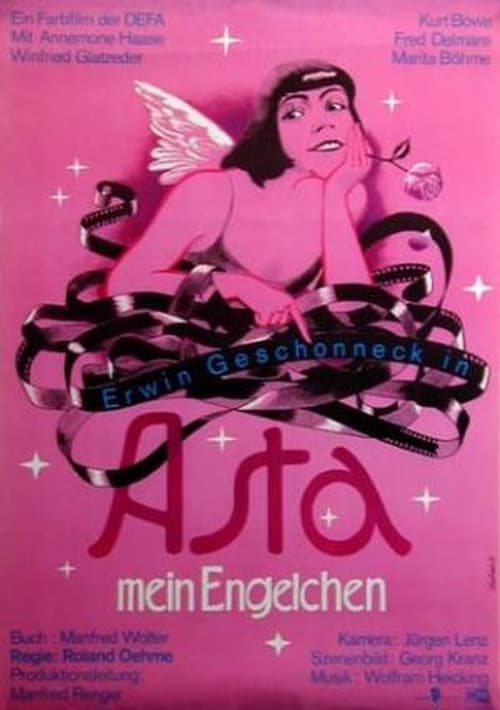
Asta, mein Engelchen
10.0

Old Otto Gratzick is a porter at DEFA and a great admirer of Asta Nielsen. When the famous actor Hermann Gschwindner dies shortly before the end of his film, the director is looking for a double for the final scenes and discovers Otto in the movie theater, who has just been moved by Asta again. Otto takes on the task. He also places a marriage advertisement looking for a woman who resembles Asta. The first date with Astrid, who does indeed look like Asta, is a flop. Otto falls asleep. He tries again with her - as Hermann Gschwindner - and is successful. He is recognized in a hotel bar and asked to perform a song. Everyone, including Astrid, is entranced. After a few complications, his real identity is revealed - Astrid had also done a lot of work to look like Asta.

Asta, mein Engelchen

1981
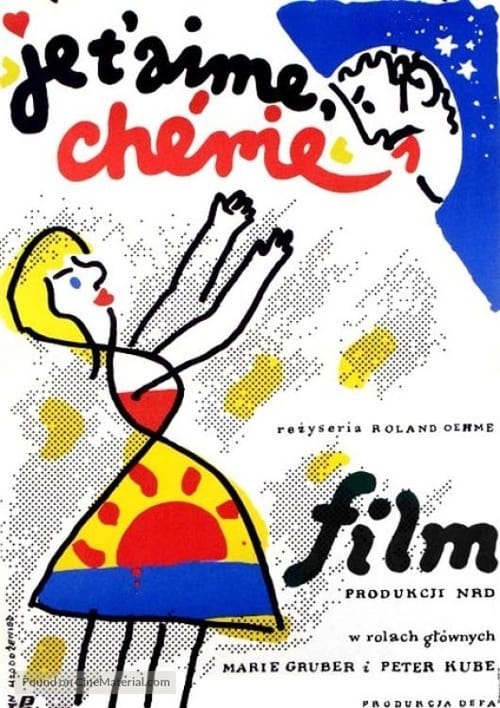
Je t'aime, chérie
7.0

"Je t'aime, Chérie." These three words and a Bulgarian volleyball jersey is all Martina, a young working woman from Berlin, is left with after a night at the beach spent with a mysterious lover. But then she learns that she is pregnant, and once the baby is born, she starts for Bulgaria to search for her son’s father. The orderly yet diffident Thomas, an employee of the embassy of the GDR, joins her in order to provide diplomatic support. The quest, however, turns out to be rather difficult.

Je t'aime, chérie

1986
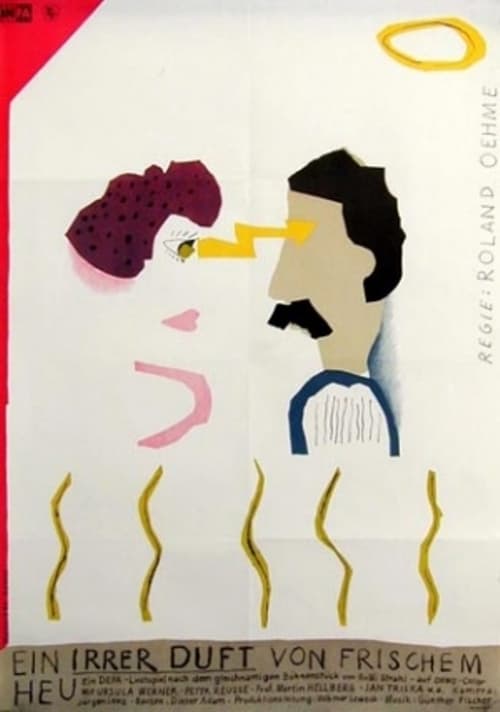
The Crazy Smell of Fresh Hay
4.9

Signs and wonders are said to be happening in Trutzlaff, a small village in Mecklenburg. The party secretary of the local LPG, Mattes Mathias, has the "second face", which has been passed down from generation to generation in his family and is first mentioned in the witches' church chronicle in 1681. This special bond with the church lives on to this day. Mattes engages in a constant but creative competition with Pastor Himmelknecht. But it is not only his weather forecasts that come true every day. With his miraculous powers, Mattes tracks down lost things and heals the sick. Mattes' reputation reaches far beyond the village of Trutzlaff to the district town. A letter from the village cobbler has even reached the Vatican. Both here and there, people have pricked up their ears and want to get to the bottom of the matter. ... The only one who keeps a clear head is Mattes. But then there is "The crazy smell of fresh hay"!

The Crazy Smell of Fresh Hay

1977
That's How DEFA Sounded: Film Music from Babelsberg
N/A

When people think of DEFA, the film heritage of the GDR, they probably don't just think of film images, but also some of the timeless melodies that were created in Babelsberg.

That's How DEFA Sounded: Film Music from Babelsberg

2018
No image
10.0

Founded in 1954 as the “Deutsche Hochschule für Filmkunst”, today's “Hochschule für Film und Fernsehen” is celebrating its 50th anniversary. The documentary traces the history of the university. Graduates of the school have their say and excerpts of student films from five decades are presented.

Ein bisschen Luft unter die Flügel

2004
No image
N/A

A story about two young lovers in an East German coal mining town.

Erzählung über eine Liebe

1964