Frank van der Weij
Sound
Known For
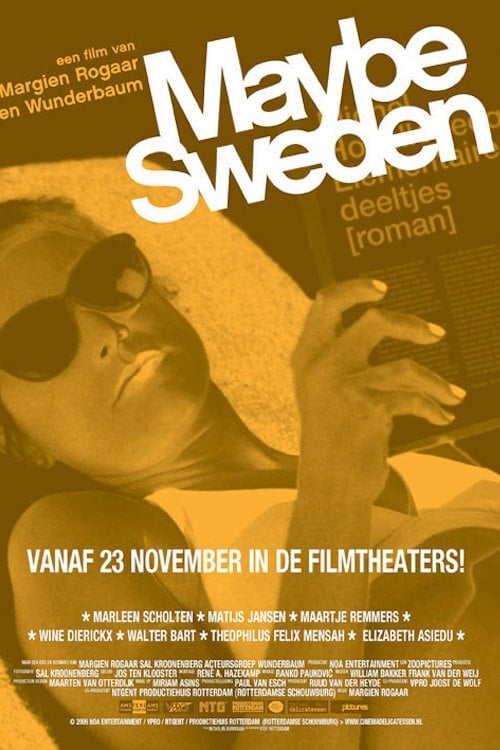
Maybe Sweden is about five book worms on a reading holiday in a beautiful country house somewhere in South Europe. By the pool, in the hammock and even round the campfire they are buried in their books. Or they discuss literature. This changes when they come across a sleeping Ghanaian in the garden. The rather mousy Mira takes care of his ill mother and, soon, of other stranded boat people. The haven of peace changes into an aid station, not to everyone's pleasure. Harmless collisions - does the Ghanaian have to read Michel Houellebecq to gain a better understanding of Europe? - get out of hand more and more, until the idyll crumbles.
Maybe Sweden

This documentary was made with the huge amount of material that was left over after the montage of 'Rock 'n Roll Junkie (1994)'. It is uncut and unpolished: Herman Brood at his most honest, walking through his hometown, working in his atelier, in the studio and during interviews.
Herman Brood Uncut
In Wreed Geluk, the maker fathoms Claus' multifaceted personality through his poems and through conversations with some of his former companions.
Wreed Geluk: Claus, Vlaanderen en de liefde
Nineteen-year-old Bendja was born in the Netherlands, but his roots are in Moluccas. His father, writer Frans Lopulalan, understands his son’s desire to touch Moluccan soil; he shares that wish. The two decide to travel to the village of Porto on Saparua island, where Frans’ deceased father, a former KNIL soldier, used to live. Verhaagen follows them on their trip to the tropics. A trip that the two men experience in different ways. Frans writes a lot and visits the ground where his father’s house once stood. Bendja dives into the daily village life. He also wonders if he shouldn’t resume his ancestors’ battle. Frans has mixed feelings about this: ‘I hope he can identify with being Moluccan without it necessarily causing him to reject his life in Holland.’ The personal experiences of father and son Lopulalan are complemented by significant archive footage.
a Son of Porto
Impressionistic, nightmarish images of a traveller in the Danube delta who looks for 'the man in the house behind the swamp' from the story of the same name by Dutch author A. Alberts. When he moors at an island with a house on it that used to be the executed dictator Ceausescu's country cottage, reality and imagination converge at this remarkable place. The occupant is disturbed by the unwanted guest. When it gets dark, he disappears into the house. He is watched through the slightly open door. In the end, he sits down to dinner and it turns out the table has been set for three. The invisible third person is the host's imaginary lover. Loneliness and booze prevail. When the traveller's delirium is at its height, the swamp becomes the dominant factor.