Writing
From England to Egypt, accompanied by his elegant and trustworthy sidekicks, the intelligent yet eccentrically-refined Belgian detective Hercule Poirot pits his wits against a collection of first class deceptions.
Play for Today is a British television anthology drama series, produced by the BBC and transmitted on BBC1 from 1970 to 1984. During the run, more than three hundred programmes, featuring original television plays, and adaptations of stage plays and novels, were transmitted. The individual episodes were between fifty and a hundred minutes in duration.
A BBC television anthology series featuring productions of classic and contemporary stage plays usually broadcast on BBC1. Each production featured a different work, often using prominent British stage actors in the leading roles. The series was transmitted from October 1965 to September 1983.
Omnibus was an arts-based BBC television documentary series, broadcast mainly on BBC1 in the United Kingdom. The programme was the successor to the long-running arts-based series 'Monitor'. It ran from 1967 until 2003, usually being transmitted on Sunday evenings. During its 35-year history, the programme won 12 Bafta awards. Among the series' best remembered documentaries are Cracked Actor, a profile of David Bowie, and Rene Magritte, a graduate film by David Wheatley, 'Madonna: Behind the American dream', a film produced by Nadia Hagger, and a profile of the British film director Ridley Scott. For a season in 1982, the series was in a magazine format presented by Barry Norman. The series was replaced by 'Imagine' hosted by Alan Yentob.
An anthology series of television plays which aired on BBC1 from October 1964 to May 1970. The plays were usually written for television, although adaptations from other sources also featured.
ITV Playhouse is a British comedy-drama TV series that ran from 1967 to 1983, which featured contributions from playwrights such as Dennis Potter, Rhys Adrian and Alan Sharp. The series began in black and white, but was later shot in colour and was produced by various companies for the ITV network, a format that would inspire Dramarama. Actors appearing in the series included Leslie Anderson, Gwen Nelson, Ricky Alleyne, Pat Heywood, Michael Elphick, Ian Hendry, Edward Woodward, Margaret Lockwood, Jessie Matthews and Lloyd Peters.
A one-hour anthology television series of one-off contemporary and classic dramas produced by the BBC.
The Ruth Rendell mysteries is a British television series made by TVS and Meridian Television for ITV between 2 August 1987 and 11 October 2000.
ABC Stage 67 is the umbrella title for a series of 26 weekly shows that included dramas, variety shows, documentaries, and original musicals. It premiered on American Broadcasting Company on September 14, 1966 with Murray Schisgal's The Love Song of Barney Kempinksi, directed by Stanley Prager and starring Alan Arkin as a man enjoying the sights and sounds of New York City in his last remaining hours of bachelorhood. Arkin was nominated for an Emmy Award for Outstanding Single Performance By An Actor in a Leading Role in a Drama and the program was nominated as Outstanding Dramatic Program. Future programs included appearances by Petula Clark, Bobby Darin, Sir Laurence Olivier, Albert Finney, Peter Sellers, David Frost, and Jack Paar. ABC's effort to bring culture to the masses was a noble but unsuccessful experiment. Scheduled first against I Spy on Wednesdays and then The Dean Martin Show on Thursdays, the show consistently received low ratings. Its last production, an adaptation of Jean Cocteau's one-woman play The Human Voice starring Ingrid Bergman, aired on May 4, 1967. "Stage 67" was not actually a part of the primary ABC facilities in Los Angeles. It was produced at the old Monogram Studios backlot that was later sold to KCET.
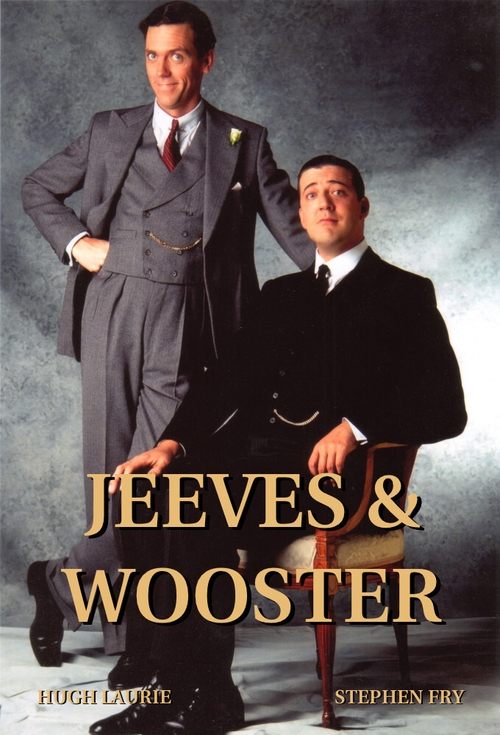
Jeeves and Wooster is a British comedy-drama series adapted by Clive Exton from P.G. Wodehouse's "Jeeves" stories. It aired on the ITV network from 1990 to 1993, starring Hugh Laurie as Bertie Wooster, a young gentleman with a "distinctive blend of airy nonchalance and refined gormlessness", and Stephen Fry as Jeeves, his improbably well-informed and talented valet. Wooster is a bachelor, a minor aristocrat and member of the idle rich. He and his friends, who are mainly members of The Drones Club, are extricated from all manner of societal misadventures by the indispensable valet, Jeeves. The stories are set in the United Kingdom and the United States in the 1930s.
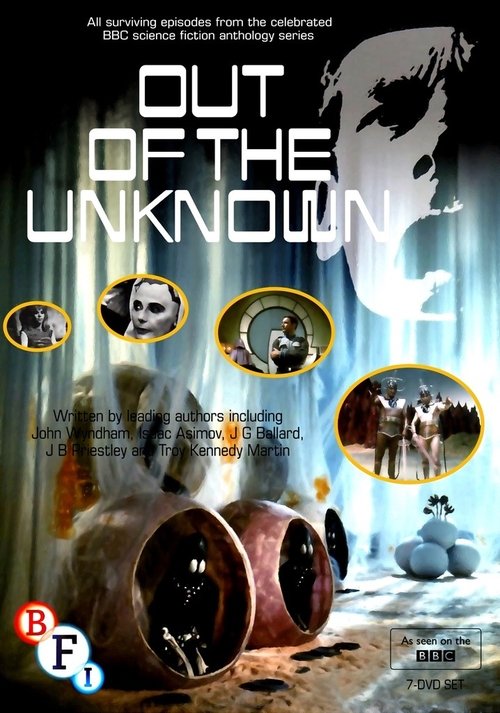
Out of the Unknown is a British television science fiction anthology drama series, produced by the BBC and broadcast on BBC2 in four series between 1965 and 1971. Each episode was a dramatisation of a science fiction short story; some were created for the series, but most were adaptations of already published stories. The first three years were exclusively science fiction, but that genre was abandoned in the final year in favour of horror and fantasy. A number of episodes were wiped during the early 1970s, as was standard procedure at the time.
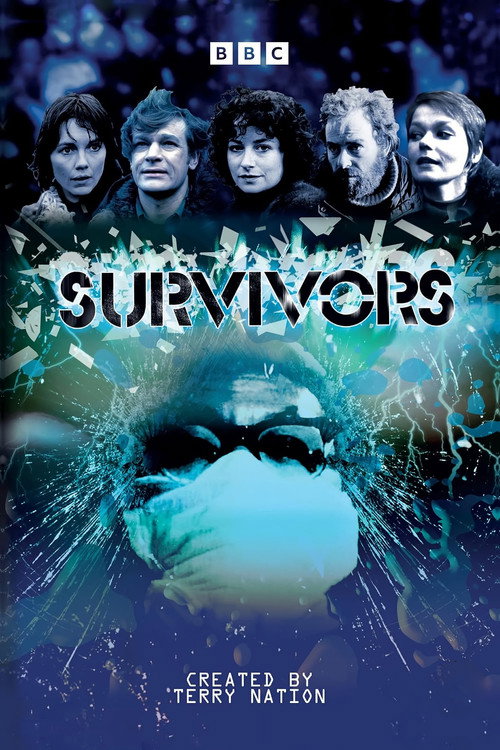
Survivors is a British post-apocalyptic fiction television series devised by Terry Nation and produced by Terence Dudley at the BBC from 1975 to 1977. It concerns the plight of a group of people who have survived an accidentally released plague – referred to as "The Death" – that kills nearly the entire human population of the planet.
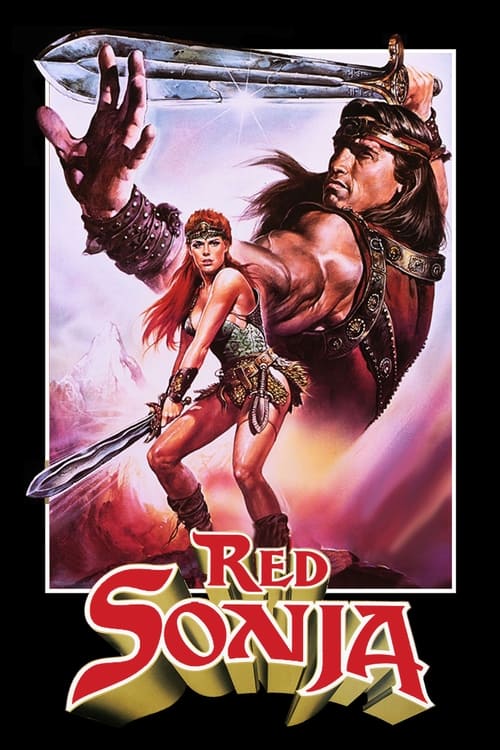
The tyrant Gedren seeks the total power in a world of barbarism. She raids the city Hablac and kills the keeper of a talisman that gives her great power. Red Sonja, sister of the keeper, sets out with her magic sword to overthrow Gedren.
Drama 61-67 is anthology drama series which took a different title, based on year of transmission, each year. It alternated with Armchair Theatre from ABC in the Sunday evening slot. The series was described at the time as epitomising ATV drama.
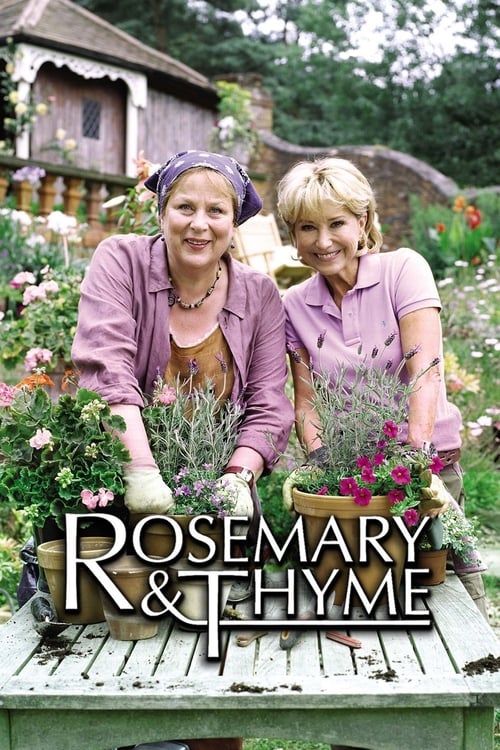
Brought together by professional and personal heartache, two plucky ladies plant the seeds for a brighter future. Rosemary Boxer, with a doctorate in plant pathology, and Laura Thyme, a former police constable and avid gardener, discover their shared love of green-thumbness and start a gardening business. As they restore various English gardens back to their lavish states, the inquisitive pair also find themselves uncovering an assortment of mysteries.
A BBC television series of forty-five-minute excerpts from stage plays running in London.
Story Parade specialized in adaptations of modern novels. It was broadcast on June 5, 1964 and repeated on August 28, 1964. The teleplay was by Terry Nation (who invented "Blake's 7" and the Daleks in Dr. Who), and Elijah Baley was played by the late Peter Cushing. It also starred John Carson John Carson as R. Daneel Olivaw and Kenneth J. Warren. The master tapes of the program were erased, however a few clips from the production have turned up in various documentaries about Isaac Asimov's work.
Out of This World is a British science fiction anthology television series made by ABC Television and broadcast in 1962. A spin-off from the popular anthology series Armchair Theatre, each episode is introduced by actor Boris Karloff. Many episodes are adaptations of stories by sci-fi writers including Isaac Asimov, Philip K. Dick and Clifford D. Simak. The series is generally seen as a precursor to the BBC science fiction anthology Out of the Unknown.
A series of anthologies highlighting the initial projects of directors venturing into television drama filmmaking.
A strand of annual British short television adaptations of classic ghost stories, referencing the oral tradition of telling supernatural tales at Christmas. First broadcast on BBC One from 1971 to 1978, and revived in 2005 on BBC Four.