FEEL IT.STREAM
Hubert von Meyerinck

Hubert von Meyerinck

Acting

Biography

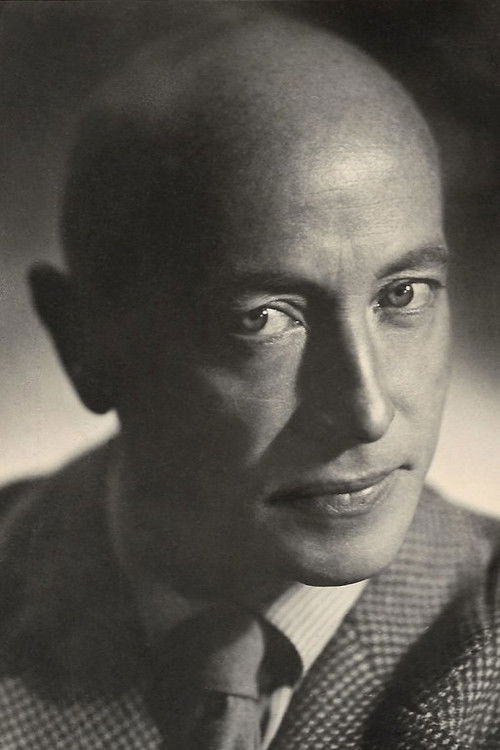
Hubert von Meyerinck was born in Potsdam on August 23, 1896, the son of a major. After his parents divorced, he was raised by his mother. From an early age he showed a strong interest in acting and began taking lessons as a child, despite his parents’ wish that he pursue a career as a priest. After completing school, he was drafted into military service during World War I but was discharged shortly afterward for health reasons. In 1917, he made his stage debut at the Berliner Schauspielhaus as Lieutenant von Hagen in "Kolberg." Following an engagement at the Hamburger Kammerspiele from 1918 to 1920, he performed at numerous Berlin theatres and variety venues, including the revue "Es liegt was in der Luft" alongside Marlene Dietrich. He earned acclaim both for his cabaret performances at the famed Tingeltangel and for dramatic stage roles such as Mephisto in "Faust" and Mackie Messer in "Die Dreigroschenoper." At the beginning of the 1920s, von Meyerinck transitioned to film. After a significant early role in Georg Jacoby’s serial "Der Mann ohne Namen," he appeared in supporting roles in silent films including Artur Robison’s "Manon Lescaut" (1926) and Wilhelm Dieterle’s "Ich lebe für Dich" (1929). His distinctive appearance—bald head, monocle, thin moustache—quickly made him recognizable, and he became a popular character actor. He was often typecast as aristocrats, bourgeois figures, authoritarian officials, eccentrics, or crooks. With the arrival of sound film, his raspy voice further defined his screen persona. Among his notable early sound films were Max Ophüls’ "Die verliebte Firma" (1931/32), Franz Wenzler’s "Wenn die Liebe Mode macht" (1932), and Kurt Gerron’s "Der weiße Dämon" (1932). During the Nazi era, he remained one of Germany’s most prolific and popular supporting actors, appearing in more than 90 productions between 1933 and 1945. These ranged from comedies such as "Ein falscher Fuffziger" (1935) to Willi Forst’s adaptation of Maupassant’s "Bel Ami" (1939) and Helmut Käutner’s "Kitty und die Weltkonferenz" (1939). He also took smaller roles in propagandistic films including "Ein Volksfeind" (1937) and "Trenck, der Pandur" (1940). Although it was widely known that he was homosexual, he was not prosecuted by the regime. In the 1950s and 1960s, von Meyerinck successfully parodied his established authoritarian image in numerous comedies. In 1957 alone he appeared in 13 films, including the popular "Der tolle Blomberg" and "Das Wirtshaus im Spessart." He received the Prize of the German Film Critics in 1960 for "Ein Mann geht durch die Wand" and again in 1961 for "Das Spukschloß im Spessart." Another highlight was his role as an exuberant aristocrat in Billy Wilder’s Cold War satire "One, Two, Three." Between 1965 and 1969, he regularly appeared as Sir Arthur, head of Scotland Yard, in the Edgar Wallace film series. Despite appearing in around 250 films, von Meyerinck remained committed to the stage and joined the ensemble of Hamburg’s Thalia Theatre in 1966. In 1968, he received a lifetime achievement award at the German Film Prize and published his memoirs. He died in Hamburg on May 13, 1971.

Known For

Bambi
9.0

The Bambi, often called the Bambi Award and stylised as BAMBI, is a German award presented annually by Hubert Burda Media to recognize excellence in international media and television to personalities in the media, arts, culture, sports, and other fields "with vision and creativity who affected and inspired the German public that year", both domestic and foreign. First held in 1948, it is the oldest media award in Germany. The trophy is named after Felix Salten's book Bambi, A Life in the Woods and its statuettes are in the shape of the novel's titular fawn character. They were originally made of porcelain until 1958, when the organizers switched to using gold, with the casting done by the art casting workshop of Ernst Strassacker in Süßen.

Bambi

1948
No image
6.0

No description available.

German Film Award

1951
Das Kriminalmuseum
8.0

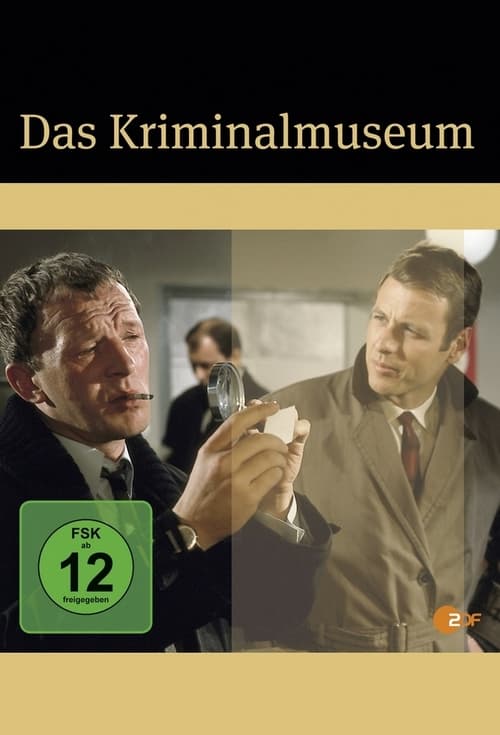
Das Kriminalmuseum was a German television series. It ran from 1963 to 1970 on ZDF and was one of its first programs. Each episode began with a tracking shot through an unspecified crime museum, stopping at one of the displays, whose story was then told. Each episode was between 60 and 75 minutes long and featured different actors as the criminal commissioner. The best known was Erik Ode, who in 1969 moved to Der Kommissar, appearing in 97 episodes. The theme music of the series was written by German composer Martin Böttcher, who also composed the complete scores for five episodes.

Das Kriminalmuseum

1963
Dem Täter auf der Spur
10.0

Dem Täter auf der Spur is a German television series.

Dem Täter auf der Spur

1967
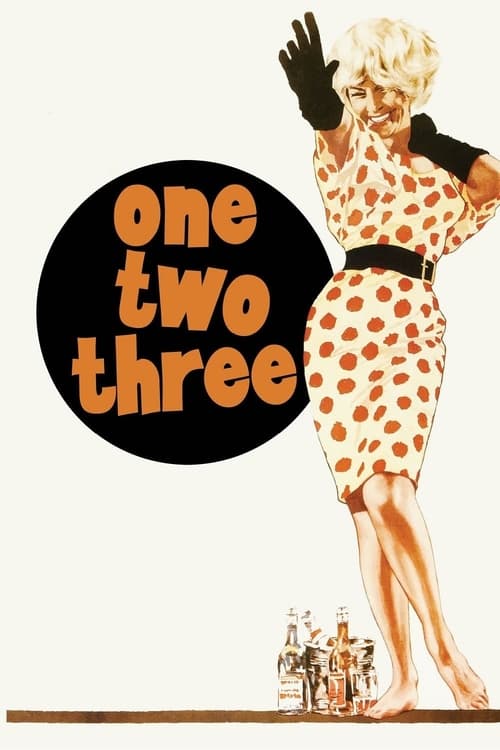
One, Two, Three
7.5

In Cold War-era West Berlin, American Coca-Cola executive C.R. 'Mac' MacNamara is tasked with playing babysitter to his boss' spoiled 17-year-old daughter Scarlett, who proves more difficult than anticipated when she reveals that she is pregnant by a Communist.

One, Two, Three

1961
The Rothschilds
6.1

Biopic about the Rothschilds, a Jewish family whose members rose to the top of the European banking community during the Napoleonic era.

The Rothschilds

1940
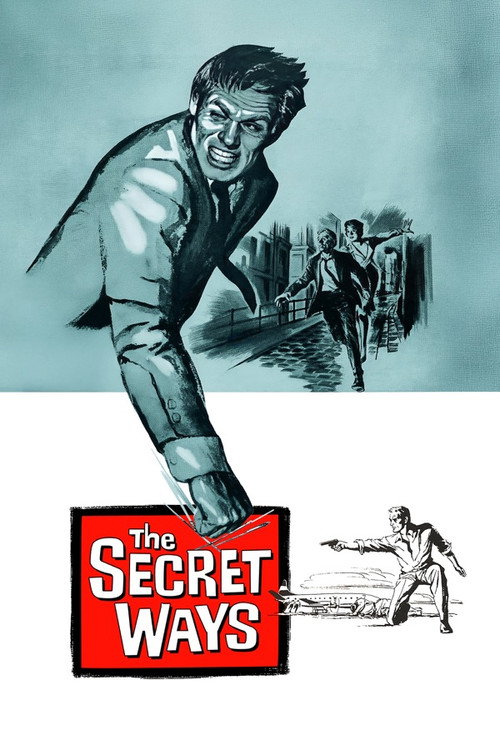
The Secret Ways
5.5

Vienna, 1956. After Soviet tanks crush the Hungarian uprising, soldier-of-fortune Michael Reynolds is hired to help a threatened Hungarian scientist escape from Budapest.

The Secret Ways

1961
Maxie
7.0

No description available.

Maxie

1954
Diesel
6.5

A German wartime biography of Rudolf Diesel, inventor of the Diesel engine. The movie links the importance of the engine to the war by starting the movie with newsreel clips of German Navy U-boats in action.

Diesel

1943
No image
7.5

Berlin's theatre crowd is excited about the new operetta "Frau Luna". But for the head of the city's vice police, who was invited to the dress rehearsal, the costumes for the ladies onstage are a bit too revealing. He demands the show be cancelled as offensive. The president of the Thusneldenbund has taken it upon himself to alert everyone about the growth of immorality in the capital. The theatre director Knopp has come up with an idea to convince these "fine" gentlemen to let the operetta go onstage again: He intends to win over the friendship of the moral police and then nothing will stand in the way of "Frau Luna" once more being performed.

Mistress Moon

1941
The Zombie Walks
6.5

A serial killer who calls himself "The Laughing Corpse" dresses up in a skeleton costume and kills his victims with a poison-filled scorpion-shaped ring.

The Zombie Walks

1968
Hallo Janine
6.7

The French ballet girl Janine, a gifted tap-dancer, dreams of a musical career in Paris. But first she wants to take revenge on Count René who stood up her best friend Charlotte. Janine wants him to fall in love with her and disappoint him afterwards. At a masked ball at which Janine pretends to be a Marquise they have their first meeting. Janine is very disappointed in the "good gentleman", but she does not suspect that this gentleman also makes a pretence. The man whom she holds to be count René is Pierre, a composer and pianist.

Hallo Janine

1939
Münchhausen
6.5

Legendary, immortal nobleman Baron Munchausen regales a lovestruck woman with tales of his amazing adventures.

Münchhausen

1943
Ferien auf Immenhof
6.8

The pony hotel has just been opened, but so far no guests have arrived. Dick gets Ralf to design a brochure about the hotel. The girls and Ethelbert then lead the village children on horseback to Lübeck, where they all distribute the brochure - not knowing that Dalli has added some embellishments to the text.

Ferien auf Immenhof

1957
Anna Favetti
10.0

The daughter of a reclusive couple in the St. Moritz mountains tends to her brother, disabled from the Great War, though a handsome young architect who has just arrived waits for her attentions.

Anna Favetti

1938
Charleys Onkel
5.5

Driving instructor Carola "Charley" can no longer stand the constant advances of her pupils and quits her job without further ado. To gain some distance, she takes the opportunity to look after her friend Lilo's dog, the two parrots and her apartment while Lilo is on vacation. But even here she has to fend off unloved admirers, as Lilo earns her living as a playgirl. However, "Charley" has received a good tip from her friend: As soon as a man becomes too pushy, janitor Pinkus pretends to be "Captain Tressblekken" on cue and quickly chases the visitors away. But when the real Uncle Tressblekken turns up at "Charley's" house, chaos can no longer be averted...

Charleys Onkel

1969
People Among Us
7.3

Gerhard Lamprecht sketches a cross-section of Germany's new post-war society, with its winners, social climbers, and losers, represented by the social microcosm of an apartment building. The gossip-mad Frau Mierig from the rear building gives the newly-arrived Frau Kaminski, the janitor's wife, a lively initiation into the tenants and their peculiarities.

People Among Us

1926
An Invisible Man Goes Through the City
9.0

A taxi driver, (Piel), finds an odd contraption on the back seat that renders him invisible, but his friend steals the device to rob a bank. An inventive comedy.

An Invisible Man Goes Through the City

1933
Robert Koch, der Bekämpfer des Todes
6.6

Country Dr. Robert Koch is desperate: a tuberculosis epidemic is decimating the children in his district and no one is able to do anything about it. Every fourth child is already sick and the parents must helplessly watch as their young ones die. Now Koch is undertaking to find the cause of the tuberculosis --- something he has already been working on for years --- which has been causing this plague of illness. His work is made more difficult by envy; for example, that of his teacher, who was wounded defending his honor. But his greatest obstacle is the famous Berliner scientist and Reichstag deputy, Privy Councilor Rudolf Virchow: He is extraordinarily skeptical of Koch's theory, that the cause for tuberculosis is a bacteria.

Robert Koch, der Bekämpfer des Todes

1939
Love '47
7.7

A young man and woman meet on a bridge, both about to commit suicide by jumping into the river, and recount to each other their experiences.

Love '47

1949