FEEL IT.STREAM
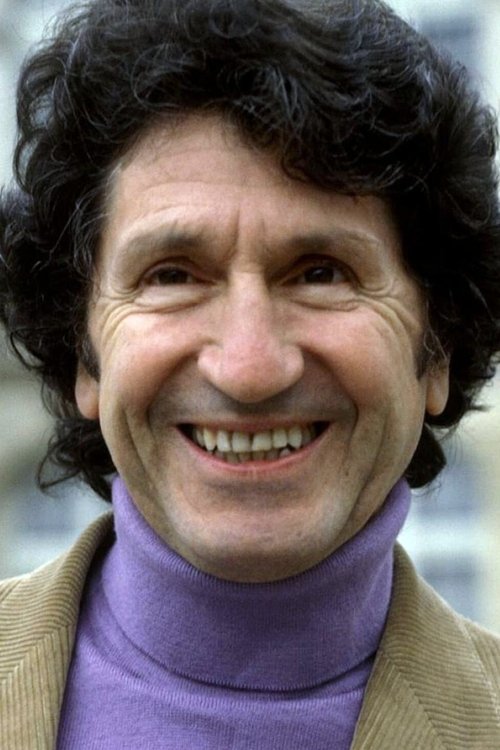
Marcel Mouloudji

Marcel Mouloudji

Acting

Biography

Marcel Mouloudji, born September 16, 1922 in the 4th arrondissement of Paris and died June 14, 1994 in Neuilly-sur-Seine is a French-Algerian singer, songwriter, painter and actor. His songs, alternately committed and sentimental, evoke love, war, nostalgia between sadness and loneliness. He has notably interpreted texts by poets such as Boris Vian, Louis Aragon and Philippe Pauletto. Marcel Mouloudji was born in 1922 in Paris to a bricklayer father and a housekeeper mother. His father, Saïd Mouloudji was born in 1896 in French Algeria in the Kabyle village of Leflaye (tribe of Aït Waghlis, daïra of Sidi-Aïch), and his mother, Eugénie Roux is a Breton born in Paris in 1901. The family knows serious problems: when Marcel was only ten years old, his mother was hospitalized for a mental disorder and his illiterate father, housed in a maid's room, had trouble raising his two sons, the eldest of whom, André, was gravely ill and the second, a gentle dreamer who finds accommodation by chance encounters. During his adolescence, Marcel enrolled with his brother in a left-wing youth movement, the Faucons Rouges, close to the SFIO. In 1935, he met Sylvain Itkine, director and member of the October Group, an organization affiliated with the Fédération des Théâtres Ouvriers de France. Marcel Maillot, director of a Syndicat du livre summer camp, encouraged him to sing with his brother. He was soon noticed by Jean-Louis Barrault. During this period, Marcel was thus hosted by Jean-Louis Barrault, who introduced him to the artistic milieu of Paris. He participated in the artistic life associated with the Popular Front in 1936. In 1936, he appeared in the film La Guerre Des Gosses by Jacques Daroy. In 1937, for the film Claudine À L'École by Serge de Poligny, the screenwriter Jacques Constant, around Blanchette Brunoy, created the character of "Petit Moulou"... soon to be Mouloudji. In 1938, Marcel played one of the three young heroes in Disparus De Saint-Agil by Christian-Jaque. In 1939, Marcel played the role of Louis in Christian-Jaque's film L'Enfer Des Anges, a film selected for the 1939 Cannes Film Festival which did not take place, and released in February 1941. In 1942, he played the role of 'Ephraïm Luska in Henri Decoin's film, The Strangers in the House, after Georges Simenon... Jacques Canetti, famous artistic agent. He will offer him to record "Comme Un P'tit Coquelicot" thanks to which Mouloudji obtains the Grand Prix du Disque 1953 and the Charles-Cros Prize in 1952 and 1953. He repeats with "Un Jour Tu Verras" the following year. He reappears in films like Henri Calef in 1949 or We Are All Assassins three years later. His last roles, he did in Rafles sur la ville by Pierre Chenal then in Llegaron Dos Hombres in 1958. After recording a disc with accordionist Marcel Azzola in 1976 called "And it was turning", he released "Unknown Unknowns" thanks to which he went on tour throughout the country. Exhausted, he decides to devote more time to writing and painting. He partially lost his voice due to pleurisy in 1992 but was still working on a new album. He died on June 14, 1994 and is buried in the Père-Lachaise cemetery in Paris.

Known For

Champs-Elysées
6.8

No description available.

Champs-Elysées

1982
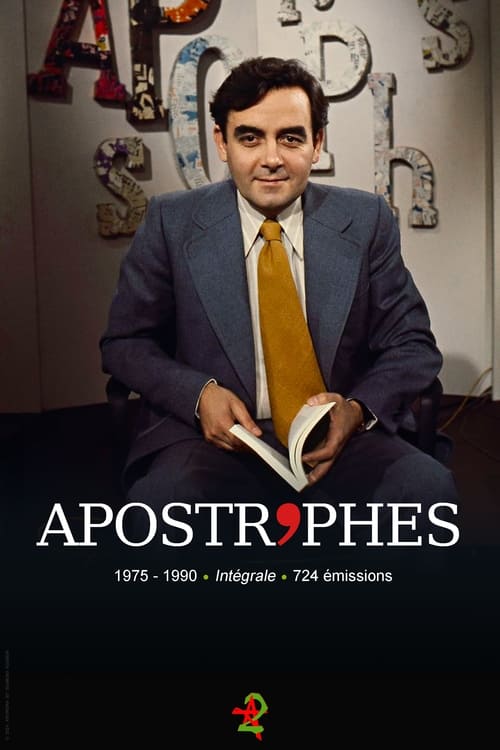
Apostrophes
8.5

Apostrophes was a live, weekly, literary, prime-time, talk show on French television created and hosted by Bernard Pivot. It ran for fifteen years (724 episodes) from January 10, 1975, to June 22, 1990, and was one of the most watched shows on French television (around 6 million regular viewers). It was broadcast on Friday nights on the channel France 2 (which was called "Antenne 2" from 1975 to 1992). The hourlong show was devoted to books, authors and literature. The format varied between one-on-one interviews with a single author and open discussions between four or five authors.

Apostrophes

1975
Les Rendez-vous du dimanche
6.0

A talk show presented by Michel Drucker

Les Rendez-vous du dimanche

1975
Numéro un
7.5

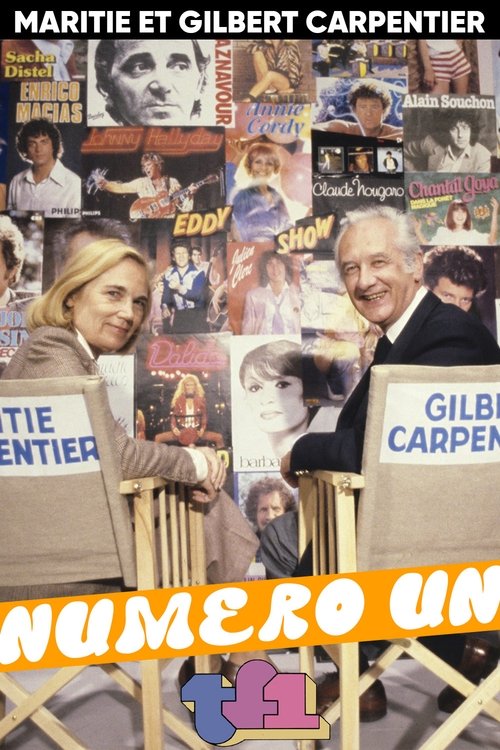
A French variety show.

Numéro un

1975
Le Grand Échiquier
8.0

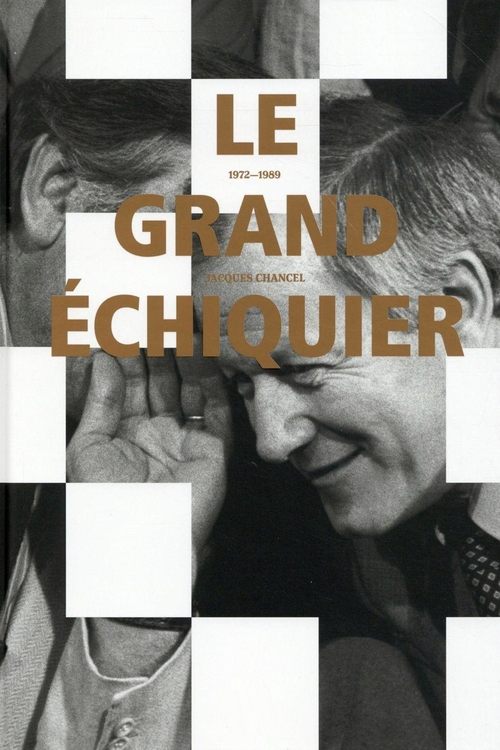
Le Grand Échiquier is a French variety television program created and presented by Jacques Chancel. It aired at 8:30 pm on the first channel of the ORTF from January 12, 1972 to July 12, 1972, then on the second color channel of the ORTF from September 1972 to December 1974, and finally on Antenne 2 from January 1975 to December 21, 1989. The program returned to France 2 on December 20, 2018 and is hosted by Anne-Sophie Lapix.

Le Grand Échiquier

1972
No image
6.0

No description available.

Midi trente

1972
Discorama
8.0

No description available.

Discorama

1959
La Chance aux chansons
6.5

No description available.

La Chance aux chansons

1984
No image
6.0

No description available.

Samedi soir

1971
Dim Dam Dom
8.0

No description available.

Dim Dam Dom

1965
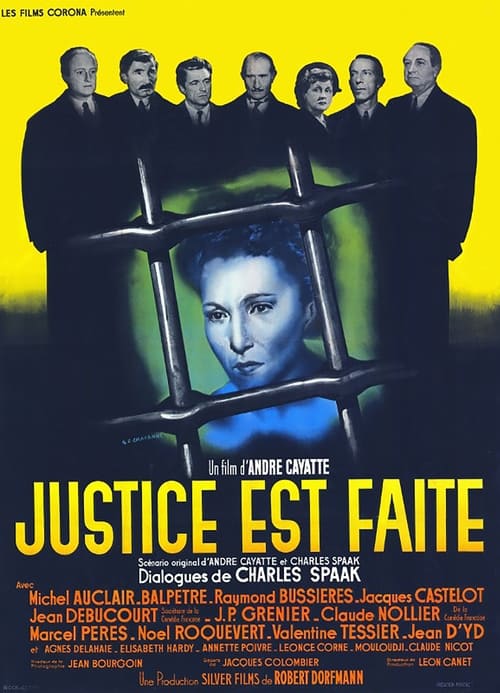
Justice Is Done
6.4

Elsa Lundenstein is accused of having murdered her lover. The jury discusses the case vividly. All members are somehow prejudiced because of personal life experience and subsequently each member reads something different into the presented facts.

Justice Is Done

1950
We Are All Murderers
6.7

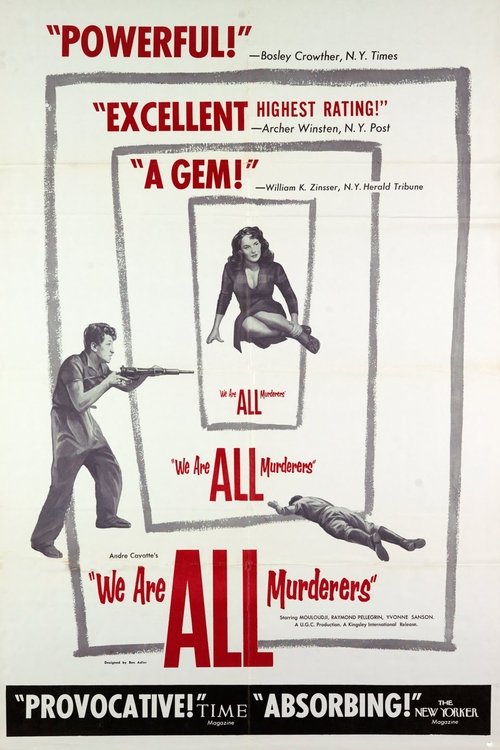
Originally titled Nous Sommes Tout des Assassins, We Are All Murderers was directed by Andre Cayette, a former lawyer who detested France's execution system. Charles Spaak's screenplay makes no attempt to launder the four principal characters (Marcel Mouloudji, Raymond Pellegrin, Antoinine Balpetre, Julien Verdeir): never mind the motivations, these are all hardened murderers. Still, the film condemns the sadistic ritual through which these four men are brought to the guillotine. In France, the policy is to never tell the condemned man when the execution will occur--and then to show up without warning and drag the victim kicking and screaming to his doom, without any opportunity to make peace with himself or his Maker. By the end of this harrowing film, the audience feels as dehumanized as the four "protagonists." We Are All Murderers was roundly roasted by the French law enforcement establishment, but it won a special jury prize at the 1952 Cannes Film Festival.

We Are All Murderers

1952
Angel and Sinner
5.4

During the stagecoach trip of a frightened group of inhabitants of Rouen, Elisabeth Rousset, known as "Boule de Suif", renders these people a signal service, but comes up against their stupidity and their sufficiency. A little later, Boule de Suif assassinates the formidable Prussian lieutenant whom his friends had nicknamed Fifi and who shamelessly displayed his taste for pillage and his sadistic tendencies.

Angel and Sinner

1945
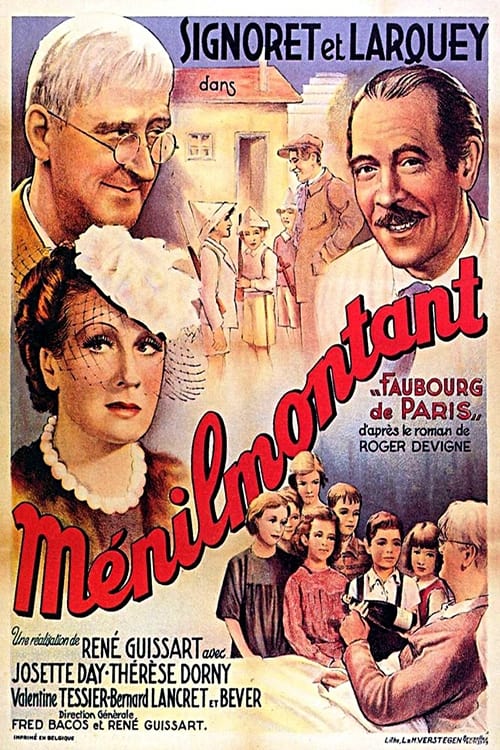
Ménilmontant
7.0

Because they brought her back a lost piece of jewelry, a very rich lady accedes to the request of three old people and transforms a vacant lot into a park for the neighborhood children.

Ménilmontant

1936
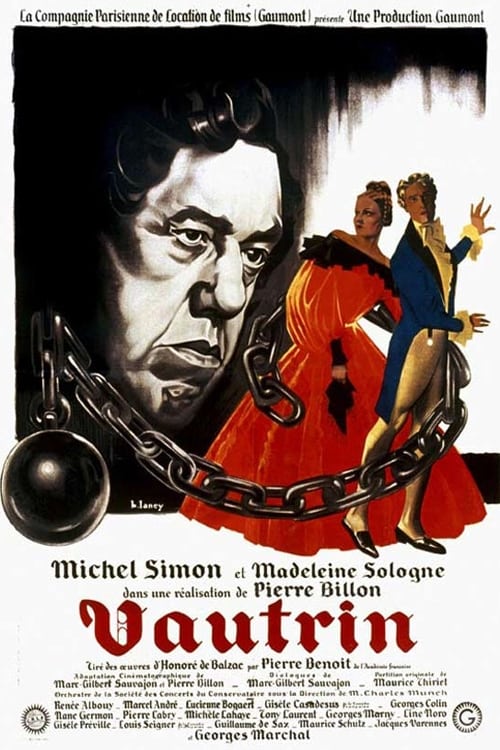
Vautrin the Thief
7.9

A famous convict Jacques Collin, alias Trompe la mort, or abbot Carlos Herrera, also called Vautrin, escapes from prison. Chance makes him meet Lucien de Rubempré, an impetuous and eternal lover who, when he is dismissed, collapses. Moved by this fragility, he takes him under his wing, and will do everything possible to ensure that his creature reaches happiness, even if it means imagining the worst shenanigans and other scams, with the help of a band of clever villains.

Vautrin the Thief

1943
Jenny
6.1

When her fiancé breaks off their engagement, Danielle leaves London and returns to her mother, Jenny, in Paris. With her business partner Benoît, Jenny runs what appears to be a respectable nightclub – it is in fact a place where wealthy men can buy the favours of attractive young women. Oblivious to her mother's professional and personal life, Danielle meets a handsome young man named Lucien, and falls in love with him – not realising that he is Jenny's lover...

Jenny

1936
Strangers in the House
7.0

Loursat, a lawyer, lives with his daughter Nicole in a sinister and vast bourgeois residence. Abandoned for nearly twenty years by his wife, the brilliant lawyer has sunk into alcoholism and his relationship with his daughter is virtually non-existent. However, one day the corpse of a stranger is discovered in the residence of Loursat. Nicole, who frequents a gang of young people who escape boredom by stealing cars and other objects, is immediately suspected.

Strangers in the House

1942
The Secrets of the Bed
3.8

Four-episode Franco-Italian omnibus film. Four men from different national and cultural background take refuge in a cabin after being sidetracked by bad weather on their way to conference.

The Secrets of the Bed

1954
Gigolo
5.7

Back from the war, Marceau Le Guern remembers. Educated in an orphanage run by Dominican brothers, he fell into misery when he left it. His only asset was his good looks, which did not escape the attention of Madame Alice, a shady woman who persuaded him to pose for pornographic photos meant for lonely aging women. Marceau also served as a gigolo before the war and captivity put an end to this juicy business. Now he wants to start a new life, all the more as ha has found love in the person of a pure young lady named Dominique. But Madame Alice won't hear of it...

Gigolo

1951
Until the Last One
6.0

Just released from prison after serving a six-month sentence, Fernand Bastia goes into hiding. He has indeed double-crossed his gang by keeping part of the product of a robbery for himself. Thanks to his sister Marcella, Fernand has taken refuge in a small circus where she works. There, he falls in love with Gina but also arouses the jealousy of Quedchi, a fairground stall-holder who has seen him hiding the stolen money. After a while, Fredo Riccioni, the boss of the gang and his men, manage to trace him...

Until the Last One

1957