
Birgit Brüel
Acting
Known For

Dansk Melodi Grand Prix is an annual music competition organised by Danish public broadcaster Danmarks Radio, which determines the country's representative for the Eurovision Song Contest. The festival has produced three Eurovision winners and thirteen top-five placings.
Dansk Melodi Grand Prix
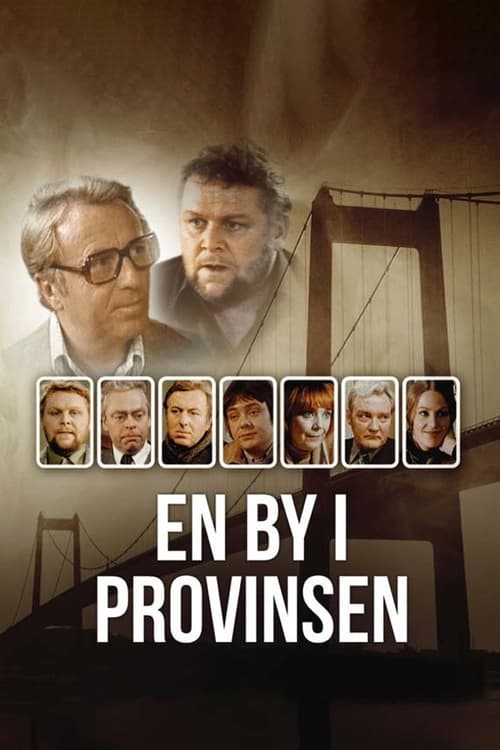
In 1970s Denmark, the criminal police in a provincial town solve different criminal cases, when the police was dominated by men and DNA was not yet a tool in investigation.
A Town in the Province
No description available.
Krigsdøtre
No description available.
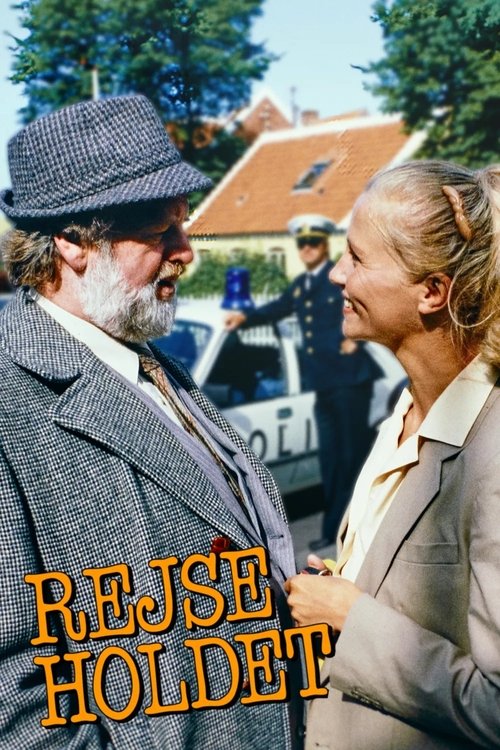
Rejseholdet
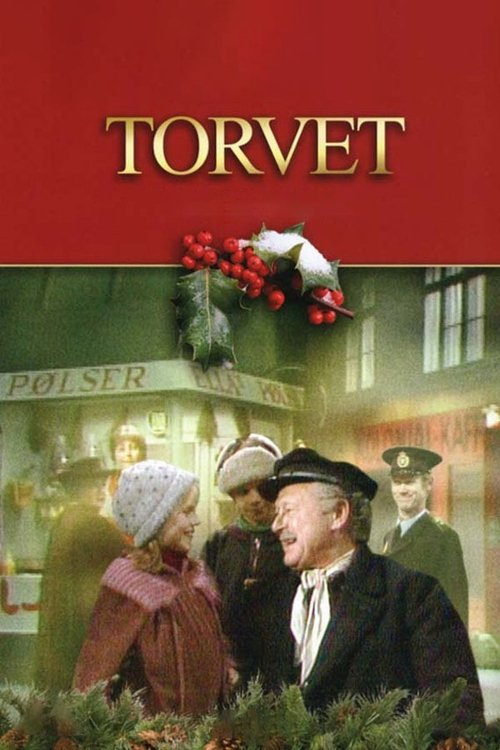
In the square of an unnamed Danish town, we follow a number of people as they go about their daily business, big and small: The police officer tries to find out whether the Christmas tree seller has a "permit" to sell Christmas trees, the bicycle repairman invents a new kind of bicycle, the baker's assistant and the chimney sweep are in love, and the barber is working on a rug made of hair. Meanwhile, the Christmas tree seller sits carving small wooden figures and talking to everyone who passes by. The dramatic main story is that a modern entrepreneur wants to tear down all the old buildings in the square and replace them with a modern parking lot. Each section ends with the characters gathering around Ella's hot dog stand and singing along with the courtyard musicians.
Torvet
No description available.
Hvad en møller kan komme ud for
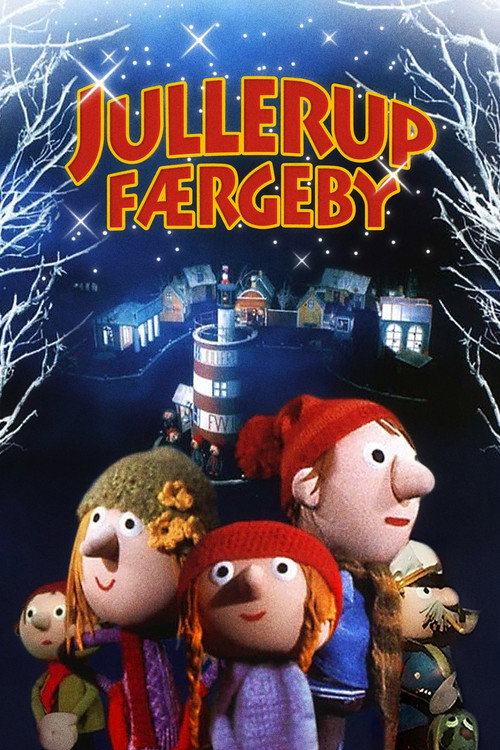
No description available.
Jullerup Færgeby
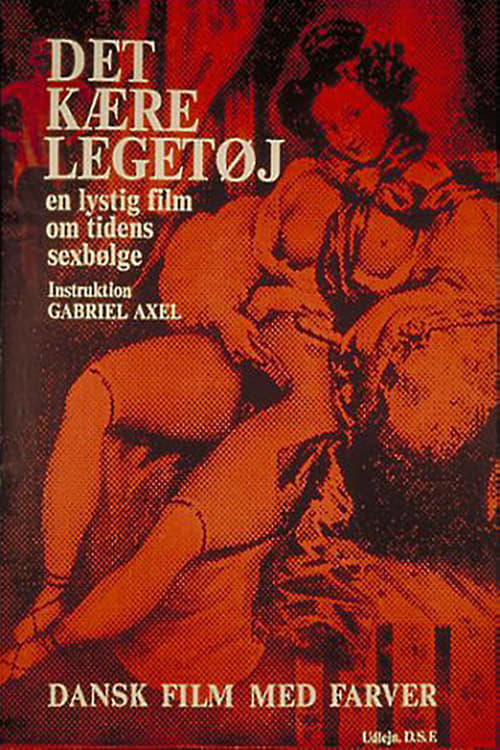
A look at what happened when Denmark abolished censorship in the late 1960s.
Sex and the Law
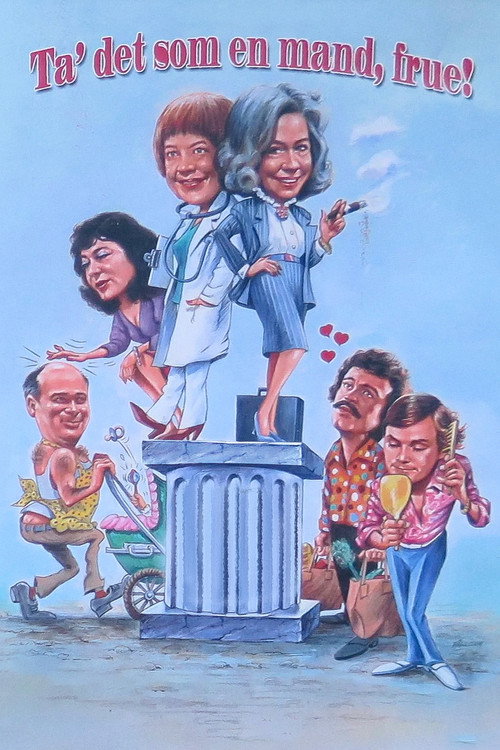
A middle aged married woman suffers from depression. Her husband suggests she get a dog, but instead she gets a job. Treatment of the women workers leads her into a hilarious fantasy in which roles are reversed and bearded men sit behind typewriters worrying about their looks and what to buy for dinner. She gets involved in a strike and loses her job, but has found some friends and a more positive attitude to life.
Take It Like a Man, Ma'am!

Half a century ago, Brazilian composer and musician Antonio Carlos "Tom" Jobim (1927-1994) introduced bossa nova to a worldwide audience with "The Girl from Ipanema." This relaxed, cool, sensuous music blended jazz and samba. After recording an album of songs by his friend Jobim, Frank Sinatra is reported to have said, "I haven't sung so quietly since I had laryngitis." Naturally, "The Girl from Ipanema" and Frank Sinatra are featured in this musical collage of countless seamlessly edited excerpts of concert footage that cover decades of events all over the world: from Rio de Janeiro to Lisbon, Paris, Copenhagen, Jerusalem, Tokyo, Montreal, New York and back to Rio.
The Music According to Tom Jobim
The last of three animated films about the history of the exploited underclass in the Nordic countries through the ages. The first two were "Trællene" (1978) and "Trællenes oprør" (1979).
The Thralls' Children

Nick is a handsome 13-year-old runaway whose search for a family leads him into the arms of male prostitution. While Nick's sexual exploits with strange men keep his pockets lined with cash, the experience does nothing to preserve his waning innocence. Soon enough, he's as hardened as a man three times his age.
Pretty Boy

A group of better-off thirty-somethings meet for a weekend in Knud and Beth's home. The host couple is prone to bickering regularly. The married couples (Jan and Ilse, and Kjeld and Tove) that are visiting understand and try to stay out of the way. Bachelor Lars, however, comes into his own and is a constant source of provocative comments.
Weekend

An everyday story about a single father with four children, whose eldest daughter, Søs, runs the household. Søs occasionally goes into town with Peter. In connection with Ole's schooling, she comes into contact with his teacher, Jørgen Stæhr. Gradually, love develops between them, especially after Søs and Jørgen participate together in Children's Aid Day. Uncle Anders is a frequent guest in the house, and the neighbor, Mrs. Sejersen, often visits under various pretexts.
Father of Four
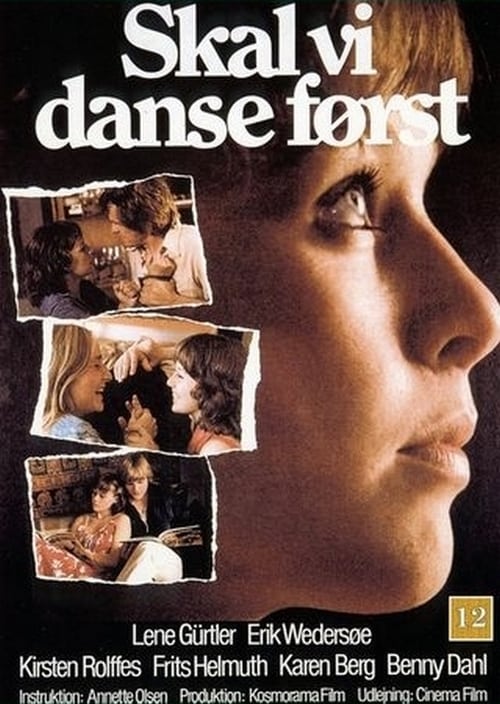
About sixteen-year-old Susanne and her relationship with her parents and friends. To make her friend Peter jealous, she flirts heavily with a forty-year-old silversmith from the sailing club where she works.
Skal vi danse først?
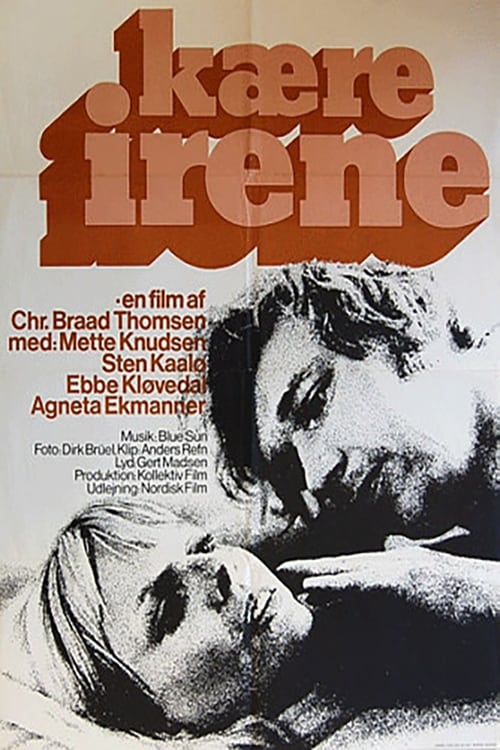
Description of Irene, a modern, free-spirited girl with a good job as press secretary for a film company. Nevertheless, she finds it difficult to get a grip on her life. She has grown distant from her husband, but for her daughter's sake she does not want to divorce him. Her lover Ebbe, a controversial journalist, is closer to her, but his violent infatuation can also be too much of a good thing. In a series of casual erotic relationships, Irene does not find what she is looking for either.
Dear Irene
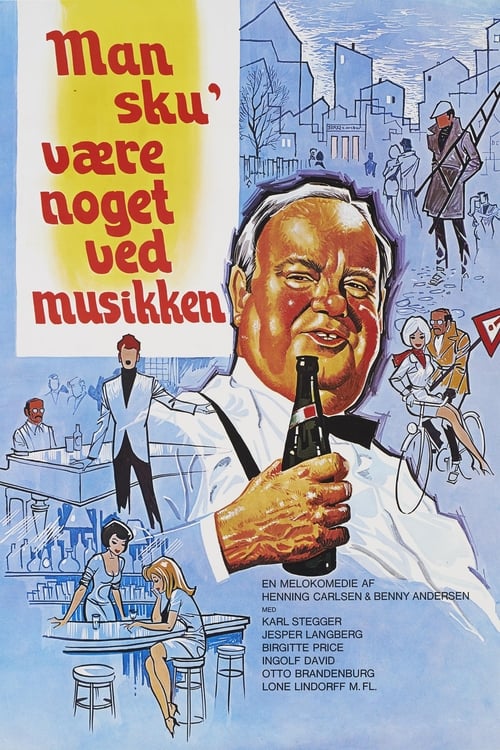
This is a film about the stuff dreams are made of, yet, there is nothing elevated in this concept, on the contrary. The characters around the bar Strudsen (the ostrich) are doing what ostriches do, hiding themselves from the threats of life and keeping their dreams to themselves. Scriptwriter Benny Andersen being a poet is rendering a loving portrait of a number of persons, who fail to try to make their dreams come true, possibly not being sufficiently dissatisfied with their life after all. The manager would like a bar of his own but dare not admit to it, the butcher would like to be an opera singer, the window cleaner (sorry, window polisher) is secretly in love with the bar lady, but dare not show it and the pianist willingly listens to all the different dreams being presented to him. This film was the best accomplished movie from Henning Carlsen since his debut with 'Sult'.
Oh, to Be on the Bandwagon!
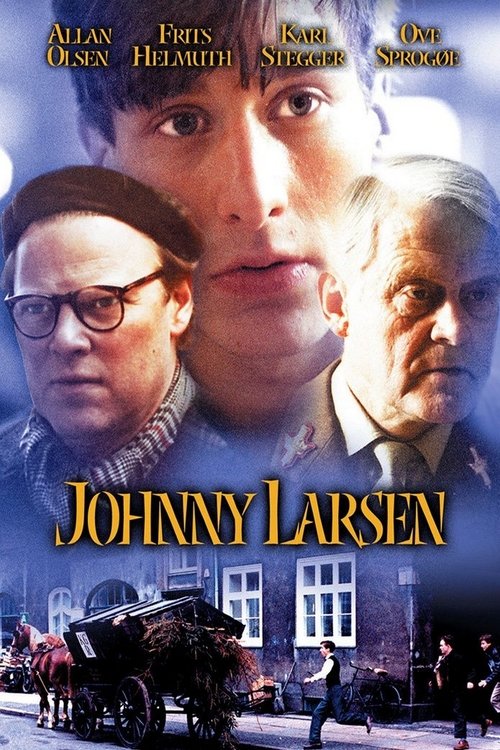
From a working class coming-of-age novel, Morten Arnfred fashioned his feature film to recapture the feel, the sting, the pain, but also the spirit of solidarity of the 1950s in the metropolitan city of Copenhagen: at the center, young Johnny, helpless, hapless, happy, unhappy, going through the motions of growing up. Bodil awards: Best Film and Best Actor (Allan Olsen).
Johnny Larsen
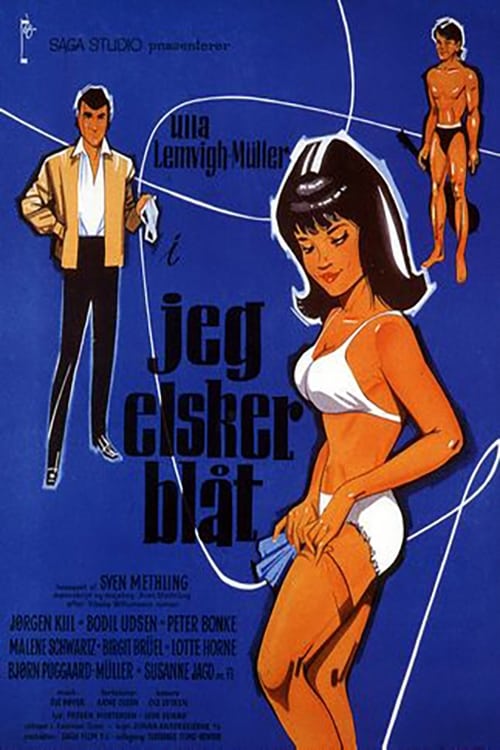
A socially realistic film about a fifteen-year-old girl and her problems with love. Judith comes from a working-class home and does not want to continue her education. After having a relationship with a man twenty years her senior, she meets seventeen-year-old rock musician Willy, with whom she becomes pregnant. Willy does not really interest her, and she has an illegal abortion.
Jeg elsker blåt
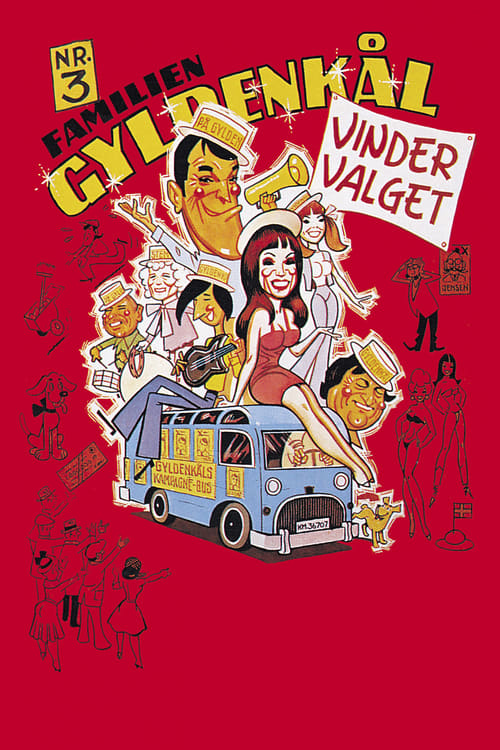
The final film in the Gyldenkål trilogy. Following a financial downturn, Charles Gyldenkål decides to run for municipal office. After an unconventional election campaign, he is elected to the city council and becomes the deciding vote in the mayoral election.