
Gérard Giroudon
Acting
Known For
No description available.
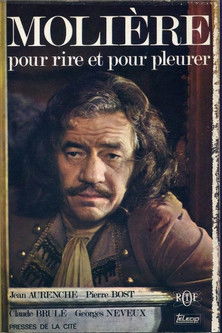
Molière pour rire et pour pleurer
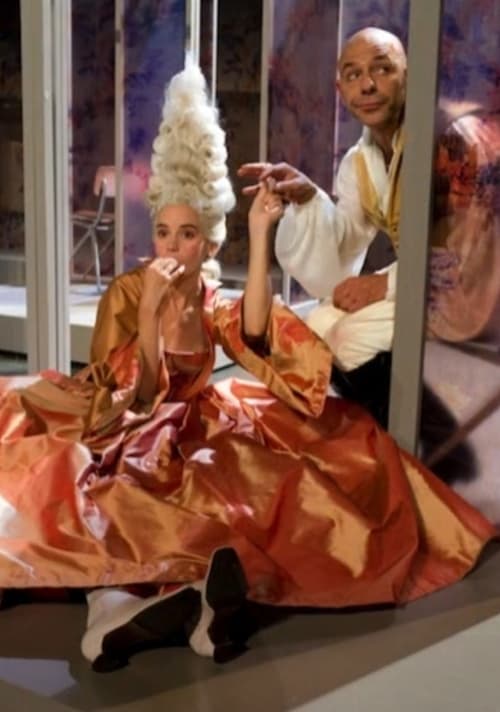
A staging of Marivaux's play "The Game of Love and Chance" by Galin Stoev.
Le Jeu de l'amour et du hasard

In a mining town which has been blighted by economic downturns, an elementary school headmaster struggles to obtain social services on behalf of his students.
It All Starts Today

Alceste hates all of humanity, denounces its hypocrisy, cowardice and compromise. But he nevertheless loves Célimène, flirtatious and slanderous. The virtuous thus launches into battles lost in advance which force him to flee.
Le Misanthrope

No description available.
Le jeu de l'amour et du hasard

This stage play from 1977 is adapted from the well-known play "Lorenzaccio" written by French poet and playwright Alfred de Musset. Set in 16th-century Florence, the play revolves around the complex and tormented protagonist Lorenzo, known as Lorenzaccio, who faces inner conflicts as he struggles with his desire for personal freedom and the responsibility he feels towards his city. Between political corruption, morality, and the struggle for justice; the stage blends with historical drama and psychological exploration.
Lorenzaccio

While visiting a friend at the hospital, Momo, a jobless comedian, meets Michel, the director of an unpaid clown's association, who visit sick children. Thanks to Michel's support and belief, Momo sets himself a new challenge : make the children laugh, despite their illness.
Le grand cirque

Françoise Barnier, the film's heroine, is a mother. One day, she stole something. She was in dire straits but no more so than usual. She was not in debt. She had always refused the degradation of excessive debt and charities, attempting to live in line with the rules laid down by society and the law. We follow her journey through the judicial institution. Here, two ideas of justice and law collide.
La voleuse de Saint-Lubin

Theater play "Les fourberies de Scapin" played by the "Comédie française" in 1998.
Les Fourberies de Scapin

No description available.
Divine Comédie, des planches à l'écran

No description available.
La Dame de chez Maxim
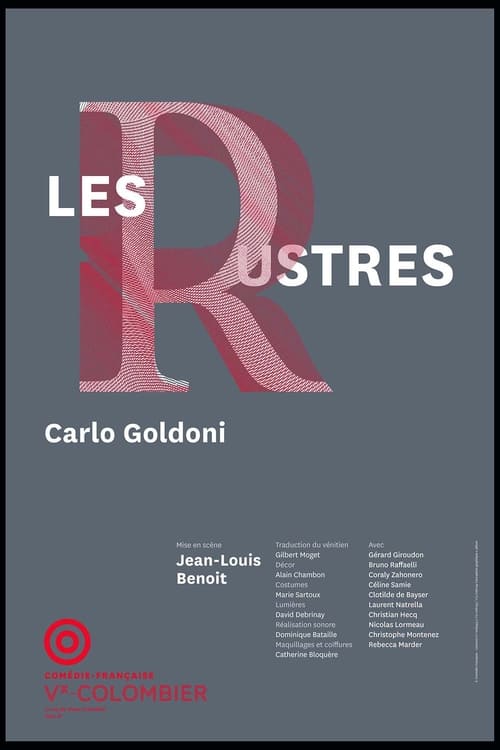
Written in 1760, Carlo Goldoni’s comedy has never been performed at the Comédie-Française, perhaps overshadowed by the famousHoliday Trilogy. A satire of the Venetian merchant class, embodied by narrow-minded, complaining and intolerant men whose mistrust of the fairer sex borders on the absurd, The Boors perfectly illustrates Goldoni’s theatre, a “theatre of life with a real content, characters observed in reality, and a natural expression.” Thus, a theatre in which the man Voltaire described as “nature’s son and painter” scrutinises his contemporaries, their relationships and their social behaviour. His work served to entertain while providing posterity with an acute testimony of the morals of his time. Indeed, Jean-Louis Benoit warns against reducing the author to a simple “photographer of reality”.
Les rustres

Silvia’s father grants her permission to meet Dorante, the man she’s promised to in marriage, by pretending to be her servant Lisette, who in turn will play the role of her mistress.
Just Love!

The Learned Ladies is a comedy by Molière in five acts, written in verse. A satire on academic pretension, female education, and préciosité (French for preciosity), it was one of his most popular comedies and the last of his great plays in verse. The character Trissotin, the main antagonist, is a caricature of Charles Cotin, an adversary of Nicolas Boileau and Molière, who both saw him as the perfect example of a pedantic scholar and mediocre scribbler.
The Learned Ladies

Woman hero Dom Juan lives a life full of excesses and love affairs. When he seduces the nun Elvire, but shows no interest in her a short time later, he gets to deal with her vengeful brothers. Dom Juan and his assistant Sganarelle have to flee and set out on a journey full of strange encounters.
Dom Juan & Sganarelle
No description available.
Ferveur - Comédie Française

First performed in 1732, Marivaux's play on the theme of cross-dressing, depicts the stratagems of the young princess Léonide in love with Agis, the legitimate heir to the throne of Sparta. To meet the prince, watched over by the philosopher Hermocrates and his sister, Léonide disguises herself as a man and seduces the whole household.