FEEL IT.STREAM
Knud Heglund

Knud Heglund

Acting

Biography

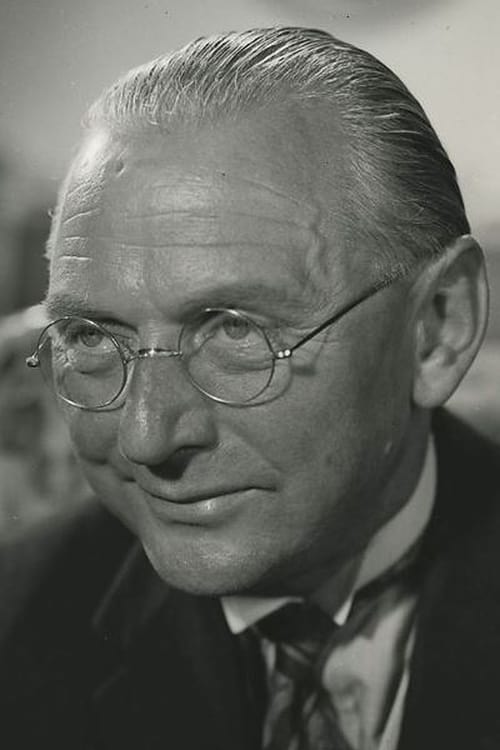
Knud Lars Valdemar Heglund (oprindelig Hägglund - navneændring 1927) var søn af garderobeforvalter Lars Heglund (død 1921) og hustru Johanna Voss (død 1944). Han voksede op i et hjem med tilknytning til Det ny Teater, hvor han debuterede 22. marts 1913 i Alexander den Store. Derefter kom han på provinsturne og blev siden elev på Det kgl. Teater, hvor han debuterede i 1919 som Helmuth i "En skavank". I 1925 forlod han nationalscenen og blev et par år senere - gennem flere år - en af de mest benyttede kunstnere på Apollo Teatret. Han havde derudover engagementer ved Nørrebros Teater, Komediehuset og Det ny Teater. I størstedelen af 30erne var han knyttet til Betty Nansen Teatret, hvor han spillede et imponerende antal roller indenfor det lettere klassiske repertoire. Han havde store successer i roller som Polonius i Kaj Munks "Hamleth", Noah i "Guds grønne enge" og som præsten i "Ordet" - alle på Betty Nansen Teatret. I 1944 kom han til Folketeatret, hvor han både var skuespiller og sceneinstruktør. Knud Heglund var også knyttet til Skolescenen. Da radioens dramatiske udsendelser startede kom Knud Heglund ind i rækken af de skuespillere som radioen fandt særlig egnet og han blev en populær radiokunstner både som oplæser og medvirkende i hørespil. Han medvirkede også i en række danske spillefilm. I 1956 fik han en biografbevilling til Skovshoved Bio, men dette ekstra arbejde tog så hårdt på hans kræfter - at han under en sceneprøve på Folketeatret blev ramt af et hjerteanfald og døde. Knud Heglund var medlem af Teaterrådet fra 1948 og af bestyrelsen for Olaf Poulsens Mindefond. Sammen med skuespillerinden Sophie Damaris Andersen fik han sønnen Jørgen Ole Heglund (19-06-1918). Knud Heglund blev i 1922 skilt fra Gerda Kofod og blev den 15. maj 1926 gift i Holmens Kirke med balletdanserinden og skuespillerinden Lili Heglund. Blandt hans revynumre kan nævnes "Da fut da da fut" fra 1927 og "Nu skal vi hjem i buret og kigge på Pappegøjn" fra Apollo Revyen 1928. Begge viser sang han sammen med Holger "Gissemand" Pedersen. I revykomedien "Guderne ter sig" i 1940 på Apollo-Teatret lancerede han "Diogenes vise" af Poul Henningsen og fra Cirkusrevyen 1942 stammer viserne "Den a'n vej" og "Vi dyrker swingpjat" som han sang sammen med Ib Schønberg. Sommerferierne tilbragte han i sit sommerhus "Teaterhytten" i Kårup skov ved Fårevejle.
Known For

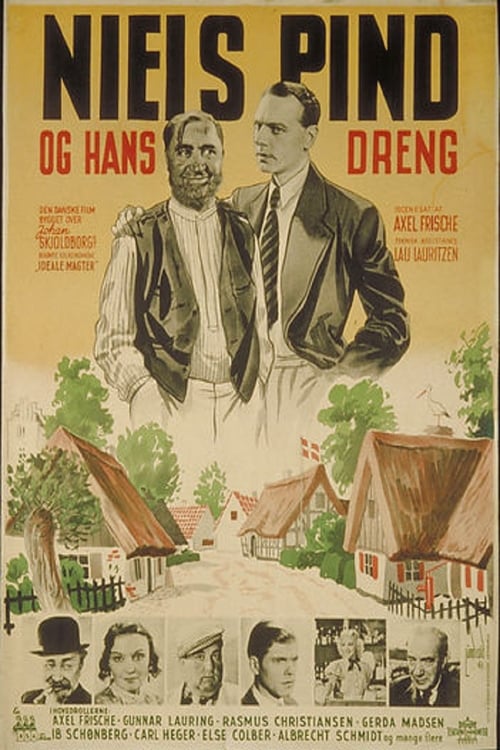
Sønnen fra Amerika
7.0

Niels Pind is a drunkard who is exploited by some of the town's residents. This comes to an end when his son, Jens, returns from America with a lot of money. Jens buys the local estate and starts extracting gravel from the ground. He quickly gains a bad reputation in the area because he only thinks about money. Niels Pind disowns his son. However, Jens changes as he falls more and more in love with Ingrid.

Sønnen fra Amerika

1957
Familien Schmidt
8.2

The bank is located in the square of a small, idyllic market town, and its manager, Anders B. Schmidt, is seriously ill in the town hospital. At the beginning of the story, he is quietly passing away. In the wealthy neighborhood of the market town, we find the bank manager's villa, which has been his pride and joy for many years. He leaves behind a deeply grieving widow and four adult children. It soon emerges that the respected citizen had a love affair before he got married, and this causes outrage.

Familien Schmidt

1951
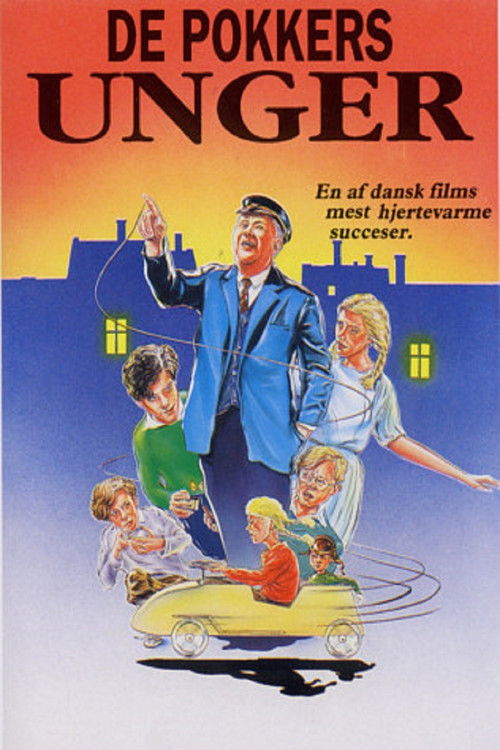
Those Damned Kids
7.0

Directed by Danish filmmakers Bjarne and Astrid Henning-Jensen, THOSE BLASTED KIDS tells a story of a group of back-alley urchins that is considered Denmark’s first true children’s film.

Those Damned Kids

1947
Penge som græs
8.3

The heavy prison door in Vridsløse opens, and freedom beckons once again to counterfeiter P. Krone-Strøm. He has served an eight-year sentence, but believes it was a miscarriage of justice. He was one of the many who could not find employment during the crisis years of the 1930s in Denmark. Now he is once again in contact with the world outside the prison walls, but conditions have changed completely during the years he has spent in isolation. Now it is not money that is lacking in society, but labor and goods.

Penge som græs

1948
Englen i sort
6.9

The beautiful and charming Betina has been married for three years to psychiatrist and senior physician Dr. Arne Brant. They live in comfortable circumstances, have an adorable little daughter, Bente, and thus have everything they need to live happily in their comfortable villa. But Betina is restless. All year round, she devotes her time, and her husband's money, to helping those in need in the community. It has become her passion to participate in aid committees and to lead philanthropic work. The refined, elegant woman, always dressed in black, this "angel in black," is admired for her self-sacrifice.

Englen i sort

1957
Father of Four: In the Snow
6.3

Ib Schønberg is again the kindly father - and now he is crowned "the ideal driver". This means that he can take all his four children to winter holiday in Norway.

Father of Four: In the Snow

1954
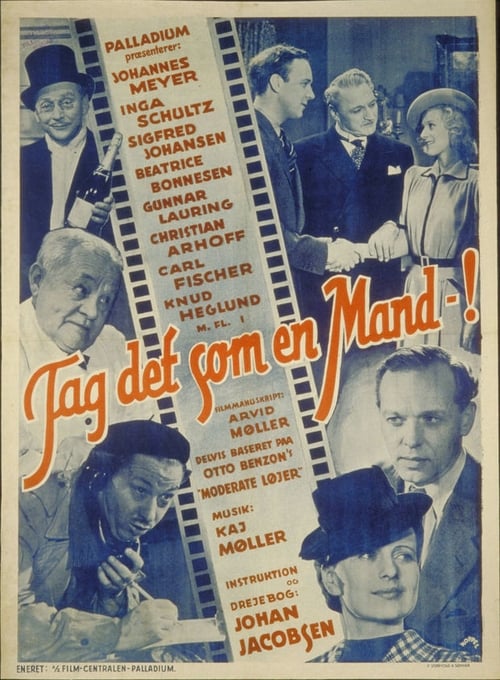
Tag til Rønneby kro
8.7

The owner of Rønneby Kro, Bartholdi, is writing his memoirs. When this comes to the ears of prominent citizens, they rush to Rønneby Kro to have the publication stopped. However, Bartholdi is neither a stickler nor a hack. They get help from a lawyer, who only has success when he goes through Bartholdi's grandson.

Tag til Rønneby kro

1941
Frk. Kirkemus
7.0

The young Ms. Holm gets the job as private secretary to Director Berg and it quickly becomes clear that she is unusually active and enterprising. Ms. Kirkemus, as Berg has named her, brings life to the entire office and a business trip to Stockholm, where half the staff participates, becomes no less festive thanks to her. But Ms. Kirkemus has fallen in love with her director and it doesn't really suit her that Berg is meeting another girl in Stockholm and then the antics get even more intense...

Frk. Kirkemus

1941
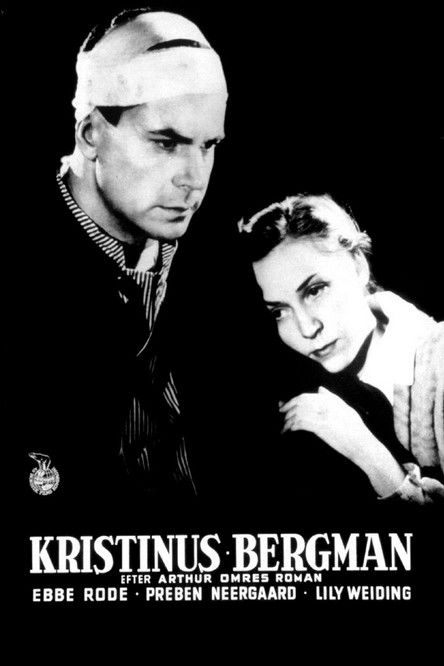
Kristinus Bergman
7.3

Danish noir crime drama with a poetic nerve. Two boys, Kristinus and Jakob (Rode and Neergaard) experienced a loveless and abusive childhood. Now as grown-ups, they are acting outside the law.

Kristinus Bergman

1948
Den gamle mølle paa Mols
8.0

A young, beautiful girl arrives at Krogerød Kro on Mols and shocks the innkeeper by telling him that he is her father. At the same time, the inn is about to lose its liquor license, threatening its very existence. The innkeeper tells the girl that both he and his friend from his military days have paid child support to her, as no one knew which of them was her real father.

Den gamle mølle paa Mols

1953
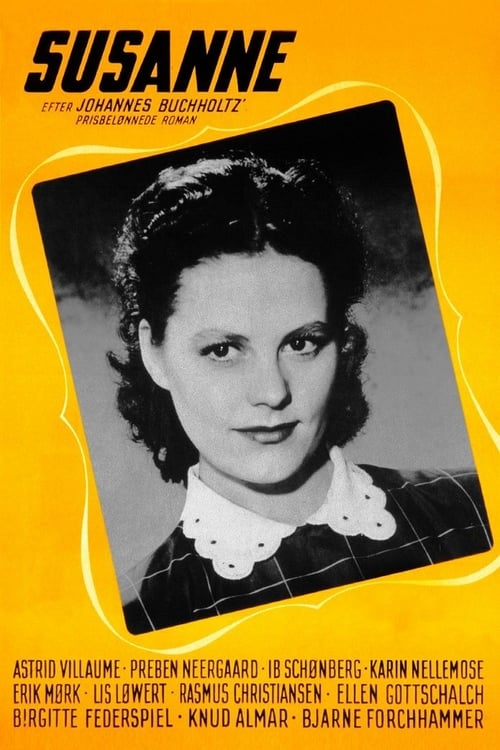
Susanne
8.3

Summer in the small market town of Stenvig equals life and good earnings for the city's shoppers. Love flourishes side by side with the urge to act, and especially the baker's daughter Susanne makes the young men's hearts beat fast. But when the infatuated Otto gets a little too close, it has major consequences for Susanne.

Susanne

1950
Us Petty Sinners
7.3

Venus aux belles fesses, or Venus with the beautiful buttocks, is the name given to a statuette by the famous Swedish sculptor Sergel, and this small work of art, a draft in fired clay, plays a significant role in this fantastic story. In a strange way, Venus intervenes in the turbulent fate of art historian Hannibal Svanø and creates conflicts for many others. After spending the whole summer leading a nomadic but rather pleasant life, interrupted only by occasional periods of work with old friends around the country, Svanø now sets off for the capital. On the way, he manages to persuade an old schoolmate, Judge Truelsen, to give him a loan that enables him to enjoy a hearty meal in a small, cozy restaurant called "Asietten."

Us Petty Sinners

1952
Magic Lighter
6.3

A soldier finds a magic tinderbox, and when he learns of its true power, he looks to use it to win over the local princess.

Magic Lighter

1946
Min kone er uskyldig
8.0

Frederik makes various scams. As money is once again tight, Frederik and his wife Betty decide that they must go in new directions. Frederik dies and Betty cancels the life insurance. At first, things go very well for Betty. At the same time, Frederik is very jealous, which is why he decides to check Betty's relationship with men. Frederik appears as Frederik's brother, Carl. Carl and Betty have a few pleasant days together. Betty suspects that Carl is actually Frederik, but how could she know for sure. At the same time, the web begins to tighten around Carl/Frederik.

Min kone er uskyldig

1950
De blaa drenge
6.5

Sylvia Grøn is fired as a teacher. Instead, she teams up with her great admirer, the actor Herman Sander. Sylvia Grøn invests her savings in his traveling theater, but the theater is doing poorly. The image of Herman Sander also fades as time goes by. Sylvia's old student, Eva Kristoffersen, seeks refuge in the theater troupe. She is secretly in love with the composer Henrik Brandt. Just before the key must be turned for the theater group, Sylvia gets an idea. Henrik Brandt has written a play and she wants to stage it.

De blaa drenge

1933
Lynet
7.0

Peter Blom, called Lynet, escapes from prison, and at the same time the unemployed actor Poul Quist sees his portrait in the newspaper, in connection with a film company wanting to make a film about Lynet, and is looking for someone to play the lead role. Since the resemblance between Blom and Quist is striking, Quist approaches the film company and then the pranks start to take off, when Quist pretends to be Lynet. The film director thinks that he really is Lynet and sees a sensation by giving him the role.

Lynet

1934
Jeg mødte en morder
6.7

The young successful author Eva Saabye surprises both her publisher William Nerup and the literary critic Dr. Hennings, who is a good friend of hers, by not wanting to publish the last book she has written. One day Eva takes the manuscript for her novel out of the drawer, and as she starts leafing through it, we are drawn into its plot. The book, titled "I Met a Murderer", has Eva Saabye as one of the main characters.

Jeg mødte en morder

1943
Hans Onsdags-Veninde
7.0

Director Peter Engel, called "Peter the Great" by his friends, is a very spoiled and spoiled young man. His mother, the general's wife, lives and breathes only for her son after her husband's death, but she is also a woman with a very determined will, and behind her flabby manner Peter has great respect for her. Every Wednesday evening Magda comes to visit Peter in his elegant bachelor apartment on Bredgade. She is a sweet and fresh young girl who lives with her father. Magda loves Peter with all her heart, which is why it hurts her that she is only his Wednesday friend.

Hans Onsdags-Veninde

1943
Meet Me on Cassiopeia
7.3

Composer John Berger is plagued by marital problems and struggling with a deadline for the music for an operetta. When he is visited by the muse of music, Polyhymnia, the melodies begin to flow, but she also causes a lot of complications in his earthly life. Like John's wife Irene, she falls in love with flight lieutenant Harry, while her father Zeus looks on disapprovingly and decides to intervene. Meanwhile, the premiere of the operetta is fast approaching.

Meet Me on Cassiopeia

1951
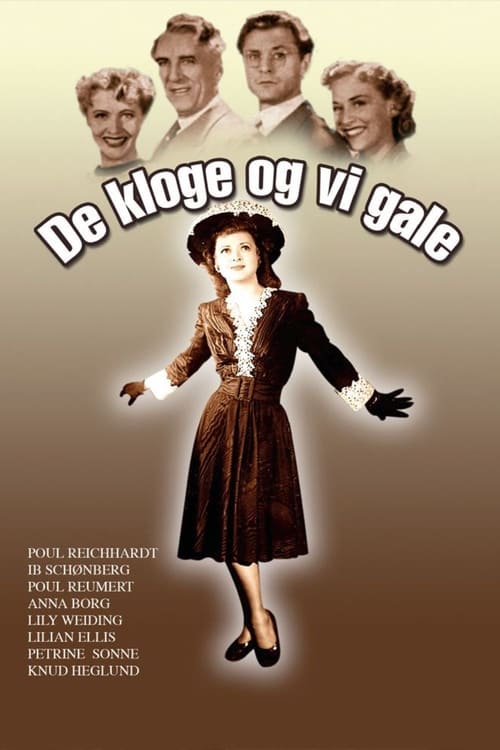
De kloge og vi gale
6.7

Composer Jørgen Rhoders lives an easy life, at least according to his son Per. Per and his stepsister, Ulla, decide to give their father a little trouble so that his compositions will improve. However, Jørgen deceives the children, and only when the children cause their parents to fall out does the situation seem to improve. Meanwhile, Ulla believes that Per is in love with Lily.

De kloge og vi gale

1945