Acting
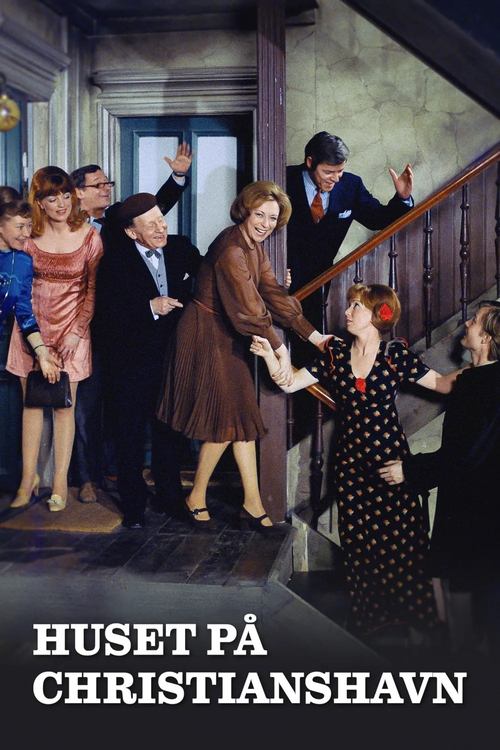
The series follows the residents of an apartment building on Copenhagen's Christianshavn, as they go about their daily lives and challenges. There is Olsen, a mover with an old fashion view of the world, Clausen who runs the local pet shop, Egon the career focused assistant, their wives who work hard to keep their spouses lives together, the young couple Tue and Rikke who recently moved in, the hard working caretaker Meyer, who never puts in to much effort, and of course Emma, the innkeeper of Rottehullet, where all the important decisions are made while running up the bar tab. The series was produced by Nordisk Film for Danmarks Radio TV station between the years 1970-77. The series' first director was Ebbe Langberg, then Erik Balling and Tom Hedegaard respectively. The series was conceived by an author team of well-known Danish authors such Leif Panduro, Benny Andersen, and Lise Nørgaard.
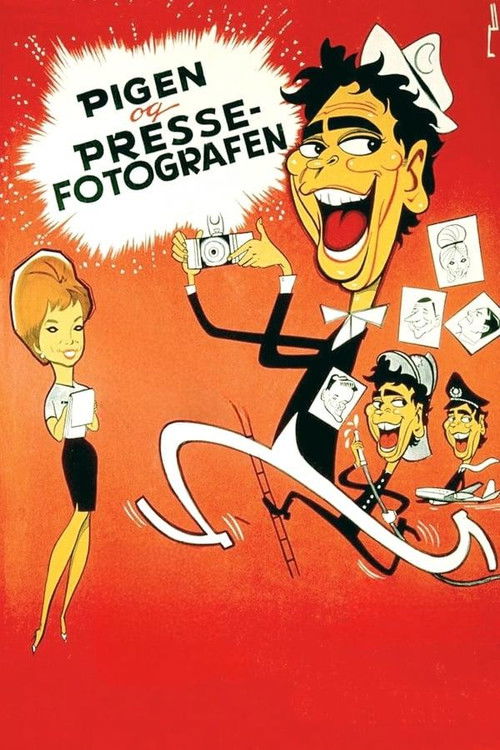
Bastian and Lene are a good couple, as a journalist and press photographer. They take turns to get ideas for how to get a scoop for the magazine "Tit og Lyt". They agree to play husband and wife so that Bastian can get an apartment. Lene is deeply in love with Bastian why she gets their mutual friend Soren to send a man from the housing authority. He says that they most have one child to stay in the apartment.
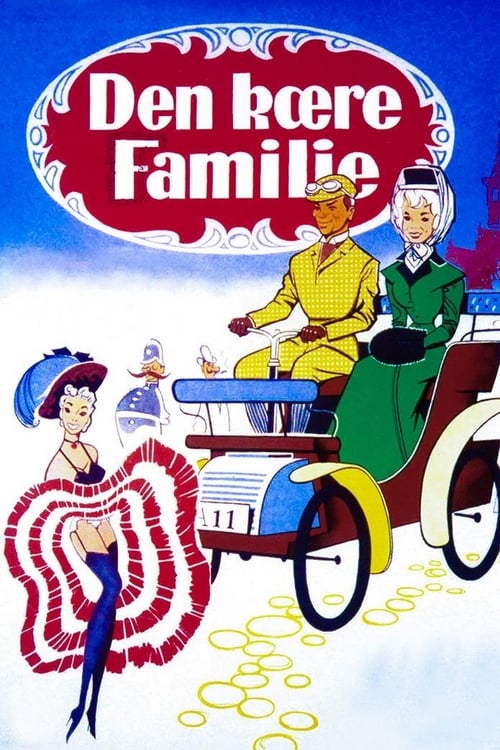
Copenhagen around the turn of the century - December 29th, 1899. Great merchant and shipowner Jacob Friis is one of Copenhagen's richest men. His home is the gathering place for family and friends. Since his wife's dead 10 years earlier, he shares sense of family and business acumen with his three daughters. Jacob wants to find a nobleman for his daughter Emily. Baron Claes is a very charming gentleman, but also a great womanizer...
A crime-series in six parts. A woman has been killed in a apartment. The murder squad are on the case.
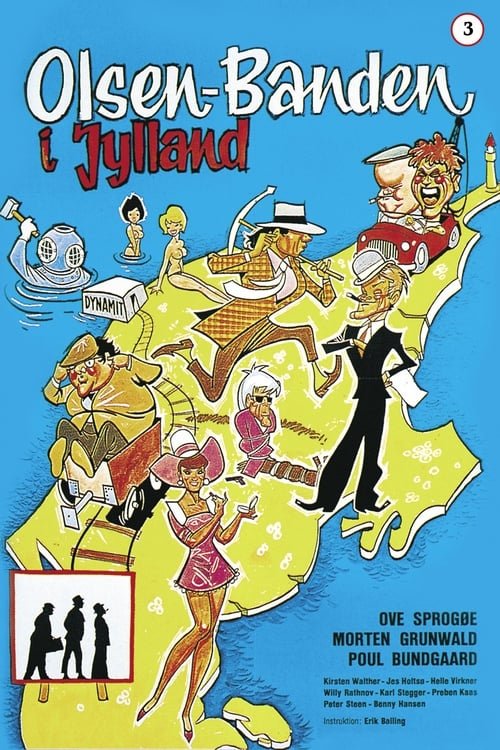
The Olsen gang in Jutland. Ones again Egon Olsen has a plan when he gets out of Vridslose State Prison. He has found out that the Germans left a large sum of money (in American dollars and gold bars) in one of their commando bunkers, when they were defeated in 1945; the only problem it's in Jutland. Egon, Benny and Kjeld "appropriate" a car and drives to Jutland along with Kjelds wife and child Yvonne and Borge. They look forward to fooling the the people in Jutland, but of course, things don't go quite as planed. It ends with Benny, Kjeld, Borge and Yvonne sitting in the train back to Copenhagen, were they are overtaken by Egon in his car on the road next to the track. This is the last time the Olsen gang goes to Jutland.
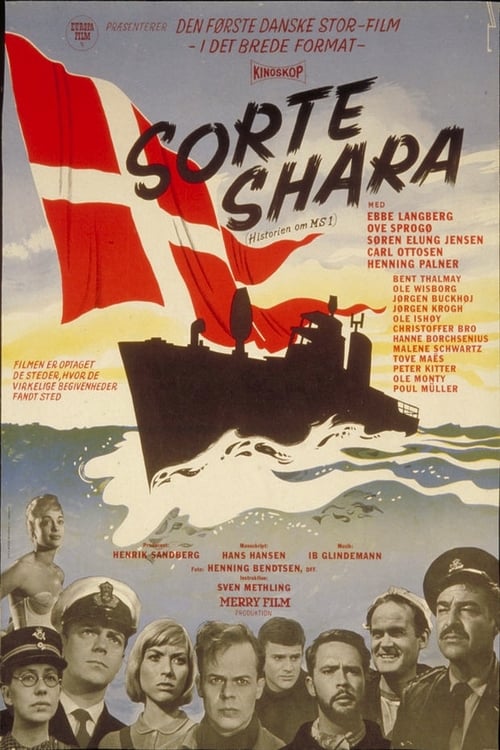
Based on a true story from the fateful day of August 29, 1943, when the Germans disarmed the Danish army and navy. The minesweeper MS 1 plays the leading role in the film about the ship that refused to surrender. The commander, Captain U.H. Gad, camouflaged the boat as a tugboat under the name 'Sorte Shara'. With Sweden as its destination, the boat set sail and experienced hours of excitement as it approached the German observation posts.
The first of 14 Olsen Gang films presents us with Egon Olsen, head of the gang, and his friends Benny and Kjeld, who want to become the best known gang in Denmark and eventually Europe by stealing a famous Bavarian work of art currently displayed in a Copenhagen museum. Although Egon's plan works out fine, there is only trouble ahead for the little gang.
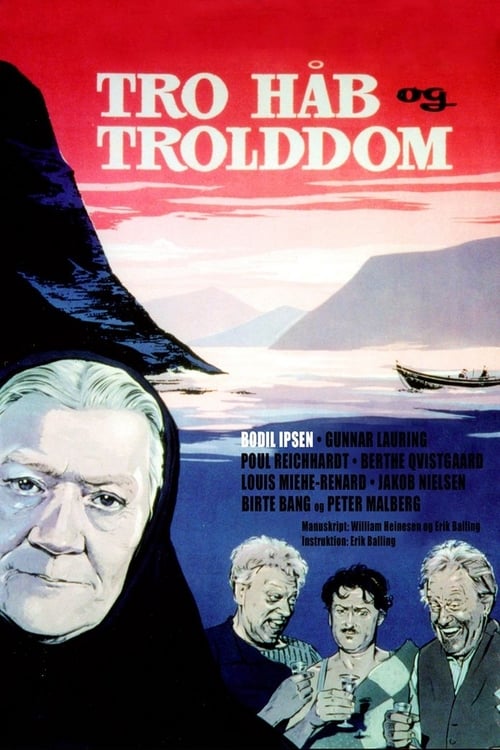
In the northern part of the Atlantic Ocean on the island of Troldø lives a single farming family. The grandmother Gunhild is the only woman on the island and her son Enok is unable to find a wife. Gunhild's advanced age causes her to worry for the future of the family. So she initiates a plan to get Enok married, a plan that is put into action when the young Eva becomes stranded on the island. But the community must be shaken by several dramatic events before Gunhild can breathe a sigh of relief.
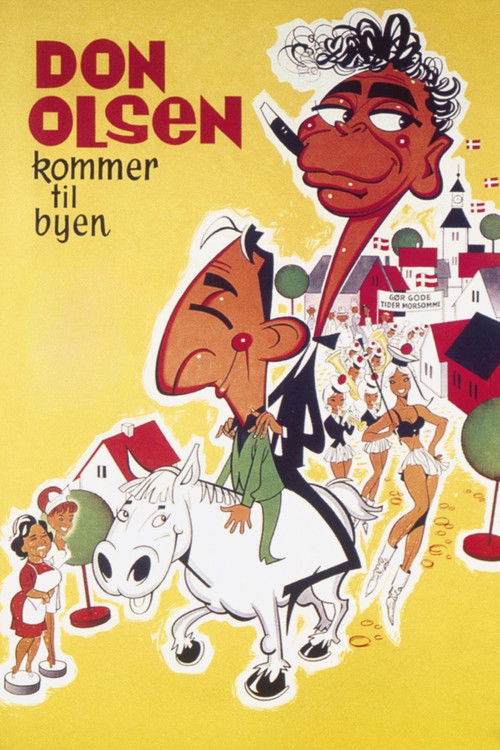
Bank director L.W. Jacobsen resides in a small provincial town. He is not particularly interested in his wife, Elsebeth, but rather in teacher and city council member Miss Mortensen. Thorsen, the town's manufacturer, is a member of the same city council group as Jacobsen. Then Don Olsen comes to town. Olsen is not interested in the upper class, but rather in people. By chance, Thorsen and Olsen meet and soon become drinking buddies. Thorsen drags the milkman's horse home to his apartment in the middle of the night. The scandal is a reality. Thorsen wants to flee, but with Olsen's help, he instead woos the townspeople and Miss Mortensen under the motto "Make good times better."
A folk comedy for the whole family. The two carefree farm musicians, Poul Otto Madsen and Bernhard Iversen, along with the dog Hannibal, move into the garden houses Nokken on Amager. Shortly afterwards, Bernhard's two children, Anne and Peter, show up after living with his sister in the United States. The children thrive among Nokken's free spirits and helpful people, but the social services want to take them away because the environment is not in the children's best interests (!) - Of course, everything ends as it should. The feisty Olga, owner of the Faldgruben pub, suddenly becomes a mother of two – initially to please the authorities and the children.
Five young people take part in a party. During the party, a man is hit and killed nearby. The driver flees. The next day, one of the young people cannot remember anything about the time surrounding the accident. Is he the perpetrator? A witness leads the police on the trail.
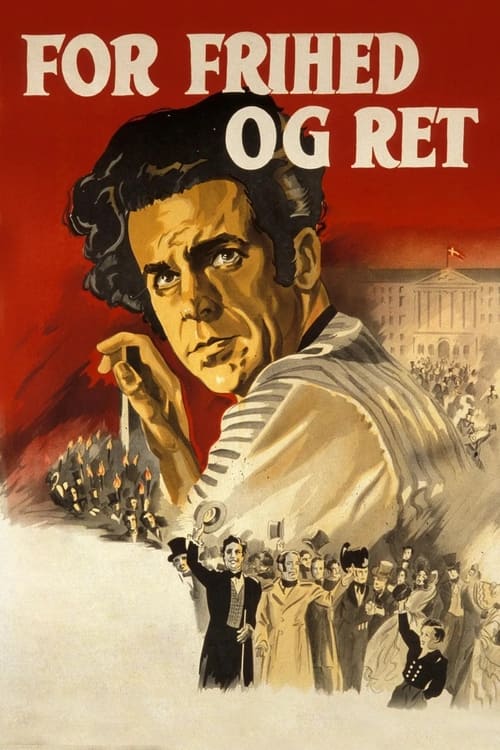
A picture of the life of the Danish people from the late 1820s to the introduction of the free constitution in 1849. A fictional character, Rasmus Nielsen, travels around the country, first as a traveling teacher, later in other positions, and through his experiences we are introduced to the conditions of various population groups. The central figure in the portrayal of historical figures is the politician Orla Lehmann.
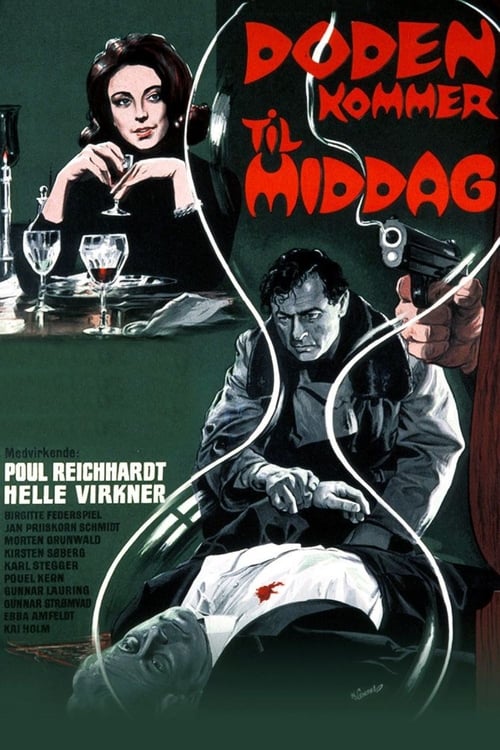
A dark evening, a crime writer Peter Sander, drives through a forest when his car runs out of petrol . A little distance from the road there is a house with lighted windows, and he goes there to borrow a phone. Suddenly he trips over a tree root and sprain one foot . He lags up the forest road . Then there is a shot, a moment after running steps. A beam cuts through the dark. It goes out . The steps moves away. Peter gets up and stomps up to the house . No one responds to his knokking.
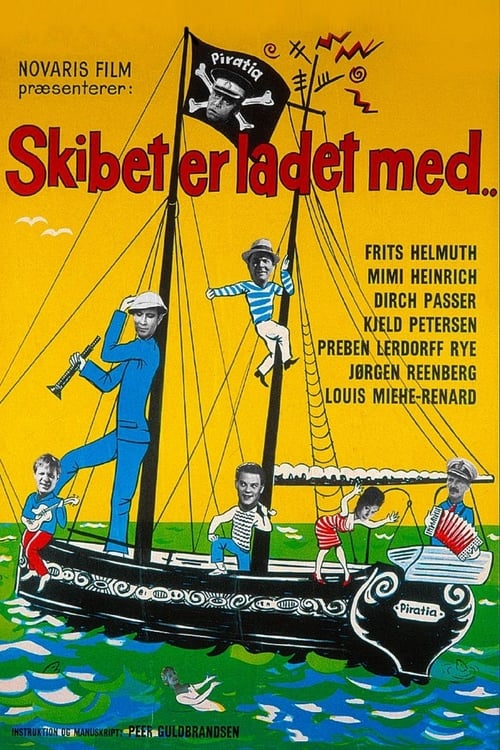
"The ship is loaded with" four angry young men, an original skipper, a fashion model, a radio station, a pirate flag and various musical instruments. And the ship is at anchor in international waters and can not sail forward or backward. On the other hand it can emit radio advertising, and it does.
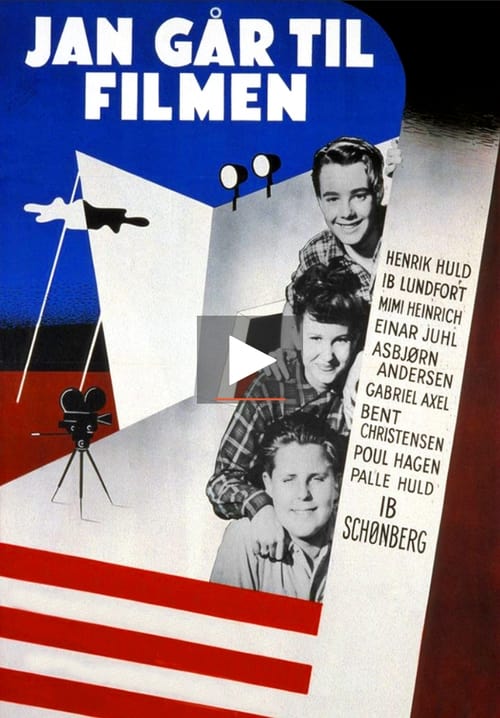
Fourteen-year-old Jan and his companion Erling appear as extras in a film being filmed at Nordisk Film's studios in Valby. A mysterious burglary at the studio's fine mechanics workshop gives the two healthy boys the opportunity to act as detectives.
Danish melodrama about a housemaid struggling to find normalcy and love in the midst of war.
Stine tries to figure out her feelings for Jens, Michael, and Søren. She is most in love with Jens. However, Jens is always so serious and only thinks about school. Stine and Jens move in together, but this does not solve any of their problems. When Jens does not come home one evening without letting her know, Stine moves in with Anders. However, she misses Jens.
A Chinese diplomat is kidnapped from a conference in Genève and the world peace is at risk. The trail leads to a hiding place in Denmark and the Danish secret service brings in their best agent, agent Smith, who has been in a psychiatric hospital since his last assignment. To accompany Smith they once again turn to novelty and party tricks salesman Frede Hansen, because they need an unrecognizable man to infiltrate the crime syndicate behind the kidnapping.
The people depicted in the film have grown up from the Jutland soil and are marked by its toughness, centuries of struggle with the fabled heath, which in its lonely majesty seems to brood over great secrets that it is most reluctant to let go of. The struggle is hard and unspeakably bitter for the frugal Jutland heath farmer, and how many destinies are not buried under the silent monument of the heath?
The protagonist is a jovial bus driver, well beloved by his passengers, essentially the whole community around him. The bus, however, is old, and needs to be replaced. The bus driver himself is also needed as a handyman for all the people around him, assisting with stray cattle, household machines, children's homework, errands of all kinds, and at one occasion, assisting birth. Progress is however leaving him behind, and the local county council plots on a solution, involving a new bus and driver. The community revolts, and the local midwife (married to the mayor) intervenes with all the locals to keep the bus driver, who ends up keeping his job in a new bus.