Acting
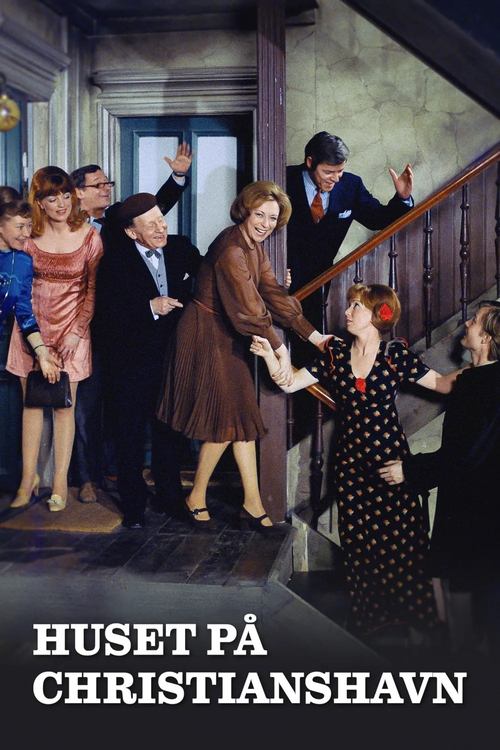
The series follows the residents of an apartment building on Copenhagen's Christianshavn, as they go about their daily lives and challenges. There is Olsen, a mover with an old fashion view of the world, Clausen who runs the local pet shop, Egon the career focused assistant, their wives who work hard to keep their spouses lives together, the young couple Tue and Rikke who recently moved in, the hard working caretaker Meyer, who never puts in to much effort, and of course Emma, the innkeeper of Rottehullet, where all the important decisions are made while running up the bar tab. The series was produced by Nordisk Film for Danmarks Radio TV station between the years 1970-77. The series' first director was Ebbe Langberg, then Erik Balling and Tom Hedegaard respectively. The series was conceived by an author team of well-known Danish authors such Leif Panduro, Benny Andersen, and Lise Nørgaard.
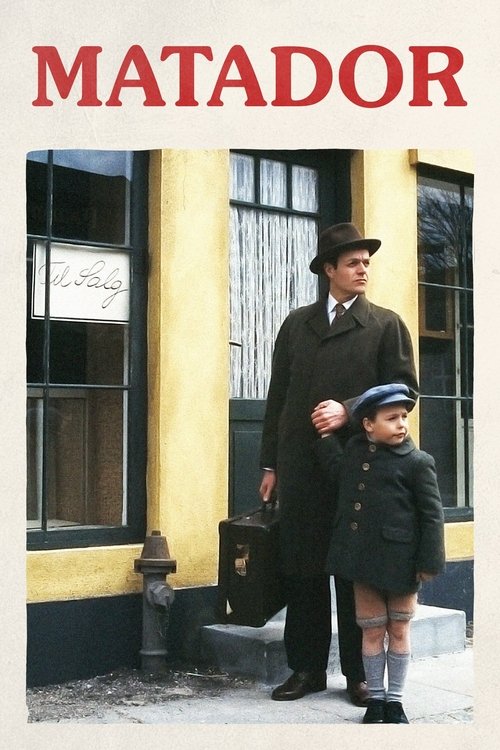
Matador is a Danish TV series produced and shown between 1978 and 1982. It is set in the fictional Danish town of Korsbæk between 1929 and 1947. It follows the lives of a range of characters from across the social spectrum, focusing specifically on the rivalry between the families of two businessmen: The banker Hans Christian Varnæs, an established local worthy, and social climber Mads Skjern, who arrives in town as the series opens. The name Matador was taken from the localised edition of the boardgame Monopoly, also the series' tentative English title. In addition, in contemporary Danish a "matador" is often used to describe a business tycoon, in the series referring to the character of Mads Skjern and his craftiness as a self-made entrepreneur. Directed by famed Danish film maker Erik Balling, Matador was the idea of author Lise Nørgaard who wrote the bulk of the episodes alongside Karen Smith, Jens Louis Petersen and Paul Hammerich. The series is one of the most well-known and popular examples of Danish television and represents the peak of longtime development of Danish TV drama by the public service channel Danmarks Radio. The series has become part of the modern self-understanding of Danes, partly because of its successful mix of melodrama and a distinct warm Danish humour in the depiction of characters, which were portrayed by a wide range of the most popular Danish actors at the time; but also not least because of its accurate portrayal of a turbulent Denmark from around the start of the Great Depression and through Nazi Germany's occupation of Denmark in World War II.
A drug pusher grows increasingly desperate after a botched deal leaves him with a large debt to a ruthless drug lord.
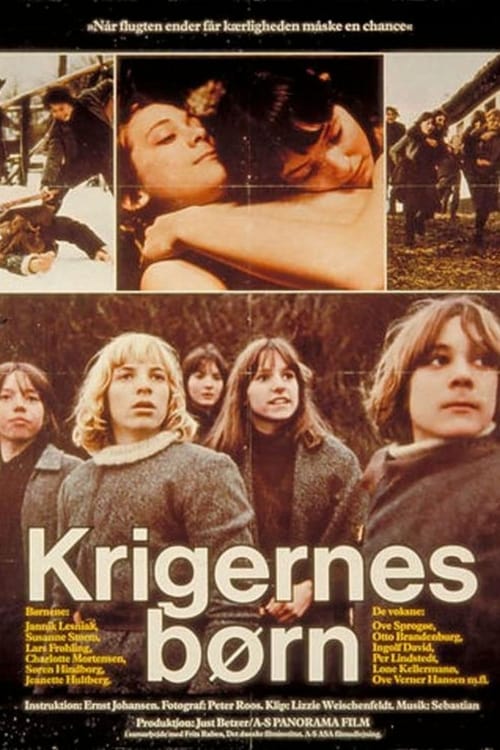
A group of children fleeing from a cruel stone age society with violence, exploitation and sexual abuse.
No description available.
In 1970s Denmark, the criminal police in a provincial town solve different criminal cases, when the police was dominated by men and DNA was not yet a tool in investigation.
Henrik is young and in love and moves with his girlfriend Anne into a commune in the countryside. It is the dawn of the 70's, a time to challenge authority and experiment with relationships. Henrik is challenged too: His role as a man is exhibited and discussed, he has to learn how to sew, to sleep in the group bedroom, to share his inheritance with the commune and his beloved Anne with a lesbian.
In a hospital's five-bed room—room number 13—there are five very different men with very different backgrounds: District Court Judge Winther, fashion designer Philip André, bank teller Madsen, the incorrigible burglar Herluf "Smukke Arne" Jensen, and legation secretary Konrad Konradsen. The legation secretary has done something foolish and fallen into the clutches of the blackmailer Helmer Gamtofte. He is in possession of some compromising photographs, which he keeps in a safe deposit box at the bank where Madsen works. The camaraderie that develops in room 13 becomes the driving force that prompts the district court judge to suggest that "Smukke Arne" help Konradsen break into the bank and steal the photos.
At a convent school for young girls, no one must know that the organist Celestin is the same person as the operetta composer Floridor. But in the long run, it cannot be hidden. His bright student Charlotte has been chosen as the bride of a man she has never met – but during a trip to Copenhagen, where Celestin is supposed to protect Charlotte from the temptations of the city, he takes her to the theatre where his operetta is to premiere. And that is where Celestin's problems really begin.
A pair of octogenarians meet, fall in love, and have a passionate love affair, much to the horror of their disapproving children.
Criminal genius Egon Olsen presents his accomplices Benny and Keld with yet another infallible plan that can only end badly. The booty is a red suitcase containing values worth five million. The sinister mastermind Bang-Johansen carries the suitcase. The Olsen Gang follows him to Paris, where they put their cunning and carefully organized plan into motion.
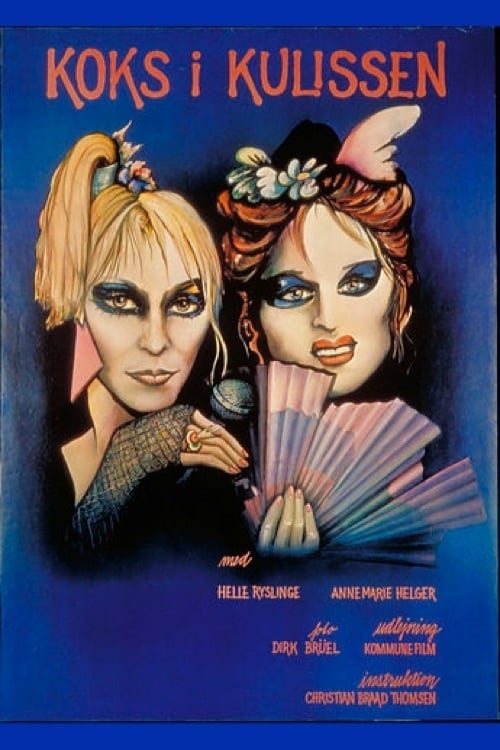
Laura and Micha travel the Danish countryside performing their off-beat cabaret show. Their personal lives suffer as a result of their dedication to their craft, yet the chaos that ensues becomes the grist for their revue.
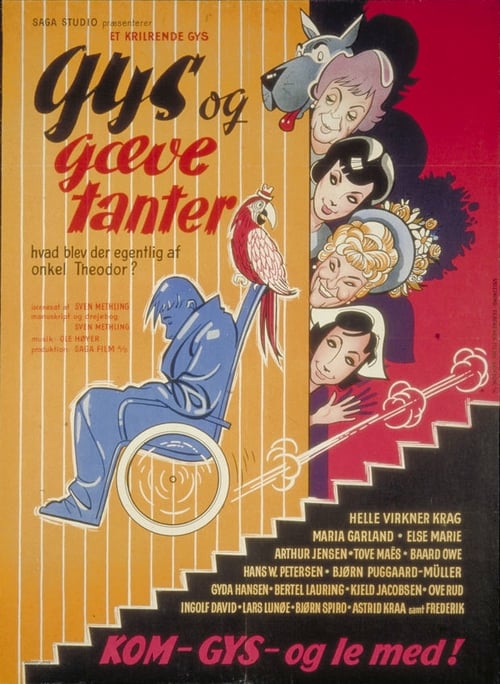
Bettina Eriksen, manager of her Uncle Teodor's nursing home, is being framed for murder. With the help of 2 older ladies, Bettina sets out to find out the murderer's identity and motive.
At the Gästhaus "Den Hvide Hest" in the Austrian Alps, romantic entanglements are in full swing. Waiter Leopold is in love with landlady Josepha, who has her eye on charming manufacturer Sigismund, who in turn hits on all women almost as a matter of principle. Klara and Lene also join the battle for the popular manufacturer, while waiter apprentice Mickey would rather just have a goat.
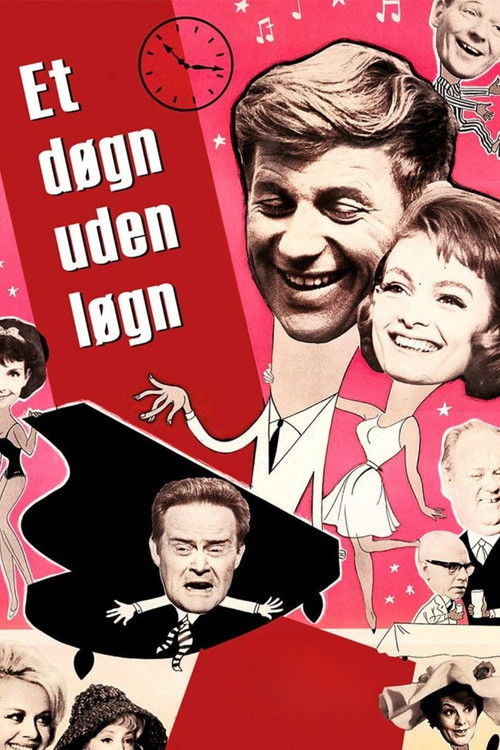
In a sophisticated world, everyone lies and deceives each other, and only the peaceful Norwegian Steen is upset by the low-level cheating. A bet is made: can he go a day without lying? Of course he can, and in fact, the bet ends up causing him more trouble than it saves him. Because when the truth comes out, there is no end to what can be revealed.
The story opens just before Christmas, when solitary, apathetic bank clerk Flemming Borck uncovers a plot to rob his bank. After doing a little rookie recon, Borck identifies the would-be bank robber as a faux shopping-mall Santa Claus, and counter-plots to steal the money himself and let Santa take the blame. This works out about as badly as you might imagine, and our bumbling protagonist spirals further and further away from the carefree, laconic lifestyle he had hoped to ensure for himself.
The family Gyldenkål is actually called Iversen, but have changed their name, after numerous problems with the IRS, loan sharks and employers. Using clever scams, the family builds up a reputation as a wealthy and respectable part of society.
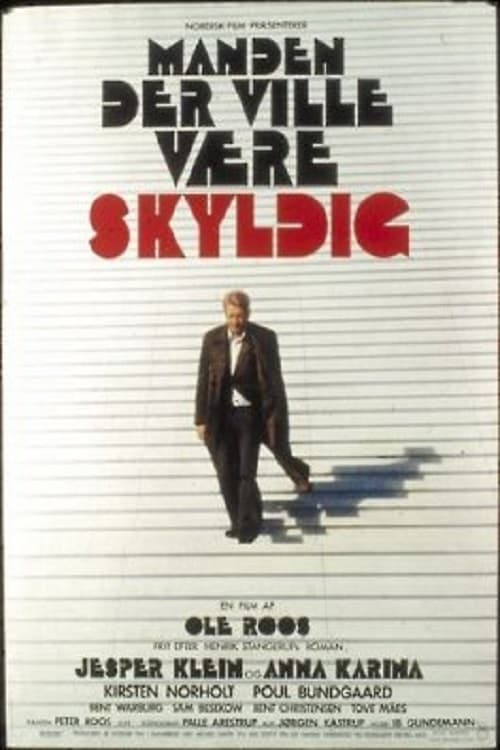
In a future surveillance and treatment society where imaginative literature is censored, author Adam Gregor lives an unhappy life. During an argument with his wife, who is prone to conformity, he pushes her over the staircase landing and now believes he has killed her. However, society does not operate with the concept of guilt, and Adam cannot be convicted of murder, but is released after psychiatric treatment. He tries to get in touch with his young son, but encounters a friendly but determined power structure. At the same time, he is monitored by the authorities, who hope he will contact his oppositionist publisher.