Writing
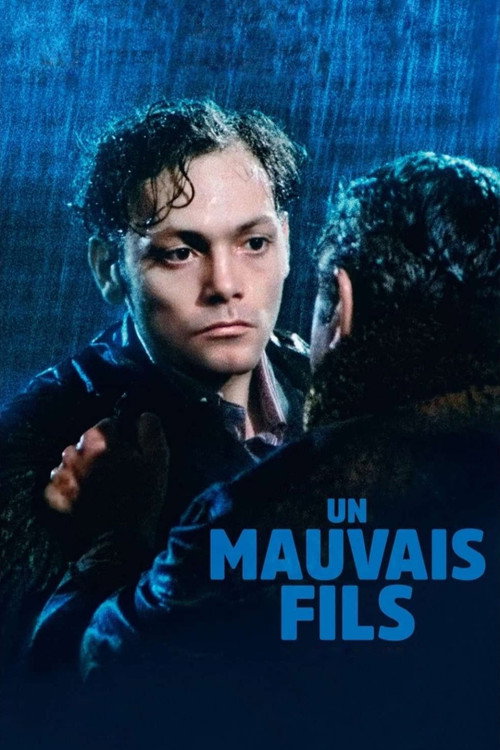
Bruno is released from prison. He looks for a job and tries to start a new life. His first stop is at his father's apartment.
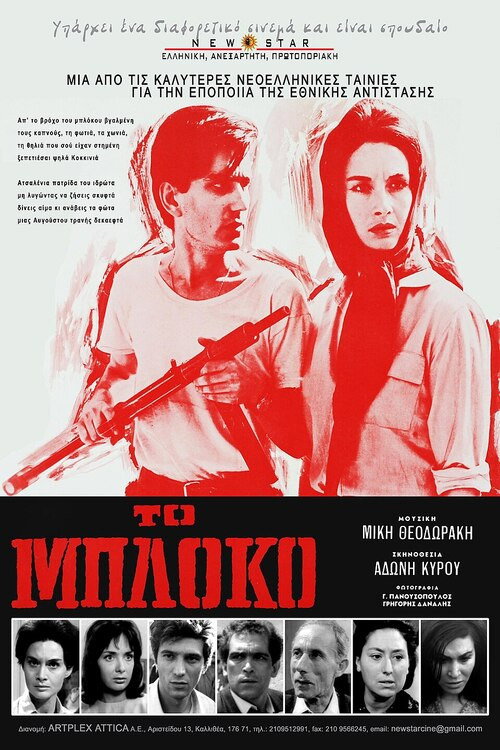
A summer night in 1944 in Kokkinia, Kosmas, a black marketeer, is out with his friends before he is arrested by the German patrol. The Germans push him to turn in people from the Resistance, or they will execute him.
According to Bernard Cohn's review, the directors "show that the painter of British society at the beginning of the 18th century was not only ahead of his time in his aesthetic theories, but that he carried within him the signs that allow us to recognize a creator." (Positif, no. 70, June 1965, p. 73.)
Long panoramic shots and tracking shots in the Louvre Museum, the Hôtel de Lauzun or the Petit Palais allow us to discover the works of Delacroix, Horace Vernet, David, Ingres, Courbet, Manet, etc. An actor reads excerpts from Baudelaire's Salons where he expresses admiration or detestation. (source: Canopé)
This program is presented as a report on the way the weekly Paris Match deals with information through images. Two of the newspaper's main managers explain what their job is. As a counterpoint to these interviews with image professionals, the philosopher and essayist Jean-François Revel recalls his attachment to marking the limits of information through images (source: Média Scérén)
Investigation in 1967 on the profession of variety singer through the testimonies of Michel Fugain whom we follow during a studio recording, of Lucien Morisse artistic director in a record company, of the lyricist and musical arranger of Michel Fugain (Jean Morlier), of the disc-jockey Mini Max. They analyze the keys to success, their respective roles, the evolution of French song in relation to Anglo-Saxon music (source: Média Scérén).
Investigation in 1967 on the profession of variety singer. Round table with young singers little known at the time, including Michel Fugain: his hopes and the difficulties of a young singer. They give their opinion on the programmers. Two programmers, Jean Peigné and Lucien Morisse, give their criteria for selecting records. Eddy Mitchell discusses the phenomenon of stardom and the keys to success (source: Média Scérén).
Evocation of André Breton's role in the surrealist movement, on images of landscapes, Paris, surrealist paintings, faces of young girls and ruins of castles. The main themes addressed: poetry, love, freedom. (source: Media-Scéren)
A mysterious individual, silent and taciturn, appears one evening in a Breton inn and arouses curiosity before provoking hatred, fear and, finally, his own death. The film was screened for the 1972 Directors' Fortnight, at the Cannes Festival.
No description available.