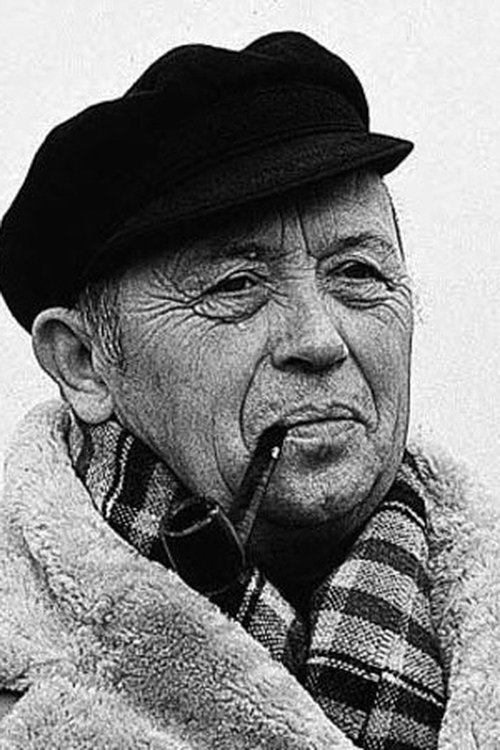
Pierre-Jakez Hélias
Writing
Biography
Pêr-Jakez Helias, baptised Pierre-Jacques Hélias, nom de plume Pierre-Jakez Hélias (1914–1995) was a Breton stage actor, journalist, author, poet, and writer for radio who worked in the French and Breton languages. For many years he directed a weekly radio programme in the Breton language and co-founded a summer festival at Quimper which became the Festival de Cornouaille. Helias was born in 1914 in Pouldreuzig, Penn-ar-Bed, Brittany. His father, Pierre-Alain Hélias, was a native of the nearby village of Plozévet. Helias' mother, Marie-Jeanne Le Goff, had grown up in Pouldreuzic, to which her husband moved after their wedding in 1913. Hélias' paternal grandfather, Yann Helias, was a tenant farmer, sabot-maker, and storyteller known in Plozévet as Yann ar Burzudou ("Yann the Wonder-Man"). Pierre-Alain Hélias had previously served at Vannes in an artillery unit of the French Army and, upon the outbreak of World War I in August 1914, he was recalled to active service. Pierre-Jacques Hélias later recalled that, during his father's combat duty as a Poilu on the Western Front, he and his mother were given, "twenty sous a day... to keep ourselves alive". His father's sickle was wielded during harvest-time by his mother and was sharpened upon a stone moistened with her tears. Hélias further recalled, "When my father returned home from the battlefield, he let his wife keep the sickle. For he thought he was no longer it's master, that mother had truly earned it... In the end,it's blade wasn't much bigger than that of a pocket knife. I rather think that tears are more effective than stone for wearing down a sickle." One of Hélias' maternal uncles, who had been serving before the war as an officer in French Indochina, was less fortunate, and returned to France only to be killed in action during the First World War. Hélias had a modest upbringing, but this included a good education. During the interwar period, the village was divided between "Reds", who discretely supported the anti-clericalism of the Third French Republic, and "Whites", who supported the Catholic Church in France. Despite the religious devotion of his mother, Pierre-Alain and Marie-Jeanne Hélias were "Reds" and, against the opposition of their parish priest, they chose to enroll their son in a secular and state-run school, in the hopes that he would learn French and move up in the world. After a career in the French Resistance during the Second World War, in 1946 Helias was appointed as director of a weekly programme in Breton on Radio Kimerc'h. Working with Pierre Trépos, he created hundreds of dialogues, many of them between two stock characters, Gwilhou Vihan and Jakez Kroc'hen. In 1948 he was the co-founder, with François Bégot and Jo Halleguen, of Les grandes Fêtes de Cornouaille, an Eisteddfod-inspired summer festival celebrating Breton culture. ... Source: Article "Pêr-Jakez Helias" from Wikipedia in English, licensed under CC-BY-SA 3.0.
Known For
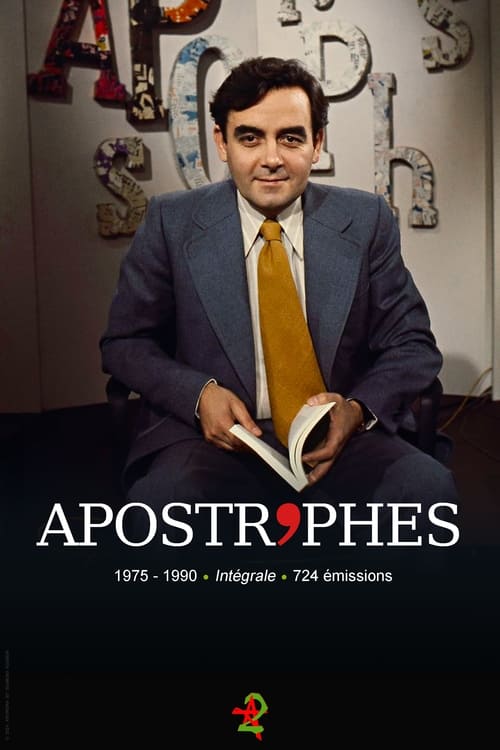
Apostrophes was a live, weekly, literary, prime-time, talk show on French television created and hosted by Bernard Pivot. It ran for fifteen years (724 episodes) from January 10, 1975, to June 22, 1990, and was one of the most watched shows on French television (around 6 million regular viewers). It was broadcast on Friday nights on the channel France 2 (which was called "Antenne 2" from 1975 to 1992). The hourlong show was devoted to books, authors and literature. The format varied between one-on-one interviews with a single author and open discussions between four or five authors.
Apostrophes
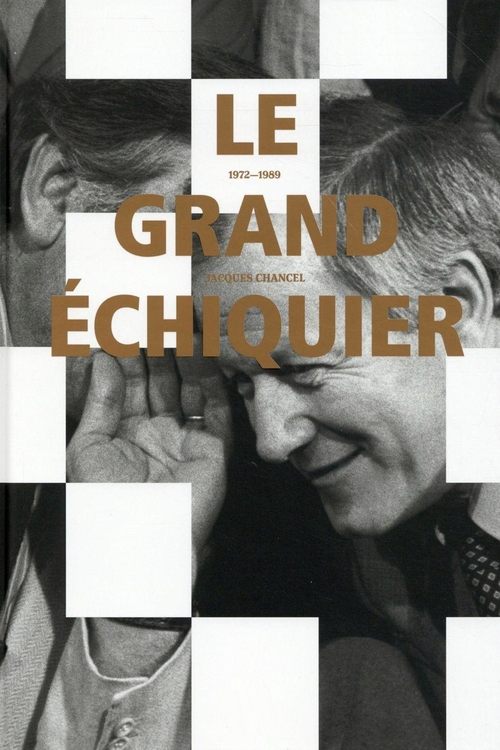
Le Grand Échiquier is a French variety television program created and presented by Jacques Chancel. It aired at 8:30 pm on the first channel of the ORTF from January 12, 1972 to July 12, 1972, then on the second color channel of the ORTF from September 1972 to December 1974, and finally on Antenne 2 from January 1975 to December 21, 1989. The program returned to France 2 on December 20, 2018 and is hosted by Anne-Sophie Lapix.
Le Grand Échiquier
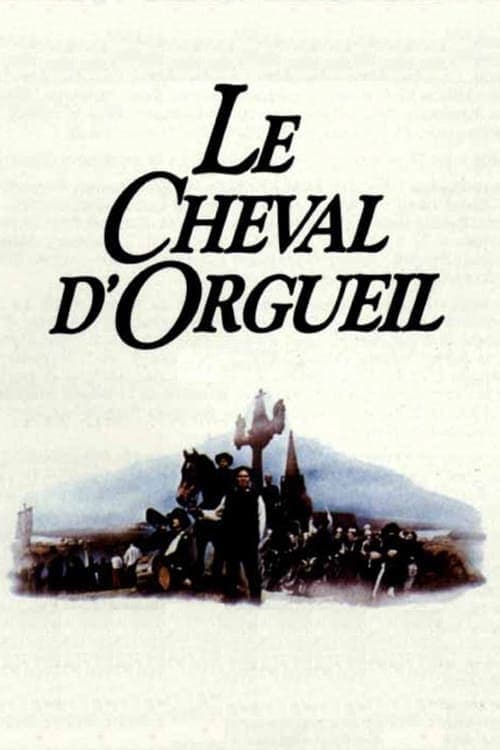
In early twentieth-century Brittany, two peasants marry, have a son, and live in traditional Breton ways: three generations under one roof, a division of labor between the sexes, elders' stories at night, politics and religion during their little free time. Times are hard: la Chienne du Monde drives some to suicide; Ankou (death) is close at hand. Pierre is born into this republican family, his lyric childhood interrupted by the outbreak of war and his father's conscription. He learns his catechism and, as a child of a Reds, also reveres school. His grandfather and father often put him on their shoulders, giving him a ride on the horse of pride.
The Horse of Pride

Images from a text by P. J. Hélias.
The island of the marine dead
Intimate portrait of Breton author Pierre-Jakez Hélias, who recounts his childhood, his family and his love of storytelling.
Pierre-Jakez Hélias, l’émerveilleur
Images on a text by Per Jakez Helias
The sunset paradises
How do souls travel to the afterlife ? What should the ferryman do ? Morgane, the water fairy, knows this (according to Per Jakez Hélias).