Aaron Copland
Sound
Biography
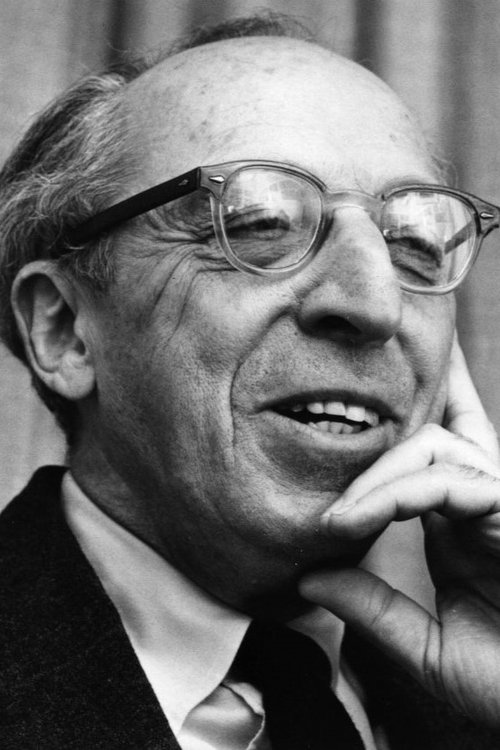
Aaron Copland (November 14, 1900 – December 2, 1990) was an American composer, composition teacher, writer, and later a conductor of his own and other American music. Copland was referred to by his peers and critics as "the Dean of American Composers". The open, slowly changing harmonies in much of his music are typical of what many people consider to be the sound of American music, evoking the vast American landscape and pioneer spirit. He is best known for the works he wrote in the 1930s and 1940s in a deliberately accessible style often referred to as "populist" and which the composer labeled his "vernacular" style. Works in this vein include the ballets Appalachian Spring, Billy the Kid and Rodeo, his Fanfare for the Common Man and Third Symphony. In addition to his ballets and orchestral works, he produced music in many other genres, including chamber music, vocal works, opera and film scores. Description above from the Wikipedia page Aaron Copland, licensed under CC-BY-SA, full list of contributors on Wikipedia.

Known For

The Kennedy Center Honors is an annual honor given to those in the performing arts for their lifetime of contributions to American culture.
The Kennedy Center Honors

A basketball player's father must try to convince him to go to a college so he can get a shorter prison sentence.
He Got Game

From 1958 through 1973, renowned conductor and composer Leonard Bernstein and the New York Philharmonic Orchestra thrilled audiences with wonderful concert experiences presented in a sparkling music-with-commentary format: the Young People's Concerts.
New York Philharmonic Young People's Concerts

In 1840s New York, the uneventful and boring days of the daughter of a wealthy doctor come to an end when she meets a dashing poorer man — who may or may not be after her inheritance.
The Heiress

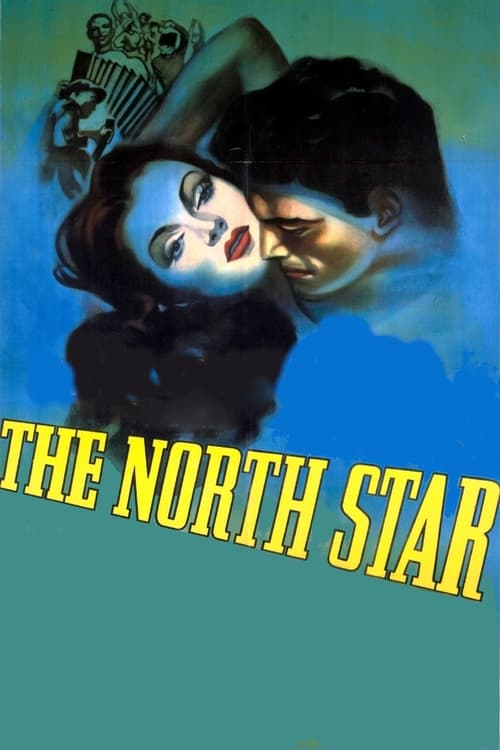
A Ukrainian village must suddenly contend with the Nazi invasion of June 1941. Later re-edited and released as "Armored Attack."
The North Star

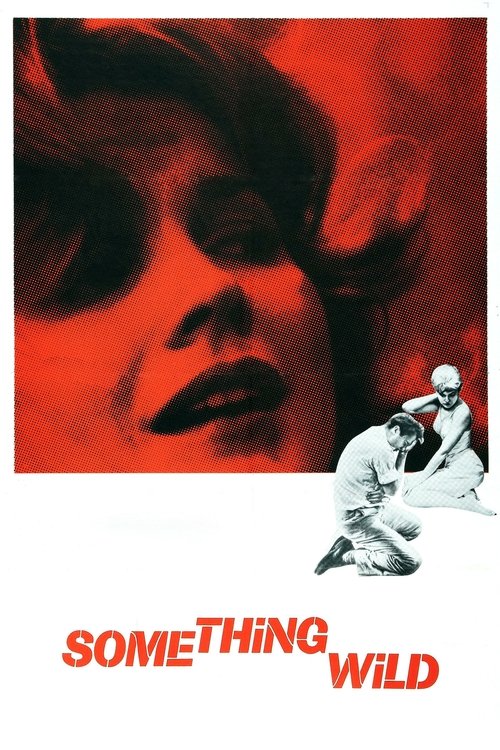
A young rape victim tries desperately to pick up the pieces of her life, only to find herself at the mercy of a would-be rescuer.
Something Wild

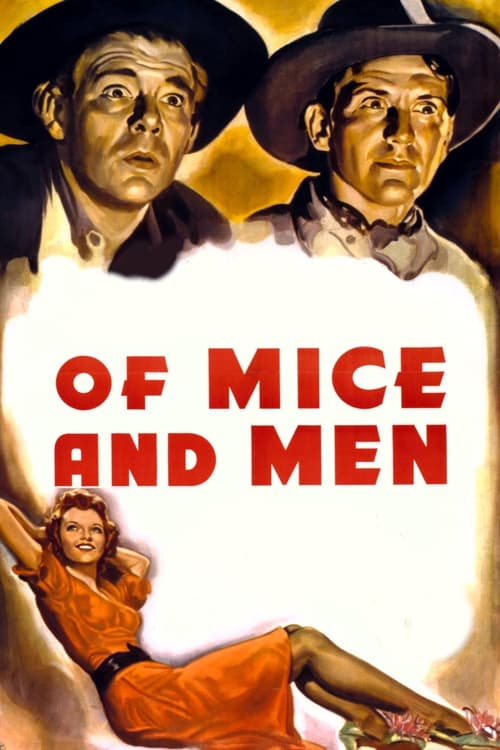
An intellectually disabled giant and his level headed guardian find work at a sadistic cowboy's ranch in depression era America.
Of Mice and Men

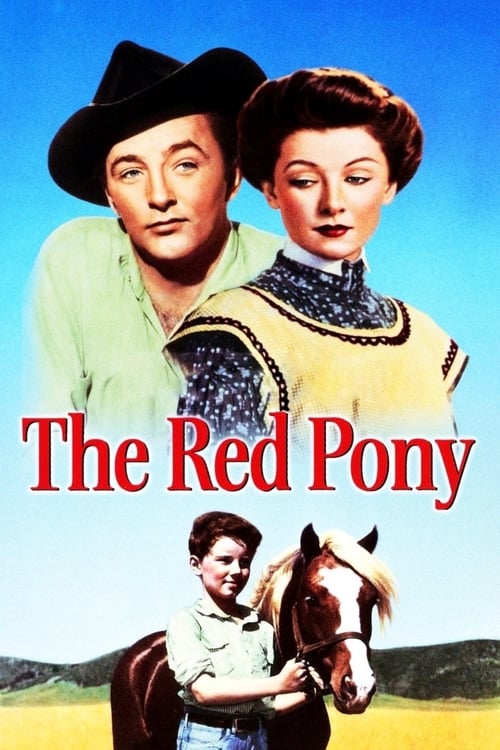
Peter Miles stars as Tom Tiflin, the little boy at the heart of this John Steinbeck story set in Salinas Valley. With his incompatible parents -- the city-loving Fred and country-happy Alice -- constantly bickering, Tom looks to cowboy Billy Buck for companionship and paternal love.
The Red Pony

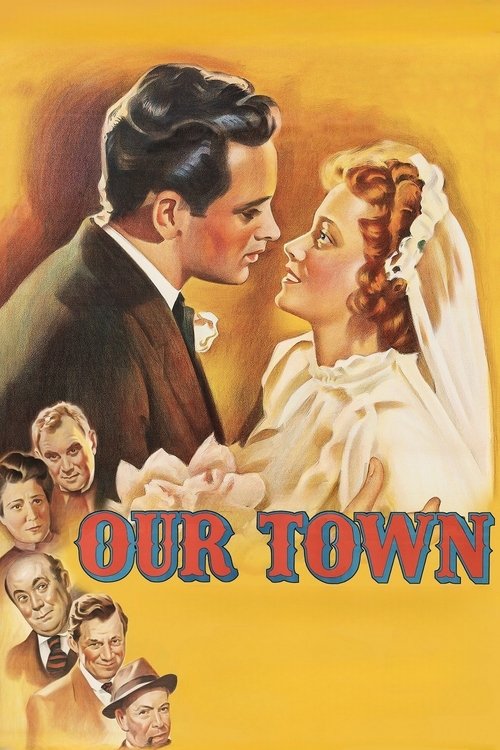
Change comes slowly to a small New Hampshire town in the early 20th century. We see birth, life and death in this small community.
Our Town

In this documentary, award-winning filmmaker Susan Froemke explores the creation of the Metropolitan Opera’s storied home of the last five decades. Drawing on rarely seen archival footage, stills, and recent interviews, The Opera House looks at an important period of the Met’s history and delves into some of the untold stories of the artists, architects, and politicians who shaped the cultural life of New York City in the ’50s and ’60s. Among the notable figures in the film are famed soprano Leontyne Price, who opened the new Met in 1966 in Samuel Barber’s Antony and Cleopatra; Rudolf Bing, the Met’s imperious General Manager who engineered the move from the old house to the new one; Robert Moses, the unstoppable city planner who bulldozed an entire neighborhood to make room for Lincoln Center; and Wallace Harrison, whose quest for architectural glory was never fully realized.
The Opera House

A storm of Modernism swept through the art worlds of the West in the early decades of the twentieth century, uprooting centuries of tradition. The epicenter of this storm was Paris, France. For an incandescent moment from 1905 to 1930, Paris was the magnetic center for radical innovation and experiment, and the Mecca for creative talents who would change the course of art throughout the Western world.
Paris: The Luminous Years

A film with very little dialogue. Set in the Catskills of 1896 – 1916, a farmer buries his deceased wife atop a nearby mountain, then makes the difficult decision to give up his newborn son, Jonathan. Later in 1916, Jonathan returns to confront his past. The only real dialogue is a voice over of the father reading a letter he wrote to his son explaining himself.
A Letter to Jonathan

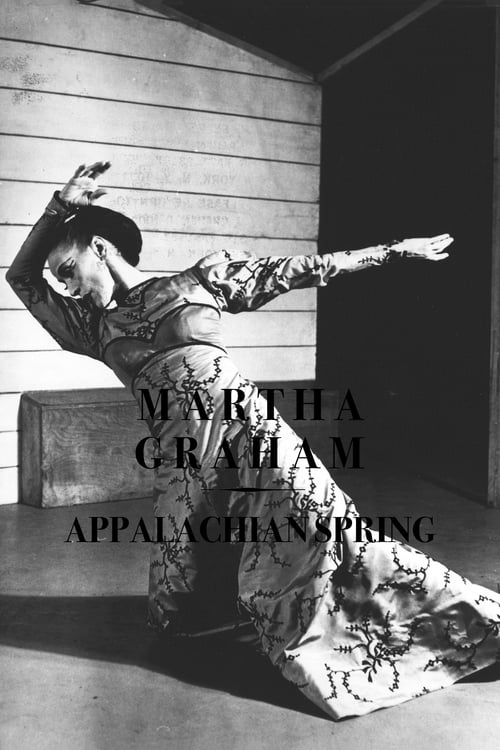
A filmed version of Aaron Copland's most famous ballet, with its original star, who also choreographed.
Appalachian Spring

A pioneer of visual music and electronic art, Mary Ellen Bute produced over a dozen short abstract animations between the 1930s and the 1950s. Set to classical music by the likes of Bach, Saint-Saëns, and Shoshtakovich, and replete with rapidly mutating geometries, Bute’s filmmaking is at once formally rigorous and energetically high-spirited, like a marriage of high modernism and Merrie Melodies. In the late 1940s, Lewis Jacobs observed that Bute’s films were “composed upon mathematical formulae depicting in ever-changing lights and shadows, growing lines and forms, deepening colors and tones, the tumbling, racing impressions evoked by the musical accompaniment.” Bute herself wrote that she sought to “bring to the eyes a combination of visual forms unfolding along with the thematic development and rhythmic cadences of music.”
Abstronic

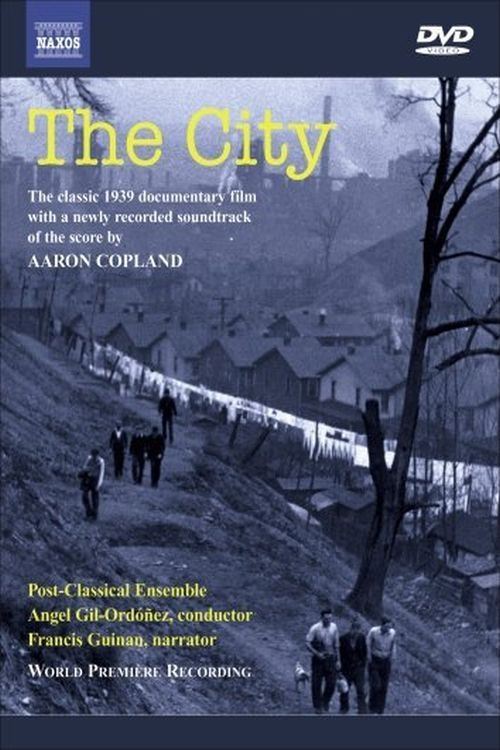
A prescient documentary about city planning, which presents idyllic suburbs and nuclear families as a solution to the chaos, poverty and social decay of industrialized inner cities.
The City

Produced by the U.S. Office of War Information, this short dramatizes the uneasy but ultimately hopeful integration of European war refugees into the small town of Cummington, Massachusetts. Narrated over silent images with a score by Aaron Copland, it blends documentary style and propaganda, underscoring both cultural tension and community acceptance.
The Cummington Story

This concert film made in the Dorothy Chandler Pavilion in Los Angeles in 1976 captures a memorable performance conducted by the doyen of American composers, Aaron Copland. It includes some of his greatest and most attractive music, from the patriotic flourish of Fanfare for the Common Man and the spirited orchestral fantasy El Salón México, to the colloquial warmth of his suite from the opera The Tender Land. Of particular importance is the collaboration with the great Benny Goodman in the masterwork he commissioned and premiered, the Clarinet Concerto.
Copland Conducts Copland

From the Rai Arturo Toscanini Auditorium in Turin: Johann Sebastian Bach – Anton Webern: Fugue (Ricercata) for 6 voices from *The Musical Offering* BWV 1079 – Wolfgang Amadeus Mozart: Concerto in A major K. 622 for clarinet and orchestra – Aaron Copland: Concerto for Clarinet and Orchestra – Igor Stravinsky. Conductor: John Axelrod.
Concerto diretto da John Axelrod
Conveyor belt idlers in construction and operation.
Idlers That Work

German-Brazilian production on the life of Brazilian composer Heitor Villa-Lobos.