FEEL IT.STREAM
Julio Neri

Julio Neri

Directing

Biography

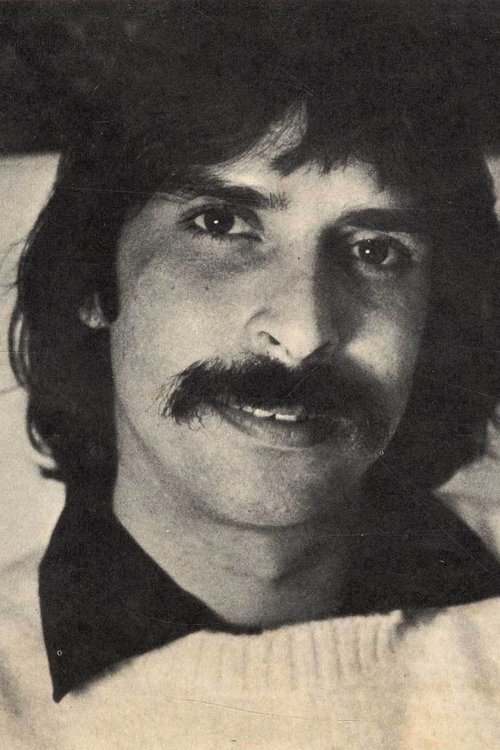
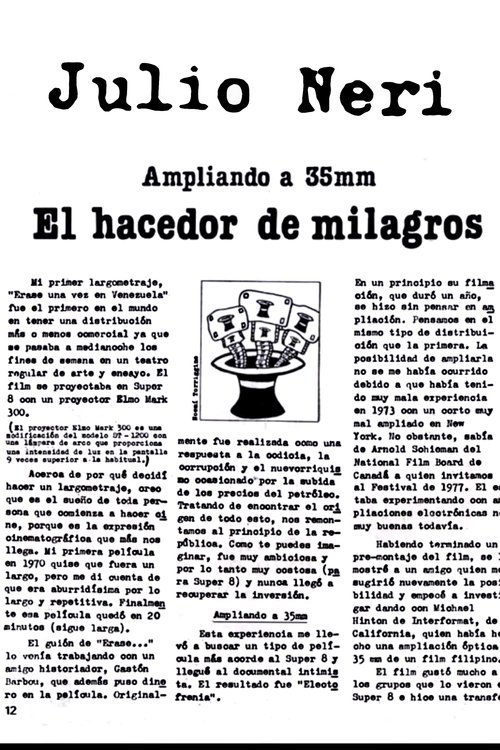
Julio Neri (Caracas, Venezuela) is a Venezuelan filmmaker, producer, and cultural promoter, best known for his key role in developing the Super-8 movement in Latin America during the 1970s. He was the founder and director of the International Festival of New Super-8 Cinema in Caracas, one of the most influential events in Venezuelan experimental film, which connected emerging filmmakers with avant-garde circuits around the world. Among his most notable works is Electofrenia (1979), a Super-8 documentary that offers a sharp and ironic portrayal of Venezuela’s 1978 presidential campaign. Premiered commercially in 1979, the film became a landmark of independent political cinema in the country for its direct and satirical look at the media and social climate of the time. Neri also directed films such as Armada (1977), Érase una vez en Venezuela (1978), and El hacedor de milagros (1982), and later worked on coproduction and digital distribution initiatives. He has served as president of Cinemania Network and has promoted the diffusion of Latin American cinema through new audiovisual platforms. His career bridges filmmaking, cultural management, and teaching, leaving a lasting mark on Venezuela’s independent and experimental film history.

Known For

Hester Street
6.2

A Russian emigre prides himself on the way he's molded himself into a real Yankee in the USA, though the world he lives in, New York's Lower East Side in the late 19th century, is almost exclusively populated by other Jewish immigrants. When his wife finally arrives in the New World, however, she has a lot of assimilating to do.

Hester Street

1975
Electofrenia
7.0

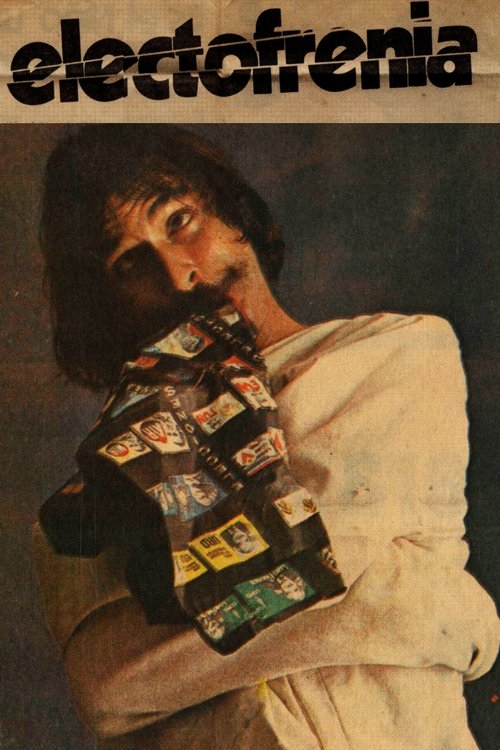
Electofrenia (1978), Neri's third political film, requires a critical distance in order to consider the reasons why Venezuelans choose their presidential candidate in the 1978 election. Electofrenia, signifying the chaos of the elections, proposes that many Venezuelans select the candidate who benefits them personally rather than the one who is good for the country at large. Not without irony, the film brings up Venezuela's two decades of peaceful democratic government. If people choose what is good for them, can we call it a democracy?

Electofrenia

1978
Cóctel de Camarones. En el Día de la Secretaria
7.0

In Secretaries Day, either you get laid or you get paid.

Cóctel de Camarones. En el Día de la Secretaria

1984
Miracle Maker
7.0

The journey of a Brazilian healer through Brazil, Panama, and Venezuela, and his various activities that blend fakirism, Christianity, and macumba, forming a noisy collective ceremony.

Miracle Maker

1982
Armada
N/A

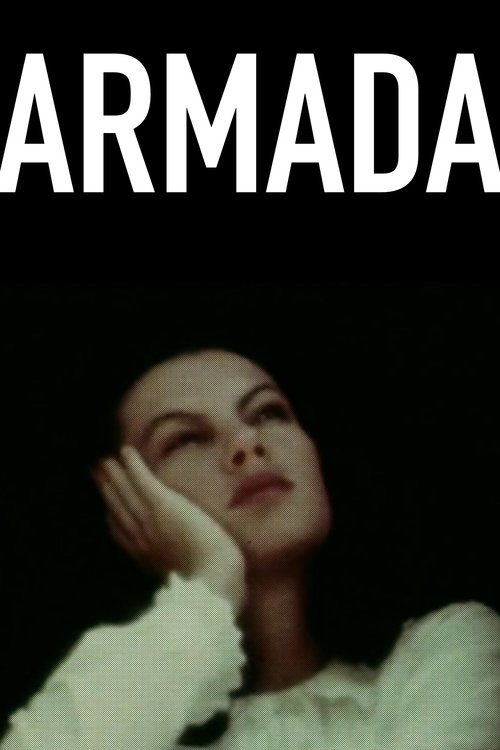
Armada (1977), Julio Neri's first political film, was made at a time in which several Latin American countries –most importantly Argentina and Chile— had seen a turn towards military dictatorships. Neri questions authoritarian regimes through the narrative of a devoted but free-loving daughter, Armada, and her military father. Armada's line of argument departs from the militant films made by New Latin American Cinema directors in the 1960’s. Rather than openly opposing the violent and repressive regimes (represented by the father), Armada establishes a complex relationship in which the daughter is divided between the love towards her father and the love towards her freedom. However, Armada's death at the hands of her violent father clearly condemns the use of violence and is thus a call to action against repressive regimes. As many Super 8 films of the 1970’s and 1980’s, Armada has a synchronized sound track rather than diegetic sound.

Armada

1977
Autorretrato
N/A

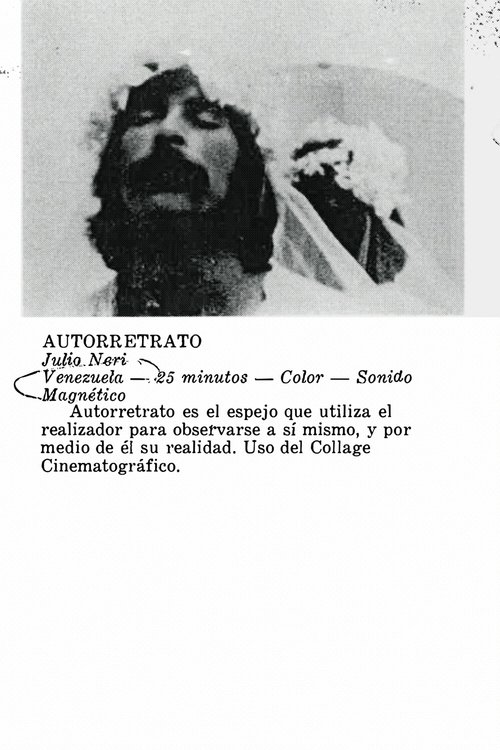
Autorretrato is the mirror the filmmaker uses to look at himself, and through it, at his reality, using the cinematic collage.

Autorretrato

1976
Claves, 3: Small mother country, great mother country
N/A

Documentary in four parts on Latin American cinema. Third episode: from the 1960s, France and Europe showed a real enthusiasm for Latin American cinema, but the latter remained hampered by numerous economic and political obstacles.

Claves, 3: Small mother country, great mother country

1984
Legado de un aficionado
N/A

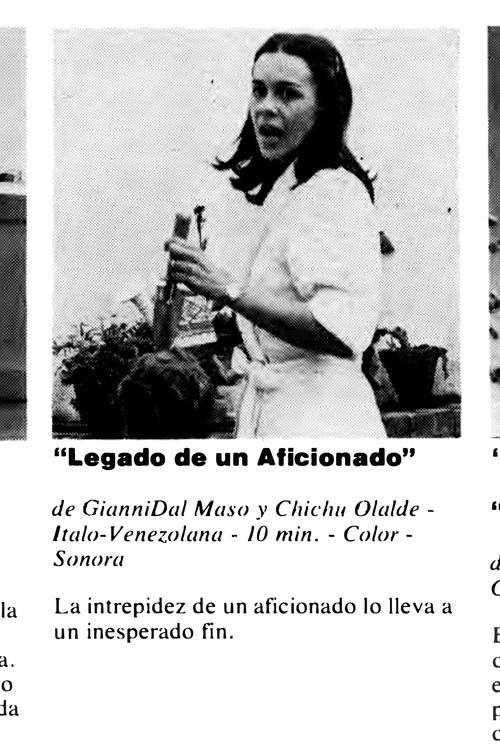
Instants in the private family life of Dal Maso, mixed with shots of the urban life around him. Suddenly, the film unexpectedly changes into a fiction

Legado de un aficionado

1978
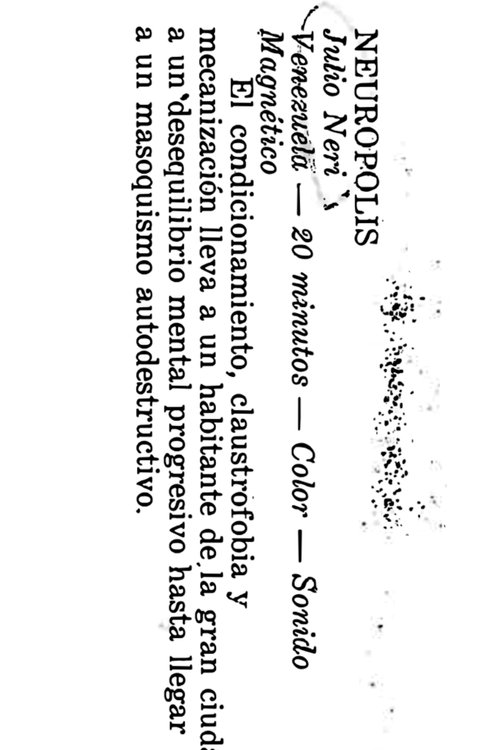
Neurópolis
N/A

Conditioning, claustrophobia, and mechanization lead a city dweller to a progressive mental imbalance, culminating in self-destructive masochism.

Neurópolis

1976
Érase una vez en Venezuela
10.0

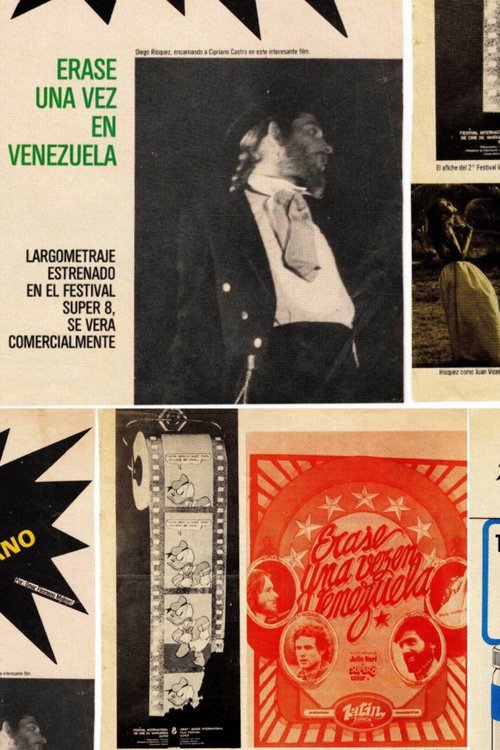
Film by Julio Neri.

Érase una vez en Venezuela

1977