Mário de Andrade
Writing
Biography
Mário Raul de Morais Andrade (October 9, 1893 – February 25, 1945) was a Brazilian poet, novelist, musicologist, art historian and critic, and photographer. He wrote one of the first and most influential collections of modern Brazilian poetry, Paulicéia Desvairada (Hallucinated City), published in 1922. He has had considerable influence on modern Brazilian literature, and as a scholar and essayist—he was a pioneer of the field of ethnomusicology—his influence has reached far beyond Brazil. Andrade was a central figure in the avant-garde movement of São Paulo for twenty years. Trained as a musician and best known as a poet and novelist, Andrade was personally involved in virtually every discipline that was connected with São Paulo modernism. His photography and essays on a wide variety of subjects, from history to literature and music, were widely published. He was the driving force behind the Modern Art Week, the 1922 event that reshaped both literature and the visual arts in Brazil, and a member of the avant-garde "Group of Five". The ideas behind the Week were further explored in the preface to his poetry collection Pauliceia Desvairada, and in the poems themselves. After working as a music professor and newspaper columnist, he published his great novel, Macunaíma, in 1928. Work on Brazilian folk music, poetry, and other concerns followed unevenly, often interrupted by Andrade's shifting relationship with the Brazilian government. At the end of his life, he became the founding director of São Paulo's Department of Culture, formalizing a role he had long held as a catalyst of the city's—and the nation's—entry into artistic modernity. (Wikipedia)
Known For

Brava Gente was a television series aired by TV Globo in Brazil between 2000 and 2003, initially as a special year-end. The program was adapted from stories and national stories, and plays by famous playwrights, screenwriters and signed by a number represented by several actors and actresses. The genres of the stories varied each week with the style of each director or author. Brava Gente in the stories ranged from comedies and dramas. In all 53 episodes were shown, broadcast on Tuesday nights.
Brava Gente

Between scenes from his concert in São Paulo's oft-inaccessible Theatro Municipal, rapper and activist Emicida celebrates the rich legacy of Black Brazilian culture.
Emicida: AmarElo - It's All for Yesterday

Born a fully grown black man in a village in the Brazilian jungle, Macunaíma later magically transforms into a white man before making an adventure-filled trip to the city of São Paulo. Once there, he becomes something of a dandy, falling in love with Ci, a revolutionary who dies in an accidental bombing. After robbing a ruthless industrialist, Macunaima returns to his village where he finds his newly acquired knowledge and possessions of little use.
Macunaima
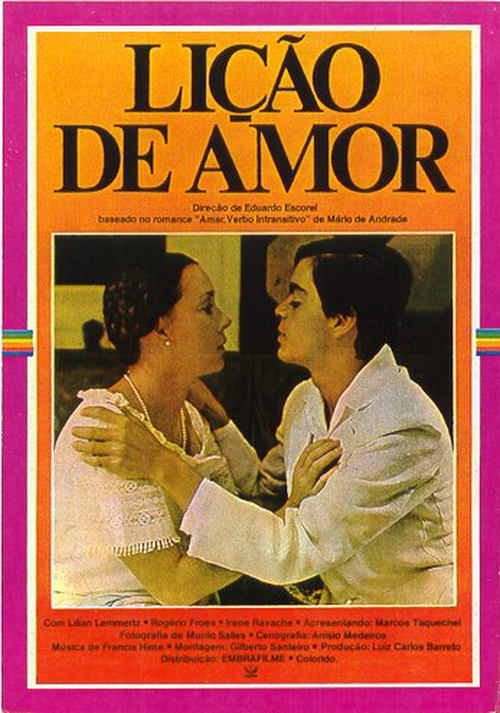
A German governess is hired to give German and piano lessons to the teenager son of a rich traditional family, in the 20s. But soon they get involved, and she teaches him love lessons instead.
Love Lesson
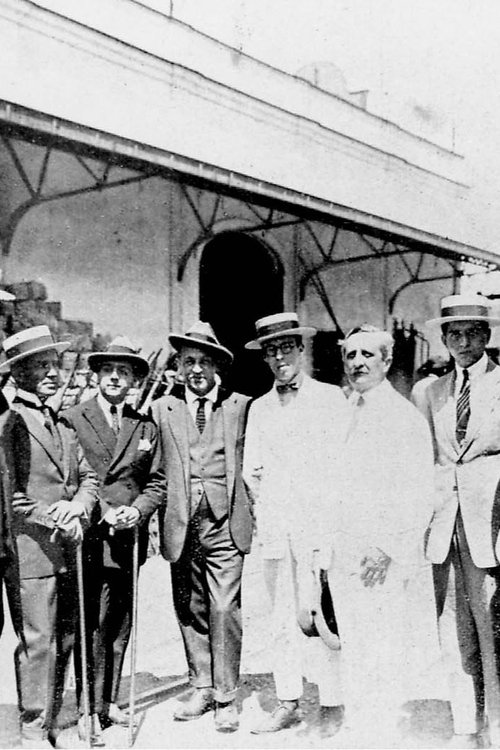
Reconstitution, through photos, films and texts, of the arrival in Brazil of the poet Cendrars, in 1924. Tributes received, visits throughout the country and the desire to make a "100 percent Brazilian film". Testimonials from figures who lived with the intensity of the core of modernist artists: Tarcila do Amaral, Oswald de Andrade, Mário de Andrade and Di Cavalcanti. Scenes from São Paulo, Rio de Janeiro, São Martinho Farm and the 1924 Revolution. Scenes from the movie LES HEURES CHAUDES DE MONTPARNASSE. Reference to Aleijadinho and Febrônio Indio do Brasil.
Acaba de Chegar ao Brasil o Bello Poeta Francez Blaise Cendrars
The hero without character is back. Here, two Macunaímas encounter with one mission in common which is to leave the place they're currently living: one is running away from the deforestation in the Amazon while the other got tired of living in heaven and wants to return to his land.
Exu-Piá, Coração de Macunaíma
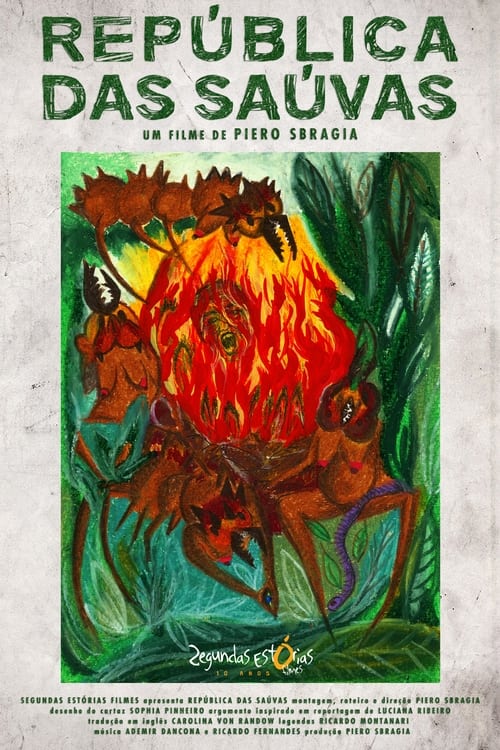
One of the greatest pests on the planet, the evil ants destroy the forest to protect their family. Memories of the covid-19 pandemic, eroded by ignorance and negationism. What's left in this great country of worms and viruses?
Republic of Evil Ants
Documentary about Mário de Andrade's research on Brazilian folklore music.