Acting
No description available.
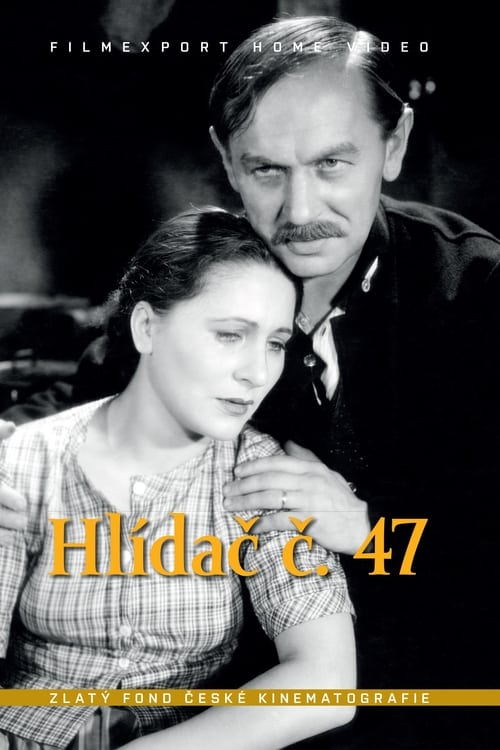
Gabriela Tuzarová still loves her husband Petr very much, even though he has cooled off towards her. Petr is an accountant in a printing house. He secretly speculates on the stock market and maintains a relationship with the owner of the company, Šeborová. He speculated on Gabriela's dowry and thirty thousand crowns, which he borrowed from the company treasury. The famous conductor Štěpán Tuzar, Petr's brother, arrives in Prague. Štěpán is enchanted by Gabriela...
A young village shopkeeper, Ferda Zuska, wants to jump in front of a train because his girlfriend has married someone else. At the last moment, he is saved by the railway guard Douša and his wife Anna. Ferda soon forgets his sadness and starts courting Anna. The unsuspecting Douša is the laughing stock of the whole village. Moreover, during Ferda's rescue, he slipped on the embankment, injured himself, and has had difficulty hearing since then. One day, he even discovers with horror that he has gone completely deaf and that he must therefore leave his job...
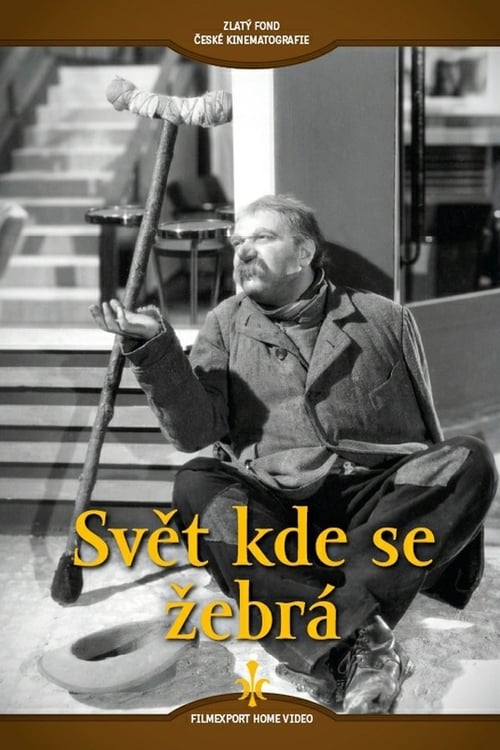
The smooth narration, corresponding to the requirements of a light comedy, develops the smiling and optimistic story of the "one-armed" beggar Dostál, who earned enough money with his excellent begging skills to buy a nice house, become a respectable master of the house, and save the impoverished lawyer Neprosil from poverty, who he contributed regularly to him when he was still well off. He also wanted to get him together with his pretty ward Zorka, for whom he said he would be an ideal husband, but the young people were able to do that by themselves and without his clumsy help, or rather despite his rather ineffective help... The film was shown at the VI. IFF in Venice in 1938.
An ambitious and selfish lawyer confesses to the murder of his first wife. Some of the scenes were filmed in the last weeks of the war.
A pair of circus clowns, played by Vlasta Burian and Jaroslav Marvan, take in an abandoned child and care for them even when they have to make a living as street musicians. The grateful foundling loves his adoptive parents even in adulthood, when he struggles with both love and stolen loot that accidentally falls into their laps. However, the result is only a crudely sentimental comedy that is considered one of the weakest works of the king of comedians, although he also participated in the direction.
The movie is a satirical look at foreign occupation - a medieval Czech jester entertains a German king and his French wife, or a modern Czech villager helps a Bavarian hunter and his French wife find wild boar in Bohemia - the story switches back and forth between the two plots and time-periods.
Honza Vavrinec (Rudolf Hrusínský) works in the investment department of a large office. One day he gets involved in the case of an unjustly convicted worker who mistakenly considers him a parliamentary deputy. Honza as a "deputy" interferes in the case and helps the worker. Encouraged by the success and possibly also out of love for the beautiful secretary Svatava (Blanka Bohdanová), the then shy and fearful Honza stands up for the chief of the department, Hofmánek (Ladislav Pesek), who has been removed from his position.
A selfish self-centered widowed ruler, barely tolerated by his subjects and called appropriately enough, 'King Myself, First' asks his three daughters to name the measure of their love for him. When one of them says, "more than salt", he banishes her from the kingdom. Not understanding what she meant the King assumes love can only be measured by precious metals or one's own talent, the 'correct' answers from his other two daughters. The arrogance of the King leads him to gather all the salt in the kingdom and destroy it. Of course, this backfires as he slowly learns the universal value of the substance, and of course, the essence of his daughter's reply. With the help of the wise and magical old 'herb woman', the King also learns what it means to be a true and wise ruler.
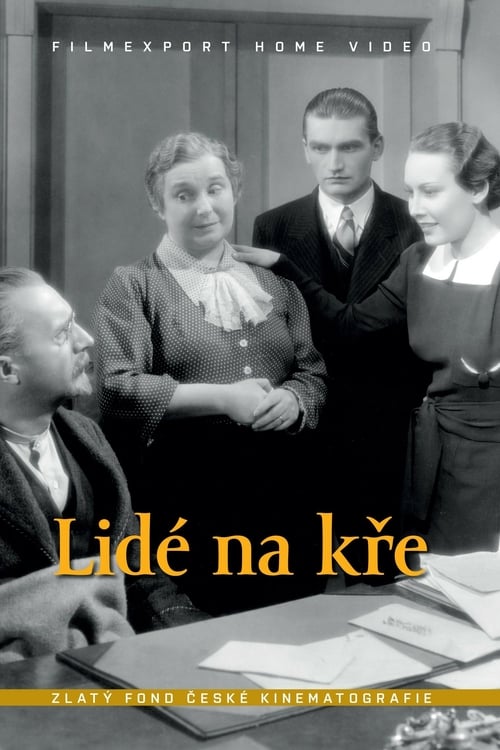
The economic crisis affects the lives of many people. Professor Václav Junek gradually discovers how significantly his idealistic vision differs from the real life of his four children. The eldest son Zdeněk has been an unemployed engineer for two years. Daughter Pavla, a doctor, works in a hospital for a very low salary. The second daughter Hanka has left her job as a stenographer and wants to become a film actress...
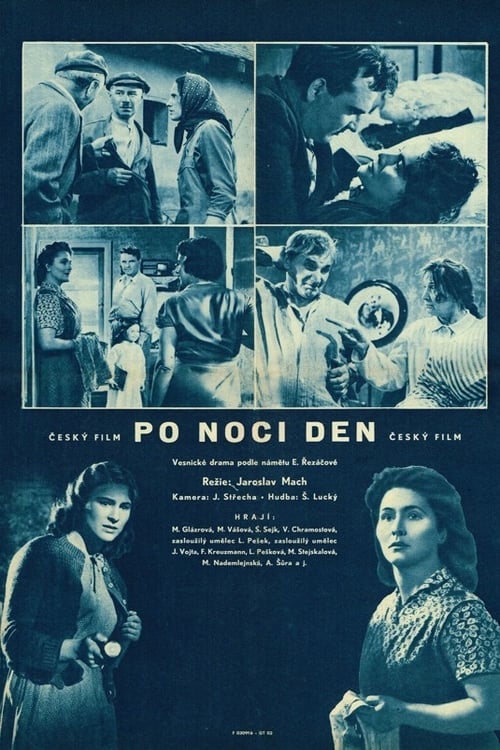
A Czech art film set in a modern village. The main character of the film is Karla Tolarová, a worker from a Prague printing house, who arrives for a harvest shift at a unified agricultural cooperative in Běšíčice at a critical time for the cooperative. The grain in the fields is ripe, the machine-tractor station does not have the necessary machines for the cooperative, the cooperative members do not trust each other, they lose interest in working together.
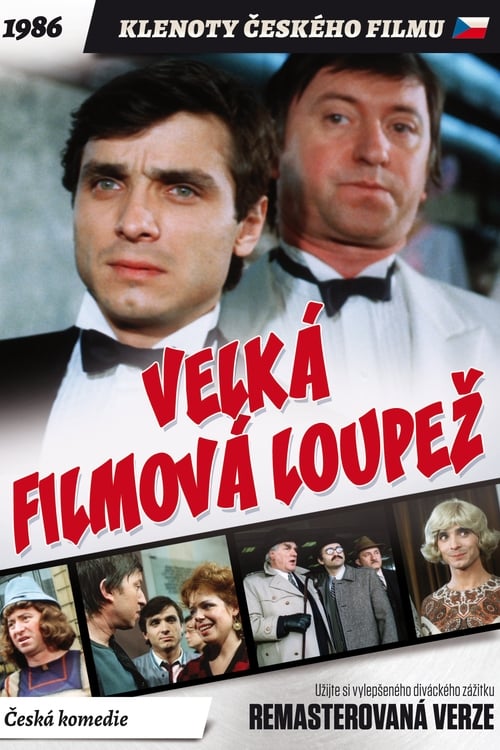
The film is essentially a feature-length commercial for an exhibition to mark the 40th anniversary of the nationalisation of the Czechoslovak film industry, to be held at the Prague U Hybernu venue. The protagonists of the piece are comedians Oldrich Kaiser and Jirí Lábus, who are set to accept an award from Japanese television representatives at the exhibition. At the same time, five gangsters plot to seize a revolutionary invention devised by professor Suzuki - a super holograph, which enables any figure from television to be transported in the flesh into the real world, and vice-versa.
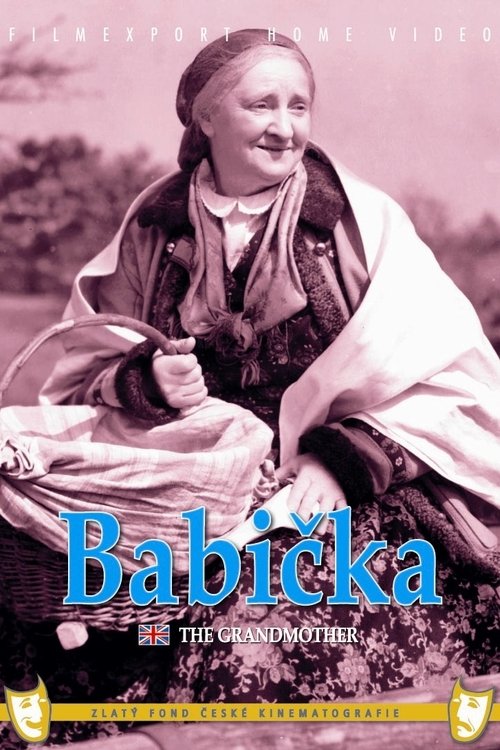
A highly romanticized autobiographical novel by a Czech 19th century writer, Bozena Nemcova. It's a classical, compulsory reading in Czech schools, about a wise, working-class woman, happier in her simplicity and good heart than the nobles whom she serves.
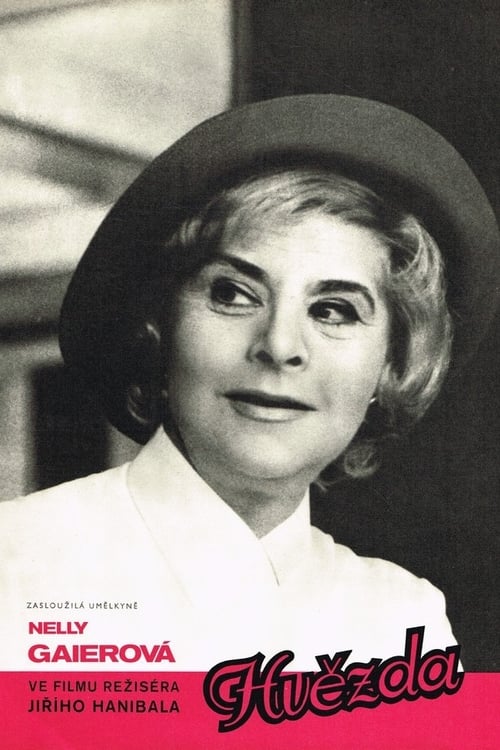
Who wouldn't want to return to the limelight? Years ago, actress Slávka Hradilová was a movie star. Today, she is approaching 60 and the most she does is appear in commercials. But she still keeps in shape. She regularly meets with friends to help them solve their problems, enjoys her teenage granddaughter, but above all she longs to get a big role in front of the movie camera again. When one day she gets an offer with a script in hand, she beams and heads to the studios where she was once almost a queen. But it turns out that times have changed, and today's directors want something different from actors than routine gestures and flashy facial expressions. So the former star is in for a profound disappointment...
Maryša, a peasant daughter, is forced by her greedy parents to marry a rich miller, a widower with three children. But she loves the village scoundrel Franck, who has no hope against Vávra. Francek goes to the army and Maryša and Vávra go to catechism with the priest. Maryša and Vávra's marriage is unhappy. The parents also realize their mistake, especially Lízal, who offers his daughter to return home. Maryša refuses and also rejects the proposal of Franck, who has returned from the army and asks her to run away to Brno with him. She chooses a tragic solution...
The families of Vavruš Cagala and Cyril Hanulík live in a secluded area in the Beskydy Mountains. Vavruš and Cyril are hardworking woodcutters and foremen. Cagala's daughter Terezka likes Tomáš Hanulík, but she also likes Pavel Zgabaj, the son of the owner of the farms in the valley. Cyril Hanulík is jealous of his Heva and wrongly suspects her of infidelity. Francek, whom Heva loved before their marriage, takes revenge on the Hanulíks: he sets fire to their apiary, from which he seizes Cagala's hayloft. Since then, misfortune has befallen the Cagala family. They lose their horses and wood, and old Zgabaj demands the money he lent them. He is only willing to back down from his demands if Terezka marries his son. Cagala does not want to allow her daughter to sacrifice herself, so the girl secretly goes to the farm to work there as a helper on the farm...