Philippe Grandrieux
Directing
Biography
Philippe Grandrieux (born 10 October, 1954; Saint-Étienne) is a French filmmaker. His work covers several cinematographic fields : TV experimentation, video art, research movie, film essay, documentary and museum exhibition. His uncompromised vision of Art, leads him to push the boundaries of the cinematographic fields he is working on. Following the work of Teinosuke Kinugasa, Jean Epstein and Pier Paolo Pasolini who were constantly looking for and inventing new narrative forms that would only fit films, Grandrieux’s films, deriving from horror movies and experimental movies, give the viewer intense sensorial experiences. His goal is to make the viewer psychologically involved in his movies. Its films actually express a whole world of energies based on sensations and affects despite a linear narration and an iconography that relies on archetypes that refer to the archaic images of the fairy tale and the legend.
Known For

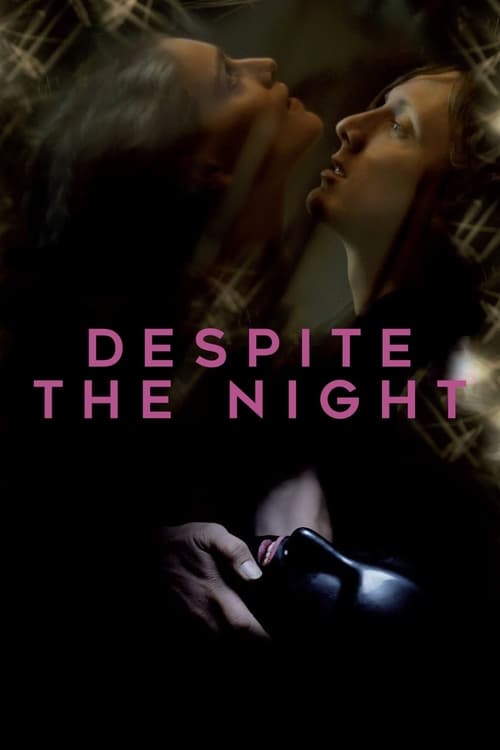
After returning to Paris, a heartbroken man searching for his missing lover finds solace, and a passionate but troubled love, with a grieving nurse. This unconventional romance unfolds against a backdrop of music and defies expectations, venturing into uncharted emotional territory.
Despite the Night

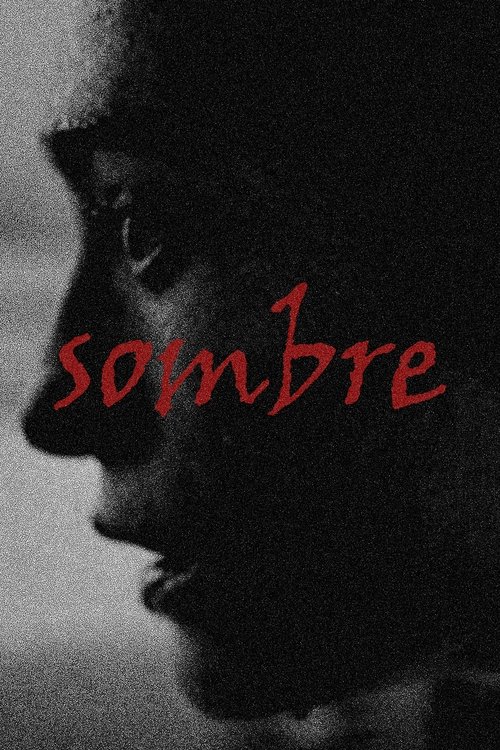
A serial killer stalks a woman he befriended after her car broke down.
Sombre
No description available.
Live

A young American drifts through a decaying Eastern European city, where his fixation on an elusive woman pulls him deeper into an underworld fueled by possession.
A New Life
No description available.
Azimut
Region by region, the history of the liberation of France at the end of the Second World War.
Les libérations de la France

The action unfolds in a country about which we know nothing, a land of snow and forests, somewhere in the North. A family lives in an isolated house near a lake. Alexi, a young, pure-hearted man, is a woodcutter. Occasionally suffering from epileptic seizures and overcome by an ecstatic state, he is one with the nature around him. Alexi is very close to his younger sister, Hege. Their blind mother, father, and younger brother, silently observe this uncontrollable love. One day a stranger arrives, a young man slightly older than Alexi.
A Lake
An evocation of the period from 1900 to 1914, which was marked by an optimism and a faith in progress that the beginning of the war came to destroy brutally.
The Century of Man
Where do images come from? This disturbing and essential question is posed by Philippe Grandrieux, and he already imposed it on himself the start, via Sombre (1999) up to the portrait recently devoted to Masao Adachi (FID 2011). From where, then? Maybe from the depths behind our eyes, ungraspable visions, night in suspension, promise of the end of an eclipse, between dream and nightmare. This is the start (and in truth the programme) of White Epilepsy. In a darkness barely broken by light, a mass advances: a nude back, in a long shot entirely centred on the shoulders.
White Epilepsy

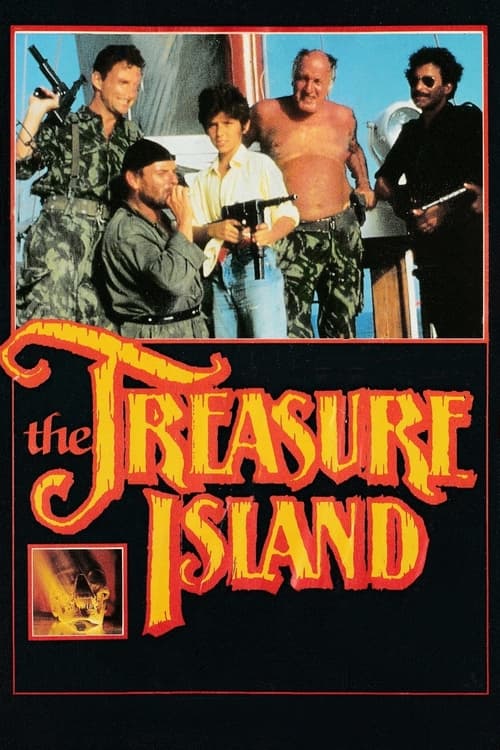
Jim is a small child who lives in an inn run by his parents. The arrival of a strange captain to the Island they live will trouble his existence and tip him into an universe of adventures.
Treasure Island
No description available.
Histoire parallèle

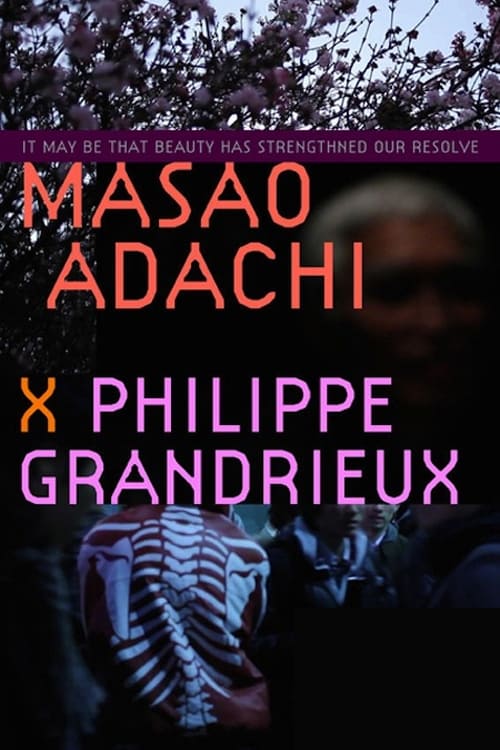
The first in a planned series of films about radical filmmakers by film critic Nicole Brenez and filmmaker Philippe Grandrieux, It May Be That Beauty Has Strengthened Our Resolve is a portrait of Masao Adachi, who emerged during the Japanese New Wave of the 1960s as a screenwriter for Nagisa Oshima and Koji Wakamatsu, and directed a series of avant-garde films that grafted radical politics to the sexploitation genre. A 1971 visit to a Popular Front for the Liberation of Palestine (PFLP) training camp while on the way back from Cannes resulted in Adachi's most infamous film, the agit-prop documentary Red Army/PFLP: Declaration of World War, which he co-directed with Wakamatsu. Soon after, Adachi joined a splinter cell of the Japanese Red Army in Lebanon, where he stayed from 1974 until he was deported to Japan in 1997 to serve time for passport violations.
It May Be That Beauty Has Strengthened Our Resolve - Masao Adachi

In the vision of Philippe Grandrieux, the director of Tristan und Isolde, the latter is the driving force behind the passionate drama of Tristan and herself. She is an erotomaniac who wants to possess and swallow him whole. Philippe Grandrieux's direction focuses on Isolde's desire and not the desire of both of them (as classical literature usually reads Wagner's opera).
Tristan und Isolde
A week after the Dayton accords, Phillipe Grandrieux visits Sarajevo accompanied by Sada, a Bosnian who is returning home after four years of exile.
Back to Sarajevo

For a series of programs made for TV Fnac, Philippe Grandrieux meets different people who tell us, each in their own point of view, a story of images. After Paul Virilio (The World is an image) and before Jean-Louis Schaeffet, Le Trou noir (AKA The Black Hole) gives us the enlightened reflections of psychanalyst Juan David Nasio about real and reality.
The Black Hole

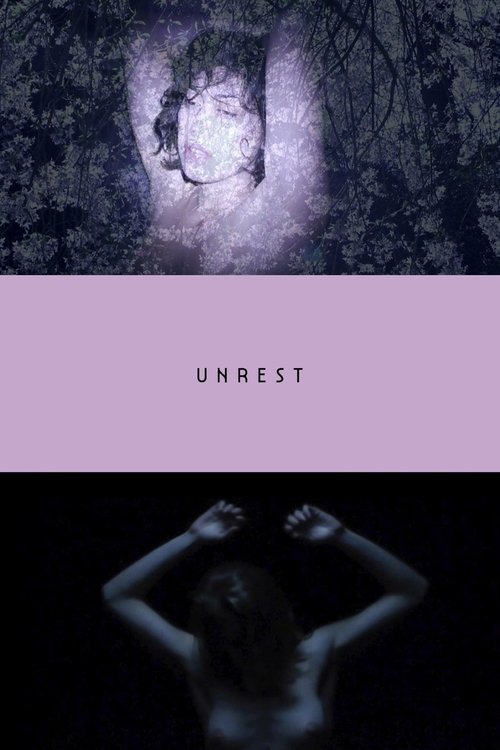
Unrest is the third movement of a triptych by Philippe Grandrieux whose common thread is anxiety. A body as a return from the depths of time, an archaic body that we do not know and which nevertheless continues to project in us its shadow, its anxiety.
Unrest
No description available.
Berlin

In the second part of the trilogy on anxiety (in continuation of White Epilepsy), the only light source that reflects on the screen is the naked human body. Its surface, full of bones and muscles, flexes and vibrates in a frantic rhythm. The livelier the reflection, the deeper a viewer feels his/her mortality, as he recognizes between the convulsions the forces he/she cannot control.
Meurtrière

Commissioned for the French television series Regards Entendus, La peinture cubiste is a multilayered, elusive investigation of the perception of reality and representation through cinema, painting and video. Unfolding as an evocative, implied fictional narrative, this work was suggested by a Jean Paulhan text in which a man experiences and perceives everyday life as though in the multifaceted space of a Cubist painting. Alternating between film and video, Kuntzel and Grandrieux explore physical and psychical perception, constructing an analogy between the way video transforms conventional filmic representation and the way Cubism fractured the perspectival codes of classical pictorial space. Shifting between abstraction and materiality, the real and the imaginary, this work suggests passages between painting, cinema and video.
The Cubist Painting

An Irish filmmaker grapples with the legacy of his estranged father, the late documentarian Arthur MacCaig, through MacCaig's decades-spanning archive of the conflict in Northern Ireland. Drawing on over 30 years of unique and never-seen-before footage, 'The Image You Missed' is an experimental essay film that weaves together a history of the Northern Irish 'Troubles' with the story of a son's search for his father. In the process, the film creates a candid encounter between two filmmakers born into different political moments, revealing their contrasting experiences of Irish nationalism, the role of images in social struggle, and the competing claims of personal and political responsibility.