Directing
Ihor Savchenko was a Soviet and Ukrainian film director, screenwriter, and theater teacher.
The story of three young Russsian adventurers against the background of post-revolutionary skirmishes in the Ukraine. The boys get mixed up with a wounded commissar and a marauding White Russian officer. They find themselves in all sorts of predicaments before the Reds arrive to save the day, and become the mascots of a troop of Bolshevik cavalry.
About the work of the Soviet film director S. F. Bondarchuk.
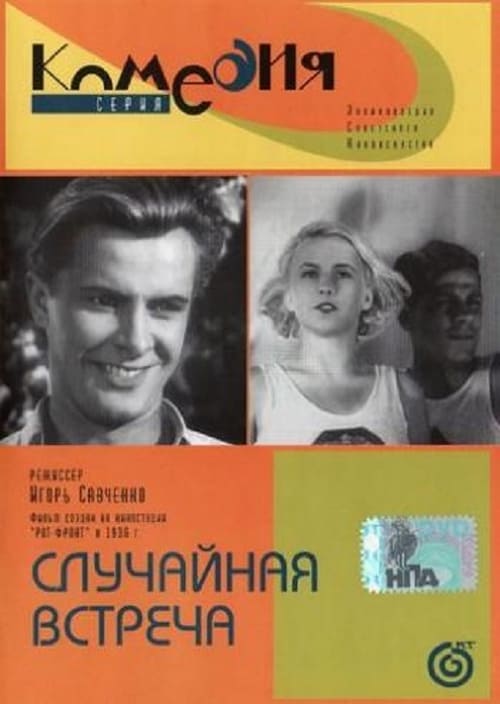
A supposedly ordinary woman’s personal triumph and tragedy is explored in Igor Savchenko’s 1936 Sluchainaya Vstrecha (Accidental Meeting). Irina – the best shock worker in a provincial children’s factory – develops a relationship with the newly arrived and charming physical culture instructor named Grisha. Soon we learn that Irina is pregnant. Disappointed and angry on hearing her news, Grisha asks her about what will now happen to all their dreams.
No description available.
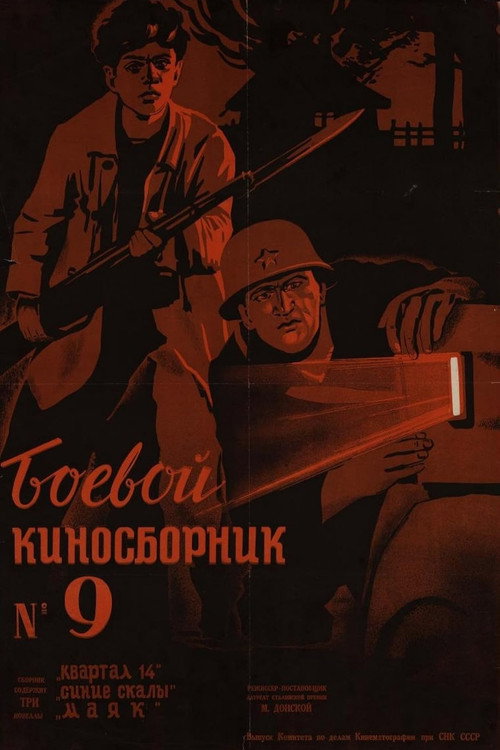
Fighting Film Collection No. 9 (Boyevoy kinosbornik No. 9) is the ninth issue of Boyevoy kinosbornik series, released in May 1942. It contains three segments: "Kvartal No.14/Block 14" (Savchenko), "Siniye skaly/The Blue Cliff" (or "Blue Crags") (Braun) and "Mayak/The Signal" (or "Beacon") (Donskoy).
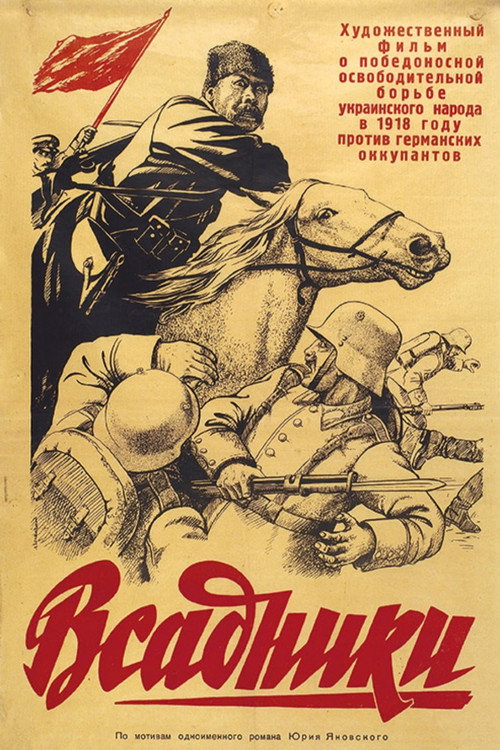
Episodic story of the resistance to the German invasion of Ukraine in 1918 during World War I, and made as an example of the guerrilla warfare and fierce spirit in which Ukrainian peasants were again resisting Teuton onslaughts in 1939. Highlights a small band of guerrillas and their battles using scythes, shotguns and, often, just clubs against the Kaiser's army in the Ukrainian forests.
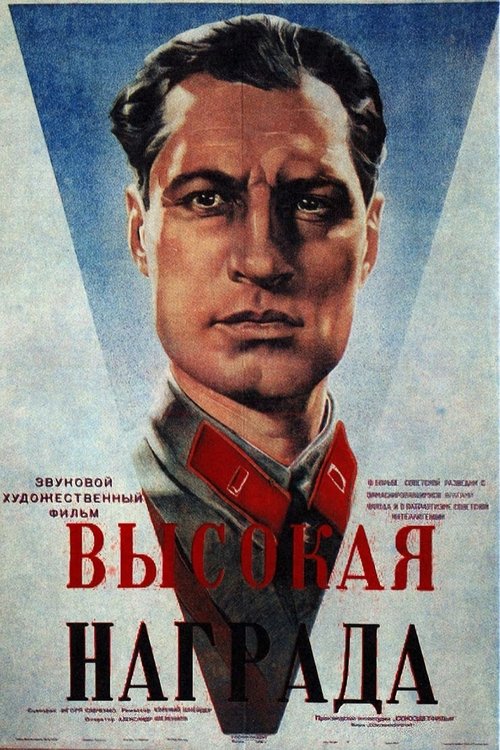
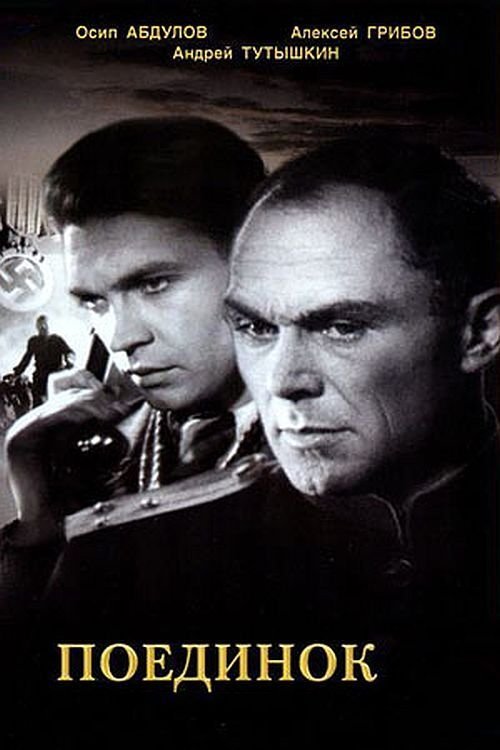
The Second World War. A new L-2 heavy duty gun is being supplied to the Soviet Army. German intelligence needs to seize a new secret weapon.
Docu-drama about political and military conflict during the Russian Civil War in 1918, from an orthodox pro-Communist viewpoint.
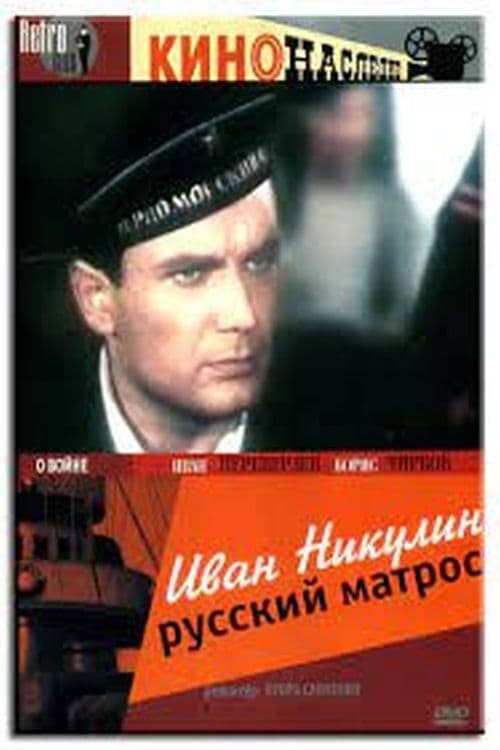
The story takes place in Summer 1942, when a small force of Black Sea Fleet sailors was surrounded by German troops but broke out the encirclement.
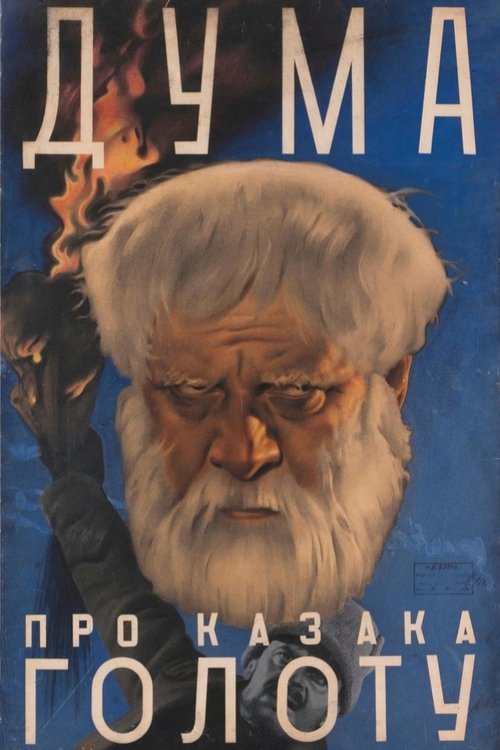
648. Ukraine under the oppression of Poland. Polish nobility committing outrage, burning villages one after another. Hetman of Zaporozhian Cossacks Bohdan Khmelnytskyi gathers the army of defenders of the motherland.
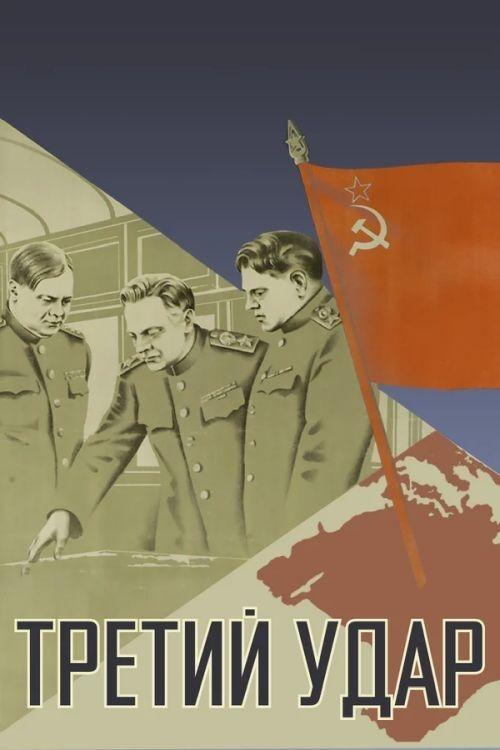
On April 1944, Joseph Stalin orders the Red Army to liberate the Crimea from the German occupiers. The Wehrmacht's local commanders beg Hitler to allow them to retreat from the vulnerable position, but he refuses. After a fierce battle, the Soviet forces destroy the German and Romanian units defending the peninsula and retake Sevastopol.
Igor Savchenko's Accordion (Garmon', 1934) was adapted from a poem by A. Zharov. This film sheds light on the reasons why the mass song came into being. In it, the country boy Timosha stops playing the accordion after being chosen leader of the local Komsomol. When he understands that he must compete with the sad kulak songs played by Tlskliby ("Mournful"), he recognizes his mistake in abandoning his accordion, and in the end he gathers the other youths around him with his lively and merry songs.
This is a two-in-one flashback film in which the flashback ends up teaching a group of kids a heroic lesson that they take to heart when war comes to their doorstep.
Growing up in a Ukrainian peasant family, knowing all hardships of serf life, young artist and poet Taras Shevchenko in the years of study clearly identifies the meaning of true art, which is to serve the interests of the people. The poems of Shevchenko are imbued with love for the common people. Fiery freedom-loving creativity of Taras Shevchenko is known throughout Russia. Nicholas I exiles the poet to the distant Caspian fort where he is to serve as an ordinary soldier and is banned from writing or drawing. In the poet's difficult days he has the support of Ukrainian soldier Skobelev, Polish revolutionary Sierakowski, captain Kosarev and the commandant of the fortress, Uskov. For the sake of his release Chernyshevsky and Dobrolyubov are hard at work. And so, the sick and aged Shevchenko is finally free. Together with Chernyshevsky and Dobrolyubov, he dreams of a bright future of the motherland, when the Russian and Ukrainian peoples throw off the chains of slavery.
About child partisans of the Great Patriotic War.
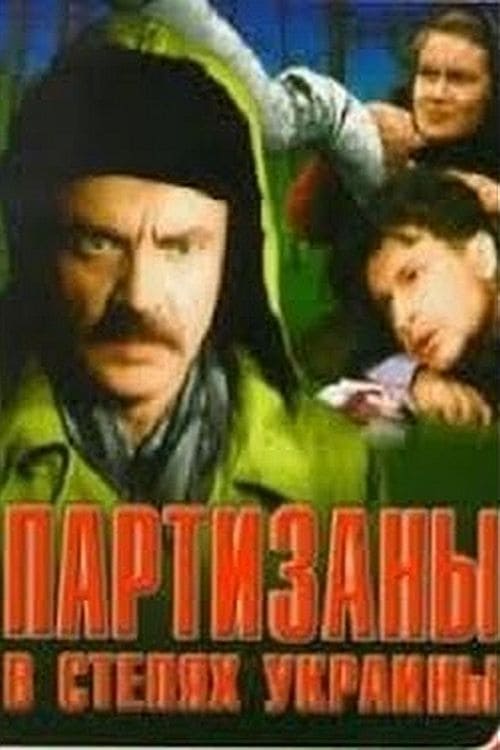
The film tells about the heroic struggle of Ukrainian farmers-partisans with nazi invaders during the Great Patriotic war.
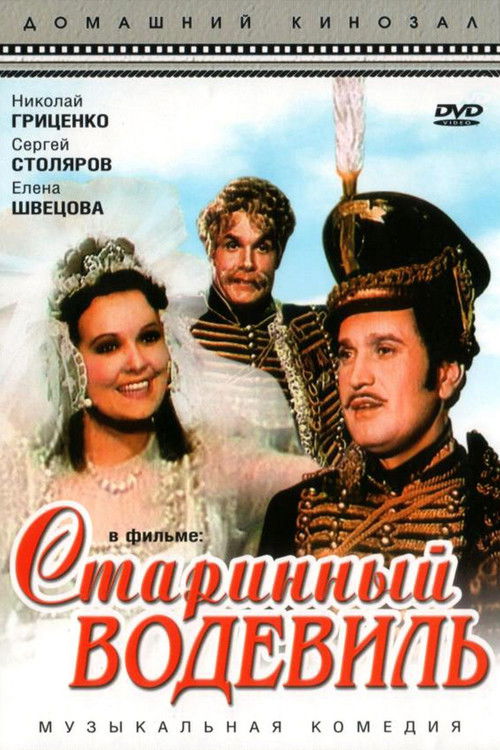
After the victory on Napoleon a hussar returns to Moscow. He is met by a desperate man who offers him a deal: marry his daughter before she turns 18 and inherit a huge fortune from her rich, eccentric aunt. There is also another condition...