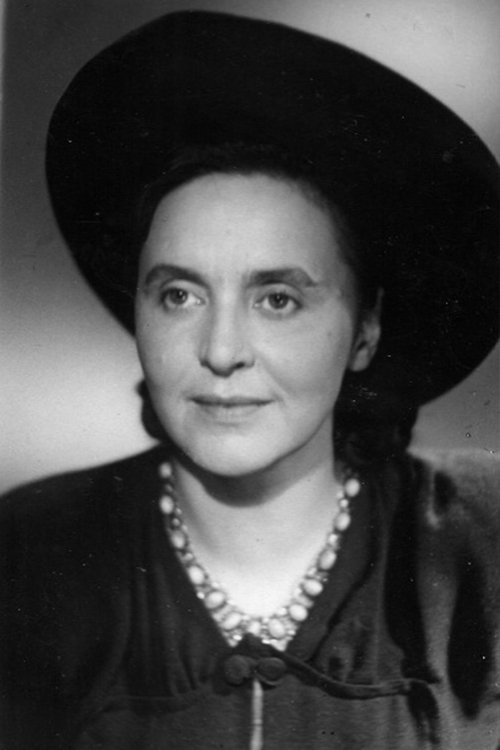
Vera Stroyeva
Directing
Biography
Soviet director and screenwriter. Married to director Grigoriy Roshal.
Known For
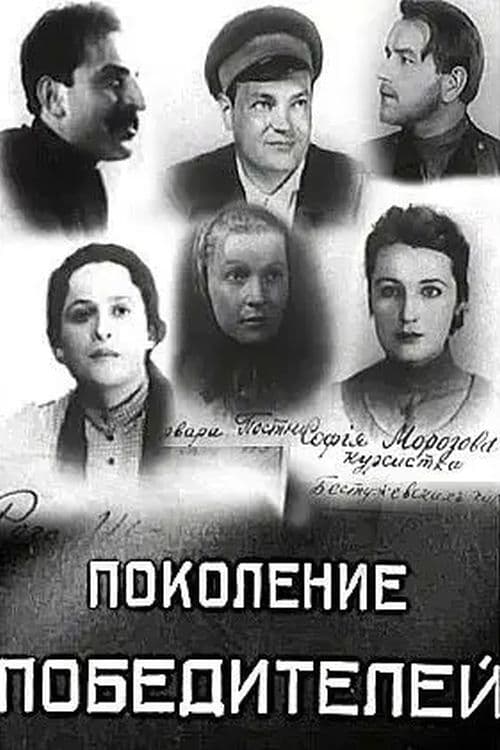
The film covers the events of 1896-1905 - from the first revolutionary gatherings to the armed Moscow uprising of workers at Krasnaya Presnya, later called Bloody Sunday. St. Petersburg students Alexander Mikhailov and Yevgeny Svetlov and a peasant girl Varvara Postnikova arrive in Moscow and follow the complicated path of underground revolutionaries.
Generation of Victors
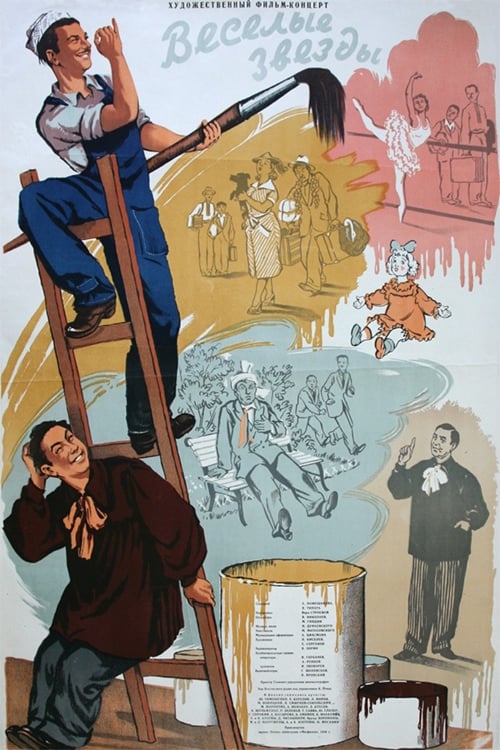
Local comic duo from the Ukraine reach for the "big time" by entering a talent contest for the Moscow vaudeville circuit, must overcome the interference of an established, competition-shy duo who are helping judge the contest.
Variety Stars
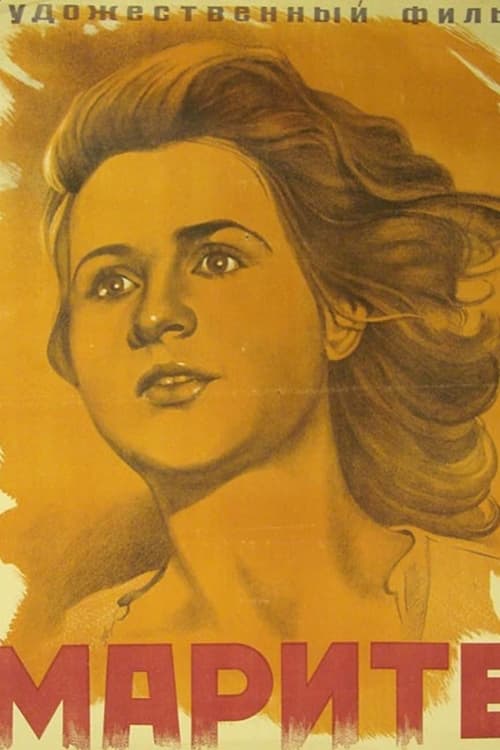
The poor Melnik family lives in Zarasai region. Elder Mary parents struggle to send Marry to school but they did this anyway. The horizons of the girl, who until then had learned only from the old grandfather Peter, are spreading there, she, as if seeing herself in her place, tells the class about the legendary hero of Lithuanian history Grazina. Deprivation prevents Maryte from graduating, so she starts working in a candy factory where she hears political inferences. 1940, Vilnius is returned to Lithuania. Maryte, her best friend Elena and a group of young people in national costumes get ready to walk to the capital. In the periphery, the Bolsheviks remember the land of the rich, distribute it to the poor, and Mary dreams of continuing her studies and becoming a doctor. The dream is interrupted by the outbreak of World War II.
Maryte
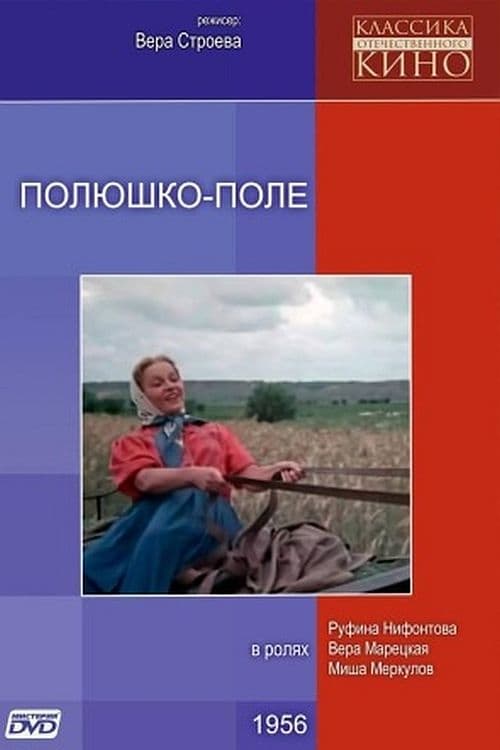
Agronomist Valya Chernysheva fell in love with the new chief agronomist of the MTS Savitsky, a widower with two small daughters. During the illness of one of the daughters, whom Valya was nursing, he realized that she had become a close person for him. But the girl left to work in another distant collective farm.
Polyushko, pole
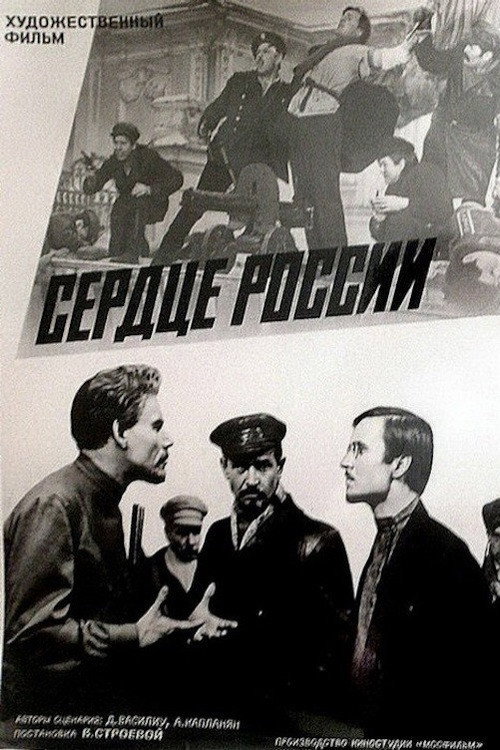
Reminiscing the 1917 Russian October Revolution, a time when the films' director was 14 years old.
Russia's Heart

No description available.
Collection of Films for the Armed Forces #12
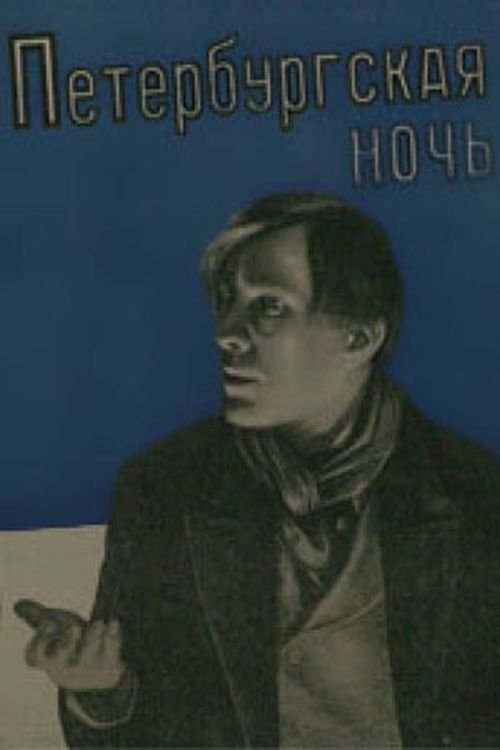
A loose Communist adaptation of a Dostoyevsky novel. The serf Egor Efimov, a talented violinist, dreams of true art. Released by his landlord, he goes to the capital. But cold, bureaucratic St. Petersburg quickly destroys his illusions.
Petersburg Nights
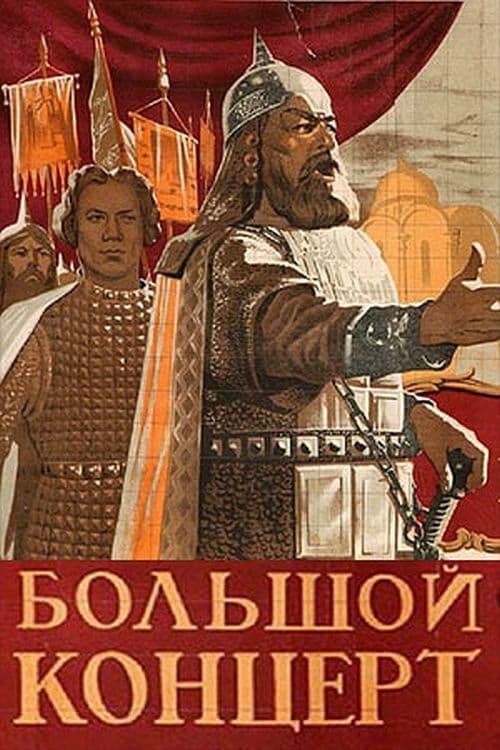
Young Soviet farm workers are treated to a weekend in Moscow visiting the Bolshoi theater, in gratitude for which they invite the artists who've befriended them to visit their farm and be entertained by performances of their own.
The Grand Concert
After several days of the offensive, the Red Army detachment settles down to rest. At a halt, the warrior Kuregen tells his comrades-in-arms the story of the feat of the legendary Kazakh batyr Tolagai, who sacrificed his life for the people's good a thousand years ago.
Batyr of the Steppes
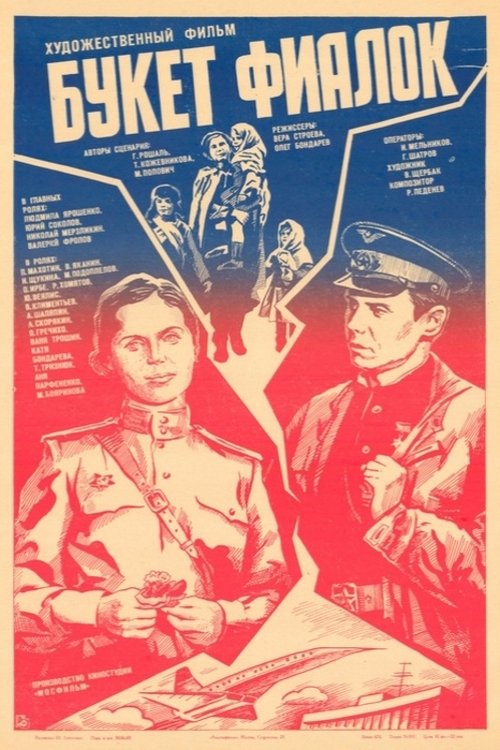
The WWII. Berestova, an air regiment engineer, meets Ardatov, a fighter pilot whose wife has died. Now he must think about how to raise his two children alone. However, Arbatov does not live to see victory. After the war Berestova finds his children and adopts them.
Bouquet of Violets
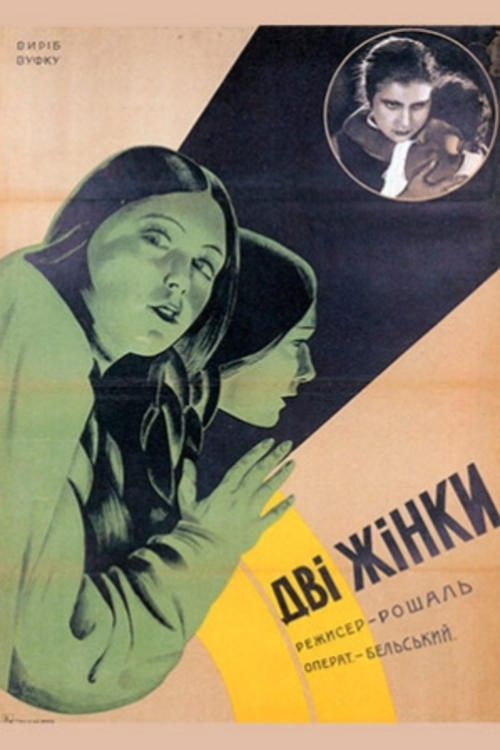
During the NEP era, the ex-wife of a White officer, now married to a dedicated Soviet worker and lover to several bourgeois “specialists”, is expelled by her husband’s party for her affairs. Meanwhile, the commissar’s wife, once captured by White Cossacks, helps her husband lead a prisoner revolt and later serves as an exchange inspector on the commodity exchange. When she exposes the director’s fraud and her husband is wrongly implicated, both are reassigned to the provinces and depart together. Considered lost.
Two Women
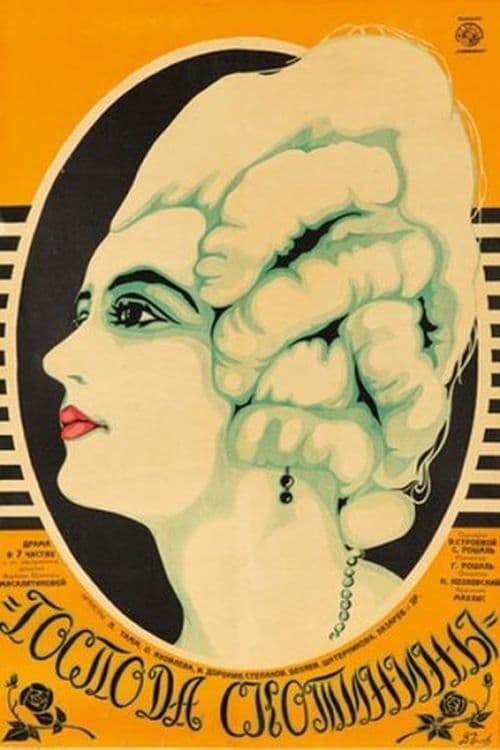
A comedy starring Nina Shaternikova, The Skotinins is loosely based on the 18th century play The Minor by Denis Fonvizin. In it, the upper class is shown as both depraved and stupid, engaging a variety of absurd, over-the-top follies.
The Gentlefolks of Skotinin

Russian filmmaker Vera Stroyeva specialized in cinematic adaptations of famous operas. One of the most successful of these was her 1955 film version of Mussorgsky and Pushkin's Boris Godunov. Stroyeva's adaptation deftly streamlines the story of a Russian czar whose life is placed in jeopardy by a pretender to his throne. A. Pirogov sings the title role, while G. Nellep provides vocal and visual menace as the "False Dmitri". The use of a color process known as Magicolor adds just the right touch of theatrical artificiality to the pomp-and-splendor proceedings.
Boris Godunov
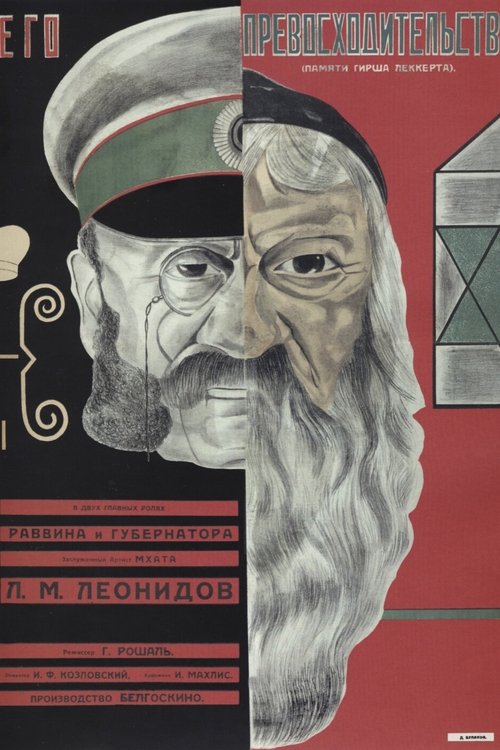
This 1928 film features stylized cinematography and actors from the Moscow Art Theater in a fiction story based on the life of Jewish Labor Bund member Hirsch Lekert who attempted to assassinate the Vilna governor in 1902 to avenge the flogging of workers who participated in a May Day rally.
His Excellency

January 1917. The workers and peasants of Russia, hunted by the tsarist government in the trenches, forced to defend alien interests of the king, the landowners and exploiters-capitalists. Bolshevik worker Yakov Orel, selflessly performing party mission, said the soldiers the truth about war, about revolution, about what the overthrow of the autocracy does not mean the liberation of the workers from the yoke of landlords and capitalists exploitation. For example, one regiment of the film reflects the events that took place in the whole of the Russian army between February and October 1917.
We, The Russian People
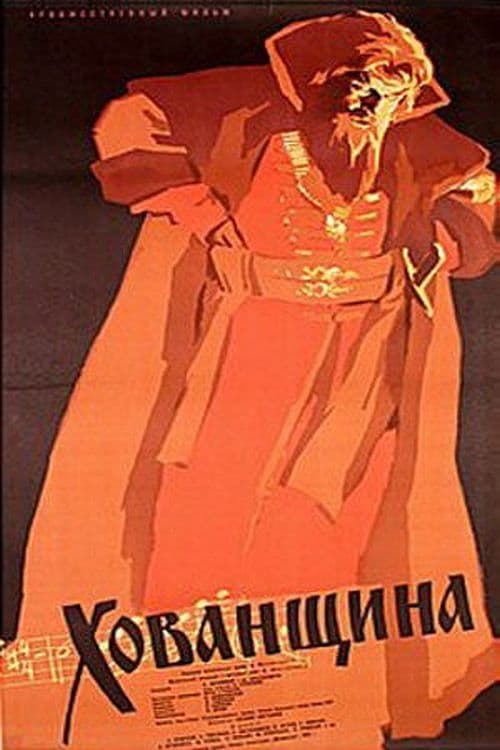
Modest Mussorgsky's final opera, left unfinished at the time of this death in March of 1881.
Khovanshchina
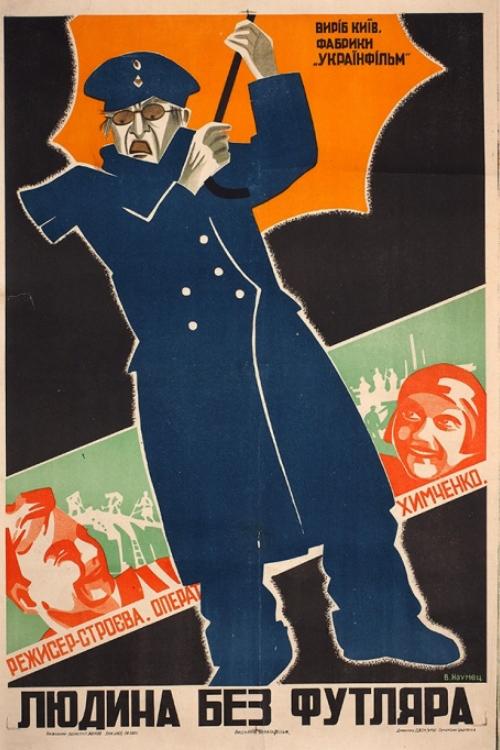
At the school where worker Nikolai Zhikharev studied, students were given a lot of theoretical information, but how to work with machinery was not explained. Therefore, on one of the first working days at the plant Zhikharev made a serious mistake - he let steam out of the boiler. He was transferred to the clerk's office, but even there difficulties awaited the hero. However, Zhikharev did not give up. He decided to change the educational process in schools so that trained and prepared workers would come to the factories.
A Man Without A Case
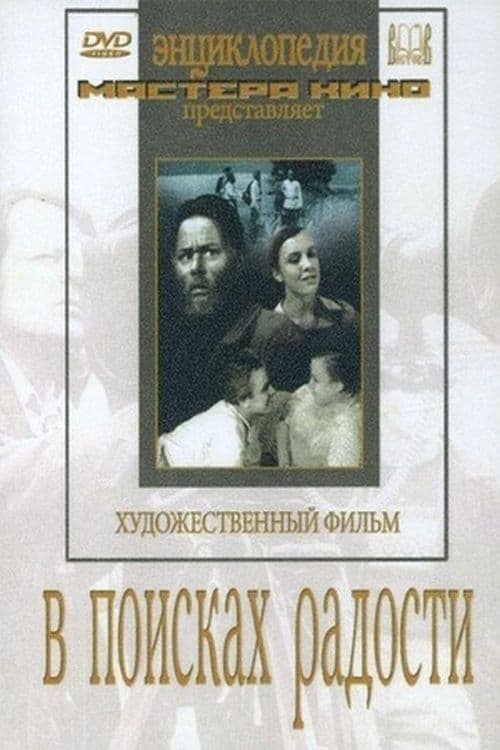
Having tried his hand on the side, the middle peasant chose a collective farm in his native village and achieved a rich harvest, overcoming the resistance of the kulaks.
Looking for Happiness
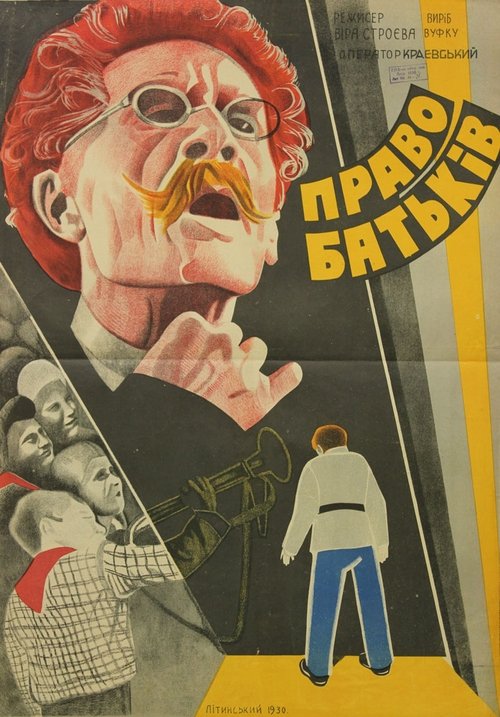
The clockmaker practices what is known as \"parental rights\" – he mercilessly beats his son Boris for every misdemeanor. The boy grows up intimidated, angry, trusting no one, and befriending no one. One day, while the students at the polytechnic school where Boris studies are busy with a physical education class, he deliberately destroys a model that the students have worked so hard to build. The teacher prevents a cruel punishment of the culprit. The school community takes on the responsibility of re-educating Boris. Considered lost.