Pablo Picasso
Acting
Biography
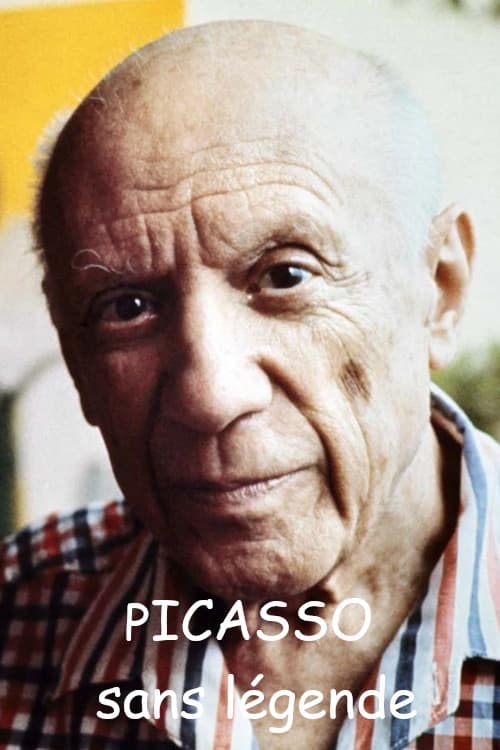
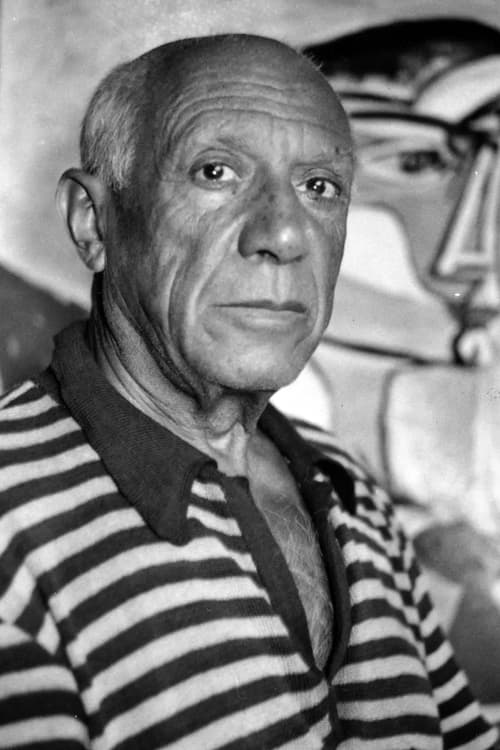
Pablo Ruiz Picasso (25 October 1881 – 8 April 1973) was a Spanish painter, sculptor, printmaker, ceramicist and theatre designer who spent most of his adult life in France. One of the most influential artists of the 20th century, he is known for co-founding the Cubist movement, the invention of constructed sculpture, the co-invention of collage, and for the wide variety of styles that he helped develop and explore. Among his most famous works are the proto-Cubist Les Demoiselles d'Avignon (1907), and the anti-war painting Guernica (1937), a dramatic portrayal of the bombing of Guernica by German and Italian air forces during the Spanish Civil War. Picasso demonstrated extraordinary artistic talent in his early years, painting in a naturalistic manner through his childhood and adolescence. During the first decade of the 20th century, his style changed as he experimented with different theories, techniques, and ideas. After 1906, the Fauvist work of the older artist Henri Matisse motivated Picasso to explore more radical styles, beginning a fruitful rivalry between the two artists, who subsequently were often paired by critics as the leaders of modern art. Picasso's work is often categorized into periods. While the names of many of his later periods are debated, the most commonly accepted periods in his work are the Blue Period (1901–1904), the Rose Period (1904–1906), the African-influenced Period (1907–1909), Analytic Cubism (1909–1912), and Synthetic Cubism (1912–1919), also referred to as the Crystal period. Much of Picasso's work of the late 1910s and early 1920s is in a neoclassical style, and his work in the mid-1920s often has characteristics of Surrealism. His later work often combines elements of his earlier styles. Exceptionally prolific throughout the course of his long life, Picasso achieved universal renown and immense fortune for his revolutionary artistic accomplishments, and became one of the best-known figures in 20th-century art. Picasso was born at 23:15 on 25 October 1881, in the city of Málaga, Andalusia, in southern Spain. He was the first child of Don José Ruiz y Blasco (1838–1913) and María Picasso y López. Picasso's family was of middle-class background. His father was a painter who specialized in naturalistic depictions of birds and other game. For most of his life, Ruiz was a professor of art at the School of Crafts and a curator of a local museum. Ruiz's ancestors were minor aristocrats. Picasso's birth certificate and the record of his baptism include very long names, combining those of various saints and relatives. Ruiz y Picasso were his paternal and maternal surnames, respectively, per Spanish custom. The surname "Picasso" comes from Liguria, a coastal region of north-western Italy. Pablo's maternal great-grandfather, Tommaso Picasso, moved to Spain around 1807. ... Source: Article "Pablo Picasso" from Wikipedia in English, licensed under CC-BY-SA 3.0.
Known For

No description available.
Cinépanorama

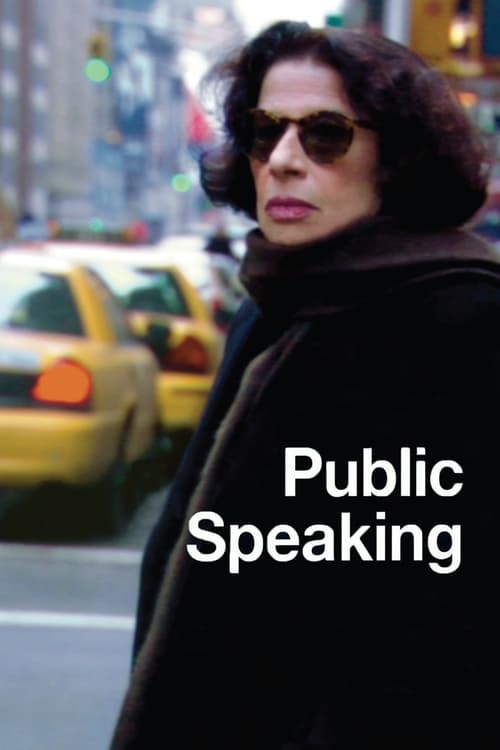
Martin Scorsese’s portrait of writer and social commentator Fran Lebowitz, celebrated for her sharp wit and observations on modern life. Filmed at New York’s Waverly Inn and intercut with archival footage and interviews, the documentary captures Lebowitz’s distinctive worldview through her spontaneous monologues and public appearances.
Public Speaking

Communism spread to all of the continents of the word, lasting through four generations and over seven decades. Hundreds of millions of men and women were affected by this political system, one of the most unjust and bloodiest in history. Using newly discovered propaganda films and archival photos, these four episodes explore the mysteries of this totalitarian political machine that lured its share of important followers into the fold. Known as the red church, communism seduced its ardent followers like some earthly religion.
Faith of the Century: A History of Communism

No description available.
The Century of Icons

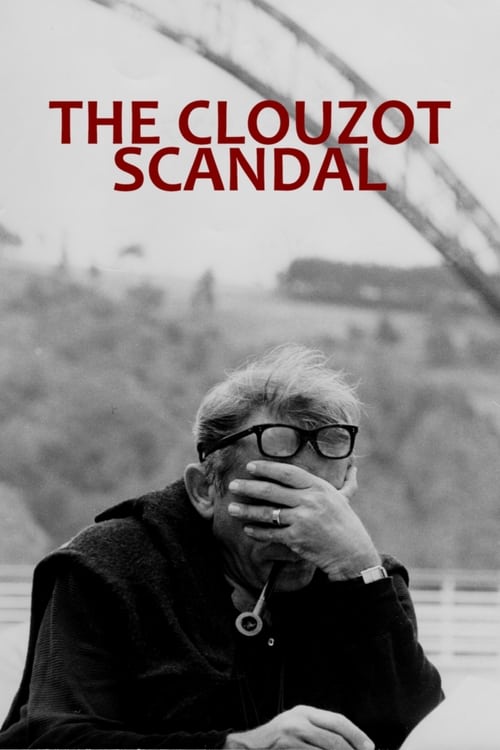
Great filmmakers claim the artistic influence of French director Henri-Georges Clouzot (1907-1977), a master of suspense, with a unique vision of the world, who knew how to offer both great shows and subtle studies of characters. Beyond the myth of the tyrannical director, a contrasting portrait of a visionary, an agitator, an artist against the system.
The Clouzot Scandal

An 18th century poet travels through time in search of divine wisdom. In a mysterious wasteland, he has a series of enigmatic encounters with symbolic phantoms with whom he muses about the nature of art and his own career. Ultimately, the poet strives to achieve his rebirth as a celestial being.
Testament of Orpheus

No description available.
En direct de...

In 1906, Georges Braque and Pablo Picasso were 24 and 25 years old. The Butte Montmartre is their Parisian sanctuary where artists in need of recognition meet. Braque and Picasso become friends to the point of never leaving each other. For the moment, their paintings do not interest many people; only Apollinaire, then aged 26, and the young gallery owner Daniel-Henry Kahnweiler, 22, saw immense potential in them. And in addition to their passion for painting, these four inseparable boys share the same appetite for modernity. Collages, diversions of materials and geometrization of forms: cubism opened the way to abstraction. A revolution initiated by Picasso and Braque, which profoundly changed the course of the history of modern art.
Picasso, Braque & Cie - The Cubist Revolution

Using a specially designed transparent 'canvas' to provide an unobstructed view, Picasso creates as the camera rolls. He begins with simple works that take shape after only a single brush stroke. He then progresses to more complex paintings, in which he repeatedly adds and removes elements, transforming the entire scene at will, until at last the work is complete.
The Mystery of Picasso

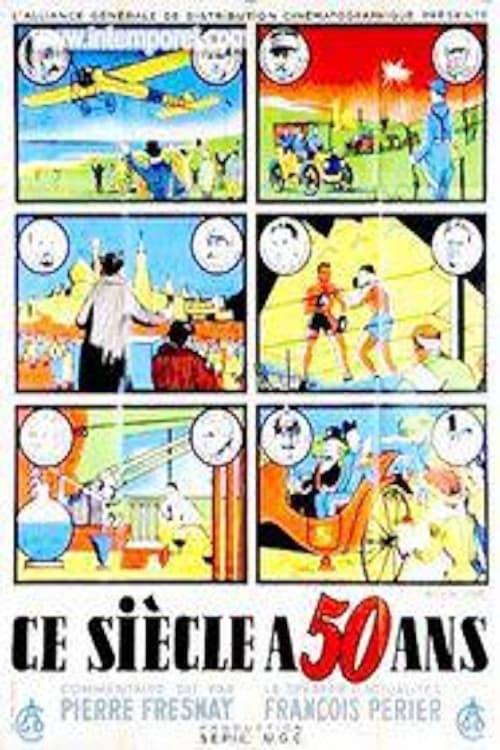
As the title of this French documentary indicates, Ce Siecle a 50 Ans examines the 20th Century at its halfway point. Utilizing the archives of several European film reserves, director Denise Tua offers a fascinating mosaic of the people and events that shaped the years 1900 to 1950. Complementing the vintage film clips are three dramatized sketches, delineating the romantic customs of three different points in time. These sketches are inadequately performed, and can easily be ignored. Ce Siecle a 50 Ans both preserved and provided celluloid material for scores of future documentaries.
The Century Is Fifty

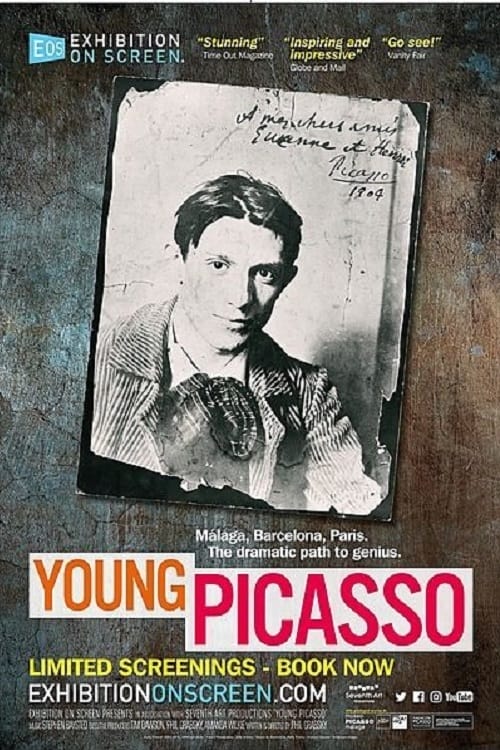
Pablo Picasso is one of the greatest artists of all time - and right up until his death in 1973 he was the most prolific of artists. Many films have dealt with these later years - the art, the affairs and the wide circle of friends. But where did this all begin? What made Picasso in the first place? Too long ignored, it is time to look at the early years of Picasso; the upbringing and the learning that led to his extraordinary achievements.
Young Picasso

Various international presentions are featured through satellite uplink.
Our World
No description available.
Rendez-vous de l'espérance

Many twentieth century European artists, such as Paul Gauguin or Pablo Picasso, were influenced by art brought to Europe from African and Asian colonies. How to frame these Modernist works today when the idea of the primitive in art is problematic?
Looking for Modern Art: Rethinking Art History

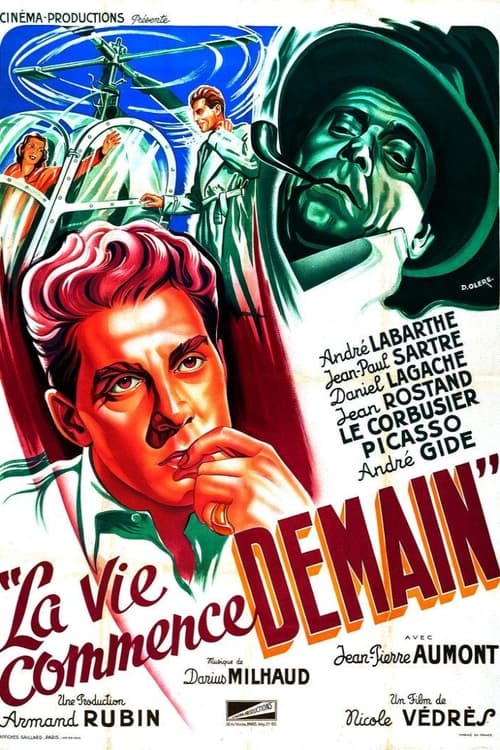
Documentary filmmaker Védrès' first semi-fictional feature was released in France in 1949 as La Vie Commence Demain. The film made it to the U.S. in 1952 as Life Begins Tomorrow. Made in cooperation with UNESCO, the film speculates on the future of mankind after the advent of Atomic Energy. Many prominent French artists and intellects contribute to the narration: Jean-Pierre Aumont plays The Man of Today, Andre Labarthe is the Man of Tomorrow, and Jean-Paul Sartre, Daniel Agache, Jean Rostand, Le Corbusier, Pablo Picasso and Andre Gide are respectively seen as "The Existentialist," "The Psychiatrist,' "The Biologist," "The Architect," "The Artist" and "The Author". Film clips of hospitals, schoolrooms, scientific laboratories, and even nightclubs are woven into Védrès' fascinating tapestry.
Life Begins Tomorrow

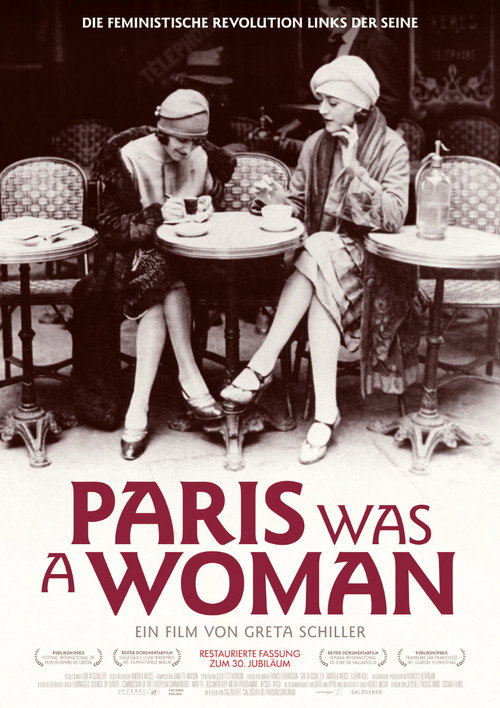
Women (many of them lesbian) artists, writers, photographers, designers, and adventurers settled in Paris between the wars. They embraced France, some developed an ex-pat culture, and most cherished a way of life quite different than the one left behind.
Paris Was a Woman

Painter Françoise Gilot shared Pablo Picasso's life from 1943 to 1953. This union nourished their respective artistic creations.
Pablo Picasso et Françoise Gilot : la femme qui dit non

No description available.
Mythos Côte d'Azur - Liebe, Luxus, Leidenschaft

A French documentary charting the life of the Spanish artist Pablo Picasso through the events of 13 significant days of his life, including his marriage to Olga Kokhlova, the birth of his daughter, the bombing of Guernica and the death of Stalin. Archive footage of Picasso, his lover Françoise Gilot, writer Jean Cocteau, photographer Brassat and critic Pierre Daix is accompanied by new interviews with Picasso's daughter Maya and son Claude.
13 Days in the Life of Pablo Picasso

A never-before-seen portrait of the artist’s life through his entire body of work, from his sketches as a child prodigy until his final paintings.