Acting
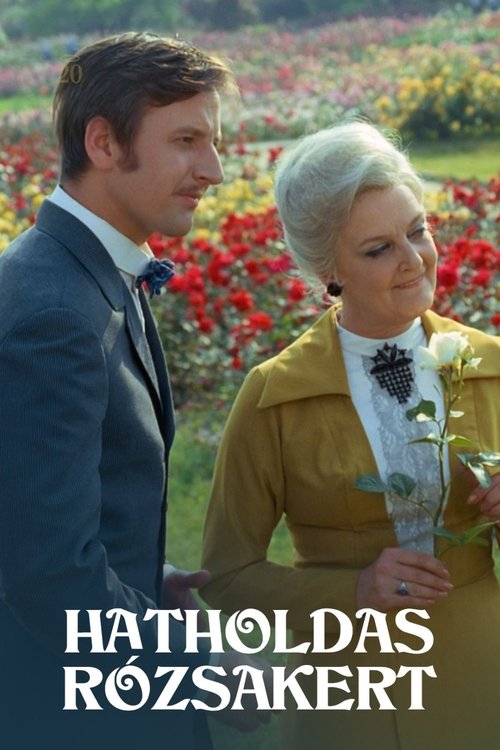
Aunt Ilka, who likes company, opens her house standing in the middle of a six-acre rose garden in the little town for the golden youth of the town. As a result of her benevolence, the tenants are in the position to adore not only the roses but a nice bunch of to-be-married girls of the town.
Misu is spending his summer holiday in an old block of flats in Budapest. The caretaker of the house, Poldi, a park attendant by occupation, is going to retire in a few days and he is afraid to think ahead of the years to come without grass and trees. An idea comes to Misu to spend the summer in an active way. He organises a working party to sod the inner court of the block of flats they live in. To achieve his plan, he has to make alliances with some people and to win the opponent to the idea, namely Kamilla, an insurance consultant. Their assistants in this mission will be the dustman and the coal deliverer and Piroska, a girl spending her holyday at Kamilla's.
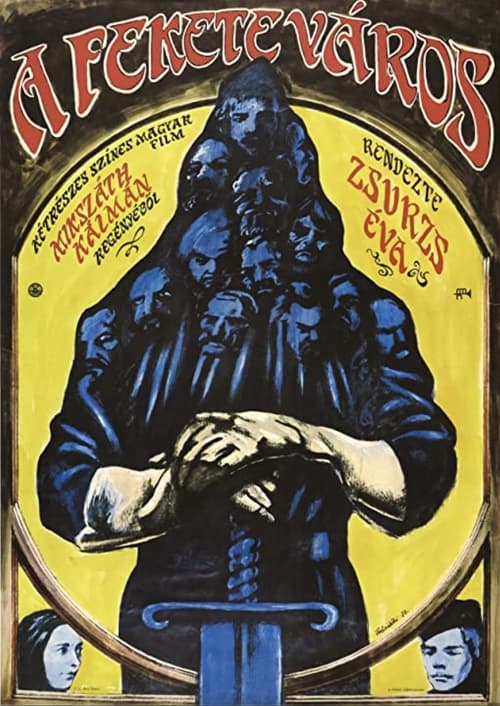
Feature film version of the 1971 series. On the eve of the 18th century, County Vicecomes Görgey Pál broods alone in his manor while the town of Leutschau celebrates New Year’s with lead‐casting omens and a disastrous hunt that sparks a bitter feud. As Görgey fights for his honor and life, and the townspeople defend their Saxon privileges, their mutual blind ambition prevents them from seeing the rising light of Rákóczi’s coming rebellion.
Mihály Zágon has been struggling with his conservative mother-in-law for a long time. Now, that his wife is pregnant, the old woman wants Piroska to stay in bed. Mihály is elected to be the president of the co-operative, but nobody is happy about this back home. His wife often pretends to be ill to keep him by her side.
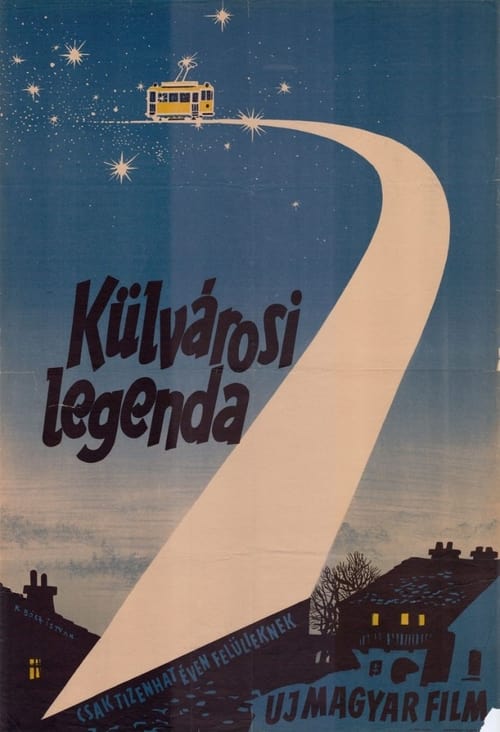
The film, depicting life in the tenement houses of Angyalföld in the thirties joins the neorealist currents of Hungarian film. Ambrus Pista, the good humoured, attractive tram conductor is loved by women for his excellent job as well. With his lover, the street-walker Terus they spy upon the neighbour as he beats his wife in jealousy.
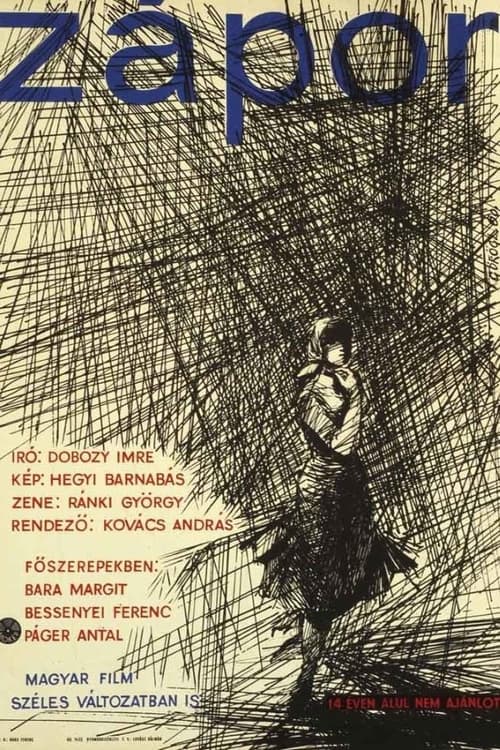
Miskei, the popular and dynamic president of a co-op falls in love with Mari, the attractive wife of the elderly Pató. The deeply feeling woman is fed up with the service beside the haughty land holder, she is longing for tenderness and a child. The passion of Miskei is growing when he sees how crudely, humiliating Pató treats her. During a powerful summer shower, when chance brings them together in an abandoned press house, he storms on Mari confessing love. The woman refuses him bitterly. Miskei calms down and he keeps on expressing his love and high esteem with the woman by steadfast and tiny compliments. Early one morning Mari leaves her husband and sets off to the city to learn and to begin a new life.
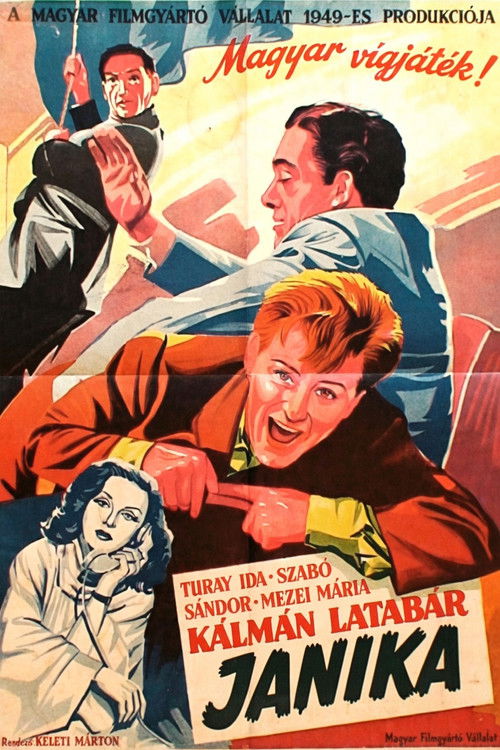
After a 15-year absence, the famous actress' expatriate husband returns to Hungary to settle their divorce. The actress is rehearsing the role of a young boy back home when her husband walks in. Seeing the little boy, the husband thinks that Janika is his child, but the actress fails to inform him of the mistake.
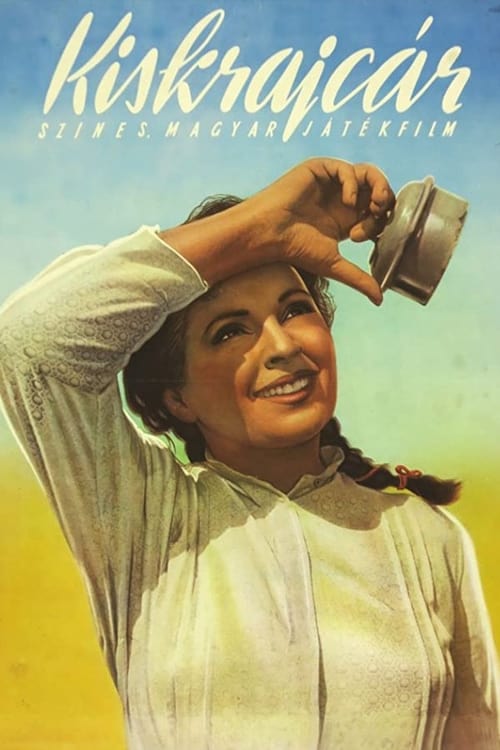
The story of a young servant girl who comes to work on the construction site of a large-scale industrial settlement. She decides to embark on an independent life, runs away from her foster parents, gets on a train and sets out to earn money. Modest and shy, she joins the factory's group of "Stakhanovites" and soon makes new comrades. Her coworkers accept her into their team.
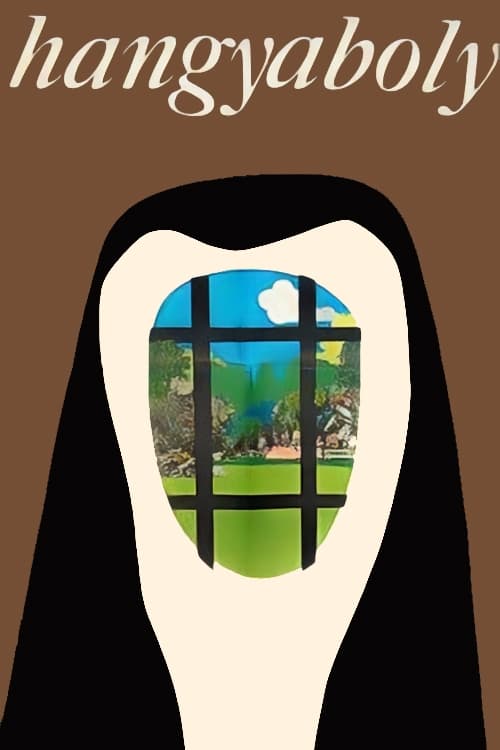
The head of the nunnery is dying, and the members are divided in two groups as the election of the new head approaches. Led by Virginia, the younger nuns stand up for changing the strict religious dogmas and would like a modern school with genuine science, a bathroom to be built, and a freer spirit. Their candidate is sister Magdolna, who went to secular universities, too. The seminarists, led by Király Erzsi, also rebel against the older nuns' strict discipline and the depressed atmosphere of the institution. However, Magdolna does not want to stay involved in the fight because she is deterred by Virginia's sinful attraction towards her and the tools Virginia is using to gain victory at any price.
The ancient families of Kont and Hadhazy have long been at war with each other. Lord Cont is a supporter of Vienna's rule, while Hadhazy is a follower of the Hungarian revolutionary Kossuth. Lord plans to fight Hadhazy at an approaching county meeting. Vicky, the beautiful and savvy daughter of Hadhazy's family, just before this, returns home from a Swiss boarding school for young girls, expelled because of her behavior. Vicky, dressed in a man's costume, goes to defend her father and with the honor of a nobleman fights the young scion of a family hostile to her. The young man's name is Feri Kont, and he mistakes the young man's introduction to Vicky for her brother Kalman Hadhazy. The political conflicts between the two families are mitigated by love complications. A misunderstanding at a county ball is brought to light, and the two warring camps are reconciled through the love of Vicky and Feri.
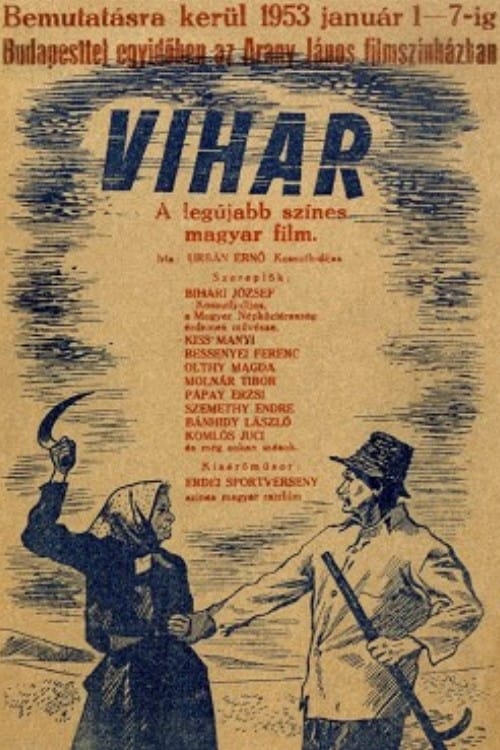
Vörös Hajnal (Red Dawn), a co-operative is the venue of skylarking, while the storm destroys the wheat which is to be harvested soon. Árendás, a middle-peasant, voices severe accusations against members of the co-operative: out of negligence, they failed to keep the ditches clean. It is always the soft option they seem to favour, while the necessity of properly taking care of the farmlands is long-forgotten. Members of the co-operative and the village people are deeply divided.
A young peasant boy stands up to tyranny, aided by his trusting friend- a goose.
Boldizsár Téglás, president of the Tsz in csókréti, unexpectedly becomes a father. Until now, he did not know about his daughter, who was born out of an affair twenty years ago. Father and daughter meet more and more. Boldi decides to give Piroska a legal name, but he still has to make a penitential confession to his wife. The news of his meeting with the young girl reaches his wife's ears before she returns home. It is because of this misunderstanding that not only Mrs Örzse, but also the people of the village turn against him.
The composer Berki András, in his co-tenancy noisy with the barking of dogs and the hullabaloo of children, is unable to compose the new song for his fiancée, the singer, although the premiere is near. He cannot believe his eyes as he sees the official decision that he will soon get an apartment on his own. Yet his joy is soon over. The pharmacist Ács Éva arrives with identical documents. The situation which evolves as a result of the new co-tenancy forces them to cover up things before their partners.
A sequel to "Yesterday". About the defeat of the Hungarian uprising of 1956. The action takes place in the barracks of the People's Army, in the War Ministry and in one of the largest factories in Budapest.
The top management of the co-operative in the rural community at Lake Balaton goes on coaches everywhere to irritate Mrs. Peczöli, the snobbish wife of the only individual farmer. Peczöli would readily join the co-operative, should it not oppose his apple improving experiments.
No description available.
In the vocational school the professionally excellent Dani János works on his own invention in his leisure time, but he does not like learning. However, even his own father learns in the evenings, he will become a teacher.
A TV movie version of István Örkény's short novel. The fate of Sister Glória, or Ilona Tarr, who has lived in a convent since her childhood, in the historical situation after 1948, when the nuns' orders were dissolved in our country. The film presents the reality of this extraordinary fate with lyrical beauty. At the age of 26, Gloria is taken out of the closed and safe world of the convent - both spiritual and everyday - and into a changing reality with shifting values. In the course of conflicts, while maintaining her individuality and integrity, she finally finds her place among everyday people.
About the life of young people in Hungary in the late 50s, their joys, hopes and dreams. When Joly entered the factory, she wanted to be as cheerful and carefree as the other girls, and she didn't tell anyone that she had a son. And now, when the wedding day with Ferenc is almost set, Yoli walks around sad and confused. She doesn't know how Feri will take the news of her son. She is afraid that Feri, who loves and trusts her very much, will never understand or forgive her. But Feri turns out to be a real man, and Yoli together with little Ali finds her true happiness.