Casper Wrede
Directing
Biography
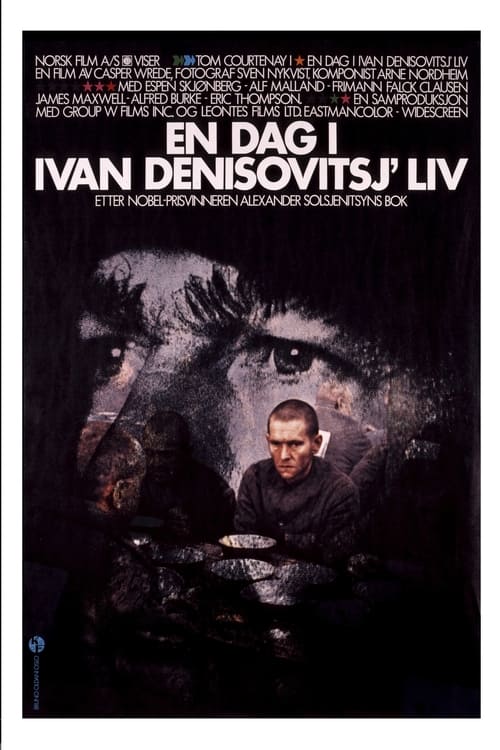
Baron Casper Gustaf Kenneth Wrede af Elimä, known as Caspar Wrede (8 February 1929 – 25 September 1998), was a Finnish theatre and film director. He was long active in the English theatre, co-founding the Royal Exchange theatre company in Manchester. Casper Wrede came from a noble Finnish family of Livonian origin, which owned large estates mainly in eastern Finland between the 17th and 19th centuries, and had been created barons in 1652 by Queen Christina. He was born in Viipuri, Finland, and was the nephew of actor Gerda Wrede. He died in Helsinki, Finland, in 1998. In 1951, he left Finland and enrolled at the Old Vic Theatre School in London run by the French director Michel Saint-Denis. He was much influenced by Saint-Denis and his ideas had a great effect on the theatre companies that Wrede helped establish. In 1956, he was involved with the setting up of the Piccolo Theatre company in Chorlton-cum-Hardy, Manchester (which only survived for a year) and in 1959 he founded the 59 Theatre Company, based at the Lyric Theatre (Hammersmith). Michael Elliott was appointed assistant artistic director and, although short-lived, the company achieved considerable success with productions of Brand, Little Eyolf and Danton's Death. During this time, Wrede also directed both the stage debut of Alun Owen's play The Rough and Ready Lot and its 1959 television adaptation. Wrede and Elliott ran a season of plays at the Old Vic in 1961. At the same time as his theatre work in the fifties, he directed plays for television including episodes of ITV Television Playhouse and ITV Play of the Week. He also started to direct films which he continued to do through the sixties, including One Day in the Life of Ivan Denisovich (1970), a feature film adaptation of Aleksandr Solzhenitsyn's novel with Tom Courtenay in the lead. In 1967, Wrede and Michael Elliott agreed to direct productions for Braham Murray’s Century Theatre at Manchester University and in1968 the three men set up the 69 Theatre Company also at the university where they produced plays until 1972. The group started to look for a permanent theatre in Manchester. They were joined by Richard Negri, a colleague and friend of Wrede's since the Old Vic School who was to design the new theatre, and the actor James Maxwell and in 1973 a temporary theatre, The Tent, was installed in the former Royal Exchange in Manchester. The success of The Tent led to the decision being taken to build the new theatre inside the Royal Exchange. Wrede directed one of the two opening productions in September 1976, The Prince of Homburg. He directed over 20 productions during the next 15 years, resigning from the company in 1990 and eventually returned to Finland with his second wife, Karen Bang, a friend since childhood.