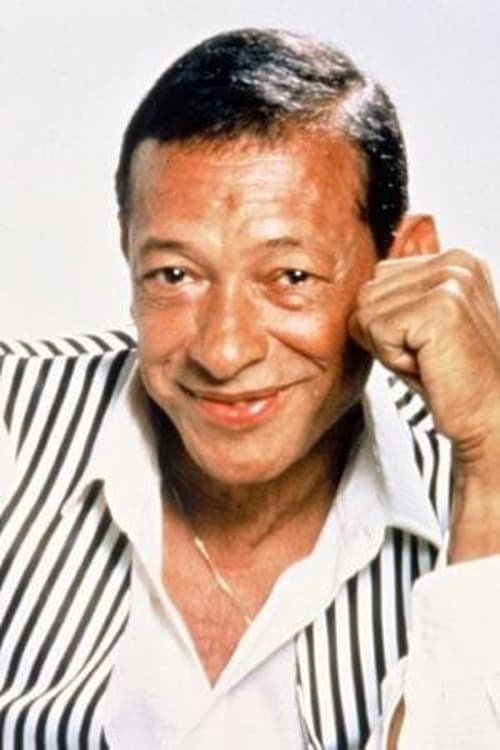
Henri Salvador
Acting
Biography
Henri Salvador (18 July 1917 – 13 February 2008) was a French Caribbean comedian, singer and cabaret artist. Salvador was born in Cayenne, French Guiana. His father, Clovis, and his mother, Antonine Paterne, daughter of a native Carib Indian, were both from Guadeloupe, French West Indies. Salvador had a brother, André, and a sister, Alice. He began his musical career as a guitarist accompanying other singers. He had learned the guitar by imitating Django Reinhardt's recordings, and was to work alongside him in the 1940s. Salvador recorded several songs written by Boris Vian with Quincy Jones as arranger. He played many years with Ray Ventura and His Collegians where he used to sing, dance and even play comedy on stage. He also appeared in movies including Nous irons à Monte-Carlo (1950), Nous irons à Paris (Jean Boyer's film of 1949 with the Peters Sisters) and Mademoiselle s'amuse (1948). He is known to have recorded the first French rock and roll songs in 1957 written by Boris Vian and Michel Legrand — "Rock'n Roll Mops", "Rock hoquet, Va t'faire cuire un oeuf, man" and "Dis-moi qu'tu m'aimes rock" — under the artist name of Henry Cording (a play on the word "Recording"). Despite this historical aspect, he never ceased to claim that he disliked rock and roll and even refused to talk about this subject later on. In the 1960s, Salvador was the host of several popular television variety shows on French TV. In 1964, he scored a hit with "Zorro est arrivé", which was adapted from The Coasters' U.S. hit "Along Came Jones". He is also famous for his rich, catchy laugh, which is a theme in many of his humorous songs. In 1969, Henri Salvador recorded a variation of "Mah Nà Mah Nà" entitled "Mais non, mais non" ("But No, But No" or "Of Course Not, Of Course Not"), with lyrics he had written in French to Piero Umiliani's music. Henri Salvador and his song "Dans mon île" (1957) were thought to be an influence on Antônio Carlos Jobim in formulating the Brazilian bossa nova style. Famous Brazilian composer and singer Caetano Veloso made Henri Salvador famous to Brazilian audiences with the song "Reconvexo", in which he says "quem não sentiu o swing de Henri Salvador?" ("who hasn't felt the swing of Henri Salvador?"). Veloso also recorded a version of Salvador's song "Dans mon île". At the age of 70, Salvador was the voice-over of the crab Sebastian in the 1989 French dubbing of Disney's The Little Mermaid. Recordings of "Embrasse-la" ("Kiss the Girl") can be found on YouTube. Salvador discovered singers Keren Ann and Art Mengo. He died of a ruptured aneurysm at his home in the early hours of 13 February 2008. He was 90 years of age. He was buried next to his wife Jacqueline in Père-Lachaise Cemetery. He was known as a supporter of Paris Saint-Germain F.C. He obtained four seats for life in the Parc des Princes. ... Source: Article "Henri Salvador" from Wikipedia in English, licensed under CC-BY-SA.
Known For

No description available.
Champs-Elysées

No description available.
Vivement dimanche

Midi Première is a French variety show presented by Danièle Gilbert, directed by Jacques Pierre and broadcast from January 6, 1975 until January 1, 1982 on TF1. The program was generally broadcast between 12:15 p.m. and 12:55 p.m., then giving way to the 1:00 p.m. TV news. However, the broadcast schedule could change, depending on the guests, and the setting where the recording of the program was shot. Certain performances by artists who have become cult like the one where Ringo jostles with a demonstrator in interpretation (1977), that of Dalida with the title There is always a song with the soundtrack that does not start, twice, at the right speed (1978), Claude François and his Clodettes, who, in the provinces, are unable to join "the set" in order to interpret his song, the latter being taken by the crowd of delirious fans (summer 1977) . The group Supertramp performed there with the title "Dreamer" on March 8, 1975.
Midi Première

The Ed Sullivan Show is an American TV variety show that originally ran on CBS from Sunday June 20, 1948 to Sunday June 6, 1971, and was hosted by New York entertainment columnist Ed Sullivan. It was replaced in September 1971 by the CBS Sunday Night Movie, which ran only one season and was eventually replaced by other shows. In 2002, The Ed Sullivan Show was ranked #15 on TV Guide's 50 Greatest TV Shows of All Time.
The Ed Sullivan Show

No description available.
Sacrée soirée

A talk show presented by Michel Drucker
Les Rendez-vous du dimanche

A French variety show.
Numéro un

No description available.
Le monde est à vous

Le Grand Échiquier is a French variety television program created and presented by Jacques Chancel. It aired at 8:30 pm on the first channel of the ORTF from January 12, 1972 to July 12, 1972, then on the second color channel of the ORTF from September 1972 to December 1974, and finally on Antenne 2 from January 1975 to December 21, 1989. The program returned to France 2 on December 20, 2018 and is hosted by Anne-Sophie Lapix.
Le Grand Échiquier
No description available.
Midi trente

Host Jacques Martin invites different talented children from various backgrounds to showcase their beautiful voices. The participants entertain and wow the audience with their lovely performances.
Fan School

No description available.
Nulle part ailleurs

No description available.
Discorama

No description available.
Victoires de la musique

No description available.
Cadet Rousselle
No description available.
Matin Bonheur
No description available.
Vergißmeinnicht

No description available.
Samedi Sébastien

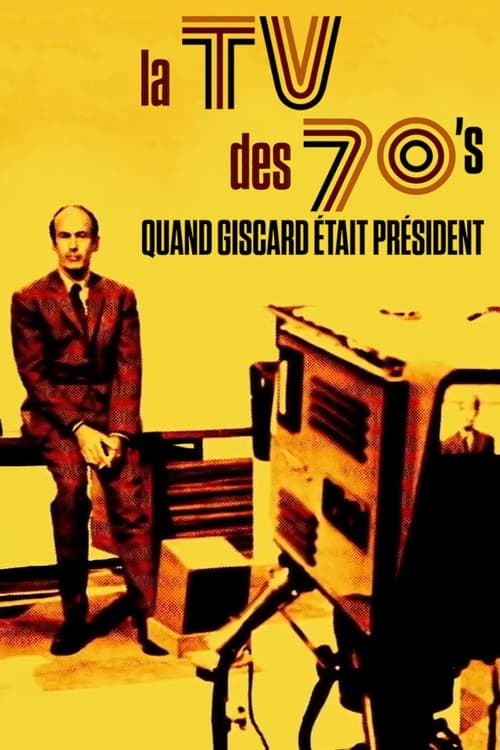
In May 1974, Valéry Giscard d'Estaing became President of the Republic and wanted to bring about a new era of modernity. One of his first decisions was to break up the ORTF with the creation of three new television channels: TF1, Antenne 2 and FR3. Three new public channels but autonomous and competing. It is a race for the audience which is engaged then, and from now on the channels will make the war! This competition will give birth to a real golden age for television programs, with variety shows in the forefront. The stars of the song are going to invade the living rooms of the French for their biggest pleasure. This unedited documentary tells the story of the metamorphosis of this television of the early 1970s, between freedom of tone, scandals, political intrigues and programs that have become mythical.
La TV des 70's : Quand Giscard était président

Paul, a friendly Parisian cab driver, has two loves: music and his fiancée Virginie. After graduating from the Conservatoire with a first prize, he lives on hope, offering his classical works to publishers. One day, while driving customers to the races, he plays a "toquard": Maubeuge, who wins. With his friends, he celebrates the event and, for dessert, composes a song for the occasion: "Tout ça ne vaut pas un clair de lune à Maubeuge". Monique, a secretary at the radio station and one of the guests, had a record made of the tape recording. And this record, following a mistake, was broadcast on a religious music program. It's a runaway success: for Paul, it's fame and fortune. which he had obviously coveted, but more with his symphonies, opera and sonatas. No matter, the "Clair de lune à Maubeuge" (Moonlight in Maubeuge) allows two happily engaged couples to become happily married.