Mircea Diaconu
Acting
Biography
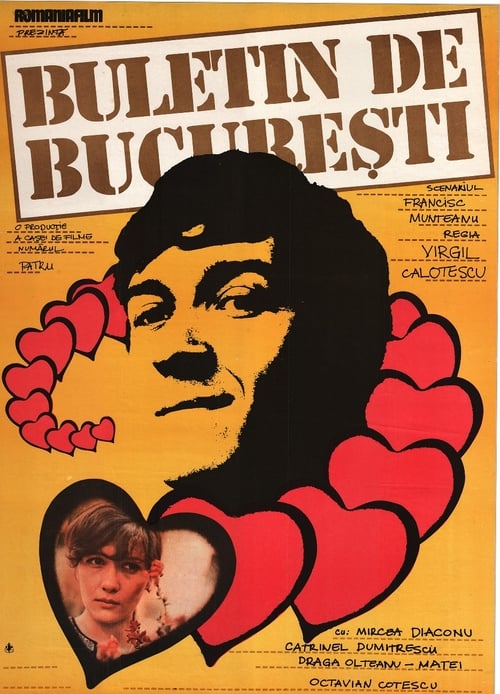
Born in Vlădești, Argeș County, he graduated high school in Câmpulung in 1967 and Bucharest's Caragiale Academy of Theatrical Arts and Cinematography in 1971. He made his theatrical debut a year before graduating, at the Bulandra Theater, in Truman Capote's The Grass Harp. His screen debut came in Dan Pița's Nunta de piatră (1972); he would later appear in the same director's Filip cel Bun (1975). Other directors with whom he has worked include Alexandru Tatos (Mere roșii, 1975; Secvențe, 1982; and Secretul armei secrete, 1988), Virgil Calotescu (Buletin de București, 1982; and Căsătorie cu repetiție, 1985), Nae Caranfil (Asfalt Tango, 1996; and Filantropica, 2002) and Cătălin Mitulescu (The Way I Spent the End of the World, 2006). In all, he has appeared in more than sixty films. Diaconu worked with Lucian Pintilie both in film (the 1981 De ce trag clopotele, Mitică?) and in theater: Gogol's The Government Inspector at Bulandra, and Shakespeare's As You Like It at the Nottara Theater. Liviu Ciulei hired him at Bulandra in 1972, and he remained there for a decade, before moving on to Nottara. At Bulandra, he appeared in Twelfth Night and The Tempest, both under Ciulei's direction; and in Marin Sorescu's Răceala, directed by Dan Micu. At Nottara, he appeared in Alexander Ostrovsky's The Forest; Ultimul bal, after Liviu Rebreanu's Forest of the Hanged; and Mihai Ispirescu's Într-o dimineață. He became the director of Nottara Theater in 2004, working as such until his resignation in 2011.
Known For

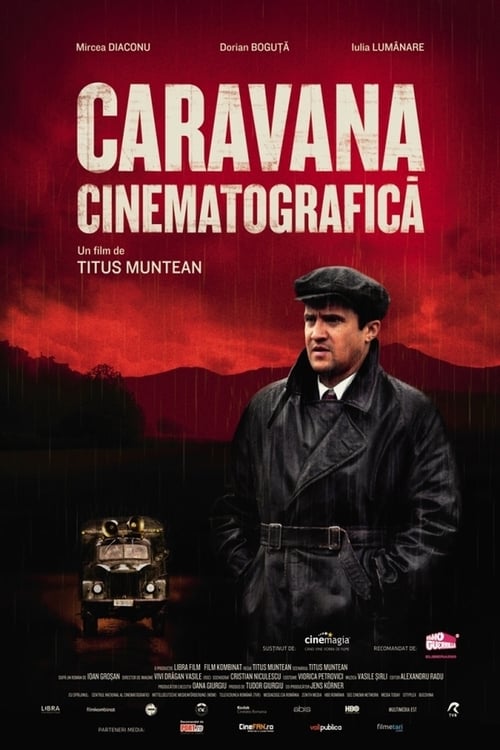
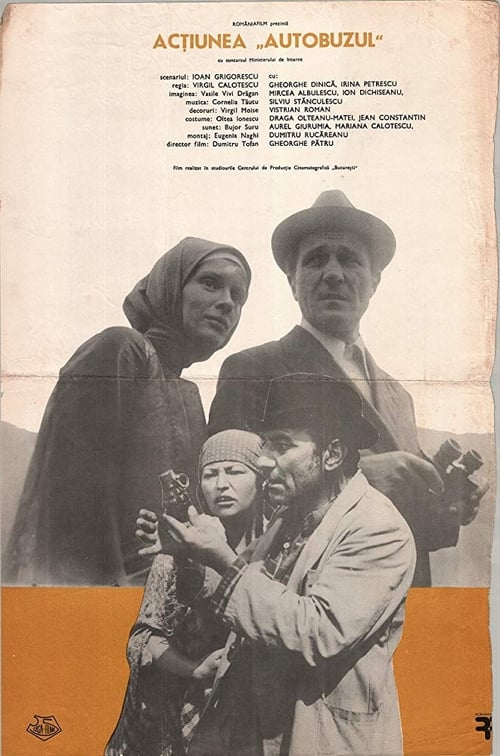
In 1950 a Western spy is clandestinely parachuted into Communist Romania to retrieve secret WW2 codes and agent lists and also to assist a group of anti-Communist guerrillas escape but the Communist police is setting a trap.
Operation 'The Bus'

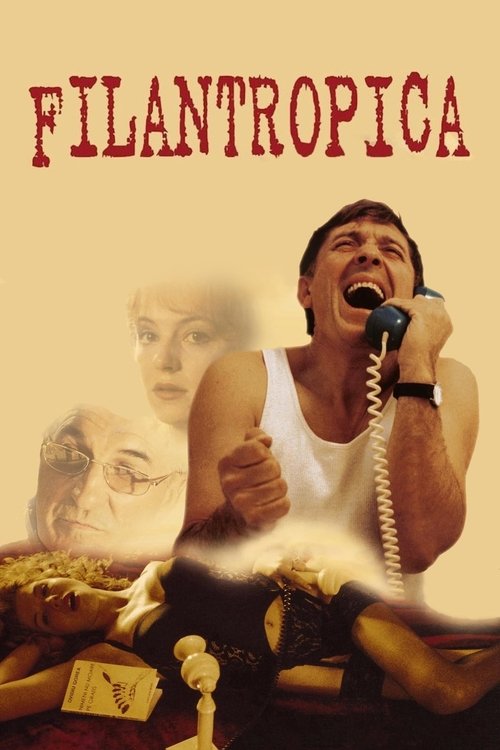
In 21st century Bucharest, to go out in the city on Saturday evening on the arm of a beautiful woman is a risky financial investment. Ovidiu, an unassuming high school teacher, never could afford it. Looking for a source of income more substantial than a teacher's salary, Ovidiu plunges into a fabulous world – the beggar mob.
Philanthropy

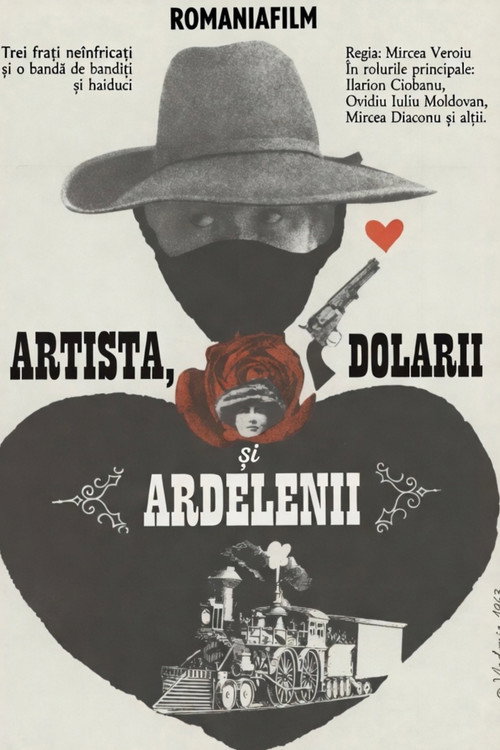
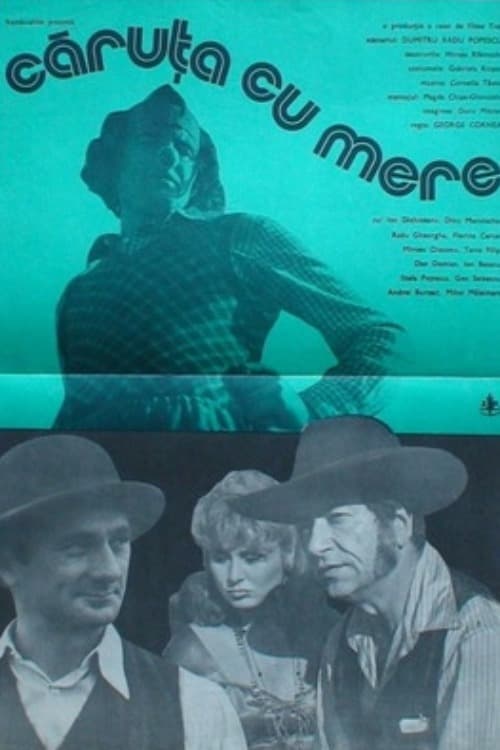
Two peasants from Transylvania go to America in order to meet their brother who had left Romania ten years earlier. They meet a prophet in the American state of Utah and eventually help the cause of justice in the villages where the prophet proves to be a dictator and exploiter of the coal miners over there.
The Prophet, the Gold, and the Transylvanians

Based on a theatrical text by Romanian writer Ion Luca Caragiale (1852-1912), who was a bitter and funny witness of the turn-of-the-20th-century Romanian bourgeois mores, Carnival Scenes manages to preserve and further enhance the slightly hysteric atmosphere of his plays. Pintilie creates a strange combination of carnival scenes which is brought to the screen as a burlesque, fast-paced, screwball comedy with a meditative undertone. This film was banned in Romania for a decade until the death of Ceausescu in 1989 and was only released after the 1989 revolution.
Why Are the Bells Ringing, Mitica?

Two bleak stories about absent love. In the first, a widow is working hard in a desperate attempt to save her dying daughter. The second tells the story of two wandering singers who kidnap a bride from her wedding.
The Stone Wedding

Love. It just happens. No rules. It may look sick, but it's deep and it hurts. For everyone, Alex and Kiki are just good friends. They happen to be two girls experiencing another kind of love. For their family, Kiki and Sandu are sister and brother who sometimes fight. They happen to be lovers. Love Sick is about their stories.
Love Sick

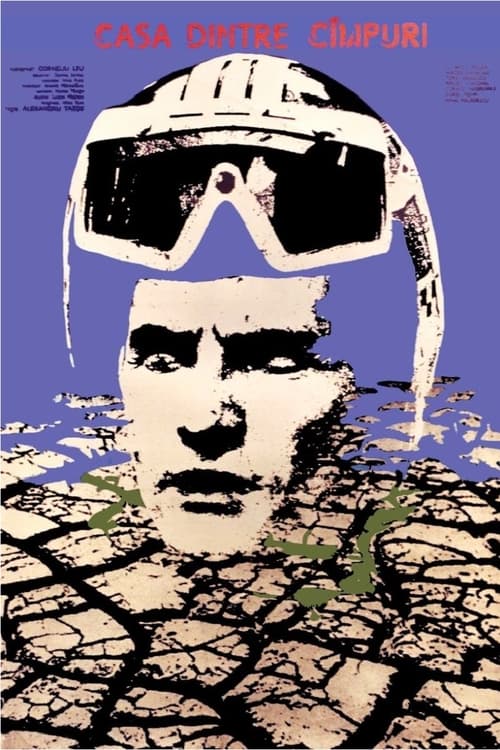
Fresh out of university, agricultural engineer Voica Teodorescu returns to her native village where she joins a local team of engineers in the planning of a dam and an irrigation mega project.Although Voica is engaged to be married to Ilarie she also is romantically attracted to local engineer Radu. Radu doesn't agree with local boss Vasile Axente's management style and deems Vasile incompetent.Therefore, Radu tries to form an alliance with the village vice-mayor Dumitru Vardaru but when a large sum of money from the public works budget goes missing Radu is investigated by authorities for embezzlement of public funds.His relationship with Voica and the villagers gets sourly tested.
The House Between the Fields

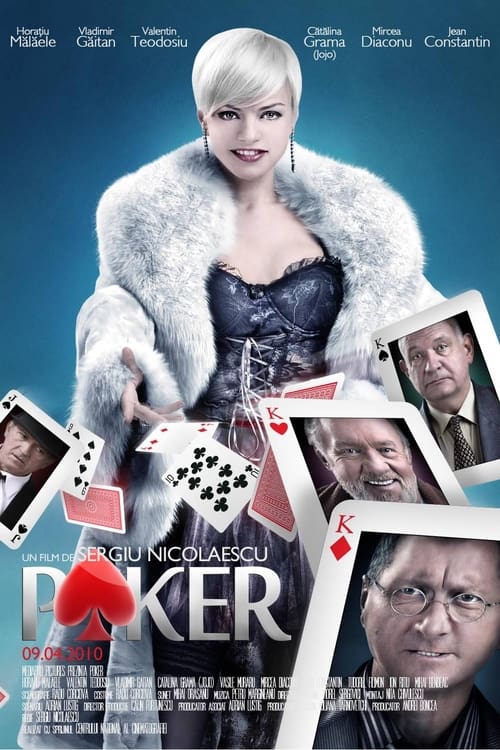
In the history of Romanian cinema, Sergiu Nicolaescu's name stands for "prolific, highly commercial and professional". At the age of 80, the director launched his latest production, which is also his second comedy in a long row of action and historic films. "Poker" is a cinema adaptation of Adrian Lustig's theatre play with the same name, and focuses on four male friends, representatives for the social canvas: a doctor without a moral conscience, an unscrupulous politician, a chief of the local mafia, and a businessman who made a fortune in America. Made by MediaPro Pictures, 'Poker' looks at immorality and intrigues in politics, hinting at the fact that contemporary Romania is a day to day jungle where strings are pulled by those in power, so everything turns into a poker round, where those who have the right aces in their sleeve can win.
Poker

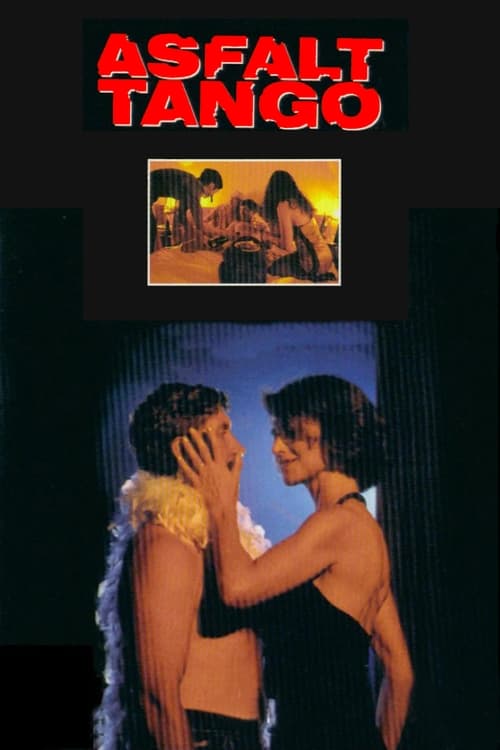
A desperate husband chases a bus full of beautiful women headed for Paris, France.
Asphalt Tango

Drăgan Niță is a humble French teacher from Romania that has always dreamt of visiting Paris one day. To make his dream come true, he saves 1 lei every day.
To Paris with the Identity Card

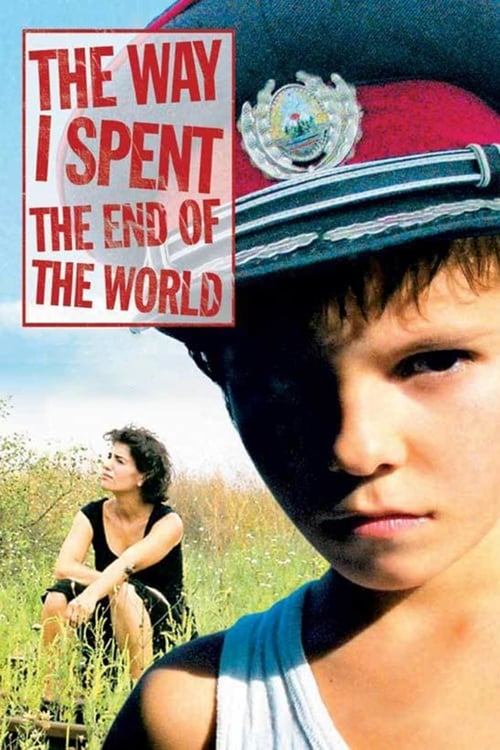
Bucharest 1989 - the last year of Ceausecu's dictatorship. Eva lives with her parents and her 7 year old brother, Lalalilu. One day at school, Eva and her boyfriend accidentally break a bust of Ceausescu. They are forced to confess their crime before a disciplinary committee and Eva is expelled from school and transferred to a reformatory establishment. There she meets Andrei, and decides to escape Romania with him. Lalalilu becomes convinced that Ceausescu is the main reason for Eva's decision to leave. So with his friends from school he devises a plan to kill the dictator.
The Way I Spent the End of the World

At Bucharest’s famous revue theater “Vox,” director Costică Caratase prepares a bold anti-fascist show despite growing threats from the Iron Guard. As pressure and violence escalate, he and his collaborators face persecution, turning their artistic resistance into an act of courage and sacrifice.
The Actor and the Savages

After defeating some Iron Guard gangs in Bucharest, those who survived were hiding somewhere in the mountains. Several bloody events took place in one of the smaller villages. In the unequal struggle with criminals entered the former police commissioner who meanwhile became a Major in Romanian Communist Police, Mihai Roman.
The Trap
Klaus Bernath, a wealthy German citizen, decides, after many years, to visit his birthplace, of the Banat Swabian village Lindenfeld, in Romania. Since the village has been deserted for many decades, his son and his biographer decide to reconstruct the whole space from scratch and present it as a populated place.
A Love Story, Lindenfeld

In Alexandru Tatos’s debut film, a young urologist is assigned to a town hospital with no urology ward and keeps bumping up against his superiors because of both ethical and medical problems.
Red Apples

The rise and fall of the opportunistic Tănase Scatiu, a boyar in 19th century Wallachia.
A Summer Tale

A petite Romanian gymnast trains with her teammates for what she hopes will be Olympic perfection.
Reach for the Sky

A minute-by-minute chronology of the Romanian revolution in December 1989 in Bucharest. This cinematic montage of live footage from the state television company TVR and video taken by numerous amateurs becomes a new media-based form of historiography.
Videograms of a Revolution

Ioanide, an apolitical and misunderstood artist who dreams of "things that are normal abroad but impossible here", led a difficult life as an architect under the old regime. After 1944, his situation improved thanks to the benevolence of an enlightened communist nicknamed Botticelli, whom he once hid from the police in the attic of his house. He receives commissions for large-scale cultural monuments, although he has "on file" the ballast of his children lost in the legionary adventure and continues to accept, in his entourage, a circle of sycophants from the former elite.
Poor Ioanide

A group of firefighters discover explosives on an abandoned ship which threatens the local city