Heinz Emigholz
Directing
Biography
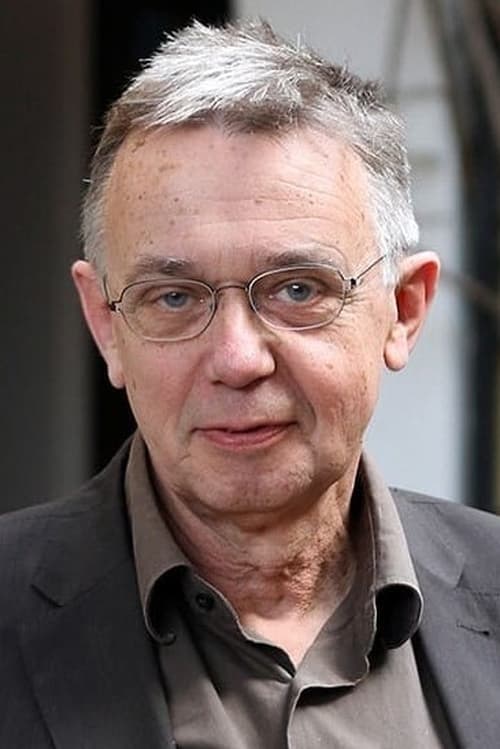
Born in 1948 near Bremen in Germany, Heinz Emigholz trained first as a draftsman before studying philosophy and literature in Hamburg. He began filmmaking in 1968 and has worked since 1973 as a filmmaker, artist, writer and producer in Germany and the USA. In 1974 he started his encyclopaedic drawing series The Basis of Make-Up . He looks back on numerous exhibitions, retrospectives, lectures and publications. In 1984 he started his film series Photography and beyond. He has held a professorship in Experimental Filmmaking at the Universität der Künste Berlin from 1993 to 2013, and co-founded the Institute for Time-based Media and the program Art and Media, there. Since 2012 member of the Academy of Arts in Berlin. In 2003 Filmgalerie 451 started an edition of all his films on DVD. Publications a.o.: Krieg der Augen, Kreuz der Sinne (War of Eyes, Cross of Senses), Seit Freud gesagt hat, der Künstler heile seine Neurose selbst, heilen die Künstler ihre Neurosen selbst (Since Freud Said That the Artist Heals His Neuroses Himself, Artists Have Been Healing Their Neuroses Themselves), Normalsatz – Siebzehn Filme (Ordinary Sentence – Seventeen Films) and Das schwarze Schamquadrat (The Black Sqare of Shame) (all four books at Verlag Martin Schmitz); Die Basis des Make-Up (I) and (II), Der Begnadete Meier (Grace Jones), Kleine Enzyklopädie der Photographie (Little Encyclopaedia of Photography) and Die Basis des Make-Up (III) (in Die Republik No. 68-71, 76-78, 89-91, 94-97 and 123-125); Sense of Architecture with more than 600 photographs.
Known For

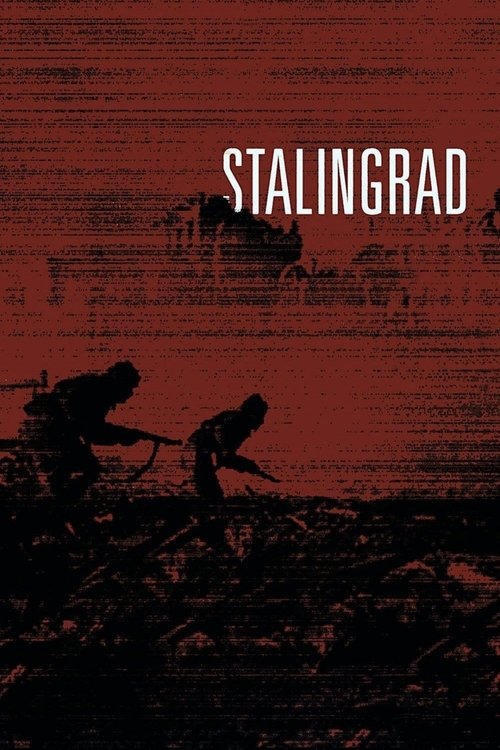
A German Platoon is explored through the brutal fighting of the Battle of Stalingrad. After half of their number is wiped out and they're placed under the command of a sadistic captain, the platoon lieutenant leads his men to desert. The platoon members attempt escape from the city, now surrounded by the Soviet Army.
Stalingrad

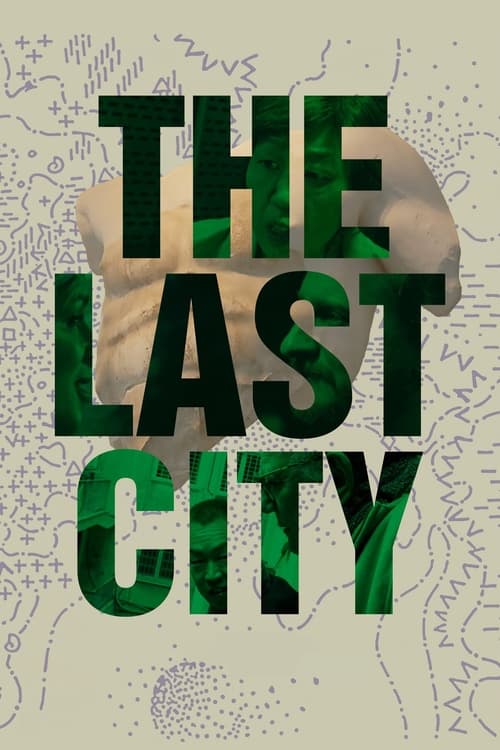
An archaeologist and a weapons designer, who knew each other in a previous life as a filmmaker and a psychoanalyst, meet at an excavation site in the Negev desert and begin a conversation about love and war, which they continue in the Israeli city of Be’er Sheva. A series of encounters with alternating actors in different roles ensues, which leads the viewer through the cities of Athens, Berlin, Hong Kong and São Paulo. Among those appearing are: an old artist who meets his younger self; a mother who lives with her two grown-up sons, a priest and a policeman; a Chinese and a Japanese woman; a curator and a cosmologist.
The Last City
![2 + 2 = 22 [The Alphabet]](https://image.tmdb.org/t/p/w500/xZmFnEC2gNQq2NjIpoLYaws5TRO.jpg)
Worn-down pavements, broken paving stones. Trees that jut out of the concrete, casting shadows on to crumbling façades. The centre of Tbilisi in the summer of 2013. Glimpses of side and main streets, over railings and under balconies, of an architectural cacophony. The voiceover spoken by Natja Brunckhorst reflects on the nature of streets and public spaces.
2 + 2 = 22 [The Alphabet]

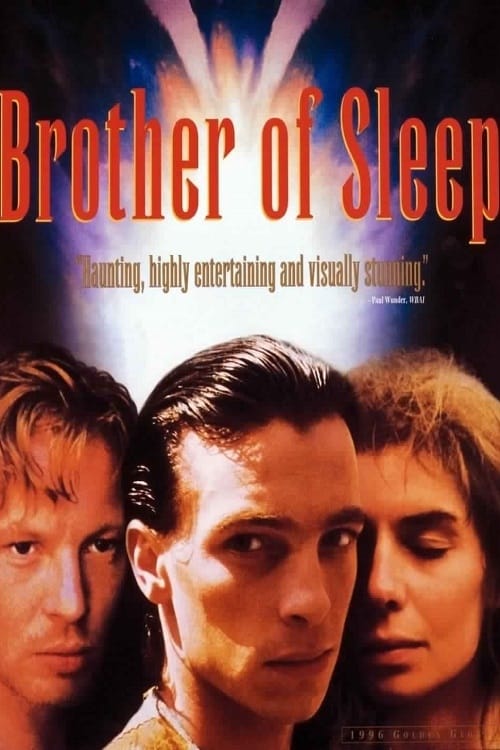
In the beginning of the 19th century, Johannes Elias Alder is born in a small village in the Austrian mountains. While growing up he is considered strange by the other villagers and discovers his love of music, especially rebuilding and playing the organ at the village church. After experiencing an "acoustic wonder", his eye color changes and he can hear even the most subtle sounds.
Brother of Sleep

Agatha is an international lawyer, Jo a filmmaker. The two women are lovers. While Jo is on the road showing her films, Agatha discovers and reads her diaries. Problems ensue as Agatha's transgressions lead to jealousy and a spiraling cycle of sexual obsession.
She Must Be Seeing Things

A German woman travels to San Francisco to find her mother, but winds up distracted by the sexually flamboyant culture of the city.
Virgin Machine

Max Taurus, a sort of amateur detective, pursues the traces of general omni-present crime back to a partially demolished house. There, the remaining tenants try to gain pleasure and power from progressive abandonment in order to tear down their own conventionalities.
Macumba

This film is in effect a slideshow of exquisite single photographic images in sparkling black and white, representing Mikesch’s own version of Mary Stuart. “The drama of a woman who attempted a kind of liberal emancipation in a time of upheaval, but got caught in the snares of men,” in her words. Confronted with layers and layers of conflicting information about “how it really was” Mikesch decided not to try to be a historian, but to radicalise the narrative and condense it into striking images of passion, power, love, pain and death.
Exekution: A Study of Mary

Emigholz presents the buildings of the great American architect Louis Sullivan (1856–1924). “In everything that men do they leave an indelible imprint of their minds. If this suggestion be followed out, it will become surprisingly clear how each and every building reveals itself naked to the eye; how its every aspect, to the smallest detail, to the lightest move of the hand, reveals the workings of the mind of the man who made it, and who is responsible to us for it.”
Sullivan's Banks
![Streetscapes [Dialogue]](https://image.tmdb.org/t/p/w500/lbaDCCZJ6xwvNLO5qFDBmjnjaOH.jpg)

A film director confides in his interlocutor. He talks about the working process, about creative blocks, about artistic crises and expressive forces. At some point, the idea takes hold that this conversation could be turned into a film. And this is the very film we’re watching the two of them in.
Streetscapes [Dialogue]

Documentary on the city of Berlin and a personal essay on alienation and being an alien in that city. Cynthia Beatt raises questions and provokes reflection on a wide range of issues concerning language and culture, politics and history.
Fury Is a Feeling Too
This story is told by the boy's father: "My father wrote letters from the front. He didn't come back from the war. In my dream, I saw a hundred thousand letters falling from the sky." The letters are memories and trauma. No one talks about them. The boy knows nothing yet about the legacy of all wars. The setting for this story is a former military airfield and its surroundings.
Bombenwerfer

Lauded artist-filmmaker Heinz Emigholz (Schindler's Houses) offers an exquisite excursus on the work of pioneering French architect Auguste Perret, including privileged views of his innovative concrete structures in Algeria and such magnificent landmarks as Paris' Art Deco Théâtre des Champs Elysées. (TIFF)
Perret in France and Algeria
A 1908 essay by Adolf Loos is here read by the incomparable Carola Regnier and set to virtual photographs of 18th-century marble inlays at St. John’s Cathedrale in Valletta, Malta.
Ornament und Verbrechen

Short film by Heinz Emigholz shot in 1976; b/w, sound, no dialogue
Schuhstück

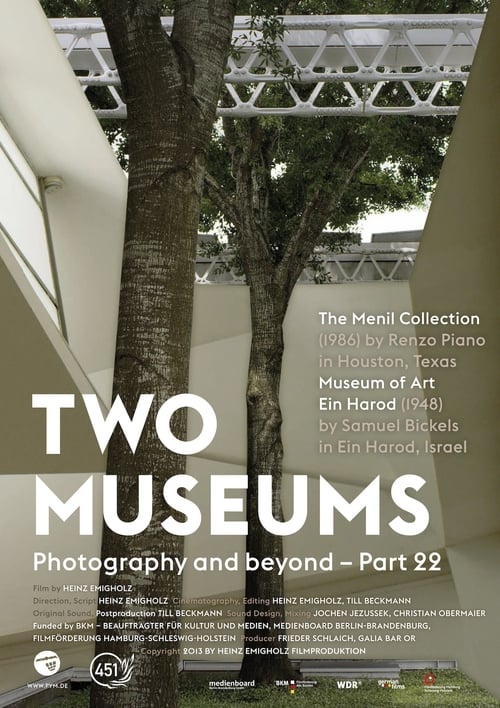
The film juxtaposes/compares two museums: The Museum of Art, Ein Harod, Israel, which Samuel Bickels (1909-1975) built there in 1948, and The Menil Collection in Houston, Texas, built by Renzo Piano (b. 1937) 1986 . The method of natural lighting in Bickels‘s construction was the direct model for Piano, who adopted for his construction at the request of its patroness Dominique de Menil.
Two Museums

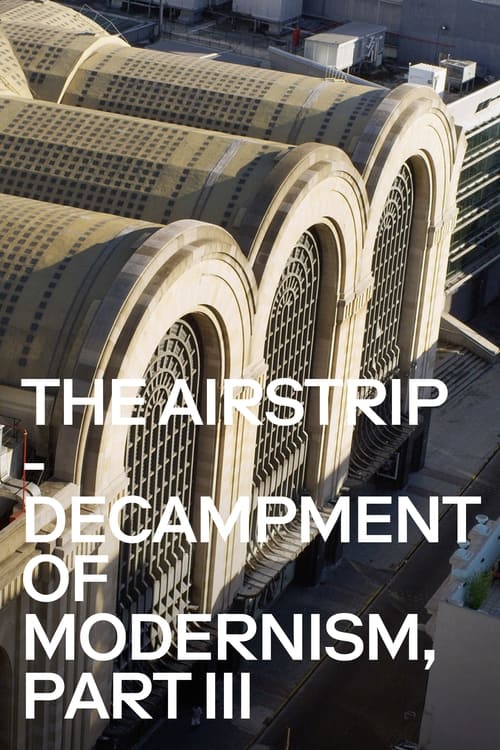
In the 21st part of his Photography and beyond series, Heinz Emigholz projects as usual a series of structures into our brains and from there on to the screen: Airports, motorways and bus stops; department stores, market halls and warehouses.
The Airstrip - Decampment of Modernism, Part III
The first part shows the progression from high tide to low tide in 15 minutes. The second, equally long part follows the changes from high tide to low tide. The artist's special work consisted of defining a complex recording plan (score) that had to be precisely described. The end result is a multi-layered, flowing film plot that does not depict a linear progression of time, but juxtaposes successive moments simultaneously.
Tide

The film shows the Antivilla built by Arno Brandlhuber in Potsdam, Krampnitz, between 2010 and 2015. The building has the project number 0131 in the catalog of works by Brandlhuber +. The shooting of Antivilla took place on April 4, 2016 in preparation for the feature film Streetscapes [Dialogue].
Antivilla

Famed Swiss architect and artist Robert Maillart was renowned for his concrete bridges; this documentary examines the elegant design of his engineering masterpieces, which, the film argues, embrace both functionality and aesthetics. Instead of following a traditional journalistic structure, director Heinz Emigholz's spellbinding film reads more like ethereal visual poetry, allowing the beauty of Maillart's work to speak for itself.