Yukiko Shimazaki
Acting
Biography
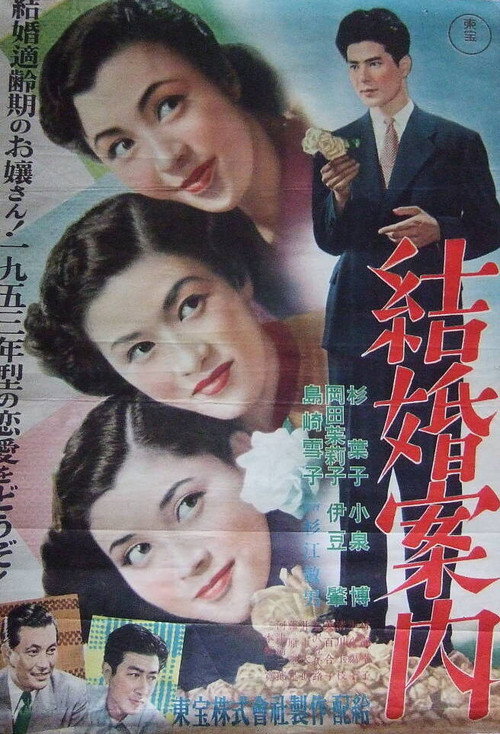
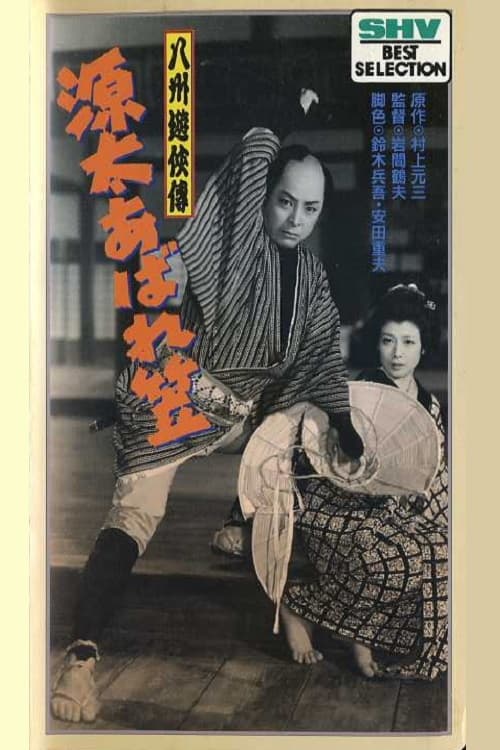
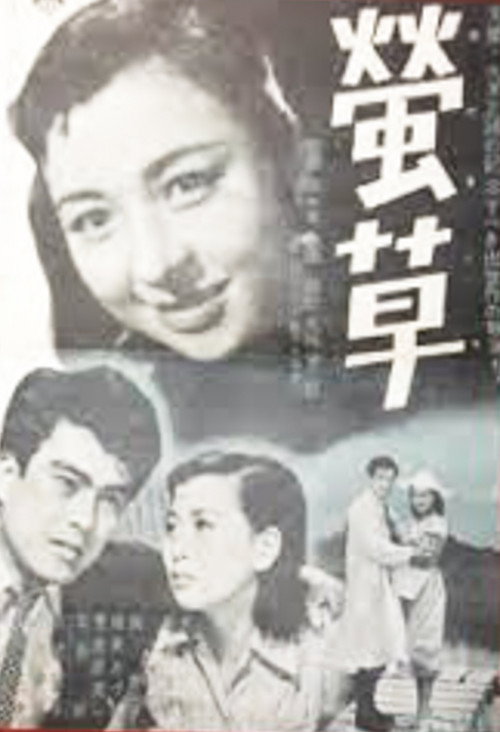
Yukiko Shimazaki (島崎 雪子 Shimazaki Yukiko, born 25 February 1931) is a Japanese actress and singer. She appeared in more than twenty films from 1950 to 1964. She was married to film director Tatsumi Kumashiro from 1955 to 1967.
Known For

A samurai answers a village's request for protection after he falls on hard times. The town needs protection from bandits, so the samurai gathers six others to help him teach the people how to defend themselves, and the villagers provide the soldiers with food.
Seven Samurai

Dai-ni-bu: Aijô ruten: Kiyoshi Saeki directed movie
Hana to ryû - Dai-ni-bu: Aijô ruten

33-year-old poor writer Ogata was able to endure his miserable life cheerfully thanks to Yoshie, a 19-year-old innocent young wife. After graduating from a girls' school in Hokuriku, she immediately moved to Tokyo to meet and marry Ogata. After neatly writing Ogata's manuscript, he would buy dorayaki as a gratuity and devour it.
Mole Alley

Grown up son arrives home to learn his father, the newly elected mayor, has been assassinated. So he journeys down a path to find the assassin and gets involved with two opposing yakuza gangs.
Big Shots Die at Dawn

The film follows a young civil engineer, played by Toshiro Mifune, who is assigned to the Tase Dam construction site in what is now Hanamaki City, Iwate Prefecture, and the human relationships involved in building the dam. A masterpiece by director Senkichi Taniguchi, who has worked on numerous films starring Mifune.
Swift Current

The Blue Pearl depicts the interplay between a young man from Tokyo and two ama (pearl divers; literally “women of the sea”) in a superstitious coastal town. Though raised within the same tradition-bound crucible, the two women – Noe and Riu – are portrayed as diametric opposites; the former meek but affectionate, the latter strong-willed but jaded by a tryst with metropolitan life.
The Blue Pearl

Gang of robbers quarrel about the loot, but when one of them gets killed, his younger brother seeks them out to ice them one by one.
Get 'em All

Fukagawa's chef Ushimatsu of the restaurant Kawatake fell in love with a maid named Omame and changed dramatically. He stopped gambling and womanizing much to the surprise of his friends. As their wedding day approached, Minosuke who had long been infatuated with Omame threatened her mother Okuma by using a promissory note for three ryō that he lent to her.
Hatsu sugata ushimatsu gōshi

A spectacular comedy with a star-studded cast that depicts unusual trials and unexpected verdicts regarding the five deadly sins: the crime of beauty, the crime of a terrifying wife, the crime of taking the wrong course, the crime of seducing, and the crime of killing with laughter.
Nonki saiban

Yuzo Kayama plays the protagonist, a whale-hunting cannon manufactuing supervisor, whose brother is an automobile tester for Komatsu Motors which has a fatal accident. As his brother investigates the "Accident" with his old college friend (makoto Sato), now a reporter... They stumble across murder, espionage and cover-ups. High-class night club, femme fatale, and a "Blueprint of Murder" all adds up to a bigger plot then first expected.
Blueprint of Murder

1961 Japanese movie
Lovers of Ginza

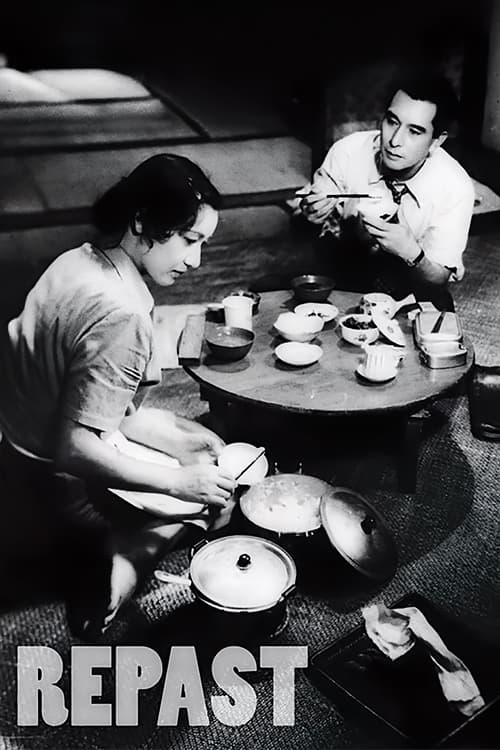
In post-WWII Osaka, a middle-aged woman is forced to examine her dreary life and marriage when her husband's young and flirtatious cousin arrives for a brief stay to escape an arranged marriage.
Repast

No description available.
Forbidden Path

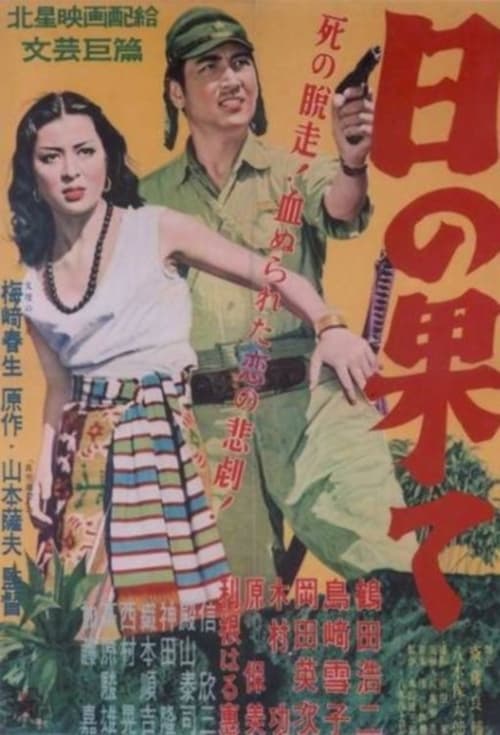
Military doctor Leutenant Hanada deserts during the war in the Philippines with a local girl. The officer in command orders Lieutenant Uji to shoot Hanada. Uji takes a sharpshooter called Takagi and tracks him. At first Uji cannot forgive Hanada but as Uji is isolated from the main force he too starts to think of desertion.
The End of a Day

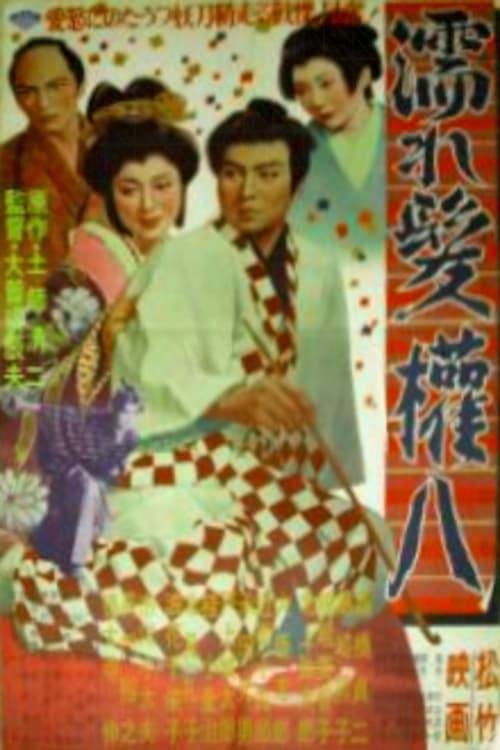
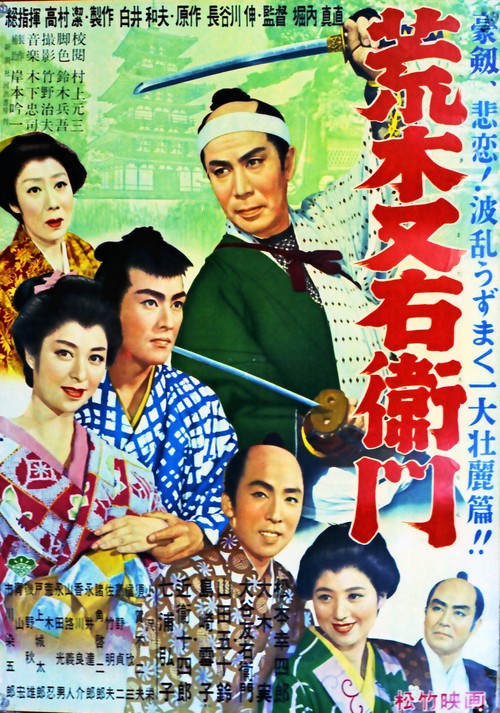
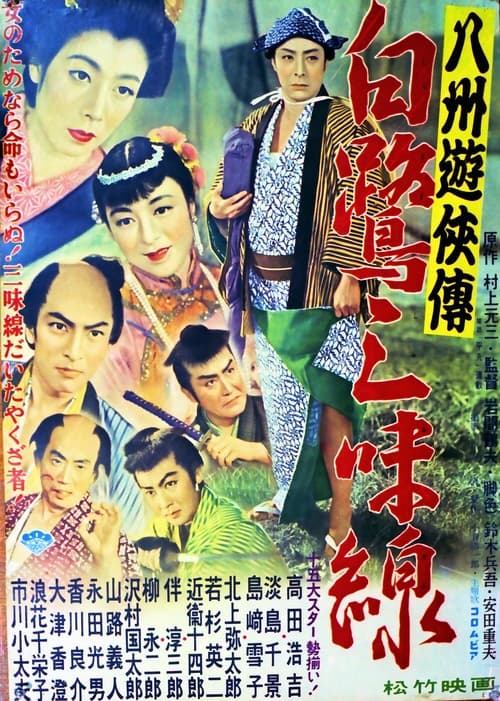
Watanabe Kazuma and Kawai Matagorō from the Bizen Okayama Ikeda clan were close friends, but they inevitably became enemies after Matagorō killed Kazuma's younger brother, Gentayū, and fled. Seeking assistance, Kazuma asked his brother-in-law, Araki Mataemon, for help, but Mataemon refused, saying that it was against the code for a brother to avenge another brother's death. On the other hand, the lord of the clan, Ikeda Tadao, ordered a search for Matagorō, who was found to be sheltered by the Hatamoto, including Andō Jiemon, in Edo. Tadao was furious but unable to act. Matagorō, in Edo, came to regret his birth as a samurai. He met and fell in love with Okō, a bathhouse maid. As the discord between the Hatamoto and the Ikeda clan deepened, Tadao died of illness. Seizing the opportunity to ease the conflict, the shogunate ordered the Ikeda clan to be succeeded by the young lord Katsugorō and to relocate to the Ikeda clan of Inshū Tottori. Meanwhile, Matagorō was exiled from Edo.
荒木又右衛門

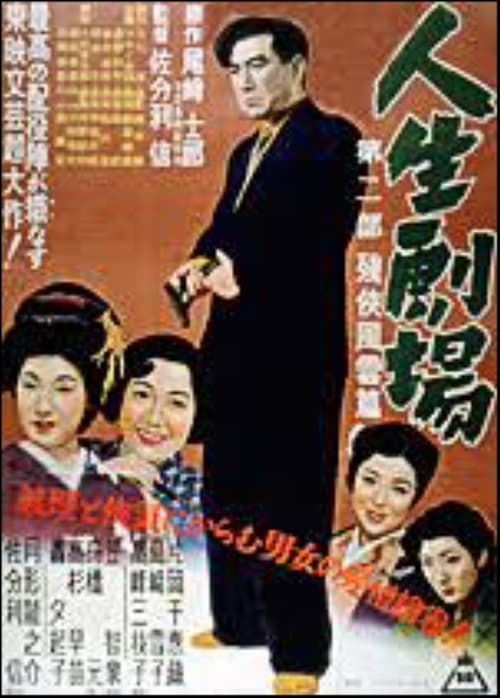
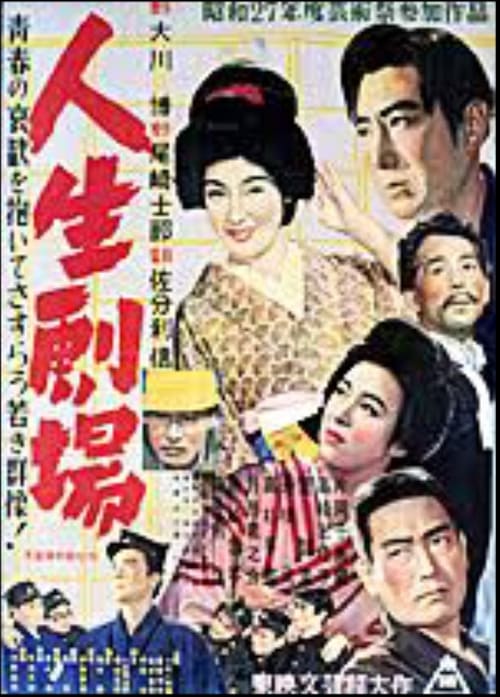
Part two of Shin Saburi's Theater of Life adaptation.
Jinsei Gekijo: dai ni bu

No description available.
Mr. Lucky

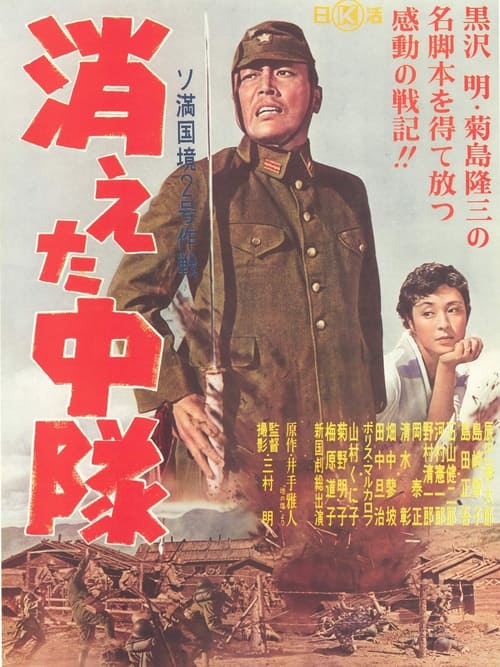
In June 1941, Captain Kagawa (Ryutaro Tatsumi), who had just graduated from the military academy, was assigned as the captain of a sentry patrol in Beiman, which was located on the opposite side of the Heilongjiang River from the Semidomka region of the Soviet Union. His predecessor, Lieutenant Kishi (Kawamura Kenichiro), a mild-mannered middle-aged man, had earned the trust of his men and the villagers by relaxing his military duties. However, newly appointed Lieutenant Kagawa thinks that Kishi's way of doing things is sloppy and begins to train the soldiers furiously in order to teach them a lesson.
Vanished Enlisted Man

One evening, at the Marine Tower observatory, cosmetics salesman Ichiro Iki is drawn into conversation with an unfamiliar young lady Akiko. She invites Ichiro back to a hotel where they make love but part without even exchanging names. A week later, they have a second chance encounter at the observatory. This time, Ichiro is the one who pursues her. Back at the hotel, Akiko begs Ichiro to give her sister – Kyoko, a bar hostess – absolute hell. Akiko resents her sister for lecturing on chastity, while wantonly indulging in promiscuous activity. Ichiro takes an interest in Kyoko and sets out towards her bar…
Flora on the Sand

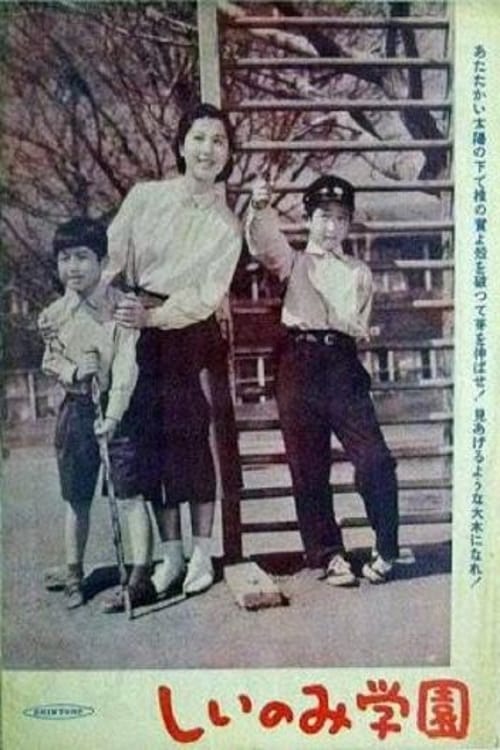
A university professor and his wife have two sons with infantile paralysis. Through trial and error, they struggle to open a school for disabled children at their own expense. Based on a true story, it features natural child performances under Hiroshi Shimizu’s skillful direction.