Acting
Down-on-his-luck veteran Tsugumo Hanshirō enters the courtyard of the prosperous House of Iyi. Unemployed, and with no family, he hopes to find a place to commit seppuku—and a worthy second to deliver the coup de grâce in his suicide ritual. The senior counselor for the Iyi clan questions the ronin’s resolve and integrity, suspecting Hanshirō of seeking charity rather than an honorable end. What follows is a pair of interlocking stories which lay bare the difference between honor and respect, and promises to examine the legendary foundations of the Samurai code.
Taking its title from an archaic Japanese word meaning "ghost story," this anthology adapts four folk tales. A penniless samurai marries for money with tragic results. A man stranded in a blizzard is saved by Yuki the Snow Maiden, but his rescue comes at a cost. Blind musician Hoichi is forced to perform for an audience of ghosts. An author relates the story of a samurai who sees another warrior's reflection in his teacup.
In Osaka's slum, capricious folks without futures engage in pilfering, assault and robbery, prostitution, and the trading of ID cards and blood.
In 1863, when American warships approach Japan, an enigmatic ronin becomes an important figure in a complex game of power between the Shogunate and the empire.
No description available.
Misawa Ihei (Nagato) is traveling with his wife Tae (Iwashita Shima) who abhors the practice of sword fighting for prize money. Tae is the daughter of the clan's chief counselor who married the low-ranking Ihei to avoid becoming the clan lord's mistress. Into the mix comes Oba Gunjuro (Tetsurō Tamba), a mysterious ronin who will do anything for money. This leads to a fitting climax as the forces of hate and love converge while the couple attempt to break through the border!
The plot is based on the novel "Akechi Samanosuke no Koi," the final work in a trilogy by Hiroshi Kato about the forced suicide of Oda Nobunaga at the temple Honnoji. Historically, the general Akechi Mitsuhide is credited with causing Nobunaga's downfall. Kato's novel focuses on Mitsuhide's nephew Samanosuke, who fought alongside his uncle during the assault on Honnoji.
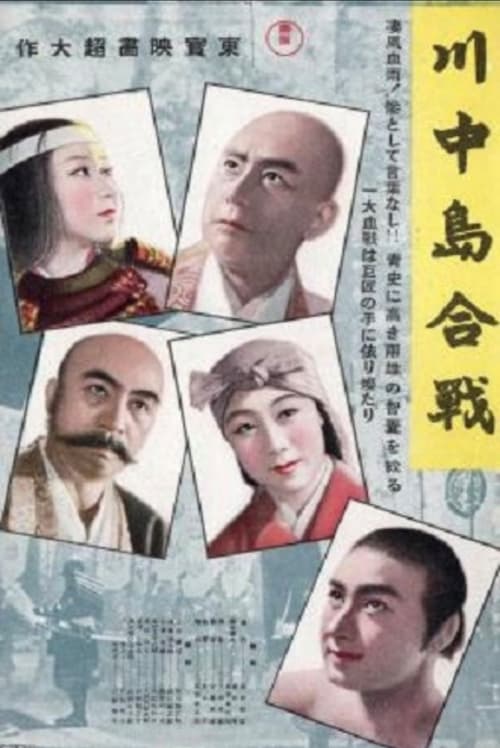
This epic depicts the battle between Uesugi Kenshin and Takeda Shingen. The focus of the story is the struggle by the unit leader in charge of the main supply wagons and the supply troops to transport materiel to the Uesugi army. To this are added episodes involving an itinerant woman.
1961 Japanese movie
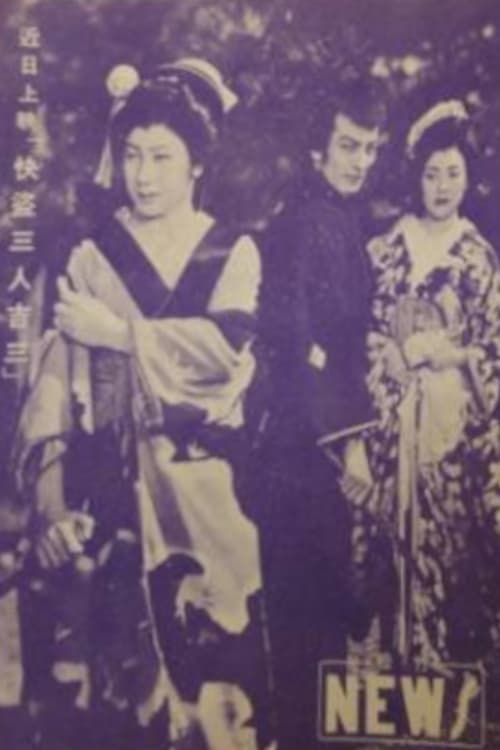
On March 11 in the seventh year of Tenpo (1836), a monk named Bennō, who fell in love with a geisha named Oshima, was publicly exposed at Nihonbashi for committing an illicit act with a woman. While this was happening, an extravagant procession led by another monk named Nikkei passed over the bridge. Nikkei, the head of the Kanouin temple, in collusion with Nakano Harima-no-Kami, had schemed to make his younger sister, Miyoshi, the Shogun's mistress and aimed to transform Kanouin into the Shogun's family temple. To fund the renovations, Nikkei accepted bribes from a corrupt merchant named Koya Bunzo.
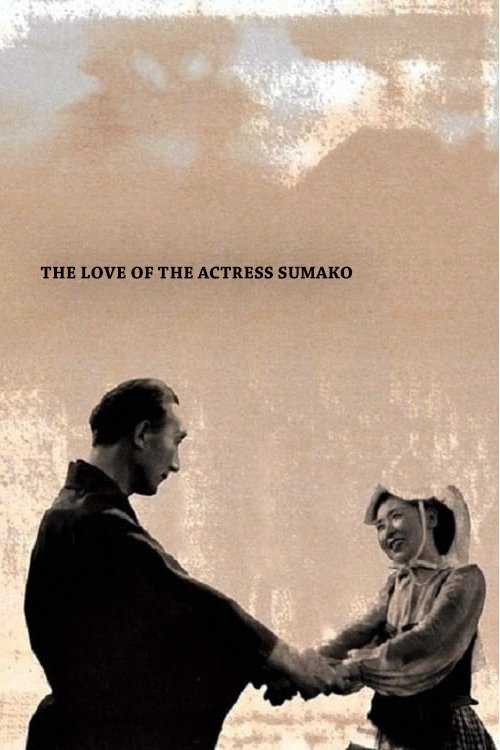
Stage director Shimamura, who is bringing western theatre to Japan, falls in love with outspoken actress Sumako Matsui, and leaves his family to be with her, while trying to keep his Art Theatre solvent.
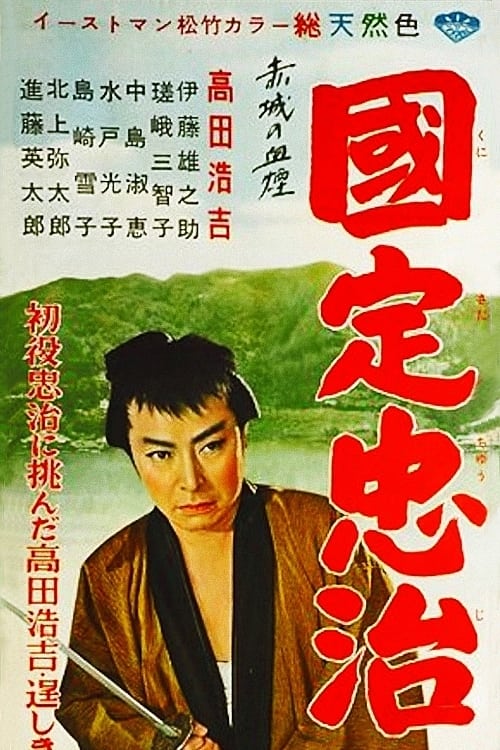
Chuji Kunisada runs into strange adventures which tests his skill as a samurai as he untangles intrigue and murder against the backdrop of the majestic Mount Akagi.
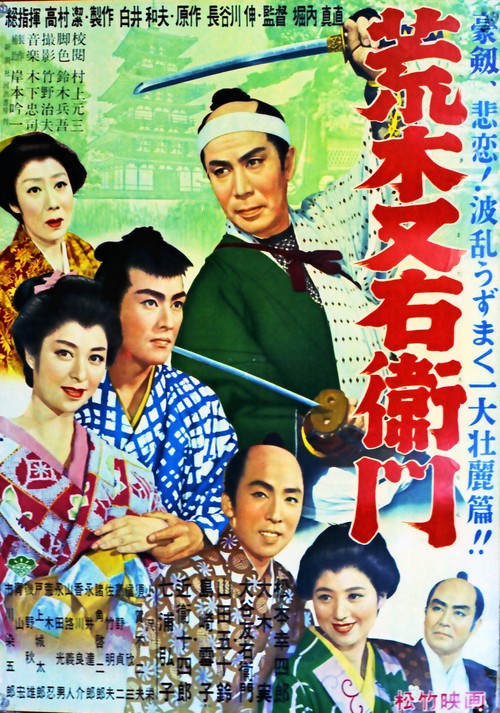
Watanabe Kazuma and Kawai Matagorō from the Bizen Okayama Ikeda clan were close friends, but they inevitably became enemies after Matagorō killed Kazuma's younger brother, Gentayū, and fled. Seeking assistance, Kazuma asked his brother-in-law, Araki Mataemon, for help, but Mataemon refused, saying that it was against the code for a brother to avenge another brother's death. On the other hand, the lord of the clan, Ikeda Tadao, ordered a search for Matagorō, who was found to be sheltered by the Hatamoto, including Andō Jiemon, in Edo. Tadao was furious but unable to act. Matagorō, in Edo, came to regret his birth as a samurai. He met and fell in love with Okō, a bathhouse maid. As the discord between the Hatamoto and the Ikeda clan deepened, Tadao died of illness. Seizing the opportunity to ease the conflict, the shogunate ordered the Ikeda clan to be succeeded by the young lord Katsugorō and to relocate to the Ikeda clan of Inshū Tottori. Meanwhile, Matagorō was exiled from Edo.
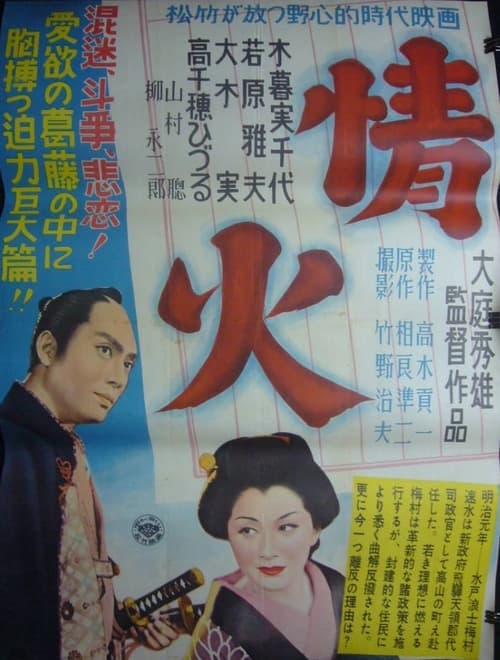
The time was the first year of Keio (1865). Upon hearing the news that the Imperial Army was approaching Hida Takayama, the district head Shimizu Uzen fled to Edo. Local officials like Yoshida Bunsuke and Yoshizumi Hironoshin showed their allegiance by welcoming them. The commander at the time, Umemura Hayami, was a former member of the Tengu Party and had previously been pursued in the town. He took refuge in a restaurant named Kabuya, and owing to a tip-off from a woman named Oraku, he was almost captured for her lover, Yoshizumi. Oraku and Yoshizumi probably feared revenge from that previous encounter, but Umemura had come back to Hida because he couldn't forget Oraku.
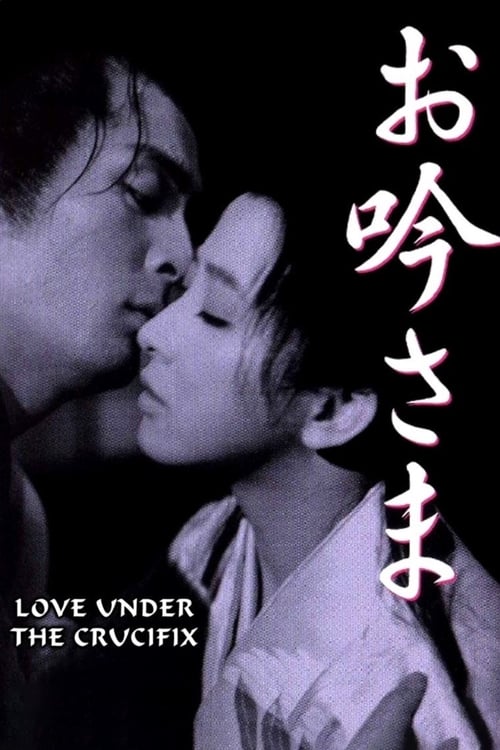
A tea master and his daughter Ogin are both Christians in feudal Japan. Ogin falls in love with a married feudal prince who shares her faith. When the Shogun bans Christianity, the situation worsens.
Shiba, a wandering ronin, encounters a band of peasants who have kidnapped the daughter of their dictatorial magistrate, in hopes of coercing from him a reduction in taxes. Shiba takes up their fight, joined by two renegades from the magistrate's guard, Sakura and Kikyo. The three outlaws find themselves in a battle to the death.
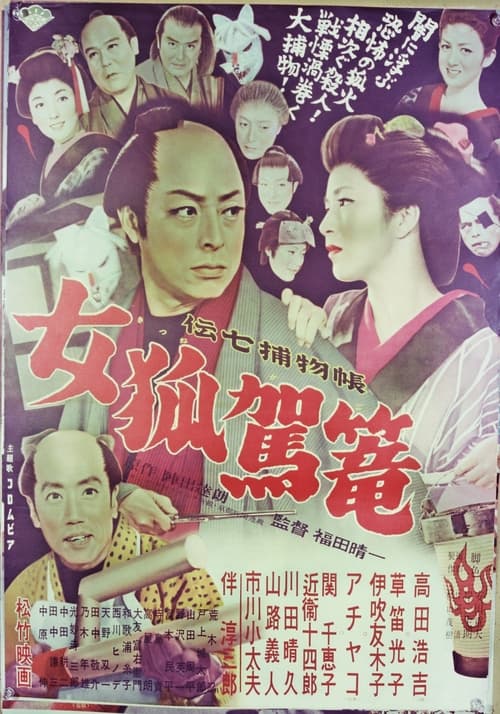
One night in Edo, a mysterious woman in a palanquin appeared at the moneylender Yamashiroya, revealing herself to a beautiful woman. She told the owner, Shigebē, that she had come to collect a life he owed from twenty years ago and then left. The same night, Maruiya Genbē also received a visit from the woman's palanquin, and nearby, a man named Manbē was murdered. The detective Hayanawa Gohē concluded the murder was the work of a fox spirit, but another detective, Den Shichi, skeptical of this theory, noticed footprints on the tatami and decided to investigate further.
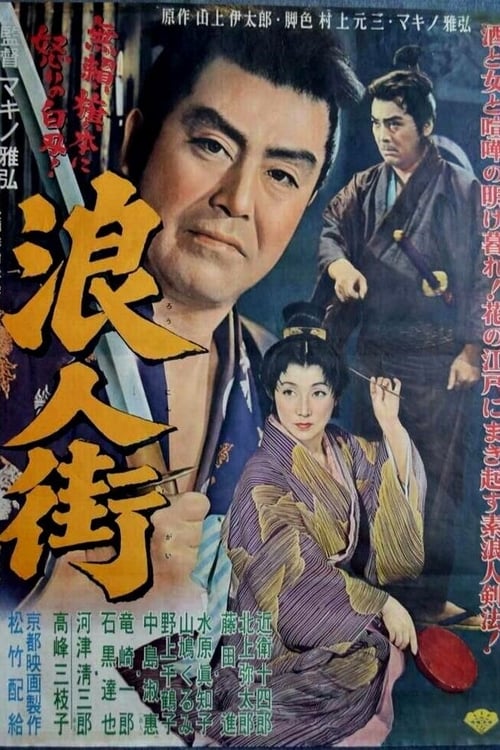
Based on the famous novel by Yamagami Itaro, this is the story of a group of ronin living in abject poverty in the latter days of the Edo period. Starring the great Konoe Jushiro, Ronin Gai is populated by an ensemble of colorful characters, social outcasts who patronize a restaurant and bar on the outskirts of Edo. Among them are masterless samurai reduced to drunkenness and debauchery. One disgraced and disillusioned former warrior gets a chance at redemption when he is hired to retrieve a famous knife from a corrupt lord. This is the third version directed by Makino Masahiro and is considered a true classic.
In Marugame Domain of Shikoku, a low-ranking foot soldier named Tagami Genbachi was envied for marrying Tsuji, the most beautiful woman in the domain. However, due to a personal grudge held by Horikawa Gentazaemon, the swordsmanship instructor, Genbachi met an untimely and bitter death through foul means within the precincts of the Hachiman Shrine. Due to the domain's oppressive treatment of those of low status, Tsuji, now with her infant son Botaro, was dispossessed of her home and exiled.